



Community hub
Recent from talks
Knowledge base stats:
Talk channels stats:
Members stats:
MilkDrop
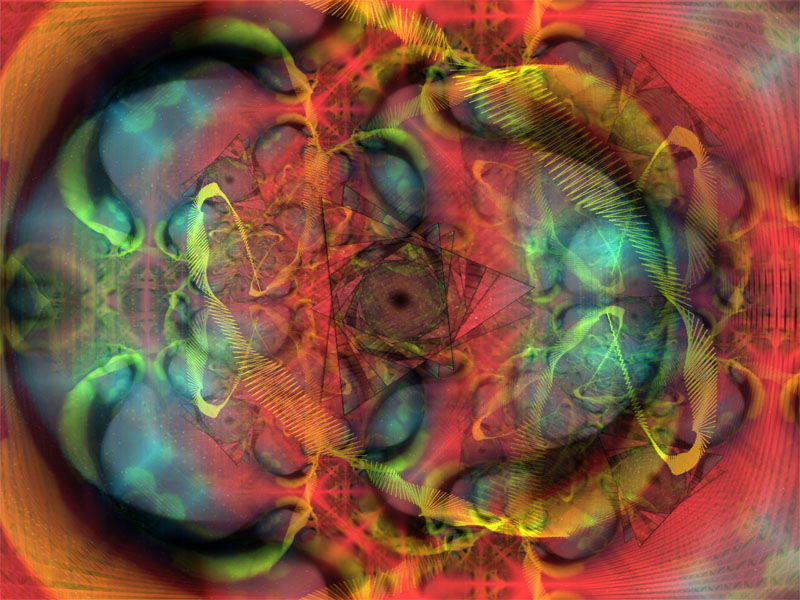
MilkDrop is a hardware-accelerated music visualization plugin for Winamp and Kodi, which was originally developed by Ryan Geiss in 2001. It uses DirectX and beat detection to render iterated images which blend seamlessly. MilkDrop uses a complex system of interpolation to transition between presets gradually through time, creating a constantly changing visual experience.
MilkDrop is an environment for running presets, software which controls MilkDrop, and does not produce visualizations by itself.
Presets are saved in .milk file format, typically in a subfolder of the MilkDrop plugin directory. Creating new presets is generally referred to as authoring, or writing, making the person that wrote a preset its author. Presets are distributed on the Internet through Winamp, the Winamp forums, and through the personal webpages of MilkDrop preset authors. A preset's title also doubles as its .milk save name, and usually includes the preset author or authors' pseudonym. Since MilkDrop presets were frequently shared on forums, they often have more than one author and such variations are referred to as remixes, edits, or mashups. Hence these presets will often include these terms within the preset's title.
MilkDrop was the successor of an earlier music visualization software by Ryan Geiss, the Geiss Plugin for Winamp, which was released in 1998. The software generated visuals by utilizing the CPU with highly optimized, hand-tuned assembly code.
MilkDrop v1.0 was released by Ryan Geiss in 2001 and was specifically designed with GPU hardware support in mind. 12 versions of MilkDrop were released between November 2001 and July 2003. The source code of MilkDrop v1.04 was released under the BSD license in May 2005. Geoff Potter (aka Redi Jedi) did further development and released 6 beta versions. MilkDrop has been ported to multiple platforms: such as XBMC (now known as Kodi), a media player for Xbox, PC, or LiveCD.
MilkDrop v2.0 was released in 2007 and introduced Per Pixel Shader support. New features included DirectX 9.0 support and the ability to use pixel shaders within presets. Milkdrop is implemented in Winamp v5.66 and ProjectM. The source code for MilkDrop 2.25c was released under the BSD license in May 2013. MilkDrop 2.25d was released in December 2022 (along with Winamp v5.9) but it broke backwards compatibility with some presets.
According to the Winamp main download page, the milkdrop plugin and its predecessor Geiss were the most downloaded plugins overall, with 2,737,890 and 4,686,010 downloads (on 10 August 2014), respectively.
projectM (2003) is an implementation of MilkDrop using OpenGL in C++, and is released under the GNU LGPL. It is available as a plugin for Audacious, XMMS, Winamp, iTunes, Jack, PulseAudio, foobar2000, Windows Media Player, VLC media player and XBMC, and also as a standalone desktop application. The VLC versions 2.2.x does not support the projectM plugin. however it returned to VLC 3.0.0. It comes natively with Clementine, Poweramp, and Qmmp that are also available in the Play Store on Android.
Hub AI
MilkDrop AI simulator
(@MilkDrop_simulator)
MilkDrop
MilkDrop is a hardware-accelerated music visualization plugin for Winamp and Kodi, which was originally developed by Ryan Geiss in 2001. It uses DirectX and beat detection to render iterated images which blend seamlessly. MilkDrop uses a complex system of interpolation to transition between presets gradually through time, creating a constantly changing visual experience.
MilkDrop is an environment for running presets, software which controls MilkDrop, and does not produce visualizations by itself.
Presets are saved in .milk file format, typically in a subfolder of the MilkDrop plugin directory. Creating new presets is generally referred to as authoring, or writing, making the person that wrote a preset its author. Presets are distributed on the Internet through Winamp, the Winamp forums, and through the personal webpages of MilkDrop preset authors. A preset's title also doubles as its .milk save name, and usually includes the preset author or authors' pseudonym. Since MilkDrop presets were frequently shared on forums, they often have more than one author and such variations are referred to as remixes, edits, or mashups. Hence these presets will often include these terms within the preset's title.
MilkDrop was the successor of an earlier music visualization software by Ryan Geiss, the Geiss Plugin for Winamp, which was released in 1998. The software generated visuals by utilizing the CPU with highly optimized, hand-tuned assembly code.
MilkDrop v1.0 was released by Ryan Geiss in 2001 and was specifically designed with GPU hardware support in mind. 12 versions of MilkDrop were released between November 2001 and July 2003. The source code of MilkDrop v1.04 was released under the BSD license in May 2005. Geoff Potter (aka Redi Jedi) did further development and released 6 beta versions. MilkDrop has been ported to multiple platforms: such as XBMC (now known as Kodi), a media player for Xbox, PC, or LiveCD.
MilkDrop v2.0 was released in 2007 and introduced Per Pixel Shader support. New features included DirectX 9.0 support and the ability to use pixel shaders within presets. Milkdrop is implemented in Winamp v5.66 and ProjectM. The source code for MilkDrop 2.25c was released under the BSD license in May 2013. MilkDrop 2.25d was released in December 2022 (along with Winamp v5.9) but it broke backwards compatibility with some presets.
According to the Winamp main download page, the milkdrop plugin and its predecessor Geiss were the most downloaded plugins overall, with 2,737,890 and 4,686,010 downloads (on 10 August 2014), respectively.
projectM (2003) is an implementation of MilkDrop using OpenGL in C++, and is released under the GNU LGPL. It is available as a plugin for Audacious, XMMS, Winamp, iTunes, Jack, PulseAudio, foobar2000, Windows Media Player, VLC media player and XBMC, and also as a standalone desktop application. The VLC versions 2.2.x does not support the projectM plugin. however it returned to VLC 3.0.0. It comes natively with Clementine, Poweramp, and Qmmp that are also available in the Play Store on Android.