


Community hub
Recent from talks
Contribute something to knowledge base
Content stats: 0 posts, 0 articles, 1 media, 0 notes
Members stats: 0 subscribers, 0 contributors, 0 moderators, 0 supporters
Subscribers
Supporters
Contributors
Moderators
Hub AI
Minaret of Jam AI simulator
(@Minaret of Jam_simulator)
Hub AI
Minaret of Jam AI simulator
(@Minaret of Jam_simulator)
Minaret of Jam
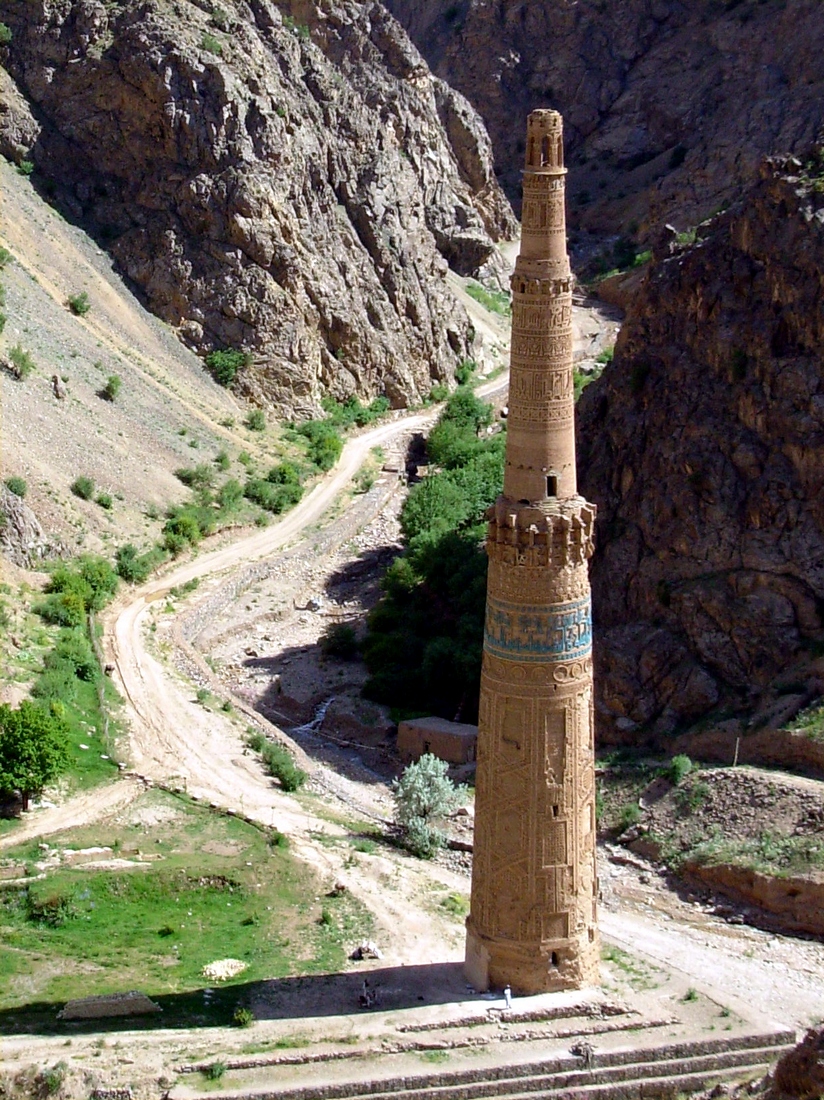
The Minaret of Jam (Pashto: د جام منار, Dari: منار جام) is a UNESCO World Heritage Site in western Afghanistan. It is located in a remote and nearly inaccessible region of the Shahrak District, Ghor Province, next to the Hari River. The 62 m (203 ft) or 65 m (213 ft) high minaret was built c. 1190, entirely of baked bricks, and is famous for its intricate brick, stucco and glazed tile decoration, which consists of alternating bands of Kufic and Naskhi calligraphy, geometric patterns, and verses from the Qur'an. Since 2002, the minaret has remained on the list of World Heritage in Danger, under serious threat of erosion, and has not been actively preserved. In 2014, the BBC reported that the tower was in imminent danger of collapse.
In 2020, the Minaret of Jam was listed among cultural heritage sites of the Islamic world by the Islamic World Educational, Scientific and Cultural Organization (ICESCO). According to the Afghan Ministry of Foreign Affairs (MoFA), the Minaret of Jam is Afghanistan's first cultural heritage site to be listed by ICESCO.
The word minaret is Arabic [منارة] and usually means a tower next to a mosque from which the muezzin calls the faithful to prayer. However it also means lighthouse and has other meanings. Here, it is used loosely.
The Minaret of Jaam is probably located at the site of the Ghurid dynasty's capital, Firozkoh.
The circular minaret rests on an octagonal base; it had 2 wooden balconies and was topped by a lantern. Its formal presentation has a striking similarity to the Ghazni minarets built by Masud III. It is thought to have been a direct inspiration for the Qutub Minar in Delhi, India.
The Minaret of Jam belongs to a group of around 60 minarets and towers built between the 11th and the 13th centuries in Central Asia, Iran and Afghanistan, including the Kutlug Timur Minaret in Old Urgench (long considered the tallest of these still in existence). The minarets are thought to have been built as symbols of Islam's victory, while other towers were simply landmarks or watchtowers.
The archaeological landscape around Jam includes the ruins of a 'palace', fortifications, a pottery kiln and a Jewish cemetery, and has been suggested to be the remains of the lost city of Turquoise Mountain. Analysis of the "robber holes" around the site, high-resolution satellite images and data from Google Maps has led to an estimate that the Ghūrid summer capital around the minaret was about 19.5 hectares in size.
The archaeological site of Jam was successfully nominated as Afghanistan's first World Heritage site in 2002. It was also inscribed in UNESCO's list of World Heritage in Danger, due to the precarious state of preservation of the minaret, and the results of looting at the site.
Minaret of Jam
The Minaret of Jam (Pashto: د جام منار, Dari: منار جام) is a UNESCO World Heritage Site in western Afghanistan. It is located in a remote and nearly inaccessible region of the Shahrak District, Ghor Province, next to the Hari River. The 62 m (203 ft) or 65 m (213 ft) high minaret was built c. 1190, entirely of baked bricks, and is famous for its intricate brick, stucco and glazed tile decoration, which consists of alternating bands of Kufic and Naskhi calligraphy, geometric patterns, and verses from the Qur'an. Since 2002, the minaret has remained on the list of World Heritage in Danger, under serious threat of erosion, and has not been actively preserved. In 2014, the BBC reported that the tower was in imminent danger of collapse.
In 2020, the Minaret of Jam was listed among cultural heritage sites of the Islamic world by the Islamic World Educational, Scientific and Cultural Organization (ICESCO). According to the Afghan Ministry of Foreign Affairs (MoFA), the Minaret of Jam is Afghanistan's first cultural heritage site to be listed by ICESCO.
The word minaret is Arabic [منارة] and usually means a tower next to a mosque from which the muezzin calls the faithful to prayer. However it also means lighthouse and has other meanings. Here, it is used loosely.
The Minaret of Jaam is probably located at the site of the Ghurid dynasty's capital, Firozkoh.
The circular minaret rests on an octagonal base; it had 2 wooden balconies and was topped by a lantern. Its formal presentation has a striking similarity to the Ghazni minarets built by Masud III. It is thought to have been a direct inspiration for the Qutub Minar in Delhi, India.
The Minaret of Jam belongs to a group of around 60 minarets and towers built between the 11th and the 13th centuries in Central Asia, Iran and Afghanistan, including the Kutlug Timur Minaret in Old Urgench (long considered the tallest of these still in existence). The minarets are thought to have been built as symbols of Islam's victory, while other towers were simply landmarks or watchtowers.
The archaeological landscape around Jam includes the ruins of a 'palace', fortifications, a pottery kiln and a Jewish cemetery, and has been suggested to be the remains of the lost city of Turquoise Mountain. Analysis of the "robber holes" around the site, high-resolution satellite images and data from Google Maps has led to an estimate that the Ghūrid summer capital around the minaret was about 19.5 hectares in size.
The archaeological site of Jam was successfully nominated as Afghanistan's first World Heritage site in 2002. It was also inscribed in UNESCO's list of World Heritage in Danger, due to the precarious state of preservation of the minaret, and the results of looting at the site.
Recent media
Recent media