



Community hub
Recent from talks
Knowledge base stats:
Talk channels stats:
Members stats:
Ming Great Wall
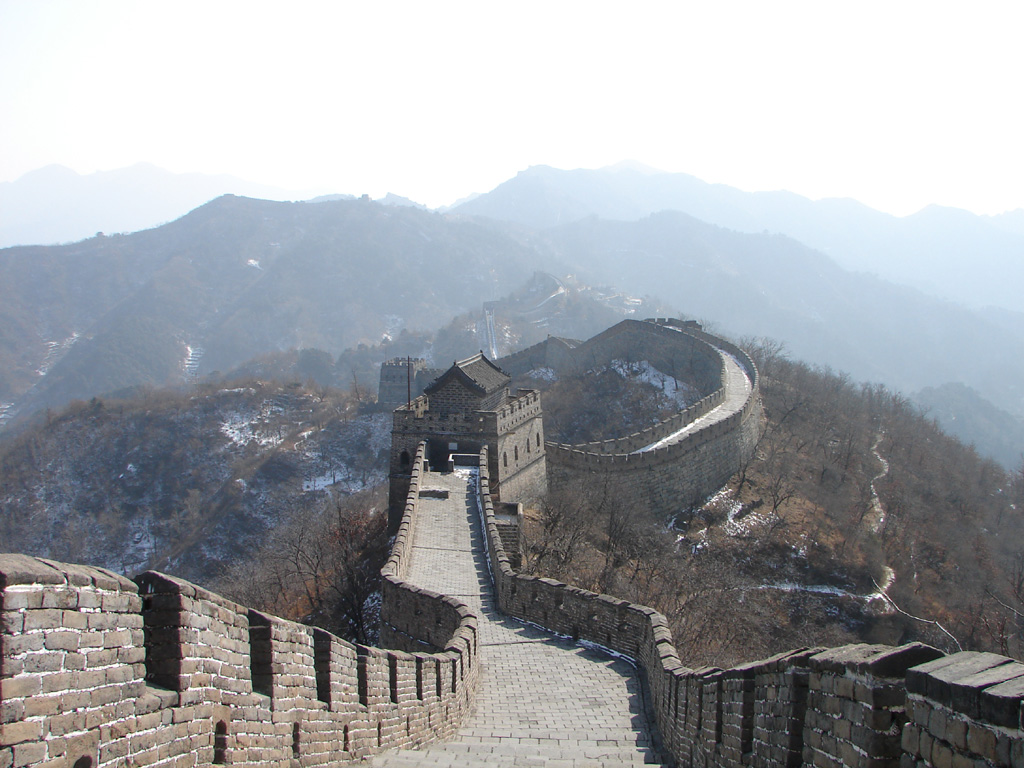
The Ming Great Wall (Chinese: 明長城; pinyin: Míng Chángchéng), built by the Ming dynasty (1368–1644), forms the most visible parts of the Great Wall of China today. A comprehensive archaeological survey, using advanced technology has concluded that the Ming walls measure 8,850 km (5,500 mi) from Jiayu Pass in the west to the sea in Shanhai Pass, then looping over to terminate in Manchuria at the Hushan Great Wall. This is made up of 6,259 km (3,889 mi) sections of actual wall, 359 km (223 mi) of trenches and 2,232 km (1,387 mi) of natural defensive barriers such as hills and rivers.
While the Ming walls are generally referred to as "Great Wall" (changcheng) in modern times, in Ming times they were called "border barriers" (邊牆; bianqiang) by the Chinese, since the term changcheng was said to evoke imagery of the tyranny of Qin Shi Huang (260–210 BC) and was associated with the Qin Great Wall.
In 1368, the Hongwu Emperor (Zhu Yuanzhang, r. 1368–98) ousted the Mongol-led Yuan dynasty from China to inaugurate the Ming dynasty. The Mongols fled back to Mongolia to form the Northern Yuan, but even after numerous campaigns, the Ming failed to expand further north and west.
In the early years of his reign, Hongwu envisioned a border policy where mobile armies along the northern frontier guarded the safety of China. To this end he set up the "eight outer garrisons" close to the steppe and an inner line of forts more suitable for defence. The inner line was the forerunner to the Ming Great Wall. In 1373, as Ming forces encountered setbacks, Hongwu put more emphasis on defence and adopted Hua Yunlong's (華雲龍) suggestion to establish garrisons at 130 passes and other strategic points in the Beijing area. More positions were set up in the years up to Hongwu's death in 1398, and watchtowers were manned from the Bohai Sea to Beijing and further onto the Mongolian steppes. These positions, however, were not for a linear defence but rather a regional one in which walls did not feature heavily, and offensive tactics remained the overarching policy at the time.
Hongwu's son, the Yongle Emperor (r. 1402–24), continued his father's policy of active campaigning against the Mongols, and in 1421 moved the Ming capital from Nanjing in the south to Beijing in the north, partially to better manage the Mongol situation. Construction of walls in stone and earth began under Yongle's reign in strategic passes, when signal towers and ditch systems were also established. Yongle's reign also saw the rearrangement of the dynasty's frontiers that led to all but one of the eight outer garrisons being abolished to cut expenses, thereby sacrificing a vital foothold in the steppe transitional zone. After Yongle's death in 1424, the Ming abandoned the last garrison at Kaiping (the former Yuan capital also known as Shangdu) in 1430. The removal of these garrisons would have long-term consequences, as Ming foreign policy turned increasingly inward and defence became preferred over offence, especially after taking into consideration the cost to maintain the outlying garrisons.
Around 1442, a wall was erected by the Ming in Liaodong to protect Han settlers from a possible threat from the Jurched-Mongol Oriyanghan. In 1467–68, expansion of the wall provided further protection for the region from against attacks by the Jianzhou Jurchens in the northeast. An offshoot of the future main Great Wall line, this "Liaodong Wall" was of simple design: for the most part constructed by pouring mud between parallel rows of stakes, with moats dug on both sides, although stones and tiles were used in some parts.
Despite withdrawal from the steppe, the Ming military remained in a strong position until the Tumu Crisis in 1449, which caused the collapse of the early Ming security system. Over half of the campaigning Chinese army perished in the conflict, while the Mongols captured the Zhengtong Emperor Zhu Qizhen. This military debacle shattered the Ming dynasty military might and momentum that had given pause to the Mongols since the beginning of the dynasty, and the Ming were on the defensive from this point on.
In the immediate aftermath of the disaster, the most pressing political concern caused by the capture of the emperor was resolved when the acting Minister of War Yu Qian (the actual minister having died at Tumu) installed the Emperor's brother as the new Jingtai Emperor (r. 1450–1459). Military tensions with the Oirats remained high during Jingtai's reign, as peace would have caused a great deal of political awkwardness for Jingtai and Yu Qian's faction, who benefited from putting Jingtai on the throne. To maintain a military presence while compensating for the loss of soldiers, fortifications, ditches, and ramparts were constructed in key passes, including at Zijing Pass (紫荊關; through where the Mongols had entered during the Tumu Crisis), Ningwu Pass (寧武關), and Juyong Pass. The work undertaken in this period marked a major shift toward defensive construction.
Hub AI
Ming Great Wall AI simulator
(@Ming Great Wall_simulator)
Ming Great Wall
The Ming Great Wall (Chinese: 明長城; pinyin: Míng Chángchéng), built by the Ming dynasty (1368–1644), forms the most visible parts of the Great Wall of China today. A comprehensive archaeological survey, using advanced technology has concluded that the Ming walls measure 8,850 km (5,500 mi) from Jiayu Pass in the west to the sea in Shanhai Pass, then looping over to terminate in Manchuria at the Hushan Great Wall. This is made up of 6,259 km (3,889 mi) sections of actual wall, 359 km (223 mi) of trenches and 2,232 km (1,387 mi) of natural defensive barriers such as hills and rivers.
While the Ming walls are generally referred to as "Great Wall" (changcheng) in modern times, in Ming times they were called "border barriers" (邊牆; bianqiang) by the Chinese, since the term changcheng was said to evoke imagery of the tyranny of Qin Shi Huang (260–210 BC) and was associated with the Qin Great Wall.
In 1368, the Hongwu Emperor (Zhu Yuanzhang, r. 1368–98) ousted the Mongol-led Yuan dynasty from China to inaugurate the Ming dynasty. The Mongols fled back to Mongolia to form the Northern Yuan, but even after numerous campaigns, the Ming failed to expand further north and west.
In the early years of his reign, Hongwu envisioned a border policy where mobile armies along the northern frontier guarded the safety of China. To this end he set up the "eight outer garrisons" close to the steppe and an inner line of forts more suitable for defence. The inner line was the forerunner to the Ming Great Wall. In 1373, as Ming forces encountered setbacks, Hongwu put more emphasis on defence and adopted Hua Yunlong's (華雲龍) suggestion to establish garrisons at 130 passes and other strategic points in the Beijing area. More positions were set up in the years up to Hongwu's death in 1398, and watchtowers were manned from the Bohai Sea to Beijing and further onto the Mongolian steppes. These positions, however, were not for a linear defence but rather a regional one in which walls did not feature heavily, and offensive tactics remained the overarching policy at the time.
Hongwu's son, the Yongle Emperor (r. 1402–24), continued his father's policy of active campaigning against the Mongols, and in 1421 moved the Ming capital from Nanjing in the south to Beijing in the north, partially to better manage the Mongol situation. Construction of walls in stone and earth began under Yongle's reign in strategic passes, when signal towers and ditch systems were also established. Yongle's reign also saw the rearrangement of the dynasty's frontiers that led to all but one of the eight outer garrisons being abolished to cut expenses, thereby sacrificing a vital foothold in the steppe transitional zone. After Yongle's death in 1424, the Ming abandoned the last garrison at Kaiping (the former Yuan capital also known as Shangdu) in 1430. The removal of these garrisons would have long-term consequences, as Ming foreign policy turned increasingly inward and defence became preferred over offence, especially after taking into consideration the cost to maintain the outlying garrisons.
Around 1442, a wall was erected by the Ming in Liaodong to protect Han settlers from a possible threat from the Jurched-Mongol Oriyanghan. In 1467–68, expansion of the wall provided further protection for the region from against attacks by the Jianzhou Jurchens in the northeast. An offshoot of the future main Great Wall line, this "Liaodong Wall" was of simple design: for the most part constructed by pouring mud between parallel rows of stakes, with moats dug on both sides, although stones and tiles were used in some parts.
Despite withdrawal from the steppe, the Ming military remained in a strong position until the Tumu Crisis in 1449, which caused the collapse of the early Ming security system. Over half of the campaigning Chinese army perished in the conflict, while the Mongols captured the Zhengtong Emperor Zhu Qizhen. This military debacle shattered the Ming dynasty military might and momentum that had given pause to the Mongols since the beginning of the dynasty, and the Ming were on the defensive from this point on.
In the immediate aftermath of the disaster, the most pressing political concern caused by the capture of the emperor was resolved when the acting Minister of War Yu Qian (the actual minister having died at Tumu) installed the Emperor's brother as the new Jingtai Emperor (r. 1450–1459). Military tensions with the Oirats remained high during Jingtai's reign, as peace would have caused a great deal of political awkwardness for Jingtai and Yu Qian's faction, who benefited from putting Jingtai on the throne. To maintain a military presence while compensating for the loss of soldiers, fortifications, ditches, and ramparts were constructed in key passes, including at Zijing Pass (紫荊關; through where the Mongols had entered during the Tumu Crisis), Ningwu Pass (寧武關), and Juyong Pass. The work undertaken in this period marked a major shift toward defensive construction.