Hubbry Logo
MoyrossMoyrossMain
Open search
Moyross
Community hub
Moyross
logo
8 pages, 0 posts
0 subscribers
Be the first to start a discussion here.
Moyross
Moyross
from Wikipedia

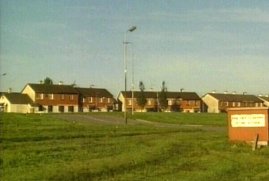
Moyross (Irish: Maigh Rois)[1] is a suburb and council estate in Limerick city in Ireland.[2] Moyross is located on the city's north side and is the largest housing estate in Limerick.[3]

Key Information

The Roman Catholic parish of Moyross is one of 60 parishes in the Diocese of Limerick. As of the 2011 census, there were 2,183 people in Moyross parish.[4]

Development

[edit]

Housing development in the area started in the 1970s and 1980s. Up to 2008, the estate was unusual in that it spanned two electoral areas, with 728 houses part of the Ballynanty DED of Limerick City Council, and 432 houses in the Limerick North Rural DED of Limerick County Council. The city boundaries have since been redrawn so that the whole estate is now covered by Limerick City and County Council. It comprises 1,160 houses which are divided into 12 parks.[citation needed]

In recent years,[when?] Moyross has seen major redevelopments and employment opportunities,[original research?] such as a new extension to its community centre in 2018 to house the Credit Union, local enterprises and after-school facilities in a newer space.[5] Housing projects have included the development of 57 new houses in Dalgaish and Cosgrave Parks in 2022,[6] and 18 new houses in Cliona Park in 2023.[7]

A proposed new private hospital, to be operated by UPMC, received planning permission in early 2024.[8]

Transport

[edit]

Moyross is served by Bus Eireann services 303 and 306 to Limerick city centre.

The Northern Distributor Road, a road projected to connect Coonagh and Moyross with Knockalisheen in County Clare, was under development. As of 2024, however, the project had been omitted from the Limerick Shannon Metropolitan Area Transport Strategy (LSMATS) and the future of the road was uncertain.[9][needs update]

In October 2022, proposals were announced to open a new train station in Moyross.[10] As of mid-2024,[11] a preferred location for the proposed station had been selected and a public consultation was undertaken between May and June 2024.[12] A planning application for the proposed station was submitted by Irish Rail in August 2025,[13] and this was approved by Limerick County Council in October 2025.[14]

Crime

[edit]

Moyross has been associated in the media with anti-social behaviour, poverty and criminal gangs. Moyross gained notoriety with a decade-long cycle of incidents involving petrol bomb attacks, stabbings, murders and gun-related incidents, which reached a peak in 2006.[15]

One incident that received much media attention in Ireland was the September 2006 petrol bomb attack of a car containing both a five-year-old and a seven-year-old child, which resulted in serious injuries to both after their mother turned down a request from youths for a lift to a courthouse.[16][17] The crime illustrated the need for government attention in Moyross and the neglect faced by housing estates in the area, compared to more affluent areas of Limerick. John Fitzgerald, a former Dublin City manager, was appointed to lead an initiative to address issues of crime and exclusion in Moyross.[18] The 'Fitzgerald Report' was released in 2007.[18]

People

[edit]

References

[edit]
Revisions and contributorsEdit on WikipediaRead on Wikipedia
from Grokipedia
Moyross (Irish: Maigh Rois) is a and council estate situated on the northern periphery of Limerick, Ireland's third-largest city. Constructed primarily as social housing to address urban population pressures, the area has endured acute socioeconomic deprivation, exemplified by rates reaching 84% during the 1980s and sustained patterns of and low . These conditions have fostered , contributing to Limerick's designation as harboring some of the nation's most disadvantaged locales, where approximately 35% of the city's residents reside in such areas marked by elevated joblessness and limited . Since 2008, Moyross has been the focus of a comprehensive regeneration framework encompassing physical reconstruction, social interventions, and economic initiatives, backed by investments exceeding €250 million across Limerick's priority zones. This has entailed the demolition and redevelopment of over 1,000 homes, stricter tenancy enforcement, and community training programs aimed at curbing , resulting in a sharp from around 7,000 to roughly 1,200 inhabitants as former residents relocated or opted out of return. Despite these measures, challenges persist, as evidenced by ongoing youth diversion and justice programs targeting at-risk behaviors in the locale. The efforts underscore causal links between concentrated deprivation, family breakdown, and intergenerational disadvantage, prioritizing empirical interventions over superficial narratives.

History

Origins and Construction (1970s–1980s)

Moyross, Ireland's largest social housing estate, was developed between 1973 and 1987 on the north side of Limerick city to rehouse tenants displaced from inner-city tenements. Construction commenced in 1973 on approximately 200 acres of farmland north of the River Shannon, about four kilometers from the city center, under the direction of Limerick Corporation. The project expanded to include over 700 dwellings by the late 1980s, with development spilling across the municipal boundary into County Limerick. The estate's layout followed an open-plan model prevalent in 1970s initiatives, prioritizing vehicular and pedestrian permeability over defined boundaries. Initial phases featured around 600 two-story terraced houses constructed without enclosed front or rear gardens, allowing direct access from streets to common green spaces. This design, intended to foster community cohesion, incorporated basic amenities like the Corpus Christi parish church but lacked comprehensive social infrastructure such as schools or community centers at inception. By the mid-1980s, Moyross housed thousands of residents, predominantly low-income families, reflecting broader Irish efforts to address urban through peripheral estate development. The construction mirrored national trends in social housing provision, where rapid building prioritized quantity over long-term integration.

Economic Decline and Early Social Challenges (1980s–1990s)

The marked a period of acute economic contraction , characterized by high public debt, fiscal , and national peaking at 17% in 1986–1987, driven by and domestic structural weaknesses in manufacturing-dependent regions like Limerick. Limerick City, with its legacy of industrial employment in textiles, engineering, and , faced factory closures and job losses exceeding the national average, leading to widespread long-term in peripheral social housing estates. In Moyross, constructed as overflow accommodation in the , these pressures manifested in extreme localized deprivation, with reported unemployment rates reaching 84% amid a lack of local economic anchors or skills training infrastructure. This economic malaise entrenched , as households increasingly relied on state supplements amid stagnant wages and minimal opportunities, fostering a disproportionately young demographic vulnerable to intergenerational idleness. in the Moyross-Ballynanty area peaked around 1981 before a cumulative 40% decline by the late 1990s, reflecting out-migration of working-age residents and net loss to more prosperous urban cores. Early social strains emerged from these conditions, including rising petty and anti-social activities, as economic isolation eroded community cohesion and informal support networks, setting patterns of exclusion that persisted despite nascent national recovery signals in the mid-1990s. Into the 1990s, while Ireland's economy began transitioning toward export-led growth—reducing national from 15.7% in 1993—the benefits bypassed Moyross, where joblessness remained entrenched at levels up to four times the city average of over 11%, per localized socio-economic surveys. Limited amenities, poor transport integration, and skill mismatches perpetuated barriers to , amplifying challenges like family instability and youth disengagement, which local community records link to the onset of organized petty crime cycles. These dynamics underscored Moyross's designation in broader disadvantage mapping, though targeted interventions remained piecemeal until later state programs.

Geography and Demographics

Location and Physical Layout

Moyross is a large social located on the north side of Limerick City, , within the Limerick City and County Council administrative area. The estate lies approximately 3 kilometres north of Limerick , bordered by the River Shannon to the north and east, with nearby landmarks including Stadium and Thomond RFC sports grounds. Its position places it adjacent to other northside suburbs such as Ballynanty and Hyde Road. The Moyross regeneration boundary encompasses roughly 200 hectares, spanning nearly 2 kilometres east-west and 1.8 kilometres north-south. Originally developed as a council estate in the 1970s and 1980s, it comprises 12 distinct sub-areas known as "parks," including Cliona Park and Pineview Gardens, totaling around 1,160 housing units. The physical layout features predominantly low-rise terraced and semi-detached dwellings arranged in blocks, with some areas exhibiting challenging , underlying rock formations that complicate , and historical issues with flooding and drainage. These geological constraints have influenced road alignments and housing configurations, contributing to a fragmented street network.

Population Composition and Socioeconomic Indicators

Moyross exhibits a young structure, characterized by an extremely low elderly compared to Limerick city and national averages, reflecting a high concentration of children and working-age adults. This demographic skew contributes to challenges in for and services. As of the 2011 , the population stood at 2,183, with limited granular updates available for smaller areas in subsequent censuses, though regeneration efforts have aimed to stabilize residency amid ongoing social issues. Ethnically, the area is overwhelmingly , with over 93% of residents in Limerick's regeneration districts, including Moyross, identifying as such in the 2006 data, far exceeding the city's more diverse profile of approximately 85% . Non-Irish nationals and other ethnic groups constitute a negligible share, distinguishing Moyross from broader urban trends influenced by migration. , while present in higher proportions across Limerick than nationally (around 1%), do not dominate Moyross demographics, though localized family networks have been noted in community studies. Socioeconomically, Moyross ranks among Ireland's most deprived locales on the Pobal HP Deprivation Index, with scores indicating persistent disadvantage despite regeneration investments exceeding €300 million since 2007; indices for the area have declined relative to 2006 baselines, signaling worsening affluence gaps in metrics like and . Unemployment rates have historically exceeded 40%, with reports citing 47% in pre-2010s assessments, though community initiatives claim reductions of up to 60% by 2025 through local enterprise programs—figures unverified against national benchmarks where Limerick's overall rate fell to 8% in 2022. remains low, with a high share of adults holding only secondary-level qualifications or less, limiting labor market participation and perpetuating cycles of dependency on social welfare. Household incomes trail national medians, exacerbated by structural barriers in a youth-heavy populace.

Infrastructure and Connectivity

Moyross relies mainly on bus services for connectivity, with Bus Éireann's route 303 providing direct links from key stops including Watch House Cross and Moyross Community Hub to Limerick city centre via Thomond Bridge. The service operates frequently, departing every 30 minutes on weekdays between approximately 7:00 AM and 7:00 PM, with journey times of about 6 minutes to the city centre. Route 303 also extends northward to areas like O'Malley Park and Pineview, facilitating local travel within the northern suburbs. Road infrastructure supports vehicular access primarily through Moyross Avenue and Kileely Road, which connect to the Ennis Road and broader arterial routes toward Limerick city centre, approximately 3-4 kilometers away. These links integrate with planned enhancements under the BusConnects Limerick scheme, including potential distributor roads like the Moyross Link Road to improve bus priority and cycling paths. Rail connectivity is currently absent, but submitted a planning application on August 29, 2025, for a new Moyross station on the Limerick-Galway line. The proposed facility would offer direct services to Limerick city centre (about 5 minutes away), as well as intercity links to Galway, Cork, and , addressing longstanding gaps in rail access for the area's residents. The station design includes integration with local bus networks and pedestrian routes to , though construction timelines remain pending approval.

Housing and Urban Planning Features

Moyross was developed in the mid-1970s as a local authority on the northern fringe of Limerick City, comprising approximately 1,160 low-density houses divided into 12 parks. The original design adopted an open-plan layout, with many units lacking defined front or back gardens, which aimed to maximize open space but fostered physical isolation through limited street connections and poor integration with adjacent areas. This configuration, constructed by Limerick Corporation, prioritized rapid provision of social housing amid urban expansion but has been retrospectively faulted for inadequate that hindered community cohesion and accessibility. Urban planning features in Moyross emphasized peripheral placement near the River Shannon, yet the estate's internal layout featured fragmented green spaces and minimal pedestrian pathways, contributing to a sense of despite low building densities. Housing stock primarily consisted of two-story terraced and units, with some deck-access elements, reflecting 1970s standards focused on volume over nuanced site-specific design. These elements, including underdeveloped public realm amenities, aligned with broader Irish local authority practices of the era but overlooked long-term maintainability and . Regeneration initiatives since 2007 have targeted these deficiencies through physical reconfiguration, including demolition of substandard units and construction of higher-quality replacements with improved tenure mix and connectivity. New developments incorporate sustainable urban drainage systems (SUDS) and enhanced public spaces to mitigate flooding risks and promote usability, alongside street upgrades and landscaping for better integration with retail and civic facilities. Specific projects, such as the 2022 commencement of 57 homes in Dalgaish and Cosgrave Parks, emphasize family-oriented units with three- and four-bedroom options, while mixed-use plans propose 115 residential properties alongside commercial elements to foster sustainable density. Recent completions, like 18 units in Cliona Park in 2023 and 10 modular homes with enhancements, reflect a shift toward resilient, amenity-proximate that addresses original oversights.

Economy and Employment

Historical Unemployment Patterns

In the 1970s, following Moyross's construction as a social housing estate to accommodate Limerick's growing working-class population amid urban expansion, unemployment was initially moderated by local industrial opportunities in manufacturing and processing sectors. However, the severe national recession of the early 1980s, with Ireland's overall unemployment rate reaching 17.1% by 1985, exacerbated structural vulnerabilities in peripheral estates like Moyross, where job losses in traditional industries were concentrated. By the mid- to late-1980s, male unemployment in Limerick's local authority housing estates, including Moyross, surpassed 70%, reflecting a collapse in formal employment amid deindustrialization and limited skill-matching for residents. Community records from the period report overall unemployment in Moyross hitting 84%, underscoring the estate's transformation into a pocket of entrenched joblessness far exceeding national figures. The economic upturn of the era in the mid-1990s brought national down to 7.5% by 1997 and 4.2% by 2000, driven by and service sector growth, yet Moyross saw minimal convergence. Long-term persisted due to factors such as low , geographic isolation from emerging job hubs, and intergenerational , with rates in regeneration areas like Moyross estimated at 40-50% into the early 2000s based on localized analyses of similar Limerick estates. The 2008 global financial crisis reversed national progress, elevating Ireland's to 15.1% in 2012, and in Moyross, dependency on state income supports climbed, signaling spikes to around 50% among males by the 2011 in comparable small areas. Post-2011 recovery efforts coincided with national rates falling to 12.9% by , but Moyross bucked the trend, with state dependency reaching 56.8% of households in the census—higher than in 2011 and indicative of exceeding 40%, as regeneration investments failed to translate into broad gains. This pattern of , where high baseline deprivation insulated the area from macroeconomic booms while amplifying busts, highlights causal links to shortcomings in skills training and labor mobility rather than cyclical fluctuations alone. By the late , male in adjacent regeneration zones like St. Mary's Park stood at 69%, mirroring Moyross's stagnation despite €300 million in targeted spending.

Current Economic Activities and Barriers

Despite record-high in the Mid-West region, reaching 274,000 employed individuals in Q3 2024 with an rate of 4.5%, Moyross residents face persistently elevated barriers to labor market participation compared to Limerick's overall figures. Local initiatives, such as jobs fairs organized by the Limerick City and County Council Regeneration team, aim to bridge this gap by connecting employers, training agencies, and outreach participants in Moyross, with a focus on reducing structural obstacles like skills mismatches and limited job histories. Community employment schemes and targeted programs provide primary economic activities for residents, including supervised roles in local , sports facilities, and community services, often serving as entry points for those distant from formal . In 2024, PAUL Partnership Limerick expanded outreach offices directly in Moyross to deliver training and job preparation, building on efforts to tackle long-term rooted in the area's historical deprivation. These schemes emphasize reintegration for individuals with multiple disadvantages, such as low and absence of prior work experience. Key barriers include educational deficits, transportation limitations, and cultural or physical constraints that deter engagement with Limerick's growing sectors like and services, exacerbating reliance on social welfare. Regeneration-linked programs, including Pathways to Employment, prioritize addressing these through customized preparation, yet progress remains uneven amid broader regional shortages and skill gaps that indirectly affect disadvantaged locales like Moyross. Stigma associated with the area's reputation further impedes investment and hiring, limiting sustainable job creation beyond subsidized roles.

Crime and Social Order

Rise of Organized Crime and Gang Feuds (1990s–2000s)

The emergence of in Moyross during the was closely tied to the expansion of the illicit trade amid persistent socioeconomic challenges in the estate, including rates exceeding 50% in some periods and inadequate community resources. Local youth, facing limited legitimate opportunities, increasingly engaged in distribution networks, with imports rising sharply by the late alongside and ecstasy, transforming petty crime into structured gang activities controlled by family-based groups. The McCarthy family, later allied with the Dundons, established dominance in Moyross through enforcement roles for larger suppliers, focusing on local dealing, , and rather than international sourcing. Gang feuds intensified in the early 2000s, triggered by the October 2000 murder of Eddie Ryan in a Limerick bar, which ignited retaliatory violence between the faction—operating from Moyross and southside areas—and rivals including the Keane-Collopy group from St. Mary's Park. Disputes over drug territories escalated into a decade of bloodshed, with approximately 20 murders between the late 1990s and mid-2000s, including targeted shootings like that of Kieran Keane in January 2003, attributed to operatives. The feuds involved hundreds of incidents, encompassing attacks, stabbings, and drive-by shootings, as gangs vied for control of lucrative and markets valued in millions annually. This period marked Moyross as a hub for operations, where family loyalties fueled recruitment of teenagers into violent enforcement, exacerbating community intimidation and hindering policing efforts until major arrests in the late 2000s. Empirical data from Garda reports indicate that gang-related homicides in Limerick peaked during these years, with Moyross-linked incidents contributing to the city's reputation for entrenched criminality driven by profit motives over ideological conflicts.

Key Incidents and Empirical Data on Violence

One of the most intense periods of violence in Moyross occurred in September 2006, amid escalating gang feuds linked to drug trafficking disputes involving factions such as the group. On September 17, 2006, Frankie Ryan, aged 21 and associated with the faction, was shot dead while sitting in a parked car in Delmege Park, Moyross, in an execution-style killing carried out by Gary Campion, who was later convicted of the . This incident triggered a wave of retaliatory attacks, with five separate shooting incidents reported in Delmege Park on September 22, 2006. The violence peaked over the following weekend, with six shootings recorded across Moyross by September 24, 2006, marking the third consecutive weekend of such activity. On September 24, a woman named Jenny Shapland, aged 42, sustained non-life-threatening injuries to her lower body, and a 14-year-old suffered minor leg wounds during an attack in Delmege Park; the other four incidents on Friday and Saturday caused no reported injuries. Additional arson attacks included the burning of Gavin and Millie Murray in a on September 10, 2006, and petrol bombings targeting Garda vehicles on September 8 and 9, 2006, alongside a house fire in nearby Pineview Gardens. October 2006 saw continued escalation, including a on October 10 that injured a young male, crossfire between Pineview and Delmege areas in early October that struck a potentially occupied by children, and an arms discovery on September 30 and October 3. By November 5, 2006, machine-gun fire—estimated at 30 to 40 shots—riddled three and four houses in Delmege Park, with further petrol bombings on October 31 and a house on November 1. These events, documented in a resident's contemporaneous log, highlight the density of attacks in Delmege Park, a core area of Moyross, often involving firearms, explosives, and indiscriminate targeting. Later incidents included the April 26, 2007, shooting death of Noel Campion, aged 34, in Pineview Gardens, Moyross, tied to ongoing drug feuds, and the May 2010 murder of Lee Slattery, aged 24, whose body was found in the Delmege House estate near Moyross. Empirical data from the period indicate Moyross as a focal point for Limerick's broader violence, which contributed to 16 gang-related murders city-wide from 2003 to 2008, though localized statistics remain limited due to aggregated Garda reporting. Shootings in Limerick, many concentrated in areas like Moyross, accounted for approximately 30% of national reported cases in early 2007.

Causal Factors: Policy Failures and Cultural Dynamics

The development of Moyross as a large-scale social housing estate in the 1970s concentrated socioeconomic disadvantage, exacerbating social exclusion through poor urban planning that isolated residents from employment opportunities and community resources. Government policies failed to address early warnings, such as the 2001 RAPID reports identifying Moyross as a high-deprivation area with disproportionate youth populations and welfare dependency, leading to unchecked deterioration into criminality. Subsequent regeneration efforts, initiated around 2007–2008 with €337 million allocated, have been criticized for failing to meet objectives like reducing concentrated poverty and improving housing quality, as internal reviews in 2015 and statements from Limerick's mayor in 2021 highlighted persistent underperformance in community integration and infrastructure delivery. Welfare policies contributed to intergenerational dependency, with Moyross exhibiting very high reliance on social welfare payments by 2001, coupled with stigma that deterred and perpetuated cycles of unemployment rates exceeding national averages. Inadequate and standard public services overlooked the unique barriers of , allowing drug markets and youth disaffection to flourish without effective intervention. Culturally, gang culture in Moyross stems from family breakdowns, where absent parental structures and domestic instability leave vulnerable to recruitment by criminal networks promising identity and amid limited legitimate prospects. This dynamic fosters a normalization of , with empirical patterns showing feuds rooted in trade disputes evolving into entrenched territorial conflicts, amplified by a "gangsta" glorifying antisocial behavior. High rates of one-parent families and early leaving, intertwined with , undermine social cohesion, as evidenced by the teenage "powder keg" of , poor , and drug involvement driving organized crime persistence.

Regeneration Efforts

Government-Led Initiatives (2007–Present)

In June 2007, the Irish government established the Limerick Regeneration Agencies, state bodies tasked with addressing entrenched , crime, and economic disadvantage in priority estates including . These agencies, operating under the Department of the Environment, Heritage and Local Government, developed vision and framework strategies emphasizing integrated physical redevelopment, community empowerment, and economic revitalization. The Limerick Regeneration Framework Implementation Plan (LRFIP), formalized in subsequent years, allocated substantial resources to Moyross, projecting €106.5 million for initiatives such as €37 million for constructing new units, €10.8 million for refurbishing existing stock, and €40 million for and recreational facilities. Key components included the of derelict and outdated social —targeting up to 1,160 units in Moyross—and replacement with mixed-tenure perimeter-block developments to foster sustainable communities and reduce concentrated deprivation. Complementing housing efforts, the agencies launched employment-focused programs in Moyross starting in 2008, partnering with local entities to provide , skills development, and job placement services aimed at curbing high rates exceeding 50% in the area. Broader social initiatives integrated enhancements, youth diversion schemes, and infrastructural upgrades like improved public spaces and transport links, coordinated through multi-agency task forces. By 2018, the program had facilitated the delivery of approximately 400 new homes and upgrades to 900 units across Limerick's regeneration areas, including Moyross, under ongoing oversight. In October 2025, an additional €3 million in funding was announced for sustained support in Moyross and similar estates, focusing on economic and social infrastructure to build on prior investments. These efforts remain embedded in national frameworks, with annual reviews adapting to fiscal constraints and local needs.

Implemented Projects and Measurable Outcomes

In Moyross, key implemented projects under the Limerick Regeneration Framework Implementation Plan (2007–present) have centered on renewal, with 110 new social units delivered by September 2016 across sites including Cliona Park (34 units in Phase 1 completed by 2013, plus 21 elderly units by February 2016) and Colivet Court/Waller's Well. Thermal upgrades to achieve Building Energy Rating (BER) C were completed on 278 units by September 2016, with 640 more in progress, yielding a projected 63% reduction in CO2 emissions for upgraded properties. Demolition of obsolete or disconnected continued, with over 400 homes removed in Moyross by 2014, though rebuild efforts lagged, delivering only 269 new units across all Limerick regeneration areas by 2021 against 1,287 demolitions city-wide. By 2022, construction commenced on 57 additional homes in Moyross as part of ongoing replenishment under a mixed-tenure model. Employment initiatives included the €3 million redevelopment of the Moyross Community Enterprise Centre, funded in September 2015 with construction slated for 2017, which supported 113 direct jobs and 7,924 users in 2014 prior to upgrades. The Education & Centre (HETC), operational since 2014, trained 133 Moyross residents, achieving an 81% completion rate for QQI Level 4/5 qualifications and 66% progression to full-time employment or . Youth-focused under the Moyross Regeneration targeted skills matching via surveys of 49 under-25s, revealing 40% interest in equine jobs amid a baseline 47% local rate, though specific placement metrics remain limited to informing broader framework targets. Educational outcomes showed gains at Corpus Christi National School, a DEIS-designated institution, with attainment rising 39% and 41% from 2008 to 2015, alongside a 20% absenteeism reduction (2009–2014). Community programs like Coisceim achieved 97% re-engagement for at-risk youth (2012–2014), while the Limerick Smarter Travel School Project at Our Lady Queen of Peace increased walking-to-school rates from 26% to 49% (2014–2015). Crime-related metrics are predominantly city-wide, with youth diversion referrals in Limerick dropping 11% since 2012 (595 in 2014) and vehicle thefts halving from 987 (2007) to 512 (2015), attributed partly to enhanced Garda presence and CCTV extensions into Moyross. However, localized reports indicate persistent challenges, including claims of worsened dealing in adjacent areas post-regeneration onset and an uptick in violence involving younger cohorts as of 2025. Overall deprivation indices in regeneration zones, including Moyross, deteriorated relative to pre-2007 baselines despite €300 million invested by 2019, coinciding with a population decline from 12,000 to 8,000 across sites since 2013.

Debates on Effectiveness and Alternative Approaches

Critics, including Limerick's mayor Daniel Butler, have argued that the Limerick Regeneration Framework, initiated in 2007 with a focus on areas like Moyross, has largely failed to alleviate entrenched despite over €300 million in public expenditure by 2021. Local residents and observers have highlighted persistent overcrowding in social housing post-demolition and rebuilding phases, which exacerbated social tensions rather than resolving them, particularly during that amplified isolation and family strains. reviews acknowledge incomplete delivery of promised infrastructure, such as facilities and hubs, attributing delays to economic downturns and hurdles, though independent assessments question whether physical restructuring alone—demolishing high-rise estates and replacing them with low-rise units—addresses root causes like intergenerational rates exceeding 40% in Moyross as of early 2010s baselines. Debates center on the program's overreliance on state-led physical interventions, with data showing limited measurable gains in key metrics: for instance, while some training initiatives under the 2008 Moyross project aimed to cut , participation rates remained low and job retention poor, failing to shift the area's economic dependency on welfare. Proponents of the framework cite incremental successes, such as new sports facilities shared across regeneration zones, but detractors, including groups, contend these are superficial amid ongoing gang-related and educational underachievement, suggesting a mismatch between top-down planning and local needs. Recent allocations of €3 million in 2025 for ongoing support indicate sustained commitment, yet without rigorous independent evaluation of long-term outcomes, skepticism persists regarding value for money. Alternative approaches proposed include greater emphasis on decentralized, community-driven models over centralized agencies, such as empowering resident alliances to co-design interventions to avoid displacement effects from bulk housing relocations. Some analyses advocate integrating Moyross more aggressively into Limerick's broader economic corridors via targeted vocational pipelines tied to demands, rather than generic training, drawing from evaluations showing higher efficacy in mixed-tenure developments that dilute concentrations of social housing to foster social mixing and informal employment networks. Others call for bundled social supports, like intervention programs evaluated positively in pilot phases for improving child outcomes, as complements to physical works, arguing that causal factors such as disrupted structures—evident in Moyross's low elderly dependency ratios indicating youth-heavy demographics—require proactive cultural and behavioral shifts beyond bricks-and-mortar fixes. These alternatives prioritize empirical tracking of causal linkages, such as linking regeneration funding to verifiable reductions in , over broad expenditure without disaggregated impact data.

Community and Perceptions

Local Resilience and Achievements

Despite persistent socioeconomic challenges, residents of Moyross have demonstrated resilience through initiatives focused on development and . Community-led efforts, such as the #BuildOurRoad campaign in the early , highlighted local determination to improve infrastructure and foster progress, with participants emphasizing devotion to collective advancement amid adversity. The Moyross Youth Academy (MYA), operational since the early 1990s and rebranded in 2018, stands as a prominent achievement in diverting at-risk from toward skill-building and employment. Partnering with the Garda Youth Diversion Project since 2007, MYA's equine and training programs engage up to 150 teenagers weekly, producing jockeys including Wesley Joyce, who secured seven race victories by 2021, among them a €100,000 handicap at the Galway Festival. Complementary social enterprises, such as furniture production using CNC equipment donated by , have fulfilled orders like 20 coffee tables and 40 lockers for the Trust, generating revenue and teaching trades like carpentry to participants. These programs have reduced antisocial behavior by providing structured alternatives, with alumni like jockeys Lee Quinn and Alan Ryan competing internationally in the UK, , and . The Moyross Community Enterprise Centre further exemplifies local agency by promoting , , and enterprise growth, serving as a hub for multiple projects that enhance social well-being. Over the past decade, refurbishments including an expanded childcare facility, playground, and the redeveloped Youth Academy have bolstered community infrastructure, while the MoyCafe provides affordable meals and social cohesion. In September 2025, the centre announced plans for a new Community Campus integrating , health, sports, arts, and services to support all ages. Additionally, the Moyross Community Sports Hub offers public access to an astroturf pitch and facilities, encouraging and outdoor engagement. Residents consistently cite this "old-school" communal spirit—marked by mutual support and optimism—as a core strength enabling navigation of external pressures.

Media Narratives and Public Controversies

Media coverage of Moyross has predominantly emphasized , , and social disorder, constructing a public image of the estate as a locus of entrenched criminality and exclusion. Analyses of print and broadcast reporting from the onward reveal a pattern of over-reporting violent incidents, such as feuds involving drug trade control, while underrepresenting or regeneration efforts. This framing, critics argue, perpetuates stigma that hinders economic and for residents, as evidenced by resident testimonies noting reluctance from journalists to cover positive developments. Public controversies have arisen over the disproportionate negativity, with academic critiques highlighting how media practices amplify fear and external perceptions of Moyross as a , potentially exacerbating isolation rather than informing policy. For instance, a 2011 study on media stigmatization documented how coverage combines sensationalized discourses of warfare with minimal contextualization of underlying socioeconomic factors, leading to calls for balanced reporting. Residents and advocates have countered this through initiatives like theatrical productions reclaiming narratives, as in the 2014 project where locals staged stories to challenge the violence-centric portrayal. Sensationalism in gang feud reporting has drawn specific rebukes, including accusations that hyperbolic coverage incites further unrest by glorifying or inflating threats, as noted in public letters criticizing national media for dramatizing Limerick's criminality over empirical trends. Despite documented declines in certain metrics post-2007 interventions, persistent focus on sporadic incidents—such as 2025 feud escalations—has fueled debates on whether media prioritizes audience engagement over of shortcomings. Recent documentaries have spotlighted this tension, examining media's "legacy of intrusion" against evidence of community-led progress.

References

Add your contribution
Related Hubs
User Avatar
No comments yet.