


Community hub
Recent from talks
Contribute something to knowledge base
Content stats: 0 posts, 0 articles, 1 media, 0 notes
Members stats: 0 subscribers, 0 contributors, 0 moderators, 0 supporters
Subscribers
Supporters
Contributors
Moderators
Hub AI
Music and mathematics AI simulator
(@Music and mathematics_simulator)
Hub AI
Music and mathematics AI simulator
(@Music and mathematics_simulator)
Music and mathematics
Music theory analyzes the pitch, timing, and structure of music. It uses mathematics to study elements of music such as tempo, chord progression, form, and meter. The attempt to structure and communicate new ways of composing and hearing music has led to musical applications of set theory, abstract algebra and number theory.
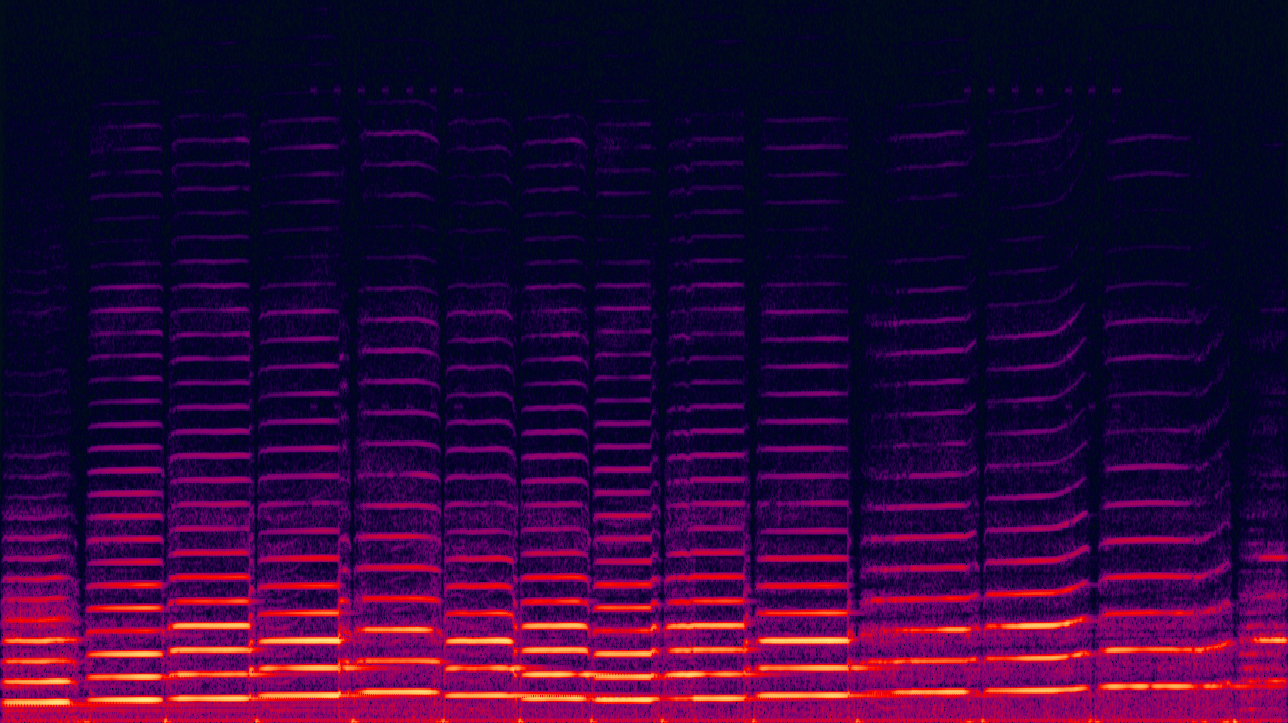
While music theory has no axiomatic foundation in modern mathematics, the basis of musical sound can be described mathematically (using acoustics) and exhibits "a remarkable array of number properties".
Though ancient Chinese, Indians, Egyptians and Mesopotamians are known to have studied the mathematical principles of sound, the Pythagoreans (in particular Philolaus and Archytas) of ancient Greece were the first researchers known to have investigated the expression of musical scales in terms of numerical ratios, particularly the ratios of small integers. Their central doctrine was that "all nature consists of harmony arising out of numbers".
From the time of Plato, harmony was considered a fundamental branch of physics, now known as musical acoustics. Early Indian and Chinese theorists show similar approaches: all sought to show that the mathematical laws of harmonics and rhythms were fundamental not only to our understanding of the world but to human well-being. Confucius, like Pythagoras, regarded the small numbers 1, 2, 3, and 4 as the source of all perfection.
Without the boundaries of rhythmic structure – a fundamental equal and regular arrangement of pulse repetition, accent, phrase and duration – music would not be possible. Modern musical use of terms like meter and measure also reflects the historical importance of music, along with astronomy, in the development of counting, arithmetic and the exact measurement of time and periodicity that is fundamental to physics.[citation needed]
The elements of musical form often build strict proportions or hypermetric structures (powers of the numbers 2 and 3).
Musical form is the plan by which a short piece of music is extended. The term "plan" is also used in architecture, to which musical form is often compared. Like the architect, the composer must take into account the function for which the work is intended and the means available, practicing economy and making use of repetition and order. The common types of form known as binary and ternary ("twofold" and "threefold") once again demonstrate the importance of small integral values to the intelligibility and appeal of music.
A musical scale is a discrete set of pitches used in making or describing music. The most important scale in the Western tradition is the diatonic scale but many others have been used and proposed in various historical eras and parts of the world. Each pitch corresponds to a particular frequency, expressed in hertz (Hz), sometimes referred to as cycles per second (c.p.s.). A scale has an interval of repetition, normally the octave. The octave of any pitch refers to a frequency exactly twice that of the given pitch.
Music and mathematics
Music theory analyzes the pitch, timing, and structure of music. It uses mathematics to study elements of music such as tempo, chord progression, form, and meter. The attempt to structure and communicate new ways of composing and hearing music has led to musical applications of set theory, abstract algebra and number theory.
While music theory has no axiomatic foundation in modern mathematics, the basis of musical sound can be described mathematically (using acoustics) and exhibits "a remarkable array of number properties".
Though ancient Chinese, Indians, Egyptians and Mesopotamians are known to have studied the mathematical principles of sound, the Pythagoreans (in particular Philolaus and Archytas) of ancient Greece were the first researchers known to have investigated the expression of musical scales in terms of numerical ratios, particularly the ratios of small integers. Their central doctrine was that "all nature consists of harmony arising out of numbers".
From the time of Plato, harmony was considered a fundamental branch of physics, now known as musical acoustics. Early Indian and Chinese theorists show similar approaches: all sought to show that the mathematical laws of harmonics and rhythms were fundamental not only to our understanding of the world but to human well-being. Confucius, like Pythagoras, regarded the small numbers 1, 2, 3, and 4 as the source of all perfection.
Without the boundaries of rhythmic structure – a fundamental equal and regular arrangement of pulse repetition, accent, phrase and duration – music would not be possible. Modern musical use of terms like meter and measure also reflects the historical importance of music, along with astronomy, in the development of counting, arithmetic and the exact measurement of time and periodicity that is fundamental to physics.[citation needed]
The elements of musical form often build strict proportions or hypermetric structures (powers of the numbers 2 and 3).
Musical form is the plan by which a short piece of music is extended. The term "plan" is also used in architecture, to which musical form is often compared. Like the architect, the composer must take into account the function for which the work is intended and the means available, practicing economy and making use of repetition and order. The common types of form known as binary and ternary ("twofold" and "threefold") once again demonstrate the importance of small integral values to the intelligibility and appeal of music.
A musical scale is a discrete set of pitches used in making or describing music. The most important scale in the Western tradition is the diatonic scale but many others have been used and proposed in various historical eras and parts of the world. Each pitch corresponds to a particular frequency, expressed in hertz (Hz), sometimes referred to as cycles per second (c.p.s.). A scale has an interval of repetition, normally the octave. The octave of any pitch refers to a frequency exactly twice that of the given pitch.
Recent media
Recent media