



Community hub
Recent from talks
Knowledge base stats:
Talk channels stats:
Members stats:
Music technology (electric)
Electric music technology refers to musical instruments and recording devices that use electrical circuits, which are often combined with mechanical technologies. Examples of electric musical instruments include the electro-mechanical electric piano (invented in 1929), the electric guitar (invented in 1931), the electro-mechanical Hammond organ (developed in 1934) and the electric bass (invented in 1935). All of these electric instruments do not produce a sound that is audible by the performer or audience in a performance setting unless they are connected to instrument amplifiers and loudspeaker cabinets, which made them sound loud enough for performers and the audience to hear. Amplifiers and loudspeakers are separate from the instrument in the case of the electric guitar (which uses a guitar amplifier), electric bass (which uses a bass amplifier) and some electric organs (which use a Leslie speaker or similar cabinet) and most electric pianos. Some electric organs and electric pianos include the amplifier and speaker cabinet within the main housing for the instrument.
Electric sound recording and reproduction are electrical or mechanical techniques and devices for the inscription and re-creation of sound waves, such as spoken voice, singing, instrumental music, or sound effects. Acoustic analog recording is achieved by a small microphone diaphragm that can record sound waves on a phonograph (in which a stylus senses grooves on a record) or magnetic tape. The first practical sound recording and reproduction device was the mechanical phonograph cylinder, invented by Thomas Edison in 1877 and patented in 1878. The next major technical development was the invention of the gramophone disc in 1889. For much of the 20th century, records were the most common way of selling sound recordings. The widespread availability of records and the development of radio broadcasting enabled a much larger proportion of people to listen to songs and pieces performed by the top artists, enabling the development of national and even international musical stars. In the 1970s, the compact cassette became a major consumer audio format. Advances in electronic and mechanical miniaturization led to the development of the Sony Walkman, a pocket-sized cassette player introduced in 1979, which allowed consumers to listen to their favourite albums outside of their home.
An electric piano is an electric musical instrument which produces sounds when a performer presses the keys of the piano-style musical keyboard. Pressing keys causes mechanical hammers to strike metal strings or tines, leading to vibrations which are converted into electrical signals by magnetic pickups, which are then connected to an instrument amplifier and loudspeaker to make a sound loud enough for the performer and audience to hear. Unlike a synthesizer, the electric piano is not an electronic instrument. Instead, it is an electro-mechanical instrument. Some early electric pianos used lengths of wire to produce the tone, like a traditional piano. Smaller electric pianos used short slivers of steel, metal tines or short wires to produce the tone. The earliest electric pianos were invented in the late 1920s; the 1929 Neo-Bechstein electric grand piano was among the first. Probably the earliest stringless model was Lloyd Loar's Vivi-Tone Clavier. A few other noteworthy producers of electric pianos include Baldwin Piano and Organ Company and the Wurlitzer company.
Early electric piano recordings include Duke Ellington's in 1955 and Sun Ra's India as well as other tracks from the 1956 sessions included on his second album Super Sonic Jazz (aka Super Sonic Sounds). The popularity of the electric piano began to grow in the late 1950s after Ray Charles's 1959 hit record "What'd I Say", reaching its height during the 1970s, after which they were progressively displaced by more lightweight electronic pianos capable of piano-like sounds without the disadvantages of electric pianos' heavy weight and moving mechanical parts. Another factor driving their development and acceptance was the progressive electrification of popular music and the need for a portable keyboard instrument capable of high-volume amplification. Musicians adopted a number of types of domestic electric pianos for rock and pop use. This encouraged their manufacturers to modify them for stage use and then develop models primarily intended for stage use.
Digital electronic stage pianos have largely replaced most of the original electro-mechanical instruments in the 2000s, due to the small size, low weight and versatility of digital instruments, which can produce a huge range of tones besides piano tones (e.g., emulations of Hammond organ sounds, synthesizer sounds, etc.). However, some performers still perform and record with vintage electric pianos. In 2009, Fender Rhodes produced a new line of electro-mechanical pianos, known as the Rhodes Mark 7 followed by an offering from Vintage Vibe.
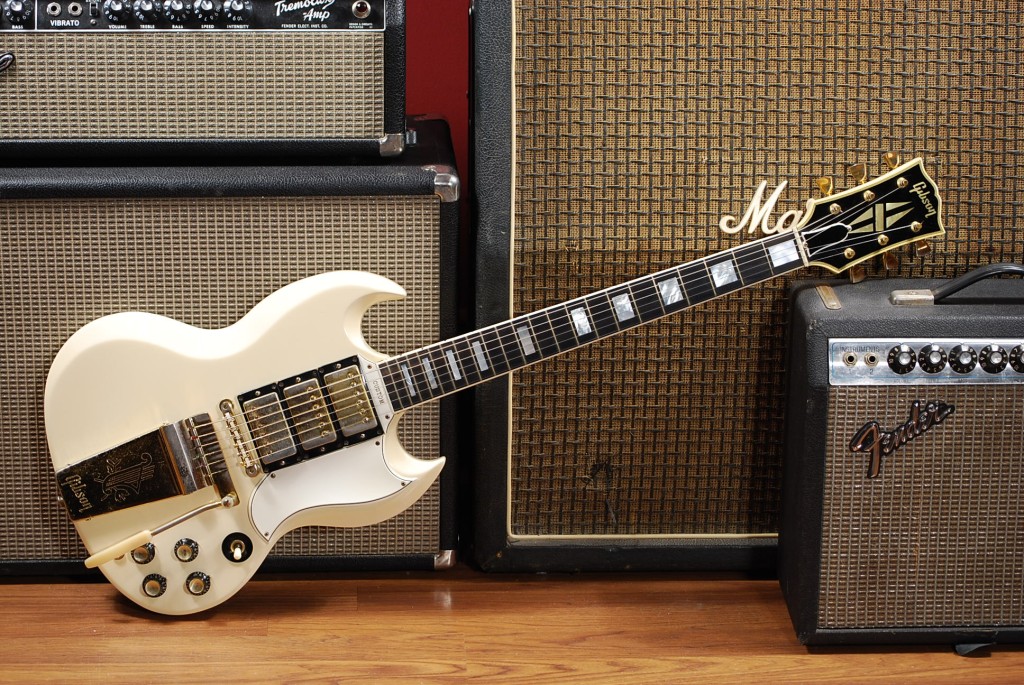
An electric guitar is a guitar that uses a pickup to convert the vibration of its strings into electrical impulses. The most common guitar pickup uses the principle of direct electromagnetic induction. The signal generated by an electric guitar is too weak to drive a loudspeaker, so it is amplified before being sent to a loudspeaker. The output of an electric guitar is an electric signal, and the signal can easily be altered by electronic circuits to add color to the sound. Often the signal is modified using electronic effects such as reverb and distortion.
Invented in 1931, the electric guitar became a necessity as jazz guitarists sought to amplify their sound in the big band format. Early proponents of the electric guitar on record included Les Paul, Lonnie Johnson, Sister Rosetta Tharpe, T-Bone Walker, and Charlie Christian. During the 1950s and 1960s, the electric guitar became the most important instrument in pop music. It has evolved into an instrument that is capable of a multitude of sounds and styles. It served as a major component in the development of electric blues, rock and roll, rock music, and many other genres of music.
Electric guitar design and construction vary greatly in the shape of the body and the configuration of the neck, bridge, and pickups. Guitars have a fixed bridge or a spring-loaded hinged bridge that lets players bend notes or chords up or down in pitch or perform a vibrato. The sound of a guitar can be modified by new playing techniques such as string bending, tapping, hammering on, using audio feedback, or slide guitar playing. There are several types of electric guitar, including the solid-body guitar, various types of hollow-body guitars, the seven-string guitar, which typically adds a low B string below the low E, and the twelve-string electric guitar, which has six pairs of strings.
Hub AI
Music technology (electric) AI simulator
(@Music technology (electric)_simulator)
Music technology (electric)
Electric music technology refers to musical instruments and recording devices that use electrical circuits, which are often combined with mechanical technologies. Examples of electric musical instruments include the electro-mechanical electric piano (invented in 1929), the electric guitar (invented in 1931), the electro-mechanical Hammond organ (developed in 1934) and the electric bass (invented in 1935). All of these electric instruments do not produce a sound that is audible by the performer or audience in a performance setting unless they are connected to instrument amplifiers and loudspeaker cabinets, which made them sound loud enough for performers and the audience to hear. Amplifiers and loudspeakers are separate from the instrument in the case of the electric guitar (which uses a guitar amplifier), electric bass (which uses a bass amplifier) and some electric organs (which use a Leslie speaker or similar cabinet) and most electric pianos. Some electric organs and electric pianos include the amplifier and speaker cabinet within the main housing for the instrument.
Electric sound recording and reproduction are electrical or mechanical techniques and devices for the inscription and re-creation of sound waves, such as spoken voice, singing, instrumental music, or sound effects. Acoustic analog recording is achieved by a small microphone diaphragm that can record sound waves on a phonograph (in which a stylus senses grooves on a record) or magnetic tape. The first practical sound recording and reproduction device was the mechanical phonograph cylinder, invented by Thomas Edison in 1877 and patented in 1878. The next major technical development was the invention of the gramophone disc in 1889. For much of the 20th century, records were the most common way of selling sound recordings. The widespread availability of records and the development of radio broadcasting enabled a much larger proportion of people to listen to songs and pieces performed by the top artists, enabling the development of national and even international musical stars. In the 1970s, the compact cassette became a major consumer audio format. Advances in electronic and mechanical miniaturization led to the development of the Sony Walkman, a pocket-sized cassette player introduced in 1979, which allowed consumers to listen to their favourite albums outside of their home.
An electric piano is an electric musical instrument which produces sounds when a performer presses the keys of the piano-style musical keyboard. Pressing keys causes mechanical hammers to strike metal strings or tines, leading to vibrations which are converted into electrical signals by magnetic pickups, which are then connected to an instrument amplifier and loudspeaker to make a sound loud enough for the performer and audience to hear. Unlike a synthesizer, the electric piano is not an electronic instrument. Instead, it is an electro-mechanical instrument. Some early electric pianos used lengths of wire to produce the tone, like a traditional piano. Smaller electric pianos used short slivers of steel, metal tines or short wires to produce the tone. The earliest electric pianos were invented in the late 1920s; the 1929 Neo-Bechstein electric grand piano was among the first. Probably the earliest stringless model was Lloyd Loar's Vivi-Tone Clavier. A few other noteworthy producers of electric pianos include Baldwin Piano and Organ Company and the Wurlitzer company.
Early electric piano recordings include Duke Ellington's in 1955 and Sun Ra's India as well as other tracks from the 1956 sessions included on his second album Super Sonic Jazz (aka Super Sonic Sounds). The popularity of the electric piano began to grow in the late 1950s after Ray Charles's 1959 hit record "What'd I Say", reaching its height during the 1970s, after which they were progressively displaced by more lightweight electronic pianos capable of piano-like sounds without the disadvantages of electric pianos' heavy weight and moving mechanical parts. Another factor driving their development and acceptance was the progressive electrification of popular music and the need for a portable keyboard instrument capable of high-volume amplification. Musicians adopted a number of types of domestic electric pianos for rock and pop use. This encouraged their manufacturers to modify them for stage use and then develop models primarily intended for stage use.
Digital electronic stage pianos have largely replaced most of the original electro-mechanical instruments in the 2000s, due to the small size, low weight and versatility of digital instruments, which can produce a huge range of tones besides piano tones (e.g., emulations of Hammond organ sounds, synthesizer sounds, etc.). However, some performers still perform and record with vintage electric pianos. In 2009, Fender Rhodes produced a new line of electro-mechanical pianos, known as the Rhodes Mark 7 followed by an offering from Vintage Vibe.
An electric guitar is a guitar that uses a pickup to convert the vibration of its strings into electrical impulses. The most common guitar pickup uses the principle of direct electromagnetic induction. The signal generated by an electric guitar is too weak to drive a loudspeaker, so it is amplified before being sent to a loudspeaker. The output of an electric guitar is an electric signal, and the signal can easily be altered by electronic circuits to add color to the sound. Often the signal is modified using electronic effects such as reverb and distortion.
Invented in 1931, the electric guitar became a necessity as jazz guitarists sought to amplify their sound in the big band format. Early proponents of the electric guitar on record included Les Paul, Lonnie Johnson, Sister Rosetta Tharpe, T-Bone Walker, and Charlie Christian. During the 1950s and 1960s, the electric guitar became the most important instrument in pop music. It has evolved into an instrument that is capable of a multitude of sounds and styles. It served as a major component in the development of electric blues, rock and roll, rock music, and many other genres of music.
Electric guitar design and construction vary greatly in the shape of the body and the configuration of the neck, bridge, and pickups. Guitars have a fixed bridge or a spring-loaded hinged bridge that lets players bend notes or chords up or down in pitch or perform a vibrato. The sound of a guitar can be modified by new playing techniques such as string bending, tapping, hammering on, using audio feedback, or slide guitar playing. There are several types of electric guitar, including the solid-body guitar, various types of hollow-body guitars, the seven-string guitar, which typically adds a low B string below the low E, and the twelve-string electric guitar, which has six pairs of strings.