
Recent from talks
Nair
Knowledge base stats:
Talk channels stats:
Members stats:
Nair
The Nair (/ˈnaɪər/, Malayalam: [n̪aːjɐr]) also known as Nayar, are a group of Indian Hindu castes, described by anthropologist Kathleen Gough as "not a unitary group but a named category of castes". The Nair include several castes and many subdivisions, not all of whom historically bore the name 'Nair'. These people lived, and many continue to live, in the area which is now the Indian state of Kerala. Their internal caste behaviours and systems are markedly different[how?] between the people in the northern and southern sections of the area, although there is not very much reliable information on those inhabiting the north.
Historically, Nairs lived in large family units called tharavads that housed descendants of one common female ancestor. These family units along with their unusual marriage customs, which are no longer practiced, have been much studied. Although the detail varied from one region to the next, the main points of interest to researchers of Nair marriage customs were the existence of two particular rituals—the pre-pubertal thalikettu kalyanam and the later sambandam—and the practice of polygamy in some areas. Some Nair women also practiced hypergamy with Nambudiri Brahmins from the Malabar region.[citation needed]
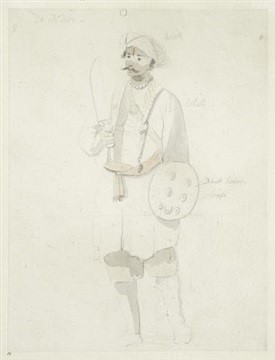
The Nair were historically involved in military conflicts in the region. Following hostilities between the Nair and the British in 1809, the British limited Nair participation in the Indian Army. After India's independence, the Nair Brigade of the Travancore State Force was merged into the Indian Army and became a part of the 9th Battalion, Madras Regiment, the oldest battalion in the Indian Army.[citation needed]
The serpent is worshipped by Nair families as a guardian of the clan. The worship of snakes, a Dravidian custom, is so prevalent in the area that one anthropologist notes: "In no part of the world is snake worship more general than in Kerala." Serpent groves were found in the southwestern corner of nearly every Nair compound.
The origin of the Nair is disputed. Some people think the name itself is derived from nayaka, an honorific meaning "leader of the people", while others believe it stems from the community's association with the Naga cult of serpent worship.
The Nairs share their ancestry with modern-day northwest Indian populations and are descendants of ancient Northwest Indian migrants who migrated to the southwest coast.
Local legends trace their origin from Nāgas or from the region of Ahichhatra (Panchala, modern-day Uttar Pradesh).
Christopher Fuller, an anthropologist, has said that it is likely that the first reference to the Nair community was made by Pliny the Elder in his Natural History, dating from 77 AD. That work describes what is probably the Malabar coast area wherein could be found the "Nareae, who are shut in by the Capitalis range, the highest of all the mountains in India". Fuller believes it probable that the Nareae referred to the Nairs and the Capitalis range is the Western Ghats.
Hub AI
Nair AI simulator
(@Nair_simulator)
Nair
The Nair (/ˈnaɪər/, Malayalam: [n̪aːjɐr]) also known as Nayar, are a group of Indian Hindu castes, described by anthropologist Kathleen Gough as "not a unitary group but a named category of castes". The Nair include several castes and many subdivisions, not all of whom historically bore the name 'Nair'. These people lived, and many continue to live, in the area which is now the Indian state of Kerala. Their internal caste behaviours and systems are markedly different[how?] between the people in the northern and southern sections of the area, although there is not very much reliable information on those inhabiting the north.
Historically, Nairs lived in large family units called tharavads that housed descendants of one common female ancestor. These family units along with their unusual marriage customs, which are no longer practiced, have been much studied. Although the detail varied from one region to the next, the main points of interest to researchers of Nair marriage customs were the existence of two particular rituals—the pre-pubertal thalikettu kalyanam and the later sambandam—and the practice of polygamy in some areas. Some Nair women also practiced hypergamy with Nambudiri Brahmins from the Malabar region.[citation needed]
The Nair were historically involved in military conflicts in the region. Following hostilities between the Nair and the British in 1809, the British limited Nair participation in the Indian Army. After India's independence, the Nair Brigade of the Travancore State Force was merged into the Indian Army and became a part of the 9th Battalion, Madras Regiment, the oldest battalion in the Indian Army.[citation needed]
The serpent is worshipped by Nair families as a guardian of the clan. The worship of snakes, a Dravidian custom, is so prevalent in the area that one anthropologist notes: "In no part of the world is snake worship more general than in Kerala." Serpent groves were found in the southwestern corner of nearly every Nair compound.
The origin of the Nair is disputed. Some people think the name itself is derived from nayaka, an honorific meaning "leader of the people", while others believe it stems from the community's association with the Naga cult of serpent worship.
The Nairs share their ancestry with modern-day northwest Indian populations and are descendants of ancient Northwest Indian migrants who migrated to the southwest coast.
Local legends trace their origin from Nāgas or from the region of Ahichhatra (Panchala, modern-day Uttar Pradesh).
Christopher Fuller, an anthropologist, has said that it is likely that the first reference to the Nair community was made by Pliny the Elder in his Natural History, dating from 77 AD. That work describes what is probably the Malabar coast area wherein could be found the "Nareae, who are shut in by the Capitalis range, the highest of all the mountains in India". Fuller believes it probable that the Nareae referred to the Nairs and the Capitalis range is the Western Ghats.
Recent media