


Community hub
Recent from talks
Contribute something
Nothing was collected or created yet.
Ned Miller
View on WikipediaKey Information


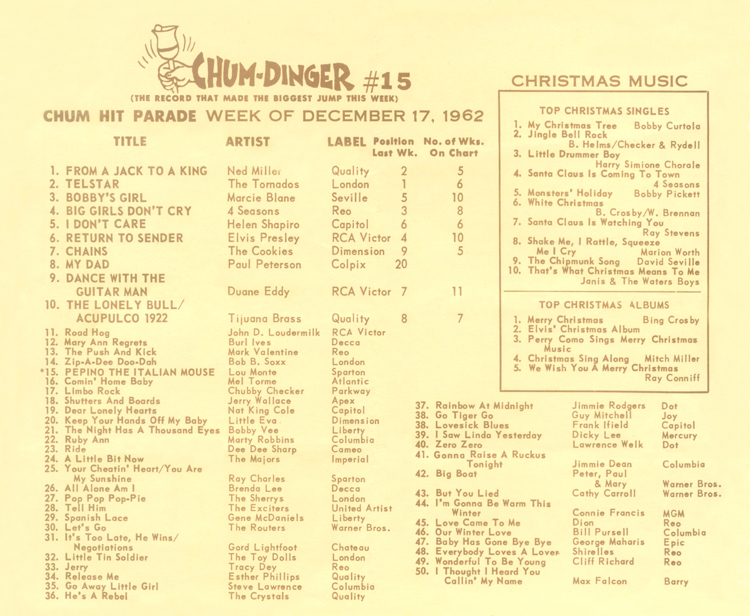
Henry Ned Miller (April 12, 1925 – March 18, 2016) was an American country music singer-songwriter. Active as a recording artist from 1956 to 1970, he is known primarily for his hit single "From a Jack to a King", a crossover hit in 1962 which reached the Top 10 on the country music, adult contemporary, and Billboard Hot 100 chart, No. 1 for five weeks in Canada, as well as reaching No. 2 in the UK singles chart.[3] He had several more chart singles in his career, although none matched the success of "From a Jack to a King". He also composed and recorded "Invisible Tears".
Biography
[edit]Miller's start as a songwriter came when he was sixteen years old.[4] He later joined the United States Marine Corps, from which he was later discharged.
In 1956, both Gale Storm and Bonnie Guitar had Top Five hits with different versions of the song "Dark Moon", which Miller co-wrote.[4] Another song he wrote, "A Fallen Star", was a country hit for Jimmy C. Newman.[5] Notable is also his uptempo song "Cave In", which in 1960 was the flip side of Warren Smith's No. 5 country hit "I Don't Believe I'll Fall In Love Today", recorded for the Liberty Records label. He also wrote and recorded the song "From a Jack to a King", which was released on Fabor Records but saw little success on the charts.[6] After being briefly signed to Capitol Records, Miller returned to Fabor and persuaded them to re-release "From a Jack to a King".[5] The song proved successful the second time around, and became a crossover hit for Miller.[4] It sold over two million copies by July 1963, and was awarded a gold disc.[7] It was a big hit also in the United Kingdom, where it peaked at No. 2 on the singles chart (spending four consecutive weeks there) and became the ninth best-selling single of 1963 in the UK in the process[8] (making Miller the only American artist to reach the Top Ten best-sellers of the year in the UK that year).
Miller was not particularly interested in his singing career, and rarely toured owing to stage fright.[6] He gave up recording in the 1970s and soon moved to Prescott, Arizona, and later to Las Vegas, Nevada.[6]
Country music artist Ricky Van Shelton covered "From a Jack to a King" in the 1980s; his version reached No. 1 on the country music chart.[4]
Discography
[edit]Albums
[edit]| Year | Album | Chart positions | Label | |
|---|---|---|---|---|
| U.S. Country | U.S. | |||
| 1963 | From a Jack to a King | 50 | Fabor | |
| 1965 | Ned Miller Sings the Songs of Ned Miller | Capitol | ||
| The Best of Ned Miller | 28 | |||
| 1967 | Teardrop Lane | 22 | ||
| 1968 | In the Name of Love | |||
| 1970 | Ned Miller's Back | Republic | ||
| 1981 | From a Jack to a King | Plantation | ||
Singles
[edit]| Year | Single | U.S. Country | U.S. | U.S. AC | CAN | UK[9] | IRE | Album |
|---|---|---|---|---|---|---|---|---|
| 1957 | "Roll O' Rollin' Stone" | — | — | — | — | — | — | Singles only |
| "From a Jack to a King" | — | — | — | — | — | — | ||
| "Lights in the Street" | — | — | — | — | — | — | ||
| 1958 | "Gypsy" | — | — | — | — | — | — | |
| 1959 | "Ring the Bell for Johnny" | — | — | — | — | — | — | |
| 1961 | "Cold Grey Bars" | — | — | — | — | — | — | |
| "Dark Moon" | — | — | — | — | — | — | ||
| 1962 | "From a Jack to a King" (re-release) | 2 | 6 | 3 | 1 | 2 | 1 | From a Jack to a King |
| 1963 | "One Among the Many" | 27 | — | — | — | — | — | |
| "Another Fool Like Me" | 28 | — | — | — | — | — | Singles only | |
| "Big Love" | — | — | — | — | — | — | ||
| "Magic Moon" | — | — | — | — | — | — | ||
| 1964 | "Invisible Tears" | 13 | 131 | — | — | — | — | The Best |
| 1965 | "Do What You Do Do Well" | 7 | 52 | — | 29[10] | 48 | — | |
| "Two Voices, Two Shadows, Two Faces" | — | — | — | — | — | — | Songs of Ned Miller | |
| "Whistle Walkin'" | 28 | — | — | — | — | — | ||
| "Down the Street" | — | — | — | — | — | — | ||
| 1966 | "Lovin' Pains" | — | — | — | — | — | — | The Best |
| "Summer Roses" | 39 | — | — | — | — | — | Teardrop Lane | |
| "Teardrop Lane" | 44 | — | — | — | — | — | ||
| 1967 | "Echo of the Pines" | — | — | — | — | — | — | Singles only |
| "Hobo" | 53 | — | — | — | — | — | ||
| 1968 | "Only a Fool" | 61 | — | — | — | — | — | In the Name of Love |
| 1969 | "Autumn Winds" | — | — | — | — | — | — | Singles only |
| 1970 | "Breakin'" | — | — | — | — | — | — | |
| "Lover's Song" | 39 | — | — | — | — | — | Ned Miller's Back | |
| "Back to Oklahoma" | — | — | — | — | — | — |
References
[edit]- ^ Whitburn, Joel (2008). Hot Country Songs 1944 to 2008. Record Research, Inc. p. 277. ISBN 978-0-89820-177-2.
- ^ Slotnik, Daniel E. (3 May 2016). "Ned Miller, a Country Songwriter Who Gave Up Singing, is Dead at 90". The New York Times. Retrieved 4 May 2016.
- ^ "CHUM Hit Parade - December 17, 1962". Chumtribute.com.
- ^ a b c d AllMusic ((( Ned Miller > Biography )))
- ^ a b Colin Larkin, ed. (2002). The Virgin Encyclopedia of Fifties Music (Third ed.). Virgin Books. pp. 287/8. ISBN 1-85227-937-0.
- ^ a b c "Ned Miller Biography". Oldies.com.
- ^ Murrells, Joseph (1978). The Book of Golden Discs (2nd ed.). London: Barrie and Jenkins Ltd. p. 148. ISBN 0-214-20512-6.
- ^ "Sixties City - Pop Music Charts - Every Week Of The Sixties". Sixtiescity.net.
- ^ Roberts, David (2006). British Hit Singles & Albums (19th ed.). London: Guinness World Records Limited. p. 367. ISBN 1-904994-10-5.
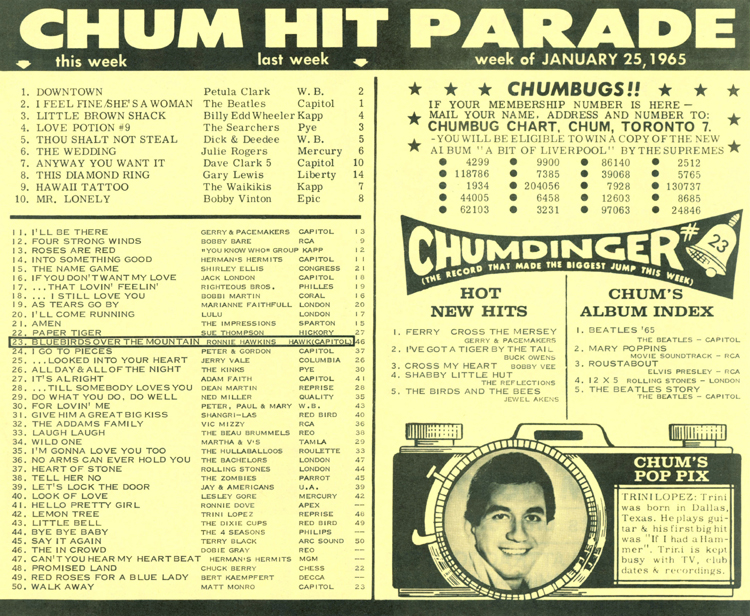
- ^ "CHUM Hit Parade - January 25, 1965". Chumtribute.com.
| International | |
|---|---|
| National | |
| Artists | |
| People | |

Ned Miller
View on GrokipediaEarly Life
Birth and Upbringing
Henry Ned Miller was born on April 12, 1925, in Rains, a small coal mining community in Carbon County, Utah.[6] He was the tenth of ten children born to Charles Henry Miller, a 29-year-old resident of the area, and Marvella Winn, then 21.[6] The family soon relocated to Salt Lake City while Miller was still a young child, where they settled into urban life amid the challenges of the Great Depression.[7] Growing up in Salt Lake City during the economic turmoil of the 1930s profoundly shaped Miller's early years. The Miller family's modest circumstances reflected the broader struggles of Depression-era families, fostering a resilient, self-reliant worldview in the young Miller. Miller's interest in music emerged during his teenage years in Salt Lake City. At age nine, he purchased his first guitar by splitting and selling wood, and his mother taught him the basics of playing it.[8] By 16, while still in high school, he began self-taught songwriting, experimenting with country music styles that would later define his career.[9] These early creative pursuits provided an outlet that he continued into adulthood.Military Service and Early Influences
Following his graduation from Murray High School near Salt Lake City, Henry Ned Miller enlisted in the United States Marine Corps and served three years during World War II in the Pacific Theater.[1][9] He was stationed at significant sites including Midway, Okinawa, and Iwo Jima, contributing to the Allied efforts in the region.[8][9] Miller was honorably discharged around 1946 at the age of 21.[10][11] Upon returning to civilian life, Miller utilized the GI Bill to attend college briefly before taking on various odd jobs, including as a pipe fitter and air-conditioning installer, to support himself.[8][12] He resettled in Vernal, Utah, where he worked in local radio, gaining early exposure to broadcasting and music performance in a small-town setting.[10] This period of transition, marked by modest employment and reflection on his rural Utah roots, laid the groundwork for themes of isolation and simplicity that would later appear in his work.[1] By his mid-20s, around 1950, Miller had begun more serious attempts at professional songwriting, building on unpublished compositions he had started as a teenager at age 16.[13][12] In 1956, at age 31, Miller relocated to California to pursue songwriting full-time, marking the end of his immediate post-service phase and the start of his dedicated music endeavors.[10][12] His early experiences in the Marines and subsequent return to Utah's sparse landscapes fostered an introspective approach to creativity, though he initially kept his writings private and unpublished.[8][13]Music Career
Songwriting Beginnings
Ned Miller began his professional songwriting career in the mid-1950s after relocating to Los Angeles in 1956 following his service in the United States Marine Corps.[14] He signed with the small independent label Fabor Records, a subsidiary of Abbott Records owned by Fabor Robison, where he focused on composing country and pop material.[14] Early efforts included minor and unpublished works, such as "A Falling Star," which received limited attention through Fabor's distribution deal with Dot Records in 1957, though neither achieved significant commercial success at the time.[15] Miller's breakthrough as a songwriter came with "Dark Moon," a melancholic ballad he composed solo in 1956.[1] The song was first recorded by Bonnie Guitar in early 1957 on Dot Records, reaching No. 6 on the Billboard Hot 100 and spending 22 weeks on the chart, marking one of the earliest crossover successes for a female country artist.[16] Gale Storm's competing cover, also released on Dot in March 1957, climbed to No. 4 on the Billboard Hot 100, further amplifying the song's popularity and generating substantial royalties that supported Miller's ongoing work in the industry.[17] Despite these hits for other artists, Miller faced challenges in establishing himself, including initial commercial failures with his own compositions and recordings on Fabor and Dot, such as the 1957 release of "From a Jack to a King," which did not chart.[14] Competition from label-sanctioned covers, like Storm's version of "Dark Moon," often overshadowed original efforts and complicated self-promotion in the competitive Los Angeles music scene. Personal stage fright began to emerge during early demo sessions, adding to the difficulties of pitching material.[1] These hurdles persisted through the late 1950s and into 1960, with additional minor releases on independent labels yielding limited recognition.Breakthrough Hit and Recordings
In 1962, Ned Miller transitioned from primarily a songwriter to a recording artist with the re-release of his self-penned composition "From a Jack to a King" on Fabor Records. Originally written and recorded in 1957 for Fabor Records, where it achieved little commercial success, Miller convinced label owner Fabor Robison to reissue a new version after building his reputation through earlier hits like "Dark Moon." The song's lyrics metaphorically depict a gambler's unlikely victory in love, drawing from themes of personal transformation that echoed Miller's own journey from obscurity to recognition.[18][8] The single quickly became a crossover phenomenon, peaking at #2 on the U.S. Billboard Hot Country Singles chart for four weeks and spending 19 weeks on the tally, while reaching #6 on the Billboard Hot 100 and #3 on the Adult Contemporary chart. Internationally, it topped the Canadian RPM singles chart for five weeks starting January 7, 1963, and climbed to #2 on the UK Singles Chart, where it remained for 21 weeks. By July 1963, the record had sold over one million copies worldwide.[19][20][21][22] Despite Miller's well-documented reluctance to perform publicly due to severe stage fright, the song's broad appeal led to media exposure, which helped amplify its pop and country radio play. This success marked Fabor's biggest hit and elevated Miller to national prominence, blending heartfelt country storytelling with accessible pop sensibilities.[23][11] Following the breakthrough, Miller capitalized on the momentum with follow-up singles on Fabor, including the 1964 release "Invisible Tears," co-written with his wife Sue Miller, which reached #13 on the Billboard Hot Country Singles chart. Other early post-hit efforts like "Old Restless Ocean" and "Heart Without a Heartache" maintained moderate country airplay, though none replicated the crossover scale of his signature track. In 1965, seeking broader distribution, Miller signed with Capitol Records, where he continued recording self-composed material aimed at the country market.[24]Later Releases and Challenges
Following the breakthrough success of "From a Jack to a King" in 1962, Ned Miller's recording career continued into the mid-1960s with a move to Capitol Records in 1965.[25] During his tenure there from 1965 to 1968, he released four albums, including The Songs of Ned Miller (1965), The Best of Ned Miller (1965), Teardrop Lane (1967), and In the Name of Love (1968), while scoring five minor country hits characterized by sweet, melancholic themes.[4] Representative examples include "Whistle Walkin'" (1965, peaking at #28 on the Billboard Hot Country Songs chart) and "Summer Roses" (1966, #39), which exemplified his introspective style but failed to replicate earlier commercial peaks.[25][26] Over the course of the 1960s, Miller amassed a total of 11 chart hits on the Billboard Hot Country Songs chart, with three of them—"From a Jack to a King" (#2 country, #6 Hot 100), "Do What You Do Do Well" (#7 country, #52 Hot 100), and "Invisible Tears" (#13 country, #131 bubbling under Hot 100)—crossing over to the pop charts.[12][25] However, his longstanding stage fright increasingly hampered career momentum, as he avoided live performances and tours essential for promotion in the country music industry.[1] This reluctance contributed to his departure from Capitol in 1968, after which he briefly recorded for smaller labels without significant success.[8] By 1970, Miller retired from recording as a performer, releasing his final album Ned Miller’s Back on Republic Records that year, which included the minor hit "The Lover's Song" (#39 country).[25][27] He subsequently shifted focus to behind-the-scenes songwriting, leveraging his compositional talents away from the spotlight.[28]Personal Life
Stage Fright and Reclusiveness
Ned Miller experienced severe stage fright from the early days of his music career in the mid-1950s, particularly during promotional efforts for his initial recordings on the Fabor label. This condition caused intense anxiety that made live performances unbearable, leading him to completely avoid tours and public shows despite the success of songs like "Dark Moon."[29] His reclusiveness became legendary in the industry, marked by an extreme reluctance to engage in interviews or personal appearances; he preferred the isolation of studio songwriting and recording over any form of publicity. Contemporaries noted his shyness as profound, with anecdotes of Miller sending a stand-in friend to perform under his name at events he could not face. At Capitol Records, producer Ken Nelson worked with him on albums, but Miller's aversion to promotion frustrated label expectations, contributing to his limited visibility even after hits crossed over to pop charts.[1][23] The psychological impact of this phobia profoundly altered Miller's professional path, causing him to forgo opportunities for mainstream stardom that eluded many peers despite his chart successes. He retired from performing and recording by 1970, later expressing in liner notes for a 1991 reissue that the industry suited only those who enjoyed the stage: “If you love shows and like to perform, it’s a great business, but if you don’t, you shouldn’t be in it.” This withdrawal mirrored the reclusiveness of other artists hampered by similar afflictions, ultimately channeling his energies solely into private songwriting before ceasing that as well in the mid-1970s.[3][1]Family and Later Years
Miller married Clara Louise "Sue" Magers on November 26, 1945, in Salt Lake City, Utah.[6] The couple co-wrote several songs during his career, including the 1965 hit "Behind the Tear," which Sonny James took to No. 1 on the country charts for three weeks.[10] They raised five children—daughters Lynda, Karen, Rhonda, and Leslie, and son Jack—and the family maintained a low-profile life, aligning with Miller's preference for privacy amid his reclusiveness.[3] After retiring from recording in 1970, Miller and his family settled into a quiet lifestyle in the American Southwest.[10] He relocated from California to Prescott, Arizona, in the early 1970s, seeking a more secluded environment.[30] Later, the family moved to Las Vegas, Nevada, where they resided for several decades, continuing occasional songwriting collaborations, such as contributions to other artists' work through the 1970s.[30] In retirement, Miller focused on family and personal pursuits, avoiding public attention while living in Nevada.[3] The family's emphasis on privacy extended through his later decades, with no major public disclosures about health challenges prior to 2016.[1] By the early 2010s, they had relocated to White City, Oregon, to remain close-knit in a peaceful setting.[1]Death and Legacy
Death
Ned Miller died on March 18, 2016, in Medford, Oregon, at the age of 90.[1][31] The cause of death was not publicly disclosed.[1][11] His passing was confirmed to the press by his wife and fellow songwriter, Sue Miller, with the news first reported in an obituary published by The New York Times on May 4, 2016.[1][11][3] Immediate family members, including his wife, sister Bonnie Powell, four daughters, son, grandchildren, and great-grandchildren, were notified privately, reflecting the reclusive nature of his later years that contributed to the delayed public announcement.[1][3] No details regarding a funeral or memorial service were reported in contemporary accounts, though he was buried at Dallas–Fort Worth National Cemetery in Dallas, Texas.[1][31][30] There have been no significant updates on the matter since 2016.[1][31]Influence and Covers
Ned Miller's song "From a Jack to a King," originally a modest hit in 1962 that peaked at No. 2 on the Billboard country chart and No. 6 on the Hot 100, achieved enduring popularity through numerous covers by prominent country artists.[32] Ricky Van Shelton's 1988 rendition became a major success, topping the Billboard Hot Country Singles chart for one week in early 1989 and solidifying the song's status as a country standard.[33][34] Other notable early covers include Jim Reeves' 1963 version, which highlighted the song's gentle balladry, and recordings by Ferlin Husky, Bill Anderson, Slim Whitman, Hank Snow, and David Houston in the 1960s, each adapting its themes of rags-to-riches romance to the evolving Nashville Sound.[35] Internationally, the track inspired adaptations such as the German "Wenn die Sonne versinkt" by Lilibert in 1963 and the Danish "Jeg har uheld i spil" by Sejr Volmer-Sørensen in 1970, extending its reach beyond American country audiences.[35] Miller's songwriting extended beyond his own recordings, influencing the country genre through compositions recorded by artists like Sonny James, whose interpretations of Miller's melancholic tunes contributed to the polished, emotional style of mid-1960s Nashville.[10] Songs such as "Dark Moon," "Do What You Do Do Well," and "Invisible Tears" exemplified Miller's pioneering approach to introspective, heartbreak-driven narratives that blended pop accessibility with country roots, helping shape the Nashville Sound's emphasis on sophisticated string arrangements and heartfelt storytelling.[1] His work prefigured the genre's crossover potential, with covers by non-country figures like Pat Boone and even Elvis Presley underscoring its broad appeal.[23] Posthumously, Miller's catalog received renewed attention through comprehensive reissues, notably Bear Family Records' 1991 compilation From a Jack to a King, a 31-track anthology that gathered his Fabor and Dot recordings and introduced his oeuvre to new generations of listeners.[32] This release, along with obituaries highlighting his shy persona and aversion to performing, positioned Miller as a archetype for later reclusive songwriters in country music, such as those who prioritized composition over the spotlight, echoing his own withdrawal from public life after the 1960s.[23] His cultural footprint endures in country music histories as a symbol of understated success, where limited personal visibility contrasted with the widespread adoption of his songs in defining the genre's emotional depth and commercial viability during the post-war era.[1]References
- https://en.wikipedia-on-ipfs.org/wiki/List_of_number-one_singles_of_1963_%28Canada%29