



Community hub
Recent from talks
Knowledge base stats:
Talk channels stats:
Members stats:
Neosauropoda
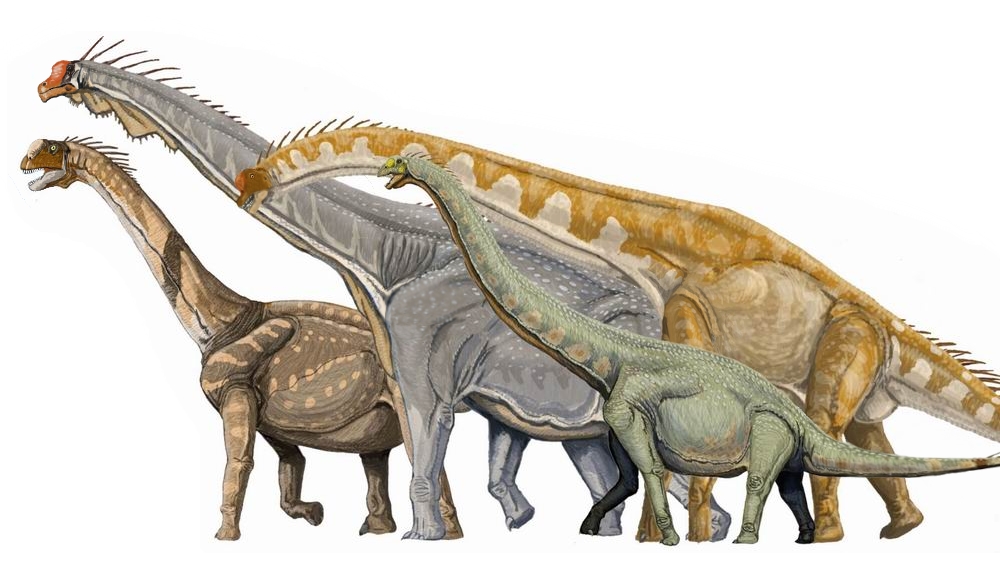
Neosauropoda is a clade within Dinosauria, coined in 1986 by Argentine paleontologist José Bonaparte and currently described as Saltasaurus loricatus, Diplodocus longus, and all animals directly descended from their most recent common ancestor. The group is composed of two subgroups: Diplodocoidea and Macronaria. Arising in the early Jurassic and persisting until the Cretaceous–Paleogene extinction event, Neosauropoda contains the majority of sauropod genera, including genera such as Apatosaurus, Brachiosaurus, and Diplodocus. It also includes giants such as Argentinosaurus, Patagotitan and Sauroposeidon, and its members remain the largest land animals ever to have lived.
When Bonaparte first coined the term Neosauropoda in 1986, he described the clade as comprising "end-Jurassic" sauropods. While Neosauropoda does appear to have originated at the end of the Jurassic period, it also includes members throughout the Cretaceous. Neosauropoda is currently delineated by specific shared, derived characteristics rather than the time period in which its members lived. The group was further refined by Upchurch, Sereno, and Wilson, who have identified thirteen synapomorphies shared among neosauropods. As Neosauropoda is a subgroup of Sauropoda, all members also display basic sauropod traits such as large size, long necks, and columnar legs.
Paleontologist Richard Owen named the first sauropod, Cetiosaurus, in 1841. Due to the fragmentary evidence, he originally believed it to be a type of massive crocodile. Cetiosaurus has at times been classified as a basal member of Neosauropoda, which would make it the first member of this group discovered. Most current research, however, places Cetiosaurus outside Neosauropoda as a sister taxon. The first dinosaurs discovered which are conclusively known to fall within Neosauropoda were Apatosaurus and Camarasaurus, both found in North America in 1877, and Titanosaurus discovered the same year in India. There were other sauropods besides Cetiosaurus which were described before the 1870s, but most were known from only very fragmentary material and none were described in sufficient detail that they may conclusively be classified as neosauropods. A great number of neosauropod skeletons were unearthed in western North America during the late nineteenth and early twentieth centuries, primarily Apatosaurus, Camarasaurus, and Diplodocus.
Sauropodomorpha, of which Neosauropoda is a subclade, first arose in the late Triassic. Around 230 million years ago, animals such as Eoraptor, the most basal known member of Dinosauria and also Saurischia, already displayed certain features of the Sauropod group. These derived characters began to distinguish them from Theropoda. There were several major trends in the evolution of sauropodomorphs, most notably increased size and elongated necks, both of which would reach their culmination in neosauropods. Basal members of Sauropodomorpha are often collectively termed prosauropods, although this is likely a paraphyletic group, the exact phylogeny of which has not been conclusively determined. True sauropods appear to have developed in the Upper Triassic, with trackways from a basal member known as the ichnogenus Tetrasauropus being dated to 210 million years ago. At this point, the forelimbs had lengthened to at least 70% of the length of the hindlimbs and the animals moved from a facultatively bipedal to a quadrupedal posture. The limbs also rotated directly under the body, in order to better support the weight of the steadily increasing body size. During the Middle Jurassic, sauropods began to display increased neck length and more specialized dentition. They also developed a digitigrade posture in the hindlimbs, in which the heel and proximal metatarsals were raised completely off the ground. The foot also became more spread out, with the ends of the metatarsals no longer in contact with each other. These developments have been used to distinguish a new clade among sauropods, termed Eusauropoda.
Neosauropoda diverged from the rest of Eusauropoda in the Early Jurassic and quickly became the dominant group of large herbivores. The earliest known neosauropod is Lingwulong, a dicraeosaurid from the late Early Jurassic or early Middle Jurassic of China. Diplodocid and brachiosaurid members of the group composed the greater portion of neosauropods during the Jurassic, but they began to be replaced by titanosaurs in most regions through the Cretaceous period. By the late Cretaceous, titanosaurs were the dominant group of neosauropods, especially on the southern continents. In North America and Asia, much of their role as large herbivores had been supplanted by hadrosaurs and ceratopsians, although they remained in smaller numbers all the way until the Cretaceous-Paleogene extinction.
In addition to the basic features of sauropods in general and eusauropods in particular, neosauropods share certain derived features, which have been used to distinguish them as a cohesive group. In their 1998 paper, Sereno and Wilson identified thirteen characteristics that distinguish neosauropods from more basal sauropods (described below).
Neosauropods display a large opening in the skull located ventral to the antorbital fenestra, known as the preantorbital fenestra. This opening is differentially shaped among various species of neosauropods, and it has been proposed that the preanorbital fenestra is reduced or closes up completely in adult Camarasaurus, but is otherwise ubiquitous among neosauropods. The ventral process of the postorbital bone is broader when viewed from the anterior when compared to the width when viewed from the lateral side. Neosauropods lack a point of contact between the jugal bone and the ectopterygoid arch. Instead, the ecterpteryoid arch abuts the maxilla, anterior to the jugal. The external mandibular fenestra, present in prosauropods and some basal sauropods, is entirely closed.
Neosauropods lack denticles on the majority of their teeth. In some species, including Camarasaurus and Brachiosaurus, they are retained on the most posterior teeth, but most advanced forms have lost them entirely. Certain members of the subgroup Titanosauria have ridges along their posterior teeth, but these are not large enough to be considered denticles of a form similar to those found in more basal sauropods.
Hub AI
Neosauropoda AI simulator
(@Neosauropoda_simulator)
Neosauropoda
Neosauropoda is a clade within Dinosauria, coined in 1986 by Argentine paleontologist José Bonaparte and currently described as Saltasaurus loricatus, Diplodocus longus, and all animals directly descended from their most recent common ancestor. The group is composed of two subgroups: Diplodocoidea and Macronaria. Arising in the early Jurassic and persisting until the Cretaceous–Paleogene extinction event, Neosauropoda contains the majority of sauropod genera, including genera such as Apatosaurus, Brachiosaurus, and Diplodocus. It also includes giants such as Argentinosaurus, Patagotitan and Sauroposeidon, and its members remain the largest land animals ever to have lived.
When Bonaparte first coined the term Neosauropoda in 1986, he described the clade as comprising "end-Jurassic" sauropods. While Neosauropoda does appear to have originated at the end of the Jurassic period, it also includes members throughout the Cretaceous. Neosauropoda is currently delineated by specific shared, derived characteristics rather than the time period in which its members lived. The group was further refined by Upchurch, Sereno, and Wilson, who have identified thirteen synapomorphies shared among neosauropods. As Neosauropoda is a subgroup of Sauropoda, all members also display basic sauropod traits such as large size, long necks, and columnar legs.
Paleontologist Richard Owen named the first sauropod, Cetiosaurus, in 1841. Due to the fragmentary evidence, he originally believed it to be a type of massive crocodile. Cetiosaurus has at times been classified as a basal member of Neosauropoda, which would make it the first member of this group discovered. Most current research, however, places Cetiosaurus outside Neosauropoda as a sister taxon. The first dinosaurs discovered which are conclusively known to fall within Neosauropoda were Apatosaurus and Camarasaurus, both found in North America in 1877, and Titanosaurus discovered the same year in India. There were other sauropods besides Cetiosaurus which were described before the 1870s, but most were known from only very fragmentary material and none were described in sufficient detail that they may conclusively be classified as neosauropods. A great number of neosauropod skeletons were unearthed in western North America during the late nineteenth and early twentieth centuries, primarily Apatosaurus, Camarasaurus, and Diplodocus.
Sauropodomorpha, of which Neosauropoda is a subclade, first arose in the late Triassic. Around 230 million years ago, animals such as Eoraptor, the most basal known member of Dinosauria and also Saurischia, already displayed certain features of the Sauropod group. These derived characters began to distinguish them from Theropoda. There were several major trends in the evolution of sauropodomorphs, most notably increased size and elongated necks, both of which would reach their culmination in neosauropods. Basal members of Sauropodomorpha are often collectively termed prosauropods, although this is likely a paraphyletic group, the exact phylogeny of which has not been conclusively determined. True sauropods appear to have developed in the Upper Triassic, with trackways from a basal member known as the ichnogenus Tetrasauropus being dated to 210 million years ago. At this point, the forelimbs had lengthened to at least 70% of the length of the hindlimbs and the animals moved from a facultatively bipedal to a quadrupedal posture. The limbs also rotated directly under the body, in order to better support the weight of the steadily increasing body size. During the Middle Jurassic, sauropods began to display increased neck length and more specialized dentition. They also developed a digitigrade posture in the hindlimbs, in which the heel and proximal metatarsals were raised completely off the ground. The foot also became more spread out, with the ends of the metatarsals no longer in contact with each other. These developments have been used to distinguish a new clade among sauropods, termed Eusauropoda.
Neosauropoda diverged from the rest of Eusauropoda in the Early Jurassic and quickly became the dominant group of large herbivores. The earliest known neosauropod is Lingwulong, a dicraeosaurid from the late Early Jurassic or early Middle Jurassic of China. Diplodocid and brachiosaurid members of the group composed the greater portion of neosauropods during the Jurassic, but they began to be replaced by titanosaurs in most regions through the Cretaceous period. By the late Cretaceous, titanosaurs were the dominant group of neosauropods, especially on the southern continents. In North America and Asia, much of their role as large herbivores had been supplanted by hadrosaurs and ceratopsians, although they remained in smaller numbers all the way until the Cretaceous-Paleogene extinction.
In addition to the basic features of sauropods in general and eusauropods in particular, neosauropods share certain derived features, which have been used to distinguish them as a cohesive group. In their 1998 paper, Sereno and Wilson identified thirteen characteristics that distinguish neosauropods from more basal sauropods (described below).
Neosauropods display a large opening in the skull located ventral to the antorbital fenestra, known as the preantorbital fenestra. This opening is differentially shaped among various species of neosauropods, and it has been proposed that the preanorbital fenestra is reduced or closes up completely in adult Camarasaurus, but is otherwise ubiquitous among neosauropods. The ventral process of the postorbital bone is broader when viewed from the anterior when compared to the width when viewed from the lateral side. Neosauropods lack a point of contact between the jugal bone and the ectopterygoid arch. Instead, the ecterpteryoid arch abuts the maxilla, anterior to the jugal. The external mandibular fenestra, present in prosauropods and some basal sauropods, is entirely closed.
Neosauropods lack denticles on the majority of their teeth. In some species, including Camarasaurus and Brachiosaurus, they are retained on the most posterior teeth, but most advanced forms have lost them entirely. Certain members of the subgroup Titanosauria have ridges along their posterior teeth, but these are not large enough to be considered denticles of a form similar to those found in more basal sauropods.