


Community hub
Recent from talks
Contribute something to knowledge base
Content stats: 0 posts, 0 articles, 1 media, 0 notes
Members stats: 0 subscribers, 0 contributors, 0 moderators, 0 supporters
Subscribers
Supporters
Contributors
Moderators
Nepean Dam
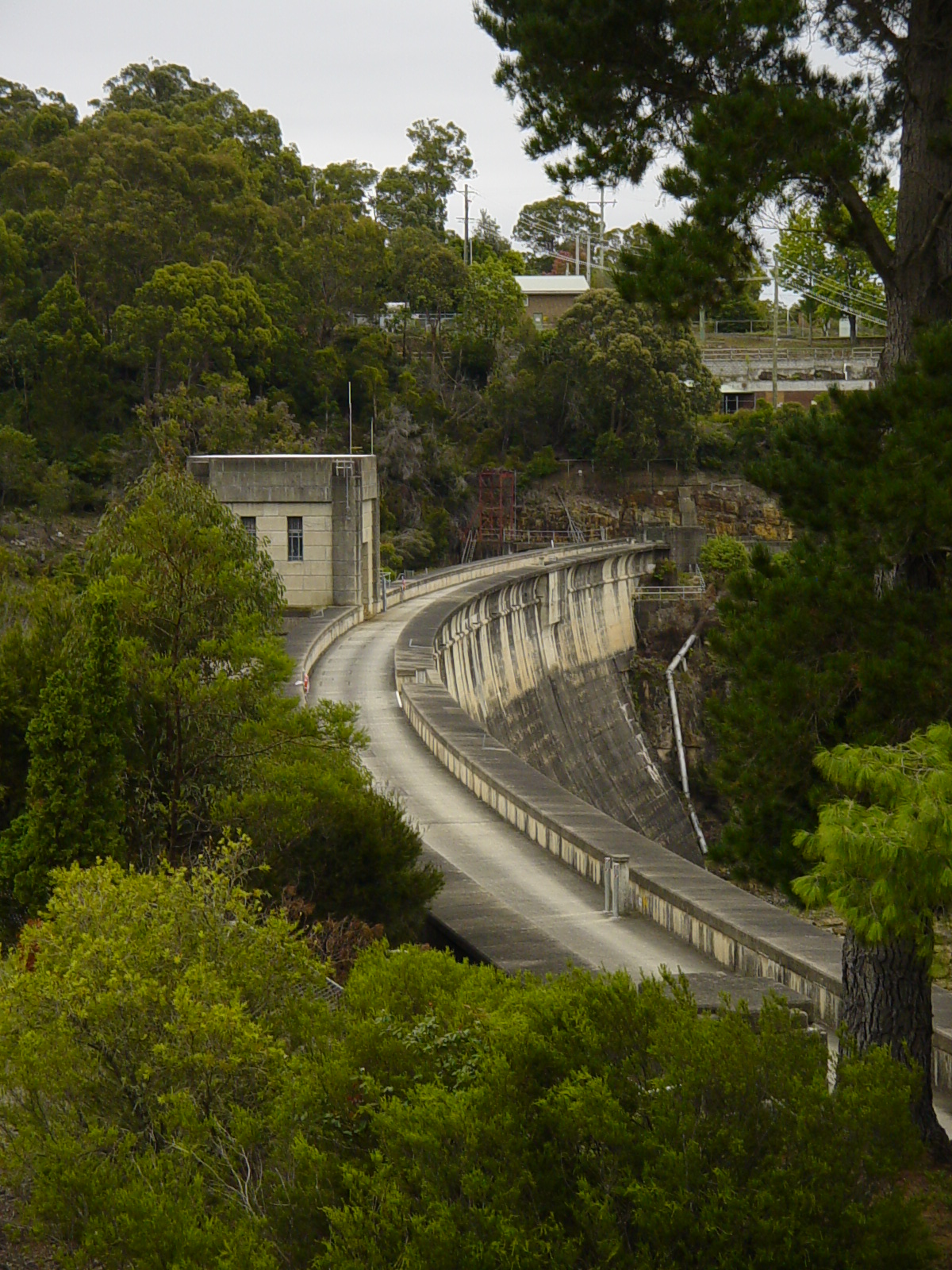
The Nepean Dam is a heritage-listed dam split across Avon in the Wingecarribee Shire and Bargo in the Wollondilly Shire, both in New South Wales, Australia. The reservoir created by the dam spreads across Avon, Bargo and also Yerrinbool in Wingecarribee Shire. The Nepean Dam is one of four dams and weirs in the catchment of the Upper Nepean Scheme, in New South Wales, Australia, and provides water to the Macarthur and Illawarra regions, the Wollondilly Shire, and metropolitan Sydney. Completed in 1935 under the supervision of Ernest Macartney de Burgh, the dam is currently managed by the Sydney Catchment Authority and is listed on the New South Wales State Heritage Register.
The Upper Nepean Scheme was commenced in 1880 after it was realised that the Botany Swamps scheme was insufficient to meet Sydney's water supply needs. The Nepean project consisted of the construction of a weir across the Nepean River to divert of the rivers Cataract, Cordeaux, Avon and Nepean, to the Prospect Reservoir.
By 1902, however, the water supply was found to be inadequate and a Royal Commission was held which recommended impounding the waters of the Cataract River by means of a major storage dam. The Cataract Dam was completed in 1907. In November 1918, a Board of Experts was appointed by the Government to draw up recommendations for the amplification of the Sydney water supply. It was upon the recommendations of this body, as approved by the Public Works Committee of the NSW Parliament, that not only Cordeaux, but also Avon and Nepean Dams were built. The Cordeaux Dam was completed in 1926 and the Avon Dam in 1927, on the Cordeaux and Avon Rivers respectively. As Cordeaux and Avon Dams were approaching completion, a fourth dam, Nepean Dam, was commenced in 1925.
The site chosen was on the Nepean River, about 7 miles (11.3 km) above the point where the Cordeaux River joins the main stream at Pheasants Nest Pass and about 4 miles (6.4 km) by road southeast of Bargo railway station. The dam was designed by engineers of the Public Works Department under the direction of the Chief Engineer for Water Supply and Sewerage, EM de Burgh.
Construction of the dam was undertaken by the Public Works Department until 1 September 1928, at which time the department was re-organised and the majority of the staff associated with water supply were transferred to the Board of Water Supply and Sewerage, who continued the work on the dam. At that date, excavation for the foundations of the wall was complete and placing of concrete about to begin. Most of the plant and equipment used for the construction of Avon Dam was dismantled and re-erected at the Nepean Dam site, including the cableways and timber towers. A suspension bridge was constructed across the Nepean River which was later used at Warragamba Dam.
Railway sidings were established on the Main Southern railway line at a point between Bargo and Yerrinbool. Transport to the dam site was again by light railway, on this occasion of standard gauge. This avoided transhipment from the Government vehicles bringing materials from large commercial quarries, effectively making the line an extended privately owned siding. The line was 4 km (2.5 mi) long through gentle countryside. Trains were worked by a variety of locomotives, including a former Sydney Steam Tram Motor. Additionally, there was a system of narrow (610 mm / 2 ft) gauge lines in use at the dam construction site.
A township for workers was constructed of timber obtained from the clearing of the catchment for the Avon Dam. This township provided four and five-roomed cottages for the married men and had metalled roads with concrete kerbing. A typical working man's accommodation consisted of a simple timber hut with a galvanised roof. Later, a barracks was constructed for single men. A Public School and recreation halls were also provided, as were full-time medical staff and facilities.
Shortly after construction of the dam was transferred from the Public Works Department to the Water Board, it was decided upon the recommendation of the Chief Engineer of the Board, Gerald Haskins, that the height of the dam wall be increased by 25 ft (7.6 m). This added nearly 50% to the storage capacity of the dam.
Nepean Dam
The Nepean Dam is a heritage-listed dam split across Avon in the Wingecarribee Shire and Bargo in the Wollondilly Shire, both in New South Wales, Australia. The reservoir created by the dam spreads across Avon, Bargo and also Yerrinbool in Wingecarribee Shire. The Nepean Dam is one of four dams and weirs in the catchment of the Upper Nepean Scheme, in New South Wales, Australia, and provides water to the Macarthur and Illawarra regions, the Wollondilly Shire, and metropolitan Sydney. Completed in 1935 under the supervision of Ernest Macartney de Burgh, the dam is currently managed by the Sydney Catchment Authority and is listed on the New South Wales State Heritage Register.
The Upper Nepean Scheme was commenced in 1880 after it was realised that the Botany Swamps scheme was insufficient to meet Sydney's water supply needs. The Nepean project consisted of the construction of a weir across the Nepean River to divert of the rivers Cataract, Cordeaux, Avon and Nepean, to the Prospect Reservoir.
By 1902, however, the water supply was found to be inadequate and a Royal Commission was held which recommended impounding the waters of the Cataract River by means of a major storage dam. The Cataract Dam was completed in 1907. In November 1918, a Board of Experts was appointed by the Government to draw up recommendations for the amplification of the Sydney water supply. It was upon the recommendations of this body, as approved by the Public Works Committee of the NSW Parliament, that not only Cordeaux, but also Avon and Nepean Dams were built. The Cordeaux Dam was completed in 1926 and the Avon Dam in 1927, on the Cordeaux and Avon Rivers respectively. As Cordeaux and Avon Dams were approaching completion, a fourth dam, Nepean Dam, was commenced in 1925.
The site chosen was on the Nepean River, about 7 miles (11.3 km) above the point where the Cordeaux River joins the main stream at Pheasants Nest Pass and about 4 miles (6.4 km) by road southeast of Bargo railway station. The dam was designed by engineers of the Public Works Department under the direction of the Chief Engineer for Water Supply and Sewerage, EM de Burgh.
Construction of the dam was undertaken by the Public Works Department until 1 September 1928, at which time the department was re-organised and the majority of the staff associated with water supply were transferred to the Board of Water Supply and Sewerage, who continued the work on the dam. At that date, excavation for the foundations of the wall was complete and placing of concrete about to begin. Most of the plant and equipment used for the construction of Avon Dam was dismantled and re-erected at the Nepean Dam site, including the cableways and timber towers. A suspension bridge was constructed across the Nepean River which was later used at Warragamba Dam.
Railway sidings were established on the Main Southern railway line at a point between Bargo and Yerrinbool. Transport to the dam site was again by light railway, on this occasion of standard gauge. This avoided transhipment from the Government vehicles bringing materials from large commercial quarries, effectively making the line an extended privately owned siding. The line was 4 km (2.5 mi) long through gentle countryside. Trains were worked by a variety of locomotives, including a former Sydney Steam Tram Motor. Additionally, there was a system of narrow (610 mm / 2 ft) gauge lines in use at the dam construction site.
A township for workers was constructed of timber obtained from the clearing of the catchment for the Avon Dam. This township provided four and five-roomed cottages for the married men and had metalled roads with concrete kerbing. A typical working man's accommodation consisted of a simple timber hut with a galvanised roof. Later, a barracks was constructed for single men. A Public School and recreation halls were also provided, as were full-time medical staff and facilities.
Shortly after construction of the dam was transferred from the Public Works Department to the Water Board, it was decided upon the recommendation of the Chief Engineer of the Board, Gerald Haskins, that the height of the dam wall be increased by 25 ft (7.6 m). This added nearly 50% to the storage capacity of the dam.
Recent media
Recent media