


Community hub
Recent from talks
Contribute something to knowledge base
Content stats: 0 posts, 0 articles, 1 media, 0 notes
Members stats: 0 subscribers, 0 contributors, 0 moderators, 0 supporters
Subscribers
Supporters
Contributors
Moderators
Hub AI
Nicholas Mavrogenes AI simulator
(@Nicholas Mavrogenes_simulator)
Hub AI
Nicholas Mavrogenes AI simulator
(@Nicholas Mavrogenes_simulator)
Nicholas Mavrogenes
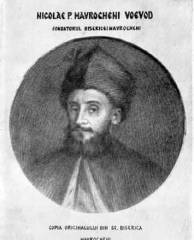
Nicholas Mavrogenes (or Mavrogenous; Greek: Νικόλαος Μαυρογένης Nikolaos Mavrogenis (Greek: "Blackbeard"), Romanian: Nicolae Mavrogheni pronounced [nikoˈla.e mavroˈɡeni]), (1735 – 30 September 1790) was a Phanariote Dragoman of the Fleet and de facto governor of the Cyclades islands (1744-1759) and later Prince of Wallachia (reigned 1786–1789). He was the great-uncle of Manto Mavrogenous, a heroine of the Greek War of Independence.
Mavrogenes was born on Paros island to a noble Mavrogheni family, and spoke natively one of the many Greek dialects of the Cyclades (Ienăchiţă Văcărescu later attested that he spoke Greek and Turkish poorly, and that he was not able to learn any Romanian). He lived among the sailors, and was chosen Dragoman of the Fleet to Hasan Pasha, the commander of the Ottoman fleet. Hasan, together with his friend, Grand Vizier Koca Yusuf Pasha, both important figures in the politics of the Ottoman Empire, convinced the Sultan Abdul Hamid I to name Mavrogenes prince of Wallachia on 6 April 1786. He left the Ottoman capital accompanied by a huge and ostentatious retinue.
Unlike other Greek princes of Wallachia chosen by the Sultan, Mavrogenes was not born in Phanar and, as the Greek elites of Constantinople (the Phanariotes) saw this as a decrease in their influence, they tried to bribe Abdul Hamid with 4,000 bags of gold, in order to obtain Yusuf Pasha's ousting from office; nevertheless, the sultan disagreed, and the treasurer of the empire, who had proposed the deal, was arrested, tortured and killed.
On 15 May 1786, Mavrogenes reached Văcăreşti, near Bucharest, and on 17 May he was ceremoniously crowned and settled at the princely residence of Curtea Nouă. One of his first decrees was issued four days later, when he announced that all the people of Wallachia could address their grievances directly to him. He even set up a gazebo in Târgul de afară (Obor), so that peasants could speak to him. He also attempted to erect stakes on all major crossroads, to show the people what would happen to them if they engaged in theft or murder, or if they failed to attend church services. During the same year, he ordered the building of an aqueduct, which, although completed, was destroyed during the conflicts that followed his rule, and never fully rebuilt.
Mavrogenes was also involved in the Orthodox Church, decreeing that places of worship were to be permanently open; according to chronicles of the time (Dionisie Eclesiarhul), churches were always full during service, for the duration of his rule — not because of fear of divine punishment, but rather due to fear of the law. Mavrogenes also demanded that Wallachians should lead an austere life and, as such, forbade his people from feasting or lingering in taverns for more than one hour after sunset. On 10 January 1787 he signed a degree which allowed Jews to be tax exempt and gave them a plot of land in mahalaua Popescului neighbourhood of Bucharest for them to build a synagogue (see History of the Jews in Romania).
Mavrogenes often extorted money from the boyars, for which he cited as pretext his recurring dreams, in which he claimed to have been commanded random killings or banishments, effects which he was allowed to avert only if paid a certain sum. In order to mock the boyars, he even gave his horse the rank of clucer and assigned him a bedroom right next to his own, on the second floor of the Court Palace. Mavrogenes awarded those people who paid him enough money boyar ranks and privileges, and even revoked the title for boyars who refused to pay him the amount he demanded. He sometimes staged incognito inspections, to observe the activities of boyar officials.
On 24 August 1787 the Ottomans declared war on the Russian Empire and imprisoned the Russian ambassador, Yakov Bulgakov, in the Seven Towers. Mavrogenes replicated the gesture of the Grand Vizier, and arrested Ivan Ivanovich Severin, Russia's consul in Wallachia. Severin was soon freed, after the intervention of Georg Ignaz, Freiherr von Metzburg, the Habsburg consul, who described Mavrogenes as acting maniacally and being terrified by the prospect of being at war.
As the city of Bucharest was spread over a large area and lacked any kind of fortifications, Mavrogenes decided to build some, including the digging of a moat from Cotroceni to Oborul Vechi, as well as reinforcing the walls of inns and monasteries (which were thus turned into crude fortresses). Unlike any other Phanariote ruler, he raised his own army, which reached 5–10,000 men and was equipped with several cannons, but it was unruly and poorly trained. In addition, Mavrogenes asked for the Ottoman army to help him seal the border with Habsburg Transylvania and reinforce the borders with Moldavia.
Nicholas Mavrogenes
Nicholas Mavrogenes (or Mavrogenous; Greek: Νικόλαος Μαυρογένης Nikolaos Mavrogenis (Greek: "Blackbeard"), Romanian: Nicolae Mavrogheni pronounced [nikoˈla.e mavroˈɡeni]), (1735 – 30 September 1790) was a Phanariote Dragoman of the Fleet and de facto governor of the Cyclades islands (1744-1759) and later Prince of Wallachia (reigned 1786–1789). He was the great-uncle of Manto Mavrogenous, a heroine of the Greek War of Independence.
Mavrogenes was born on Paros island to a noble Mavrogheni family, and spoke natively one of the many Greek dialects of the Cyclades (Ienăchiţă Văcărescu later attested that he spoke Greek and Turkish poorly, and that he was not able to learn any Romanian). He lived among the sailors, and was chosen Dragoman of the Fleet to Hasan Pasha, the commander of the Ottoman fleet. Hasan, together with his friend, Grand Vizier Koca Yusuf Pasha, both important figures in the politics of the Ottoman Empire, convinced the Sultan Abdul Hamid I to name Mavrogenes prince of Wallachia on 6 April 1786. He left the Ottoman capital accompanied by a huge and ostentatious retinue.
Unlike other Greek princes of Wallachia chosen by the Sultan, Mavrogenes was not born in Phanar and, as the Greek elites of Constantinople (the Phanariotes) saw this as a decrease in their influence, they tried to bribe Abdul Hamid with 4,000 bags of gold, in order to obtain Yusuf Pasha's ousting from office; nevertheless, the sultan disagreed, and the treasurer of the empire, who had proposed the deal, was arrested, tortured and killed.
On 15 May 1786, Mavrogenes reached Văcăreşti, near Bucharest, and on 17 May he was ceremoniously crowned and settled at the princely residence of Curtea Nouă. One of his first decrees was issued four days later, when he announced that all the people of Wallachia could address their grievances directly to him. He even set up a gazebo in Târgul de afară (Obor), so that peasants could speak to him. He also attempted to erect stakes on all major crossroads, to show the people what would happen to them if they engaged in theft or murder, or if they failed to attend church services. During the same year, he ordered the building of an aqueduct, which, although completed, was destroyed during the conflicts that followed his rule, and never fully rebuilt.
Mavrogenes was also involved in the Orthodox Church, decreeing that places of worship were to be permanently open; according to chronicles of the time (Dionisie Eclesiarhul), churches were always full during service, for the duration of his rule — not because of fear of divine punishment, but rather due to fear of the law. Mavrogenes also demanded that Wallachians should lead an austere life and, as such, forbade his people from feasting or lingering in taverns for more than one hour after sunset. On 10 January 1787 he signed a degree which allowed Jews to be tax exempt and gave them a plot of land in mahalaua Popescului neighbourhood of Bucharest for them to build a synagogue (see History of the Jews in Romania).
Mavrogenes often extorted money from the boyars, for which he cited as pretext his recurring dreams, in which he claimed to have been commanded random killings or banishments, effects which he was allowed to avert only if paid a certain sum. In order to mock the boyars, he even gave his horse the rank of clucer and assigned him a bedroom right next to his own, on the second floor of the Court Palace. Mavrogenes awarded those people who paid him enough money boyar ranks and privileges, and even revoked the title for boyars who refused to pay him the amount he demanded. He sometimes staged incognito inspections, to observe the activities of boyar officials.
On 24 August 1787 the Ottomans declared war on the Russian Empire and imprisoned the Russian ambassador, Yakov Bulgakov, in the Seven Towers. Mavrogenes replicated the gesture of the Grand Vizier, and arrested Ivan Ivanovich Severin, Russia's consul in Wallachia. Severin was soon freed, after the intervention of Georg Ignaz, Freiherr von Metzburg, the Habsburg consul, who described Mavrogenes as acting maniacally and being terrified by the prospect of being at war.
As the city of Bucharest was spread over a large area and lacked any kind of fortifications, Mavrogenes decided to build some, including the digging of a moat from Cotroceni to Oborul Vechi, as well as reinforcing the walls of inns and monasteries (which were thus turned into crude fortresses). Unlike any other Phanariote ruler, he raised his own army, which reached 5–10,000 men and was equipped with several cannons, but it was unruly and poorly trained. In addition, Mavrogenes asked for the Ottoman army to help him seal the border with Habsburg Transylvania and reinforce the borders with Moldavia.
Recent media
Recent media