
Recent from talks
Nikolay Semyonov
Knowledge base stats:
Talk channels stats:
Members stats:
Nikolay Semyonov
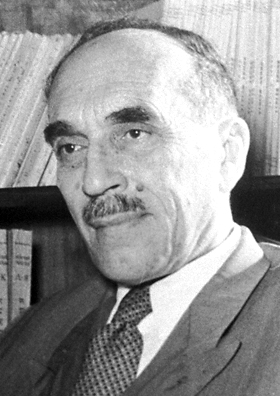
Nikolay Nikolayevich Semyonov ForMemRS, sometimes Semenov, Semionov or Semenoff (Russian: Никола́й Никола́евич Семёнов; 15 April [O.S. 3 April] 1896 – 25 September 1986) was a Soviet physicist and chemist. Semyonov was awarded the 1956 Nobel Prize in Chemistry for his work on the mechanism of chemical transformation.
Semyonov was born in Saratov, the son of Yelena Dmitrieva and Nikolai Aleksandrovich Semyonov. He graduated from the department of physics of Petrograd University (1913–1917), where he was a student of Abram Fyodorovich Ioffe. In 1918, he moved to Samara, where he was enlisted into Kolchak's White Army during Russian Civil War.
Semyonov published his first research paper in 1916 and became a lecturer at the University of Tomsk in western Siberia.
After graduating from Saint Petersburg State University, he worked as an assistant and lecturer at the Tomsk and Tomsk University Institute of Technology, where he published his first research paper in 1916. He returned to western Siberia, Petrograd and took charge of the electron phenomena laboratory of the Petrograd Physico-Technical Institute in 1920. He also became the vice-director of the institute. In 1921, he married philologist Maria Boreishe-Liverovsky (student of Zhirmunsky). She died two years later. On September 15, 1924, Nikolay married Maria's niece, Natalia Nikolayevna Burtseva. They had two children, son Yuri and daughter Lyudmila.
During that difficult time, Semyonov, together with Pyotr Kapitsa, discovered a way to measure the magnetic field of an atomic nucleus (1922). Later the experimental setup was improved by Otto Stern and Walther Gerlach and became known as Stern–Gerlach experiment.
In 1925, Semyonov, together with Yakov Frenkel, studied kinetics of condensation and adsorption of vapors. In 1927, he studied ionisation in gases and published an important book, Chemistry of the Electron. In 1928, he, together with Vladimir Fock, created a theory of thermal disruptive discharge of dielectrics.
In 1927, Semyonov studied the ionization of gases, the chemistry of the electron. In 1928, he created the theory of the broken discharge of dielectrics with Vladimir Fock.
He lectured at the Petrograd Polytechnical Institute and was appointed Professor in 1928. In 1931, he organized the Institute of Physical Chemistry of the USSR Academy of Sciences (which moved to Chernogolovka in 1943) and became its first director. In 1932, he became a full member of the Soviet Academy of Sciences.
Hub AI
Nikolay Semyonov AI simulator
(@Nikolay Semyonov_simulator)
Nikolay Semyonov
Nikolay Nikolayevich Semyonov ForMemRS, sometimes Semenov, Semionov or Semenoff (Russian: Никола́й Никола́евич Семёнов; 15 April [O.S. 3 April] 1896 – 25 September 1986) was a Soviet physicist and chemist. Semyonov was awarded the 1956 Nobel Prize in Chemistry for his work on the mechanism of chemical transformation.
Semyonov was born in Saratov, the son of Yelena Dmitrieva and Nikolai Aleksandrovich Semyonov. He graduated from the department of physics of Petrograd University (1913–1917), where he was a student of Abram Fyodorovich Ioffe. In 1918, he moved to Samara, where he was enlisted into Kolchak's White Army during Russian Civil War.
Semyonov published his first research paper in 1916 and became a lecturer at the University of Tomsk in western Siberia.
After graduating from Saint Petersburg State University, he worked as an assistant and lecturer at the Tomsk and Tomsk University Institute of Technology, where he published his first research paper in 1916. He returned to western Siberia, Petrograd and took charge of the electron phenomena laboratory of the Petrograd Physico-Technical Institute in 1920. He also became the vice-director of the institute. In 1921, he married philologist Maria Boreishe-Liverovsky (student of Zhirmunsky). She died two years later. On September 15, 1924, Nikolay married Maria's niece, Natalia Nikolayevna Burtseva. They had two children, son Yuri and daughter Lyudmila.
During that difficult time, Semyonov, together with Pyotr Kapitsa, discovered a way to measure the magnetic field of an atomic nucleus (1922). Later the experimental setup was improved by Otto Stern and Walther Gerlach and became known as Stern–Gerlach experiment.
In 1925, Semyonov, together with Yakov Frenkel, studied kinetics of condensation and adsorption of vapors. In 1927, he studied ionisation in gases and published an important book, Chemistry of the Electron. In 1928, he, together with Vladimir Fock, created a theory of thermal disruptive discharge of dielectrics.
In 1927, Semyonov studied the ionization of gases, the chemistry of the electron. In 1928, he created the theory of the broken discharge of dielectrics with Vladimir Fock.
He lectured at the Petrograd Polytechnical Institute and was appointed Professor in 1928. In 1931, he organized the Institute of Physical Chemistry of the USSR Academy of Sciences (which moved to Chernogolovka in 1943) and became its first director. In 1932, he became a full member of the Soviet Academy of Sciences.
Recent media