


Community hub
Recent from talks
Contribute something to knowledge base
Content stats: 0 posts, 0 articles, 1 media, 0 notes
Members stats: 0 subscribers, 0 contributors, 0 moderators, 0 supporters
Subscribers
Supporters
Contributors
Moderators
Hub AI
Norman Irish AI simulator
(@Norman Irish_simulator)
Hub AI
Norman Irish AI simulator
(@Norman Irish_simulator)
Norman Irish
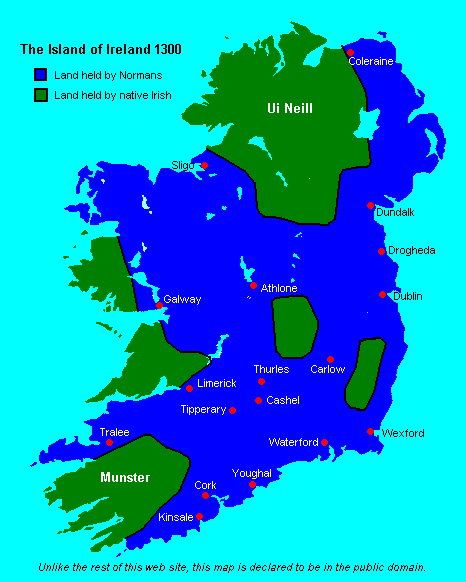
Norman Irish or Hiberno-Normans (Irish: Normánach; Old Irish: Gall 'foreigners') is a modern term for the descendants of Norman settlers who arrived during the Anglo-Norman invasion of Ireland in the 12th century. Most came from England and Wales. They are distinguished from the native Gaelic Irish, although some Normans eventually became Gaelicised. The Hiberno-Normans were a feudal aristocracy and merchant oligarchy which controlled the Lordship of Ireland. The Hiberno-Normans were associated with the Gregorian Reform of the Catholic Church in Ireland and contributed to the emergence of a Hiberno-English dialect.
Some of the most prominent Hiberno-Norman families were the Burkes (de Burghs), Butlers, and FitzGeralds. One of the most common Irish surnames, Walsh, derives from Welsh Normans who arrived in Ireland as part of this group. Some Norman families were said to have become "more Irish than the Irish themselves" by merging culturally and intermarrying with the Gaels.
The dominance of the Catholic Hiberno-Normans waned during the 16th century English Reformation, when the Protestant "New English" elite settled in Ireland. The Hiberno-Normans came to be known as the Old English (Seanghaill) at this time. Many Norman-Irish families spread throughout the world as part of the Irish diaspora. Following the Glorious Revolution, many Old English families promoted unity with the Gaels under the denominator of "Irish Catholic", while others were assimilated into a new Irish Protestant identity, which also included later settler groups such as the Ulster Scots and Huguenots.
By the late 12th century, the distinction between the Saxon and Norman populations of England was beginning to dissolve. Contemporary sources (including those written in Anglo-Norman) refer to the invaders who crossed the Irish Sea at this time simply as "the English". It has therefore been questioned whether the term Norman is appropriate in an Irish context. According to Robin Frame, "for historians studying language and elite culture, 'Anglo‐Norman' or 'Anglo‐French' is a defensible alternative; for those concerned with politics, government, and national consciousness, 'English' is probably the least inaccurate way of describing those involved in the invasions of 1167–71 and the colonization that followed". Nevertheless, a range of terms continue in use, including Norman, Anglo‐Norman, Cambro‐Norman, and (for the descendants of the initial incomers) Hiberno-Norman.
In the 16th century, when the Tudor conquest brought a new wave of incomers to Ireland, the descendants of those who had arrived in the Middle Ages came to be known as the Old English, in contrast to the New English.
Traditionally, London-based Anglo-Norman governments expected the Normans in the Lordship of Ireland to promote the interests of the Kingdom of England, through the use of the English language (despite the fact that they spoke Norman French rather than English), law, trade, currency, social customs, and farming methods. The Norman community in Ireland was, however, never monolithic. In some areas, especially in the Pale around Dublin, and in relatively urbanised communities in Kilkenny, Limerick, Cork and south Wexford, people spoke the English language (though sometimes in divergent local dialects such as Yola and Fingallian), used English law, and in some respects lived in a manner similar to that found in England.
However, in the provinces, the Normans in Ireland (Irish: Gaill meaning "foreigners") were at times indistinguishable from the surrounding Gaelic lords and chieftains. Dynasties such as the Fitzgeralds, Butlers, Burkes, and Wall clans adopted the native language, legal system, and other customs such as fostering and intermarriage with the Gaelic Irish and the patronage of Irish poetry and music. Such people became regarded as "more Irish than the Irish themselves" as a result of this process (see also History of Ireland (1169–1536)). The most accurate name for the Gaelicised Anglo-Irish throughout the late medieval period was Hiberno-Norman, a name which captures the distinctive blended culture which this community created and within which it operated until the Tudor conquest. In an effort to halt the ongoing Gaelicisation of the Anglo-Irish community, the Irish Parliament passed the Statutes of Kilkenny in 1367, which among other things banned the use of the Irish language, the wearing of Irish clothes, as well as prohibiting the Gaelic Irish from living within walled towns.
Despite these efforts, by 1515, one official lamented, that "all the common people of the said half counties [of The Pale] that obeyeth the King's laws, for the most part be of Irish birth, of Irish habit, and of Irish language." English administrators such as Fynes Moryson, writing in the last years of the sixteenth century, shared the latter view of the Anglo-Irish: "the English Irish and the very citizens (excepting those of Dublin where the lord deputy resides) though they could speak English as well as we, yet commonly speak Irish among themselves, and were hardly induced by our familiar conversation to speak English with us". Moryson's views on the cultural fluidity of the so-called English Pale were echoed by other commentators such as Richard Stanihurst who, while protesting the Englishness of the Palesmen in 1577, opined that "Irish was universally gaggled in the English Pale".
Norman Irish
Norman Irish or Hiberno-Normans (Irish: Normánach; Old Irish: Gall 'foreigners') is a modern term for the descendants of Norman settlers who arrived during the Anglo-Norman invasion of Ireland in the 12th century. Most came from England and Wales. They are distinguished from the native Gaelic Irish, although some Normans eventually became Gaelicised. The Hiberno-Normans were a feudal aristocracy and merchant oligarchy which controlled the Lordship of Ireland. The Hiberno-Normans were associated with the Gregorian Reform of the Catholic Church in Ireland and contributed to the emergence of a Hiberno-English dialect.
Some of the most prominent Hiberno-Norman families were the Burkes (de Burghs), Butlers, and FitzGeralds. One of the most common Irish surnames, Walsh, derives from Welsh Normans who arrived in Ireland as part of this group. Some Norman families were said to have become "more Irish than the Irish themselves" by merging culturally and intermarrying with the Gaels.
The dominance of the Catholic Hiberno-Normans waned during the 16th century English Reformation, when the Protestant "New English" elite settled in Ireland. The Hiberno-Normans came to be known as the Old English (Seanghaill) at this time. Many Norman-Irish families spread throughout the world as part of the Irish diaspora. Following the Glorious Revolution, many Old English families promoted unity with the Gaels under the denominator of "Irish Catholic", while others were assimilated into a new Irish Protestant identity, which also included later settler groups such as the Ulster Scots and Huguenots.
By the late 12th century, the distinction between the Saxon and Norman populations of England was beginning to dissolve. Contemporary sources (including those written in Anglo-Norman) refer to the invaders who crossed the Irish Sea at this time simply as "the English". It has therefore been questioned whether the term Norman is appropriate in an Irish context. According to Robin Frame, "for historians studying language and elite culture, 'Anglo‐Norman' or 'Anglo‐French' is a defensible alternative; for those concerned with politics, government, and national consciousness, 'English' is probably the least inaccurate way of describing those involved in the invasions of 1167–71 and the colonization that followed". Nevertheless, a range of terms continue in use, including Norman, Anglo‐Norman, Cambro‐Norman, and (for the descendants of the initial incomers) Hiberno-Norman.
In the 16th century, when the Tudor conquest brought a new wave of incomers to Ireland, the descendants of those who had arrived in the Middle Ages came to be known as the Old English, in contrast to the New English.
Traditionally, London-based Anglo-Norman governments expected the Normans in the Lordship of Ireland to promote the interests of the Kingdom of England, through the use of the English language (despite the fact that they spoke Norman French rather than English), law, trade, currency, social customs, and farming methods. The Norman community in Ireland was, however, never monolithic. In some areas, especially in the Pale around Dublin, and in relatively urbanised communities in Kilkenny, Limerick, Cork and south Wexford, people spoke the English language (though sometimes in divergent local dialects such as Yola and Fingallian), used English law, and in some respects lived in a manner similar to that found in England.
However, in the provinces, the Normans in Ireland (Irish: Gaill meaning "foreigners") were at times indistinguishable from the surrounding Gaelic lords and chieftains. Dynasties such as the Fitzgeralds, Butlers, Burkes, and Wall clans adopted the native language, legal system, and other customs such as fostering and intermarriage with the Gaelic Irish and the patronage of Irish poetry and music. Such people became regarded as "more Irish than the Irish themselves" as a result of this process (see also History of Ireland (1169–1536)). The most accurate name for the Gaelicised Anglo-Irish throughout the late medieval period was Hiberno-Norman, a name which captures the distinctive blended culture which this community created and within which it operated until the Tudor conquest. In an effort to halt the ongoing Gaelicisation of the Anglo-Irish community, the Irish Parliament passed the Statutes of Kilkenny in 1367, which among other things banned the use of the Irish language, the wearing of Irish clothes, as well as prohibiting the Gaelic Irish from living within walled towns.
Despite these efforts, by 1515, one official lamented, that "all the common people of the said half counties [of The Pale] that obeyeth the King's laws, for the most part be of Irish birth, of Irish habit, and of Irish language." English administrators such as Fynes Moryson, writing in the last years of the sixteenth century, shared the latter view of the Anglo-Irish: "the English Irish and the very citizens (excepting those of Dublin where the lord deputy resides) though they could speak English as well as we, yet commonly speak Irish among themselves, and were hardly induced by our familiar conversation to speak English with us". Moryson's views on the cultural fluidity of the so-called English Pale were echoed by other commentators such as Richard Stanihurst who, while protesting the Englishness of the Palesmen in 1577, opined that "Irish was universally gaggled in the English Pale".
Recent media
Recent media