
Recent from talks
Onge
Knowledge base stats:
Talk channels stats:
Members stats:
Onge
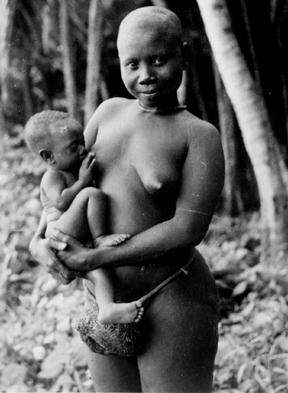
The Onge (also Önge, Ongee, and Öñge) are an Andamanese ethnic group, indigenous to the Andaman Islands in Southeast Asia at the Bay of Bengal, India. They are traditionally hunter-gatherers and fishers, but also practice plant cultivation. They are designated as a Scheduled Tribe of India.
In the 18th century the Onge were distributed across Little Andaman Island and the nearby islands, with some territory and camps established on Rutland Island and the southern tip of South Andaman Island. After they encountered British colonial officers, friendly relations were established with the British Empire in the 1800s through Lieutenant Archibald Blair. British naval officer M. V. Portman described them as the "mildest, most timid, and inoffensive" group of Andamanese people he had encountered. By the end of the 19th century they sometimes visited the South and North Brother Islands to catch sea turtles; at the time, those islands seemed to be the boundary between their territory and the range of the Great Andamanese people further north. Today, the surviving members are confined to two reserve camps on Little Andaman: Dugong Creek in the northeast, and South Bay.
Onge population numbers were substantially reduced in the aftermath of colonisation and settlement, from 672 in 1901 to barely 100. The population is still maintaining their cultural and biological identity, and it appears that total numbers have increased from 100 to 117 in 2017.
A major cause of the decline in Onge population is the changes in their food habits brought about by their contact with the outside world. Infant and child mortality is in the range of 40%. The Onge's net reproductive index is 0.91. The net reproductive index among the Great Andamanese is 1.40.
In 1901, there were 672 Onge; 631 in 1911, 346 in 1921, 250 in 1931, and 150 in 1951.
The semi-nomadic Onge have traditional stories that tell of the ground shaking and a great wall of water destroying the land. Taking heed of this story, the Onge survived the tsunami catastrophe caused by the 2004 Indian Ocean earthquake by taking shelter in the highlands.
In December 2008, eight male tribal members died after drinking a toxic liquid – identified as methanol by some sources – that they had apparently mistaken for drinking alcohol. The liquid apparently came from a container that had washed ashore at Dugong Creek near their settlement on the island, but Port Blair authorities ordered an investigation into whether it had originated elsewhere. A further 15 Onge were taken to hospital with at least one critically ill.
With their population estimated at only around 100 before the incident, the director of Survival International described the mass poisoning as a "calamity for the Onge", and warned that any more deaths could "put the survival of the entire tribe in serious danger". Bhopinder Singh, the Lieutenant Governor of the Andaman Islands, ordered an inquiry into the incident. The Onge have been rather vulnerable toward any option for radical change, they deserve close, careful attention to ward off any untoward impact of change-initiatives.
Hub AI
Onge AI simulator
(@Onge_simulator)
Onge
The Onge (also Önge, Ongee, and Öñge) are an Andamanese ethnic group, indigenous to the Andaman Islands in Southeast Asia at the Bay of Bengal, India. They are traditionally hunter-gatherers and fishers, but also practice plant cultivation. They are designated as a Scheduled Tribe of India.
In the 18th century the Onge were distributed across Little Andaman Island and the nearby islands, with some territory and camps established on Rutland Island and the southern tip of South Andaman Island. After they encountered British colonial officers, friendly relations were established with the British Empire in the 1800s through Lieutenant Archibald Blair. British naval officer M. V. Portman described them as the "mildest, most timid, and inoffensive" group of Andamanese people he had encountered. By the end of the 19th century they sometimes visited the South and North Brother Islands to catch sea turtles; at the time, those islands seemed to be the boundary between their territory and the range of the Great Andamanese people further north. Today, the surviving members are confined to two reserve camps on Little Andaman: Dugong Creek in the northeast, and South Bay.
Onge population numbers were substantially reduced in the aftermath of colonisation and settlement, from 672 in 1901 to barely 100. The population is still maintaining their cultural and biological identity, and it appears that total numbers have increased from 100 to 117 in 2017.
A major cause of the decline in Onge population is the changes in their food habits brought about by their contact with the outside world. Infant and child mortality is in the range of 40%. The Onge's net reproductive index is 0.91. The net reproductive index among the Great Andamanese is 1.40.
In 1901, there were 672 Onge; 631 in 1911, 346 in 1921, 250 in 1931, and 150 in 1951.
The semi-nomadic Onge have traditional stories that tell of the ground shaking and a great wall of water destroying the land. Taking heed of this story, the Onge survived the tsunami catastrophe caused by the 2004 Indian Ocean earthquake by taking shelter in the highlands.
In December 2008, eight male tribal members died after drinking a toxic liquid – identified as methanol by some sources – that they had apparently mistaken for drinking alcohol. The liquid apparently came from a container that had washed ashore at Dugong Creek near their settlement on the island, but Port Blair authorities ordered an investigation into whether it had originated elsewhere. A further 15 Onge were taken to hospital with at least one critically ill.
With their population estimated at only around 100 before the incident, the director of Survival International described the mass poisoning as a "calamity for the Onge", and warned that any more deaths could "put the survival of the entire tribe in serious danger". Bhopinder Singh, the Lieutenant Governor of the Andaman Islands, ordered an inquiry into the incident. The Onge have been rather vulnerable toward any option for radical change, they deserve close, careful attention to ward off any untoward impact of change-initiatives.
Recent media