



Community hub
Recent from talks
Knowledge base stats:
Talk channels stats:
Members stats:
Operational amplifier
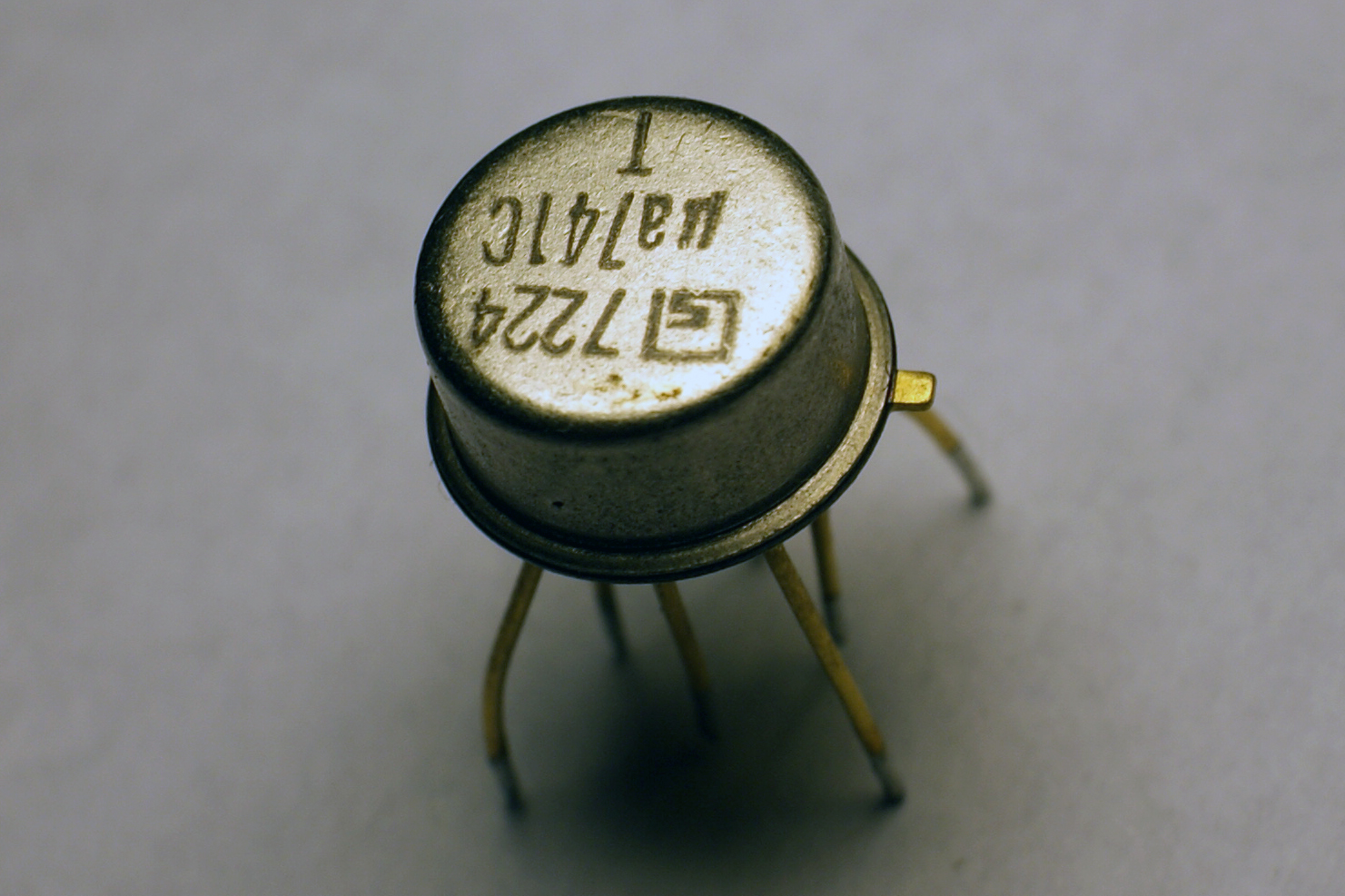
An operational amplifier (often op amp or opamp) is a DC-coupled electronic voltage amplifier with a differential input, a (usually) single-ended output, and an extremely high gain. Its name comes from its original use of performing mathematical operations in analog computers.
By using negative feedback, an op amp circuit's characteristics (e.g. its gain, input and output impedance, bandwidth, and functionality) can be determined by external components and have little dependence on temperature coefficients or engineering tolerance in the op amp itself. This flexibility has made the op amp a popular building block in analog circuits.
Today, op amps are used widely in consumer, industrial, and scientific electronics. Many standard integrated circuit op amps cost only a few cents; however, some integrated or hybrid operational amplifiers with special performance specifications may cost over US$100. Op amps may be packaged as components or used as elements of more complex integrated circuits.
The op amp is one type of differential amplifier. Other differential amplifier types include the fully differential amplifier (an op amp with a differential rather than single-ended output), the instrumentation amplifier (usually built from three op amps), the isolation amplifier (with galvanic isolation between input and output), and negative-feedback amplifier (usually built from one or more op amps and a resistive feedback network).
The amplifier's differential inputs consist of a non-inverting input (+) with voltage V+ and an inverting input (−) with voltage V−; ideally the op amp amplifies only the difference in voltage between the two, which is called the differential input voltage. The output voltage of the op amp Vout is given by the equation where AOL is the open-loop gain of the amplifier (the term "open-loop" refers to the absence of an external feedback loop from the output to the input).

The magnitude of AOL is typically very large (100,000 or more for integrated circuit op amps, corresponding to +100 dB). Thus, even small microvolts of difference between V+ and V− may drive the amplifier into clipping or saturation. The magnitude of AOL is not well controlled by the manufacturing process, and so it is impractical to use an open-loop amplifier as a stand-alone differential amplifier.
Without negative feedback, and optionally positive feedback for regeneration, an open-loop op amp acts as a comparator, although comparator ICs are better suited. If the inverting input of an ideal op amp is held at ground (0 V), and the input voltage Vin applied to the non-inverting input is positive, the output will be maximum positive; if Vin is negative, the output will be maximum negative.
If predictable operation is desired, negative feedback is used, by applying a portion of the output voltage to the inverting input. The closed-loop feedback greatly reduces the gain of the circuit. When negative feedback is used, the circuit's overall gain and response is determined primarily by the feedback network, rather than by the op-amp characteristics. If the feedback network is made of components with values small relative to the op amp's input impedance, the value of the op amp's open-loop response AOL does not seriously affect the circuit's performance. In this context, high input impedance at the input terminals and low output impedance at the output terminal(s) are particularly useful features of an op amp.
Hub AI
Operational amplifier AI simulator
(@Operational amplifier_simulator)
Operational amplifier
An operational amplifier (often op amp or opamp) is a DC-coupled electronic voltage amplifier with a differential input, a (usually) single-ended output, and an extremely high gain. Its name comes from its original use of performing mathematical operations in analog computers.
By using negative feedback, an op amp circuit's characteristics (e.g. its gain, input and output impedance, bandwidth, and functionality) can be determined by external components and have little dependence on temperature coefficients or engineering tolerance in the op amp itself. This flexibility has made the op amp a popular building block in analog circuits.
Today, op amps are used widely in consumer, industrial, and scientific electronics. Many standard integrated circuit op amps cost only a few cents; however, some integrated or hybrid operational amplifiers with special performance specifications may cost over US$100. Op amps may be packaged as components or used as elements of more complex integrated circuits.
The op amp is one type of differential amplifier. Other differential amplifier types include the fully differential amplifier (an op amp with a differential rather than single-ended output), the instrumentation amplifier (usually built from three op amps), the isolation amplifier (with galvanic isolation between input and output), and negative-feedback amplifier (usually built from one or more op amps and a resistive feedback network).
The amplifier's differential inputs consist of a non-inverting input (+) with voltage V+ and an inverting input (−) with voltage V−; ideally the op amp amplifies only the difference in voltage between the two, which is called the differential input voltage. The output voltage of the op amp Vout is given by the equation where AOL is the open-loop gain of the amplifier (the term "open-loop" refers to the absence of an external feedback loop from the output to the input).
The magnitude of AOL is typically very large (100,000 or more for integrated circuit op amps, corresponding to +100 dB). Thus, even small microvolts of difference between V+ and V− may drive the amplifier into clipping or saturation. The magnitude of AOL is not well controlled by the manufacturing process, and so it is impractical to use an open-loop amplifier as a stand-alone differential amplifier.
Without negative feedback, and optionally positive feedback for regeneration, an open-loop op amp acts as a comparator, although comparator ICs are better suited. If the inverting input of an ideal op amp is held at ground (0 V), and the input voltage Vin applied to the non-inverting input is positive, the output will be maximum positive; if Vin is negative, the output will be maximum negative.
If predictable operation is desired, negative feedback is used, by applying a portion of the output voltage to the inverting input. The closed-loop feedback greatly reduces the gain of the circuit. When negative feedback is used, the circuit's overall gain and response is determined primarily by the feedback network, rather than by the op-amp characteristics. If the feedback network is made of components with values small relative to the op amp's input impedance, the value of the op amp's open-loop response AOL does not seriously affect the circuit's performance. In this context, high input impedance at the input terminals and low output impedance at the output terminal(s) are particularly useful features of an op amp.