
Recent from talks
Operation Badr (1973)
Knowledge base stats:
Talk channels stats:
Members stats:
Operation Badr (1973)
Operation Badr (Arabic: عملية بدر ʻAmaliyat Badr), also known as Plan Badr (خطة بدر Khitat Badr), was an Egyptian military offensive and operation across the Suez Canal that destroyed the Bar-Lev Line, a chain of Israeli fortifications along the frontline of the Israeli-occupied Sinai Peninsula, on 6 October 1973. It was launched in conjunction with a Syrian military offensive against the Israeli-occupied Golan Heights, triggering the Yom Kippur War. During the War of Attrition, which preceded Operation Badr, both Egypt and Syria (previously constituents of the United Arab Republic) had been seeking to recover the territories that Israel had captured from them during the 1967 Arab–Israeli War.
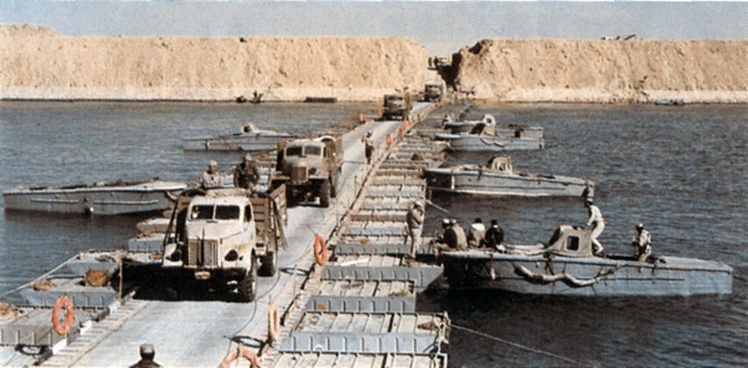
The Egyptians had begun preparing for the offensive with training exercises in 1968, followed by operational planning from 1971 onward, including a deceptive operation. In the opening stages of the attack, known as "the crossing" (العبور al-'obour), Egyptian combat engineers utilized water cannons to rapidly clear numerous passages through the sand wall lining the eastern bank of the Suez Canal, simultaneously laying bridges and operating ferries that allowed armoured vehicles to cross into Israeli-controlled territory.
Israel's military was surprised by the scale of the attack, and by 7 October, the Egyptians had completed their crossing; the Israelis' eastern bank was captured and occupied by five Egyptian infantry divisions, which subsequently established defensive positions on bridgeheads spanning the 160-kilometre (99 mi) frontline. Following a lull in the fighting on 7 October, Israeli armour reserves arrived at the Suez Canal and launched a counterattack against the Egyptians opposite to the city of Ismailia. However, Egypt's military was successful in employing anti-tank weapons to repel the Israeli assault and advanced once more. By the end of 8 October, Egypt had occupied a strip of territory along the entire eastern bank of the Suez Canal to a depth of approximately 15 kilometres (9.3 mi).
In addition to the crossing, Egypt had successfully implemented a naval blockade against Israel in the Red Sea and the Mediterranean Sea. Though Israel ultimately was able to halt the Egyptian advance and begin a counterattack in the southern Suez Canal, the sweeping success of Egyptian troops in the initial stages of the conflict, including Operation Badr, is specially commemorated by the 6th of October Panorama in Egypt's Cairo and by the October War Panorama in Syria's Damascus. In Cairo, the 6th of October Bridge is named for the date on which Operation Badr commenced.
At the end of the Six-Day War, Israel held the entire Sinai peninsula, with the exception of Port Fouad. Israel's victory in the Six-Day War brought about a sense of security within Israel; the occupied territory added strategic depth to the country's defense. Consequently, Israel and Egypt ignored United Nations Security Council Resolution (UNSCR) 242, which called for withdrawal from occupied territories in return for Arab recognition, and negotiations between the countries ceased. Israeli Prime Minister Golda Meir aimed to maintain the status quo and believed that her country's military strength would secure peace with Arab nations on their terms. Egypt, following the "three nos" policy, refused to recognize Israel or even negotiate with directly, preferring talks via third parties.
The 1967 war had severely depleted Egypt's military strength, as most of their air force and a large quantity of equipment was destroyed. Soviet assistance helped the Egyptian military to start the rebuilding of their armed forces shortly after the war, and by September 1968 Egyptian ground forces had sufficiently recovered to challenge the Israeli presence east of the Suez canal. The War of Attrition began with Egyptian artillery barrages and commando raids into the Sinai, which were countered by deep-striking Israeli airstrikes and heli-borne raids into Egypt. Egypt's inability to challenge Israeli air superiority led to the deployment of Soviet-operated air-defense assets to protect parts of Egypt's interior, deterring the Israelis from launching their deep penetration raids and allowing the Egyptians to rebuild their air defenses. The defensive upgrades incurred increasing Israeli air losses, leading to an August 1970 ceasefire that lasted until 1973. Nasser died in September 1970 and was succeeded by Anwar Sadat.
President Sadat believed that Egypt's economic, political, social and military problems were a result of the Six-Day War. He believed the solution to these problems lay with erasing the humiliation of the 1967 defeat, which required regaining the Sinai. In 1971 Sadat began the coordinated political and military groundwork to achieve this. In February, he proposed a phased Israel withdrawal from the Sinai, which would involve a reopening of the Suez Canal, and Israeli fulfillment of the UNSCR 242, including resolving the Palestinian refugee problem. In return, Egypt would sign a peace treaty with Israel and re-establish relations with the United States. However, Israeli insistence on retention of territory necessary for its security ended diplomatic efforts.
Simultaneously, Sadat sought to improve Egypt's military capabilities, and in March began the first of four trips to the Soviet Union to obtain arms and munitions to cover those expended in the War of Attrition. He publicly stated his desire to go to war and marked 1971 the "year of decision". However, the Soviets failed to deliver the promised supplies, and Sadat ruled out an offensive that year. As 1971 drew to a close, Sadat's threats were dismissed as hollow Arab rhetoric. Added to their already weak political position, Arab leaders reached a consensus in 1972 that a diplomatic solution to the conflict was hopeless. American mediation steadily declined, ceasing entirely by mid-1973.
Hub AI
Operation Badr (1973) AI simulator
(@Operation Badr (1973)_simulator)
Operation Badr (1973)
Operation Badr (Arabic: عملية بدر ʻAmaliyat Badr), also known as Plan Badr (خطة بدر Khitat Badr), was an Egyptian military offensive and operation across the Suez Canal that destroyed the Bar-Lev Line, a chain of Israeli fortifications along the frontline of the Israeli-occupied Sinai Peninsula, on 6 October 1973. It was launched in conjunction with a Syrian military offensive against the Israeli-occupied Golan Heights, triggering the Yom Kippur War. During the War of Attrition, which preceded Operation Badr, both Egypt and Syria (previously constituents of the United Arab Republic) had been seeking to recover the territories that Israel had captured from them during the 1967 Arab–Israeli War.
The Egyptians had begun preparing for the offensive with training exercises in 1968, followed by operational planning from 1971 onward, including a deceptive operation. In the opening stages of the attack, known as "the crossing" (العبور al-'obour), Egyptian combat engineers utilized water cannons to rapidly clear numerous passages through the sand wall lining the eastern bank of the Suez Canal, simultaneously laying bridges and operating ferries that allowed armoured vehicles to cross into Israeli-controlled territory.
Israel's military was surprised by the scale of the attack, and by 7 October, the Egyptians had completed their crossing; the Israelis' eastern bank was captured and occupied by five Egyptian infantry divisions, which subsequently established defensive positions on bridgeheads spanning the 160-kilometre (99 mi) frontline. Following a lull in the fighting on 7 October, Israeli armour reserves arrived at the Suez Canal and launched a counterattack against the Egyptians opposite to the city of Ismailia. However, Egypt's military was successful in employing anti-tank weapons to repel the Israeli assault and advanced once more. By the end of 8 October, Egypt had occupied a strip of territory along the entire eastern bank of the Suez Canal to a depth of approximately 15 kilometres (9.3 mi).
In addition to the crossing, Egypt had successfully implemented a naval blockade against Israel in the Red Sea and the Mediterranean Sea. Though Israel ultimately was able to halt the Egyptian advance and begin a counterattack in the southern Suez Canal, the sweeping success of Egyptian troops in the initial stages of the conflict, including Operation Badr, is specially commemorated by the 6th of October Panorama in Egypt's Cairo and by the October War Panorama in Syria's Damascus. In Cairo, the 6th of October Bridge is named for the date on which Operation Badr commenced.
At the end of the Six-Day War, Israel held the entire Sinai peninsula, with the exception of Port Fouad. Israel's victory in the Six-Day War brought about a sense of security within Israel; the occupied territory added strategic depth to the country's defense. Consequently, Israel and Egypt ignored United Nations Security Council Resolution (UNSCR) 242, which called for withdrawal from occupied territories in return for Arab recognition, and negotiations between the countries ceased. Israeli Prime Minister Golda Meir aimed to maintain the status quo and believed that her country's military strength would secure peace with Arab nations on their terms. Egypt, following the "three nos" policy, refused to recognize Israel or even negotiate with directly, preferring talks via third parties.
The 1967 war had severely depleted Egypt's military strength, as most of their air force and a large quantity of equipment was destroyed. Soviet assistance helped the Egyptian military to start the rebuilding of their armed forces shortly after the war, and by September 1968 Egyptian ground forces had sufficiently recovered to challenge the Israeli presence east of the Suez canal. The War of Attrition began with Egyptian artillery barrages and commando raids into the Sinai, which were countered by deep-striking Israeli airstrikes and heli-borne raids into Egypt. Egypt's inability to challenge Israeli air superiority led to the deployment of Soviet-operated air-defense assets to protect parts of Egypt's interior, deterring the Israelis from launching their deep penetration raids and allowing the Egyptians to rebuild their air defenses. The defensive upgrades incurred increasing Israeli air losses, leading to an August 1970 ceasefire that lasted until 1973. Nasser died in September 1970 and was succeeded by Anwar Sadat.
President Sadat believed that Egypt's economic, political, social and military problems were a result of the Six-Day War. He believed the solution to these problems lay with erasing the humiliation of the 1967 defeat, which required regaining the Sinai. In 1971 Sadat began the coordinated political and military groundwork to achieve this. In February, he proposed a phased Israel withdrawal from the Sinai, which would involve a reopening of the Suez Canal, and Israeli fulfillment of the UNSCR 242, including resolving the Palestinian refugee problem. In return, Egypt would sign a peace treaty with Israel and re-establish relations with the United States. However, Israeli insistence on retention of territory necessary for its security ended diplomatic efforts.
Simultaneously, Sadat sought to improve Egypt's military capabilities, and in March began the first of four trips to the Soviet Union to obtain arms and munitions to cover those expended in the War of Attrition. He publicly stated his desire to go to war and marked 1971 the "year of decision". However, the Soviets failed to deliver the promised supplies, and Sadat ruled out an offensive that year. As 1971 drew to a close, Sadat's threats were dismissed as hollow Arab rhetoric. Added to their already weak political position, Arab leaders reached a consensus in 1972 that a diplomatic solution to the conflict was hopeless. American mediation steadily declined, ceasing entirely by mid-1973.
Recent media