


Community hub
Recent from talks
Contribute something to knowledge base
Content stats: 0 posts, 0 articles, 1 media, 0 notes
Members stats: 0 subscribers, 0 contributors, 0 moderators, 0 supporters
Subscribers
Supporters
Contributors
Moderators
Hub AI
Defense of the Great Wall AI simulator
(@Defense of the Great Wall_simulator)
Hub AI
Defense of the Great Wall AI simulator
(@Defense of the Great Wall_simulator)
Defense of the Great Wall
The defense of the Great Wall (traditional Chinese: 長城抗戰; simplified Chinese: 长城抗战; pinyin: Chángchéng Kàngzhàn) (January 1 – May 31, 1933) was a campaign between the armies of Republic of China and Empire of Japan, which took place before the Second Sino-Japanese War officially commenced in 1937 and after the Japanese invasion of Manchuria in 1931. It is known in Japanese as Operation Nekka (熱河作戰, Nekka Sakusen) and in many English sources as the First Battle of Hopei.
During this campaign, Japan successfully captured the Inner Mongolian province of Rehe from the Chinese warlord Zhang Xueliang, and incorporated it into the newly created state of Manchukuo, whose southern frontier was thus extended to the Great Wall of China.
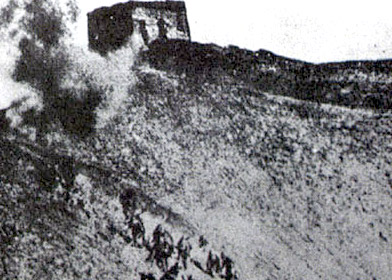
Shanhaiguan is the fortified eastern end of the Great Wall of China, where the Great Wall meets the ocean. Per the terms of the 1901 Boxer Rebellion accord, the Imperial Japanese Army maintained a small garrison of around 200 men at Shanhaiguan. On the night of 1 January 1933, the Japanese garrison commander staged an "incident" by exploding a few hand grenades and firing a few shots. The Kwantung Army used this as an excuse to demand that the Chinese 626th Regiment of the Northeastern Army, guarding Shanhaiguan, evacuate the pass defenses.
When the Chinese garrison refused, the Japanese 8th Division issued an ultimatum, and then attacked the pass with the support of 4 armored trains and 10 tanks. The Japanese attack was supported by close air support from bombers, and by shelling by warships of the Imperial Japanese Navy's IJN 2nd Fleet with a dozen warships offshore. On January 3, Chinese regimental commander Shi Shian, unable to withstand this attack, was forced to evacuate from his positions after losing half of his force.
The province of Rehe, on the northern side of the Great Wall, was the next target. Declaring the province to be historically a portion of Manchuria, the Japanese Army initially hoped to secure it through the defection of General Tang Yulin to the Manchukuo cause. When this failed, the military option was put into action. The Japanese army's Chief of Staff requested Emperor Hirohito's sanction for the 'strategic operation' against Chinese forces in Rehe. Hoping that it was the last of the army's operations in the area and that it would bring an end to the Manchurian matter, the Emperor approved, while stating explicitly that the army was not to go beyond the Great Wall. On February 23, 1933, the offensive was launched. On February 25, Chaoyang and Kailu were taken. On March 2, the Japanese 4th Cavalry Brigade encountered resistance from the forces of Sun Dianying, and after days of fighting, took Chifeng. On March 4, Japanese cavalry and the 1st Special Tank Company took Chengde the capital of Rehe.
Falling back from Rehe, Wan Fulin's 32nd Army retreated to Lengkou Pass, while the 29th Army of General Song Zheyuan also fell back, Zhang Zuoxiang's 37th Division retreated to Xifengkou Pass, General Guan Linzheng's 25th Division to the Gubeikou Pass.
On March 4, the 139th Division of the KMT 32nd Army managed to hold Lengkou Pass, and on March 7, the KMT 67th Army withstood attacks by the 16th Brigade of the Japanese 8th Division, at Gubeikou Pass.
On March 9, Chiang Kai-shek held discussions with Zhang Xueliang in Baoding about resisting the Japanese invasion. Chiang Kai-shek began to relocate his forces away from his campaign against the Jiangxi Soviet, which would include the forces of Huang Jie, Xu Tingyao and Guan Linzheng. Chiang Kai-shek also called over Fu Zuoyi's 7th Army from Suiyuan. However, his actions were too late and the reinforcements were of insufficient strength to stop the Japanese advance.
Defense of the Great Wall
The defense of the Great Wall (traditional Chinese: 長城抗戰; simplified Chinese: 长城抗战; pinyin: Chángchéng Kàngzhàn) (January 1 – May 31, 1933) was a campaign between the armies of Republic of China and Empire of Japan, which took place before the Second Sino-Japanese War officially commenced in 1937 and after the Japanese invasion of Manchuria in 1931. It is known in Japanese as Operation Nekka (熱河作戰, Nekka Sakusen) and in many English sources as the First Battle of Hopei.
During this campaign, Japan successfully captured the Inner Mongolian province of Rehe from the Chinese warlord Zhang Xueliang, and incorporated it into the newly created state of Manchukuo, whose southern frontier was thus extended to the Great Wall of China.
Shanhaiguan is the fortified eastern end of the Great Wall of China, where the Great Wall meets the ocean. Per the terms of the 1901 Boxer Rebellion accord, the Imperial Japanese Army maintained a small garrison of around 200 men at Shanhaiguan. On the night of 1 January 1933, the Japanese garrison commander staged an "incident" by exploding a few hand grenades and firing a few shots. The Kwantung Army used this as an excuse to demand that the Chinese 626th Regiment of the Northeastern Army, guarding Shanhaiguan, evacuate the pass defenses.
When the Chinese garrison refused, the Japanese 8th Division issued an ultimatum, and then attacked the pass with the support of 4 armored trains and 10 tanks. The Japanese attack was supported by close air support from bombers, and by shelling by warships of the Imperial Japanese Navy's IJN 2nd Fleet with a dozen warships offshore. On January 3, Chinese regimental commander Shi Shian, unable to withstand this attack, was forced to evacuate from his positions after losing half of his force.
The province of Rehe, on the northern side of the Great Wall, was the next target. Declaring the province to be historically a portion of Manchuria, the Japanese Army initially hoped to secure it through the defection of General Tang Yulin to the Manchukuo cause. When this failed, the military option was put into action. The Japanese army's Chief of Staff requested Emperor Hirohito's sanction for the 'strategic operation' against Chinese forces in Rehe. Hoping that it was the last of the army's operations in the area and that it would bring an end to the Manchurian matter, the Emperor approved, while stating explicitly that the army was not to go beyond the Great Wall. On February 23, 1933, the offensive was launched. On February 25, Chaoyang and Kailu were taken. On March 2, the Japanese 4th Cavalry Brigade encountered resistance from the forces of Sun Dianying, and after days of fighting, took Chifeng. On March 4, Japanese cavalry and the 1st Special Tank Company took Chengde the capital of Rehe.
Falling back from Rehe, Wan Fulin's 32nd Army retreated to Lengkou Pass, while the 29th Army of General Song Zheyuan also fell back, Zhang Zuoxiang's 37th Division retreated to Xifengkou Pass, General Guan Linzheng's 25th Division to the Gubeikou Pass.
On March 4, the 139th Division of the KMT 32nd Army managed to hold Lengkou Pass, and on March 7, the KMT 67th Army withstood attacks by the 16th Brigade of the Japanese 8th Division, at Gubeikou Pass.
On March 9, Chiang Kai-shek held discussions with Zhang Xueliang in Baoding about resisting the Japanese invasion. Chiang Kai-shek began to relocate his forces away from his campaign against the Jiangxi Soviet, which would include the forces of Huang Jie, Xu Tingyao and Guan Linzheng. Chiang Kai-shek also called over Fu Zuoyi's 7th Army from Suiyuan. However, his actions were too late and the reinforcements were of insufficient strength to stop the Japanese advance.
Recent media
Recent media