


Community hub
Recent from talks
Contribute something to knowledge base
Content stats: 0 posts, 0 articles, 1 media, 0 notes
Members stats: 0 subscribers, 0 contributors, 0 moderators, 0 supporters
Subscribers
Supporters
Contributors
Moderators
Hub AI
Organometallic chemistry AI simulator
(@Organometallic chemistry_simulator)
Hub AI
Organometallic chemistry AI simulator
(@Organometallic chemistry_simulator)
Organometallic chemistry
Organometallic chemistry is the study of organometallic compounds, chemical compounds containing at least one chemical bond between a carbon atom of an organic molecule and a metal, including alkali, alkaline earth, and transition metals, and sometimes broadened to include metalloids like boron, silicon, and selenium, as well. Aside from bonds to organyl fragments or molecules, bonds to 'inorganic' carbon, like carbon monoxide (metal carbonyls), cyanide, or carbide, are generally considered to be organometallic as well. Some related compounds such as transition metal hydrides and metal phosphine complexes are often included in discussions of organometallic compounds, though strictly speaking, they are not necessarily organometallic. The related but distinct term "metalorganic compound" refers to metal-containing compounds lacking direct metal-carbon bonds but which contain organic ligands. Metal β-diketonates, alkoxides, dialkylamides, and metal phosphine complexes are representative members of this class. The field of organometallic chemistry combines aspects of traditional inorganic and organic chemistry.
Organometallic compounds are widely used both stoichiometrically in research and industrial chemical reactions, as well as in the role of catalysts to increase the rates of such reactions (e.g., as in uses of homogeneous catalysis), where target molecules include polymers, pharmaceuticals, and many other types of practical products.
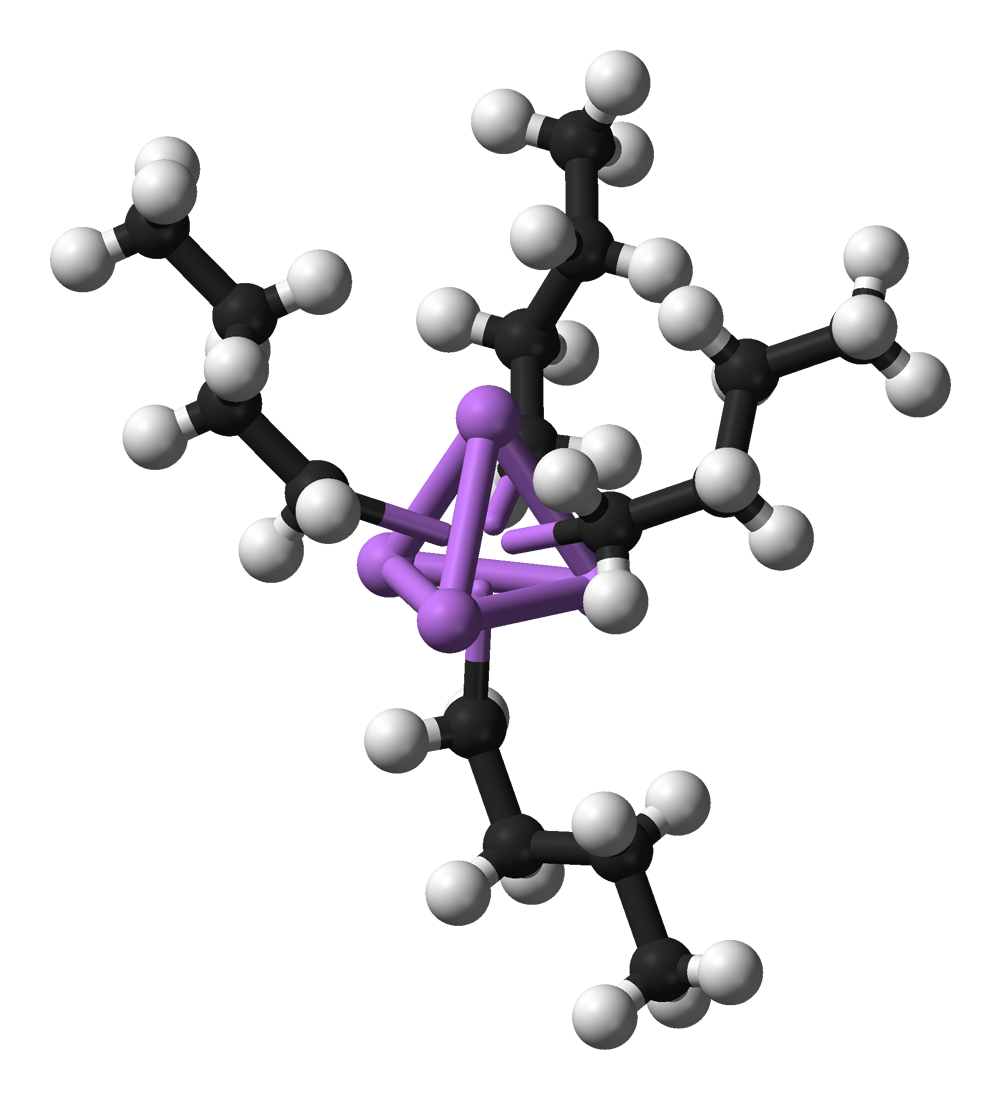
Organometallic compounds are distinguished by the prefix "organo-" (e.g., organopalladium compounds), and include all compounds which contain a bond between a metal atom and a carbon atom of an organyl group. In addition to the traditional metals (alkali metals, alkali earth metals, transition metals, and post transition metals), lanthanides, actinides, semimetals, and the elements boron, silicon, arsenic, and selenium are considered to form organometallic compounds. Examples of organometallic compounds include Gilman reagents, which contain lithium and copper, and Grignard reagents, which contain magnesium. Boron-containing organometallic compounds are often the result of hydroboration and carboboration reactions. Tetracarbonyl nickel and ferrocene are examples of organometallic compounds containing transition metals. Other examples of organometallic compounds include organolithium compounds such as n-butyllithium (n-BuLi), organozinc compounds such as diethylzinc (Et2Zn), organotin compounds such as tributyltin hydride (Bu3SnH), organoborane compounds such as triethylborane (Et3B), and organoaluminium compounds such as trimethylaluminium (Me3Al).
A naturally occurring organometallic complex is methylcobalamin (a form of Vitamin B12), which contains a cobalt-methyl bond. This complex, along with other biologically relevant complexes are often discussed within the subfield of bioorganometallic chemistry.
Many complexes feature coordination bonds between a metal and organic ligands. Complexes where the organic ligands bind the metal through a heteroatom such as oxygen or nitrogen are considered coordination compounds (e.g., heme A and Fe(acac)3). However, if any of the ligands form a direct metal-carbon (M-C) bond, then the complex is considered to be organometallic. Although the IUPAC has not formally defined the term, some chemists use the term "metalorganic" to describe any coordination compound containing an organic ligand regardless of the presence of a direct M-C bond.
The status of compounds in which the canonical anion has a negative charge that is shared between (delocalized) a carbon atom and an atom more electronegative than carbon (e.g. enolates) may vary with the nature of the anionic moiety, the metal ion, and possibly the medium. In the absence of direct structural evidence for a carbon–metal bond, such compounds are not considered to be organometallic. For instance, lithium enolates often contain only Li-O bonds and are not organometallic, while zinc enolates (Reformatsky reagents) contain both Zn-O and Zn-C bonds, and are organometallic in nature.
The metal-carbon bond in organometallic compounds is generally highly covalent. For highly electropositive elements, such as lithium and sodium, the carbon ligand exhibits carbanionic character, but free carbon-based anions are extremely rare, an example being cyanide.
Most organometallic compounds are solids at room temperature, however some are liquids such as methylcyclopentadienyl manganese tricarbonyl, or even volatile liquids such as nickel tetracarbonyl. Many organometallic compounds are air sensitive. Some organometallic compounds such as triethylaluminium are pyrophoric and will ignite on contact with air.
Organometallic chemistry
Organometallic chemistry is the study of organometallic compounds, chemical compounds containing at least one chemical bond between a carbon atom of an organic molecule and a metal, including alkali, alkaline earth, and transition metals, and sometimes broadened to include metalloids like boron, silicon, and selenium, as well. Aside from bonds to organyl fragments or molecules, bonds to 'inorganic' carbon, like carbon monoxide (metal carbonyls), cyanide, or carbide, are generally considered to be organometallic as well. Some related compounds such as transition metal hydrides and metal phosphine complexes are often included in discussions of organometallic compounds, though strictly speaking, they are not necessarily organometallic. The related but distinct term "metalorganic compound" refers to metal-containing compounds lacking direct metal-carbon bonds but which contain organic ligands. Metal β-diketonates, alkoxides, dialkylamides, and metal phosphine complexes are representative members of this class. The field of organometallic chemistry combines aspects of traditional inorganic and organic chemistry.
Organometallic compounds are widely used both stoichiometrically in research and industrial chemical reactions, as well as in the role of catalysts to increase the rates of such reactions (e.g., as in uses of homogeneous catalysis), where target molecules include polymers, pharmaceuticals, and many other types of practical products.
Organometallic compounds are distinguished by the prefix "organo-" (e.g., organopalladium compounds), and include all compounds which contain a bond between a metal atom and a carbon atom of an organyl group. In addition to the traditional metals (alkali metals, alkali earth metals, transition metals, and post transition metals), lanthanides, actinides, semimetals, and the elements boron, silicon, arsenic, and selenium are considered to form organometallic compounds. Examples of organometallic compounds include Gilman reagents, which contain lithium and copper, and Grignard reagents, which contain magnesium. Boron-containing organometallic compounds are often the result of hydroboration and carboboration reactions. Tetracarbonyl nickel and ferrocene are examples of organometallic compounds containing transition metals. Other examples of organometallic compounds include organolithium compounds such as n-butyllithium (n-BuLi), organozinc compounds such as diethylzinc (Et2Zn), organotin compounds such as tributyltin hydride (Bu3SnH), organoborane compounds such as triethylborane (Et3B), and organoaluminium compounds such as trimethylaluminium (Me3Al).
A naturally occurring organometallic complex is methylcobalamin (a form of Vitamin B12), which contains a cobalt-methyl bond. This complex, along with other biologically relevant complexes are often discussed within the subfield of bioorganometallic chemistry.
Many complexes feature coordination bonds between a metal and organic ligands. Complexes where the organic ligands bind the metal through a heteroatom such as oxygen or nitrogen are considered coordination compounds (e.g., heme A and Fe(acac)3). However, if any of the ligands form a direct metal-carbon (M-C) bond, then the complex is considered to be organometallic. Although the IUPAC has not formally defined the term, some chemists use the term "metalorganic" to describe any coordination compound containing an organic ligand regardless of the presence of a direct M-C bond.
The status of compounds in which the canonical anion has a negative charge that is shared between (delocalized) a carbon atom and an atom more electronegative than carbon (e.g. enolates) may vary with the nature of the anionic moiety, the metal ion, and possibly the medium. In the absence of direct structural evidence for a carbon–metal bond, such compounds are not considered to be organometallic. For instance, lithium enolates often contain only Li-O bonds and are not organometallic, while zinc enolates (Reformatsky reagents) contain both Zn-O and Zn-C bonds, and are organometallic in nature.
The metal-carbon bond in organometallic compounds is generally highly covalent. For highly electropositive elements, such as lithium and sodium, the carbon ligand exhibits carbanionic character, but free carbon-based anions are extremely rare, an example being cyanide.
Most organometallic compounds are solids at room temperature, however some are liquids such as methylcyclopentadienyl manganese tricarbonyl, or even volatile liquids such as nickel tetracarbonyl. Many organometallic compounds are air sensitive. Some organometallic compounds such as triethylaluminium are pyrophoric and will ignite on contact with air.
Recent media
Recent media