



Community hub
Recent from talks
Knowledge base stats:
Talk channels stats:
Members stats:
Ormiston
Ormiston is a village in East Lothian, Scotland, near Tranent, Humbie, Pencaitland and Cranston, located on the north bank of the River Tyne at an elevation of about 276 feet (84 m).
The village was the first planned village in Scotland, founded in 1735 by John Cockburn (1685–1758), one of the initiators of the Agricultural Revolution.
The word Ormiston is derived from a half mythical Norwegian Viking settler called Ormr, meaning 'serpent' or 'snake'. 'Ormres' family had possession of the land during the 12th and 13th centuries. Ormiston or 'Ormistoun' is not an uncommon surname, and Ormr also survives in some English placenames such as Ormskirk and Ormesby. The latter part of the name, formerly spelt 'toun', is likely to descend from its Northumbrian Old English and later Scots meaning as 'farmstead' or 'farm and outbuildings' rather than the meaning 'town'.
There was an "Ormiston" in Berwickshire, near Linton, where the legend of the Worm of Linton was related to land ownership by Lord Somerville and Lord Lindsay. The Cockburn family may have brought the name from the Berwickshire "Ormiston" to the East Lothian location in the 14th-century.
Ormiston was the home of the poet Elizabeth Douglas (died 1594), wife of Samuel Cockburn of Templehall, who with Mary Beaton contributed sonnets to a work by the poet William Fowler in 1587. Fowler wrote an epitaph for her. James VI came to Ormiston to hunt deer on 22 November 1588, and returned to Biel and Ormiston to hunt in October 1599.
The "model village" was laid out in 1736 by the new laird John Cockburn who had inherited the estate from his uncle, who had died without a male heir.
William Begg, Robert Burns's nephew became the parish schoolmaster at Ormiston. The whole Begg family moved to live with him at Ormiston's schoolhouse. Isabella Begg née Burns also ran a school here. The family later moved to nearby Tranent in 1834 when William resigned his post and emigrated to America.
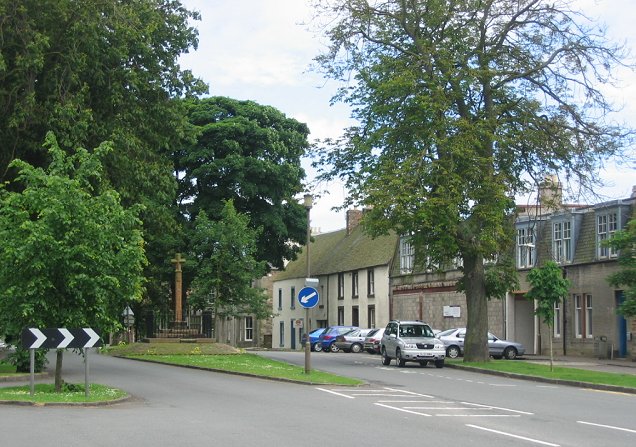
The village consists mainly of a broad Main Street, with a row of mostly two storey houses along each side. It crosses two bridges, one over the now redundant railway route, and the other a narrow bridge over the river Tyne. Using strict guidelines for its appearance, John Cockburn put housing for artisans and cottage industries (spinning and weaving) around the original mill hamlet. When he did not achieve the expected return on his investment, he sold it to the Earl of Hopetoun in 1747. The linen trade became a failure, and by 1811 the distillery shut down. A brewery and one of Scotland's first bleachfields were also built here as well. Ormiston later became a mining village. The Ormiston Coal Company's workings were south of Tranent in East Lothian. The company was one of a number of small concerns working either a single or a few linked, small pits on the East Lothian coalfield.
Hub AI
Ormiston AI simulator
(@Ormiston_simulator)
Ormiston
Ormiston is a village in East Lothian, Scotland, near Tranent, Humbie, Pencaitland and Cranston, located on the north bank of the River Tyne at an elevation of about 276 feet (84 m).
The village was the first planned village in Scotland, founded in 1735 by John Cockburn (1685–1758), one of the initiators of the Agricultural Revolution.
The word Ormiston is derived from a half mythical Norwegian Viking settler called Ormr, meaning 'serpent' or 'snake'. 'Ormres' family had possession of the land during the 12th and 13th centuries. Ormiston or 'Ormistoun' is not an uncommon surname, and Ormr also survives in some English placenames such as Ormskirk and Ormesby. The latter part of the name, formerly spelt 'toun', is likely to descend from its Northumbrian Old English and later Scots meaning as 'farmstead' or 'farm and outbuildings' rather than the meaning 'town'.
There was an "Ormiston" in Berwickshire, near Linton, where the legend of the Worm of Linton was related to land ownership by Lord Somerville and Lord Lindsay. The Cockburn family may have brought the name from the Berwickshire "Ormiston" to the East Lothian location in the 14th-century.
Ormiston was the home of the poet Elizabeth Douglas (died 1594), wife of Samuel Cockburn of Templehall, who with Mary Beaton contributed sonnets to a work by the poet William Fowler in 1587. Fowler wrote an epitaph for her. James VI came to Ormiston to hunt deer on 22 November 1588, and returned to Biel and Ormiston to hunt in October 1599.
The "model village" was laid out in 1736 by the new laird John Cockburn who had inherited the estate from his uncle, who had died without a male heir.
William Begg, Robert Burns's nephew became the parish schoolmaster at Ormiston. The whole Begg family moved to live with him at Ormiston's schoolhouse. Isabella Begg née Burns also ran a school here. The family later moved to nearby Tranent in 1834 when William resigned his post and emigrated to America.
The village consists mainly of a broad Main Street, with a row of mostly two storey houses along each side. It crosses two bridges, one over the now redundant railway route, and the other a narrow bridge over the river Tyne. Using strict guidelines for its appearance, John Cockburn put housing for artisans and cottage industries (spinning and weaving) around the original mill hamlet. When he did not achieve the expected return on his investment, he sold it to the Earl of Hopetoun in 1747. The linen trade became a failure, and by 1811 the distillery shut down. A brewery and one of Scotland's first bleachfields were also built here as well. Ormiston later became a mining village. The Ormiston Coal Company's workings were south of Tranent in East Lothian. The company was one of a number of small concerns working either a single or a few linked, small pits on the East Lothian coalfield.