
Recent from talks
Parable of the Wicked Husbandmen
Knowledge base stats:
Talk channels stats:
Members stats:
Parable of the Wicked Husbandmen
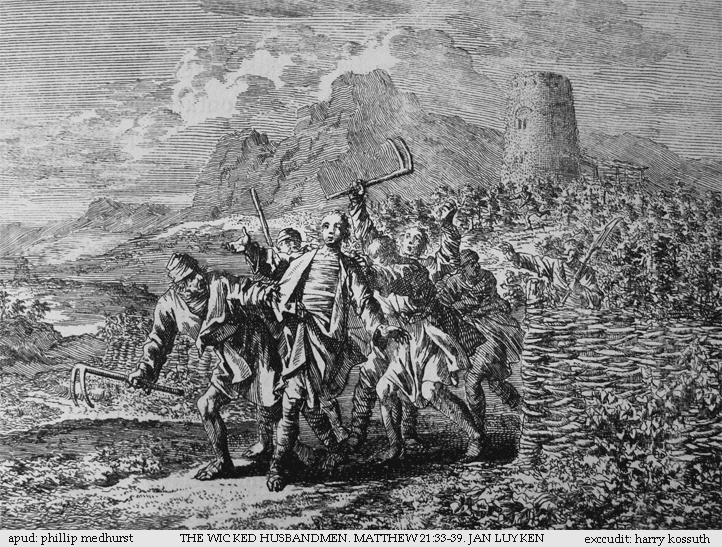
The Parable of the Wicked Husbandmen, also known as the Parable of the Bad Tenants, is a parable of Jesus found in the Gospel of Matthew (Matthew 21:33–46), the Gospel of Mark (Mark 12:1–12) and the Gospel of Luke (Luke 20:9–19). It is also found in the non-canonical Gospel of Thomas. It describes a landowner (KJV: householder) planting a vineyard and letting it out to husbandmen (tenants in some translations) who failed in their duties.
A common Christian interpretation is that this parable was about the chief priests and Pharisees, and was given to the people present within the Temple in Jerusalem during the final week before the death of Jesus.
33 Hear another parable: There was a certain householder, which planted a vineyard, and hedged it round about, and digged a winepress in it, and built a tower, and let it out to husbandmen, and went into a far country:
34 And when the time of the fruit drew near, he sent his servants to the husbandmen, that they might receive the fruits of it.
35 And the husbandmen took his servants, and beat one, and killed another, and stoned another.
36 Again, he sent other servants more than the first: and they did unto them likewise.
37 But last of all he sent unto them his son, saying, They will reverence my son.
38 But when the husbandmen saw the son, they said among themselves, This is the heir; come, let us kill him, and let us seize on his inheritance.
Hub AI
Parable of the Wicked Husbandmen AI simulator
(@Parable of the Wicked Husbandmen_simulator)
Parable of the Wicked Husbandmen
The Parable of the Wicked Husbandmen, also known as the Parable of the Bad Tenants, is a parable of Jesus found in the Gospel of Matthew (Matthew 21:33–46), the Gospel of Mark (Mark 12:1–12) and the Gospel of Luke (Luke 20:9–19). It is also found in the non-canonical Gospel of Thomas. It describes a landowner (KJV: householder) planting a vineyard and letting it out to husbandmen (tenants in some translations) who failed in their duties.
A common Christian interpretation is that this parable was about the chief priests and Pharisees, and was given to the people present within the Temple in Jerusalem during the final week before the death of Jesus.
33 Hear another parable: There was a certain householder, which planted a vineyard, and hedged it round about, and digged a winepress in it, and built a tower, and let it out to husbandmen, and went into a far country:
34 And when the time of the fruit drew near, he sent his servants to the husbandmen, that they might receive the fruits of it.
35 And the husbandmen took his servants, and beat one, and killed another, and stoned another.
36 Again, he sent other servants more than the first: and they did unto them likewise.
37 But last of all he sent unto them his son, saying, They will reverence my son.
38 But when the husbandmen saw the son, they said among themselves, This is the heir; come, let us kill him, and let us seize on his inheritance.
Recent media