
Recent from talks
Gospel of Thomas
Knowledge base stats:
Talk channels stats:
Members stats:
Gospel of Thomas
The Gospel of Thomas (also known as the Coptic Gospel of Thomas) is a non-canonical sayings gospel. It was discovered near Nag Hammadi, Egypt, in 1945 among a group of books known as the Nag Hammadi library. Scholars speculate the works were buried in response to a letter from Bishop Athanasius declaring a strict canon of Christian scripture. Most scholars place the composition during the second century, while some have proposed dates as late as 250 AD and others have traced its signs of origins back to 60 AD. Some scholars have seen it as evidence of the existence of a "Q source" that might have been similar in its form as a collection of sayings of Jesus, without any accounts of his deeds or his life and death, referred to as a sayings gospel, though most conclude that Thomas depends on or harmonizes the Synoptics.
The Coptic-language text, the second of seven contained in what scholars have designated as Nag Hammadi Codex II, comprises 114 sayings attributed to Jesus. Almost two-thirds of these sayings resemble those found in the canonical gospels and its editio princeps counts more than 80% of parallels. Experts speculate that the gospel's other sayings were added from Gnostic tradition. Its place of origin may have been Syria, where Thomasine traditions were strong. Other scholars have suggested an Alexandrian origin.
The introduction states: "These are the hidden words that the living Jesus spoke and Didymos Judas Thomas wrote them down." Didymus (Koine Greek) and Thomas (Aramaic) both mean "twin". Most scholars do not consider the Apostle Thomas the author of this document; the author remains unknown. Because of its discovery with the Nag Hammadi library, and the cryptic nature, it was widely thought the document originated within a school of early Christians, proto-Gnostics. By contrast, critics have questioned whether the description of Thomas as an entirely gnostic gospel is based solely on the fact it was found along with gnostic texts at Nag Hammadi.
The Gospel of Thomas is very different in tone and structure from other New Testament apocrypha and the four canonical Gospels. Unlike the canonical Gospels, it is not a narrative account of Jesus' life; instead, it consists of logia (sayings) attributed to Jesus, sometimes stand-alone, sometimes embedded in short dialogues or parables; 13 of its 16 parables are also found in the Synoptic Gospels. The text contains a possible allusion to the death of Jesus in logion 65 (Parable of the Wicked Husbandmen), but does not mention his crucifixion, his resurrection, or the Last Judgment; nor does it mention a messianic understanding of Jesus.
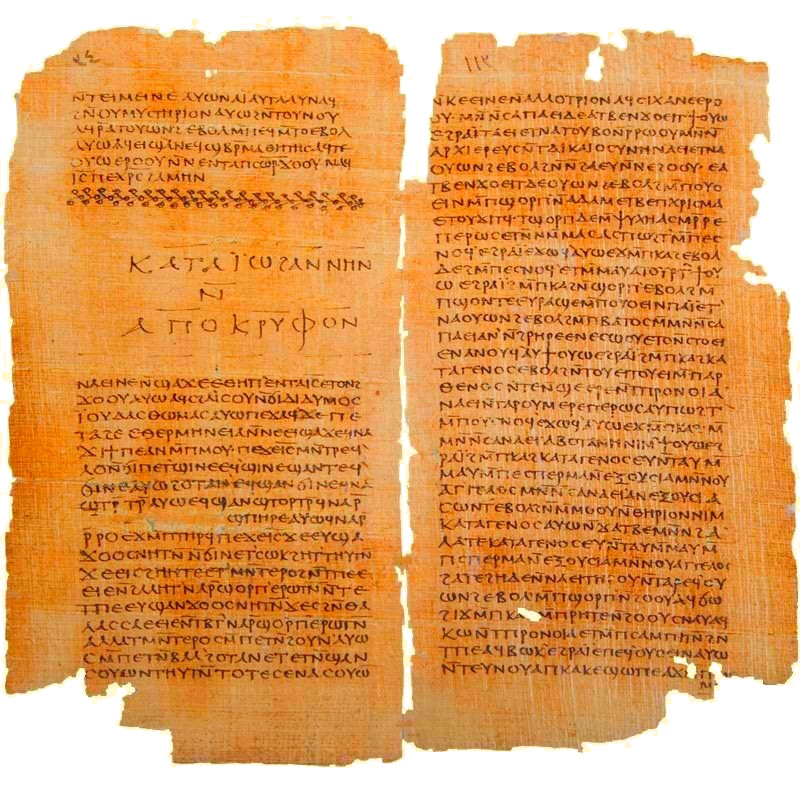
The manuscript of the Coptic text (CG II), found in 1945 at Nag Hammadi in Egypt, is dated at around 340 AD. It was first published in a photographic edition in 1956. This was followed three years later (1959) by the first English-language translation, with Coptic transcription. In 1977, James M. Robinson edited the first complete collection of English translations of the Nag Hammadi texts. The Gospel of Thomas has been translated and annotated worldwide in many languages.
The original Coptic manuscript is now the property of the Coptic Museum in Cairo, Egypt, Department of Manuscripts.
After the Coptic version of the complete text was discovered in 1945 at Nag Hammadi, scholars soon realized that three different Greek text fragments previously found at Oxyrhynchus (the Oxyrhynchus Papyri), also in Egypt, were part of the Gospel of Thomas. These three papyrus fragments of Thomas date to between 130 and 250 AD.
Prior to the Nag Hammadi library discovery, the sayings of Jesus found in Oxyrhynchus were known simply as Logia Iesu. The corresponding Uncial script Greek fragments of the Gospel of Thomas, found in Oxyrhynchus are:
Hub AI
Gospel of Thomas AI simulator
(@Gospel of Thomas_simulator)
Gospel of Thomas
The Gospel of Thomas (also known as the Coptic Gospel of Thomas) is a non-canonical sayings gospel. It was discovered near Nag Hammadi, Egypt, in 1945 among a group of books known as the Nag Hammadi library. Scholars speculate the works were buried in response to a letter from Bishop Athanasius declaring a strict canon of Christian scripture. Most scholars place the composition during the second century, while some have proposed dates as late as 250 AD and others have traced its signs of origins back to 60 AD. Some scholars have seen it as evidence of the existence of a "Q source" that might have been similar in its form as a collection of sayings of Jesus, without any accounts of his deeds or his life and death, referred to as a sayings gospel, though most conclude that Thomas depends on or harmonizes the Synoptics.
The Coptic-language text, the second of seven contained in what scholars have designated as Nag Hammadi Codex II, comprises 114 sayings attributed to Jesus. Almost two-thirds of these sayings resemble those found in the canonical gospels and its editio princeps counts more than 80% of parallels. Experts speculate that the gospel's other sayings were added from Gnostic tradition. Its place of origin may have been Syria, where Thomasine traditions were strong. Other scholars have suggested an Alexandrian origin.
The introduction states: "These are the hidden words that the living Jesus spoke and Didymos Judas Thomas wrote them down." Didymus (Koine Greek) and Thomas (Aramaic) both mean "twin". Most scholars do not consider the Apostle Thomas the author of this document; the author remains unknown. Because of its discovery with the Nag Hammadi library, and the cryptic nature, it was widely thought the document originated within a school of early Christians, proto-Gnostics. By contrast, critics have questioned whether the description of Thomas as an entirely gnostic gospel is based solely on the fact it was found along with gnostic texts at Nag Hammadi.
The Gospel of Thomas is very different in tone and structure from other New Testament apocrypha and the four canonical Gospels. Unlike the canonical Gospels, it is not a narrative account of Jesus' life; instead, it consists of logia (sayings) attributed to Jesus, sometimes stand-alone, sometimes embedded in short dialogues or parables; 13 of its 16 parables are also found in the Synoptic Gospels. The text contains a possible allusion to the death of Jesus in logion 65 (Parable of the Wicked Husbandmen), but does not mention his crucifixion, his resurrection, or the Last Judgment; nor does it mention a messianic understanding of Jesus.
The manuscript of the Coptic text (CG II), found in 1945 at Nag Hammadi in Egypt, is dated at around 340 AD. It was first published in a photographic edition in 1956. This was followed three years later (1959) by the first English-language translation, with Coptic transcription. In 1977, James M. Robinson edited the first complete collection of English translations of the Nag Hammadi texts. The Gospel of Thomas has been translated and annotated worldwide in many languages.
The original Coptic manuscript is now the property of the Coptic Museum in Cairo, Egypt, Department of Manuscripts.
After the Coptic version of the complete text was discovered in 1945 at Nag Hammadi, scholars soon realized that three different Greek text fragments previously found at Oxyrhynchus (the Oxyrhynchus Papyri), also in Egypt, were part of the Gospel of Thomas. These three papyrus fragments of Thomas date to between 130 and 250 AD.
Prior to the Nag Hammadi library discovery, the sayings of Jesus found in Oxyrhynchus were known simply as Logia Iesu. The corresponding Uncial script Greek fragments of the Gospel of Thomas, found in Oxyrhynchus are:
Recent media