Hubbry Logo
Pat DobsonPat DobsonMain
Open search
Pat Dobson
Community hub
Pat Dobson
logo
8 pages, 0 posts
0 subscribers
Be the first to start a discussion here.
Pat Dobson
Pat Dobson
from Wikipedia

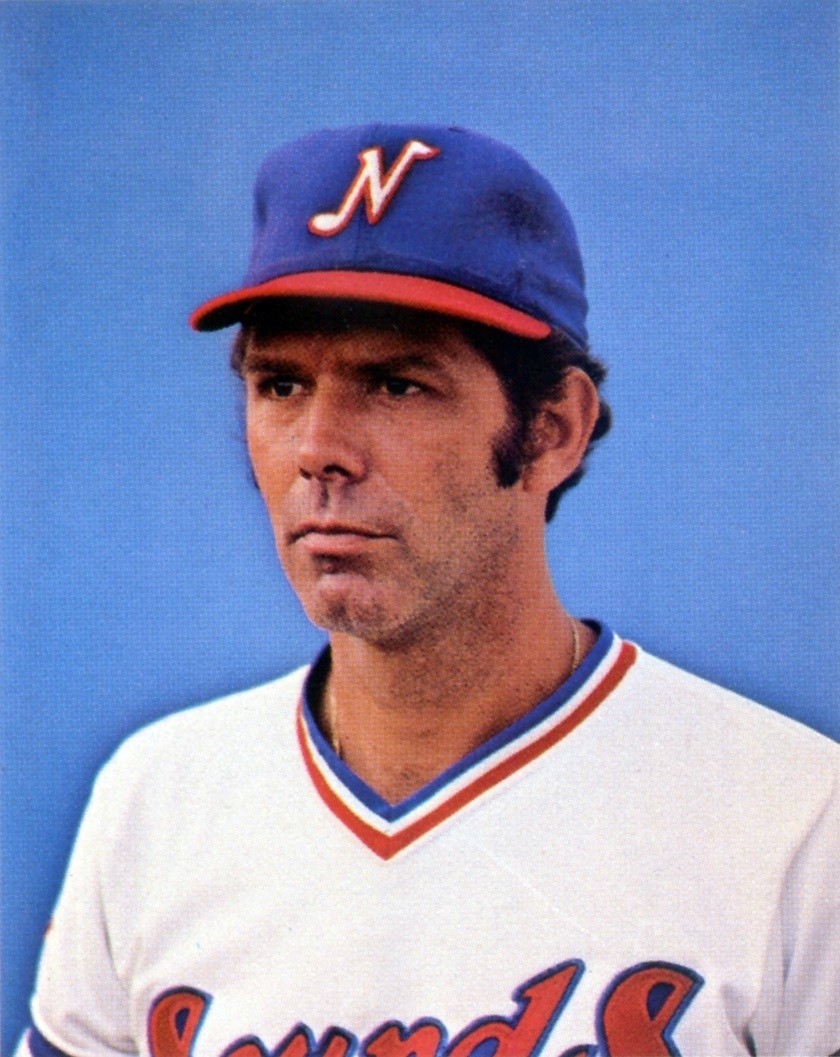
Patrick Edward Dobson, Jr. (February 12, 1942 – November 22, 2006) was an American right-handed starting pitcher in Major League Baseball who played for the Detroit Tigers (1967–69), San Diego Padres (1970), Baltimore Orioles (1971–72), Atlanta Braves (1973), New York Yankees (1973–75) and Cleveland Indians (1976–77). He was best known for being one of four Orioles pitchers to win 20 games in their 1971 season.

Key Information

Baseball career

[edit]

Dobson was born in Depew, New York. He signed with Detroit in 1959. After spending seven years in the minor leagues and winter ball, pitching both in relief and starting,[1] he made his debut with the big team in the 1967 season after starting the season 4–1 with a 1.47 ERA in six starts for the AAA Toledo Mud Hens. Dobson would spend the next 2+12 years as a reliever and spot starter for the Tigers including pitching 4+23 innings of relief in the team's 1968 World Series victory over the St. Louis Cardinals.[2] Unable to claim a spot in the Tigers' rotation of Mickey Lolich, Denny McLain, Earl Wilson, and Joe Sparma, Dobson was traded to San Diego in 1969 along with Dave Campbell for a young Joe Niekro.[3] After going 14–15 with 185 strikeouts and a 3.76 earned run average as the staff ace for the last-place Padres, he was traded along with Tom Dukes to Baltimore for Enzo Hernández, Tom Phoebus, Fred Beene and Al Severinsen on December 1, 1970.[4]

In 1971 Dobson had a winning streak of 12 games (including nine consecutive complete games) and a scoreless inning streak of 23. On September 24, he recorded his 20th win, a 7–0 shutout against the Indians. Dobson posted a 20–8, 187, 2.90 season record, and was part of the Orioles' "Big Four" pitching staff along with Dave McNally (21–5), Mike Cuellar (20–9), and Jim Palmer (20–9). Baltimore went on to win 101 games, with the distinction of having four 20-game winners in a season; only one other team in MLB history, the 1920 Chicago White Sox, have had four 20-game winners. On November 2, 1971, Dobson threw a 2–0 no-hitter against the Yomiuri Giants in Tokyo. It was the first no-hit game in the Japanese-American baseball exhibition history. Dobson was an All-Star in 1972. His 2.65 ERA was a major improvement from his 20-win season, but he went 16–18, tying for the AL lead in losses with Yankee Mel Stottlemyre.

In a transaction primarily driven by the Orioles' need for a power-hitting catcher, he was dealt along with Davey Johnson, Johnny Oates and Roric Harrison to the Atlanta Braves for Earl Williams and Taylor Duncan on the last day of the Winter Meetings on December 1, 1972.[5] After starting the 1973 season 3–7, Dobson was sent to the Yankees on June 7 for four minor league players (none of whom panned out). Escaping Atlanta, he again blossomed and finished the season with a 9–8 record for the Yankees. Dobson started the 1974 campaign weakly, achieving only a 6–11 record by mid–season. However, Dobson anchored the Yankees' pitching staff in the second half of the season, finishing with a 19–15 record and a 3.07 ERA, the best numbers that year for a Yankee pitcher. After a slumping 11–14, 4.07 in 1975, Dobson was traded to the Indians, and recovered in 1976 with a 16–12, 3.48 record. The 1977 season proved to be his last, as Dobson compiled a 3–12, 6.16 record. He was released by the Indians during spring training of 1978.

In his 11-season career Dobson had a record of 122–129, with 1,301 strikeouts, a 3.54 earned run average, 74 complete games, 14 shutouts, 19 saves, and 2,120+13 innings pitched in 414 games.

Later life

[edit]

After his playing days, Dobson became a pitching coach for the Brewers, Padres, Royals and Orioles. From 1989 to 1990, he was the manager of the Fort Myers Sun Sox of the Senior Professional Baseball Association, leading the team to a 37–35 record and a playoff berth in his first season and an 11–14 record at the time of the league's demise on December 26, 1990. In 1997, Dobson joined the San Francisco Giants organization and worked as an advance major league scout and assistant to general manager Brian Sabean.[6]

In 2006 Dobson died from leukemia in San Diego at the age of 64, one day after being diagnosed with the disease.[6]

See also

[edit]

References

[edit]
[edit]
Revisions and contributorsEdit on WikipediaRead on Wikipedia
from Grokipedia
Patrick Edward Dobson (February 12, 1942 – November 22, 2006) was an American professional baseball pitcher who played eleven seasons in (MLB) from 1967 to 1977. Right-handed and standing 6 feet 3 inches (1.91 m) tall, he appeared for the Detroit Tigers (1967–1969), Baltimore Orioles (1970–1972), New York Yankees (1973–1975), and Indians (1976–1977). Over his career, Dobson recorded 122 wins and 129 losses with a 3.54 (ERA), 1,301 strikeouts, and 2,120.1 innings pitched in 414 games (279 starts). Dobson achieved his greatest success with the Orioles, where in 1971 he posted a 20–8 record with a 2.90 ERA in 37 starts, becoming one of four pitchers on the team—alongside Mike Cuellar, Dave McNally, and Jim Palmer—to win 20 or more games that season, a unique accomplishment in MLB's modern era. The Orioles won the American League pennant that year, and Dobson started two games in the World Series, which Baltimore lost to the Pittsburgh Pirates in seven games. He was selected to his only All-Star Game in 1972, pitching a scoreless inning in the midsummer classic. Earlier in his career, Dobson contributed to the Tigers' championship, appearing in three games during the Fall Classic, a seven-game victory over the Cardinals. With the Yankees, he started 39 games and completed 12 in 1974, when he won 19 games with a 3.07 . In 1976 with , Dobson won 16 games with a 3.48 ; arm injuries limited him in 1977, his final season, before retiring. After retiring, he worked as a pitching coach for teams including the Milwaukee Brewers, San Diego Padres, , and , as well as a scout for the Giants until his death from in 2006.

Early life

Birth and upbringing

Patrick Edward Dobson Jr. was born on February 12, 1942, in , a small village located ten miles east of Buffalo. He was the son of Patrick Dobson Sr. and Bertha (Zont) Dobson. Dobson grew up in a working-class family in the post-Depression era Buffalo area, amid the economic challenges and gradual recovery of the early 1940s. He had a sister named Susan and an unnamed brother. Depew, originally established as a planned railroad community in the late with the New York Central Railroad's shops as its economic core, provided a tight-knit, blue-collar environment for Dobson's formative years, though the shops had shuttered during the of . His early interests centered on the everyday rhythms of this industrial , including interactions in a village that straddled townships and emphasized local resilience during .

Amateur baseball and education

Pat Dobson attended Lancaster Central High School in , where he developed his skills as a during his teenage years. Born in nearby Depew, he benefited from local family support that encouraged his athletic pursuits. At Lancaster Central, Dobson emerged as a standout , compiling an impressive 19–1 record over his high school career and earning recognition as the team's star hurler. His dominance on the mound drew attention from professional scouts, highlighting his potential as a right-handed despite the school's modest resources. Although specific local awards are not widely documented, his performance helped solidify Lancaster's reputation for producing talented athletes in the Buffalo area. Dobson graduated from Lancaster Central High School around 1960, shortly after signing as an amateur with the Tigers in 1959 at the age of 17. This agreement, secured by Tigers scout Cy Williams, marked the end of his amateur baseball career and launched him into ranks.

Professional baseball career

Minor league years

Pat Dobson began his professional baseball career, signing with the Detroit Tigers organization straight out of high school in 1959 at age 17. He spent his first season with the Class B Durham Bulls in the Carolina League, where he posted a 7-9 record with a 4.06 ERA over 157.1 innings, striking out 137 batters while issuing 98 walks, highlighting early control issues as he adjusted to professional competition. In 1961, Dobson split time between Durham (Class B) and the Class A Knoxville Smokies, finishing 4-10 with a 6.20 ERA in 119 innings, as his command struggles persisted with a WHIP of 2.01. Dobson's development showed steady improvement in subsequent years, progressing through the Tigers' system. In 1962, he excelled at the Class D Montgomery Rebels with an 8-7 record and 2.56 in 116 , recording 124 strikeouts, though a brief stint at Class C Duluth-Superior yielded poor results (0-2, 19.80 in 5 ). By 1963, at Class A Jamestown Falcons, he went 7-8 with a 4.10 and 158 strikeouts in 125 , then earned a promotion to Double-A Knoxville, where he thrived with a 5-1 mark and 1.33 in 61 , amassing 201 total strikeouts that season across levels. In 1964, Dobson started at Double-A Knoxville (6-5, 3.96 in 91 ) before a brief Triple-A trial with Syracuse Chiefs (1-2, 5.40 in 35 ), struggling against higher competition and returning to lower levels. The following year, 1965, saw him demoted to Double-A Montgomery Rebels, where he posted a strong 4-1 record with a 1.45 in 31 over 17 games, plus limited relief work at Syracuse (1.13 in 8 ). Prior to the 1966 season, Dobson was sent to the Indians and assigned to their Triple-A in the , marking the end of his Tigers affiliation. There, he anchored the rotation with a 12-9 record, 3.45 , and 142 strikeouts in 180 , despite dealing with that tested his durability. Over his seven minor league seasons (1960–1966), Dobson compiled an overall record of 54-54 with a 3.66 and 826 strikeouts in 928.1 , demonstrating gradual refinement of his , , and through winter ball stints in that boosted his confidence and control.

Major League debut and early teams

Pat Dobson made his debut on May 31, 1967, at the age of 25, with the Detroit Tigers, entering in relief during a game against the Cleveland Indians at Tiger Stadium. Coming off several seasons in the where he honed his skills as a right-handed known for his and , Dobson pitched 1⅔ innings in his debut, allowing two runs on four hits while striking out three batters. During his three seasons with the Tigers from 1967 to 1969, Dobson transitioned between appearances and limited starting assignments, posting an overall record of 11-20 with a 3.01 across 124 games. In 1967, he appeared in 28 games with one start, finishing 1-2 with a 2.92 in 49⅓ . His role expanded in 1968, when he made 10 starts among 47 appearances, going 5-8 with a 2.66 and seven saves over 125 , contributing to the Tigers' pennant. Dobson participated in the against the Cardinals, providing in three games for 4⅔ without a decision, as Detroit won the championship in seven games. In 1969, he led the team with 49 appearances, including nine starts, and recorded a 5-10 mark with a 3.60 , nine saves, and 105 . After the 1969 season, the Tigers traded Dobson and infielder Dave Campbell to the San Diego Padres on December 4, 1969, in exchange for pitcher . In 1970, Dobson secured a full-time starting role with the young Padres franchise in its second season, emerging as a reliable workhorse despite the team's struggles. He started 34 of his 40 games, leading the National League with 251 , and finished with a 14-15 record, a 3.76 , one , and 185 strikeouts.

Peak years with Orioles and Yankees

Dobson was acquired by the Baltimore Orioles in a trade with the San Diego Padres on December 1, 1970, in exchange for outfielder Enzo Hernández, pitcher Tom Phoebus, and pitcher Fred Beene. In his first full season with the Orioles in 1971, Dobson emerged as a dominant starter, posting a 20-8 record with a 2.90 ERA over 35 appearances, all starts, while leading the American League with 20 wins tied among pitchers. He became a key member of the Orioles' "Big Four" rotation alongside Mike Cuellar, Dave McNally, and Jim Palmer, marking only the second time in major league history that a team had four 20-game winners in a single season, following the 1920 Chicago White Sox. This feat powered Baltimore to a 101-57 record and an American League East title, though the team fell to the Pittsburgh Pirates in the World Series. Later that year, on November 2, 1971, during an exhibition tour in Japan, Dobson pitched a historic 2-0 no-hitter against the Yomiuri Giants in Toyama, becoming the first American major leaguer to achieve a no-hitter in Japanese-American baseball history. Dobson's success continued into 1972, when he earned his only selection after compiling a 16-18 record with a 2.65 in 40 starts. Following the season, traded him to the on November 30, 1972, as part of a package including , Roric Harrison, and in exchange for Earl Williams and Taylor Duncan. His tenure in Atlanta proved brief and unproductive, as he went 3-7 with a 5.56 in 12 starts during the first half of 1973. On June 7, 1973, the Braves dealt Dobson to the New York Yankees for Frank Tepedino, outfielder Wayne Nordhagen, and two players to be named later. With the Yankees from mid-1973 through 1975, Dobson provided steady rotation support during a period of rebuilding and contention. In 1973, he finished 9-8 with a 4.17 in 22 appearances (21 starts) after the trade, helping stabilize a staff in transition. His most productive year in came in 1974, when he recorded a 19-15 record and a 3.07 over 39 starts, 12 complete games, and 281 , contributing significantly to New York's 89-73 finish and their push in the pennant race. In 1975, Dobson went 11-11 with a 4.18 in 33 appearances, continuing to log heavy as the Yankees aimed to return to postseason glory.

Decline and retirement

Following his peak performance with the New York Yankees in 1974, where he recorded a 19-15 mark, Pat Dobson's effectiveness began to wane as he entered his mid-30s. In October 1975, the Yankees traded him to the Cleveland Indians in exchange for , a move that shed Dobson's $79,000 salary amid the team's roster adjustments. With Cleveland in 1976, Dobson rebounded to post a solid 16-12 record over 35 starts, complemented by a 3.48 ERA and 117 strikeouts in 217.1 innings, contributing to the Indians' first winning season (81-78) since 1968. However, his performance deteriorated sharply in 1977 at age 35, where he managed only a 3-12 record with a 6.14 ERA across 33 appearances (17 starts), including 81 strikeouts in 133.1 innings; by July, he had lost his rotation spot and shifted to the bullpen, with his final major league outing coming on September 19 against the Detroit Tigers, in which he took the loss. The Indians released Dobson on April 14, 1978, prior to the season opener, effectively ending his 11-year MLB playing career. Over his professional tenure from 1967 to 1977, Dobson compiled a 122-129 record with a 3.54 , 19 saves, and 1,301 strikeouts in 2,120.1 innings across 414 games (279 starts). His decline stemmed primarily from advancing age, recurring injuries that hampered his durability, and an unsuccessful transition to relief pitching in his final year, which disrupted his rhythm as a starter.

Post-playing career

Coaching positions

After retiring as a player, Pat Dobson transitioned into coaching, serving as pitching coach for the of the American Association from 1980 to 1981. He then joined the Milwaukee Brewers as their pitching coach from 1982 to 1984. During this period, he contributed to the team's success in the 1982 season, known as the "Harvey's Wallbangers" era, when the Brewers advanced to the before losing to the Cardinals. Dobson's tenure ended in 1984 amid the team's last-place finish in the . Dobson later served as pitching coach for the Padres from 1988 to 1990, where he worked closely with a young pitching staff, drawing on his own major league experience to emphasize improved mechanics and strategic approaches on the mound. In addition to his MLB duties, he managed the Fort Myers Sun Sox in the Senior Professional Baseball Association during the 1989 and 1990 seasons, guiding the team to a second-place finish before the league folded midway through 1990. In 1991, Dobson took on the pitching coach role with the , where he played a key part in rebuilding the confidence of reliever Mark Davis and supporting starter Mark Gubicza's recovery from shoulder surgery. His time with the Royals was brief, as he resigned on September 9 due to tensions with manager . Dobson returned to coaching in 1996 with the Baltimore Orioles, again focusing on developing young pitchers under manager , a former teammate; despite the team's second-place finish, he was let go at season's end following reported conflicts, including with ace . Throughout his coaching career, Dobson was recognized for his ability to enhance pitchers' control and endurance, leveraging insights from his 16-year to foster stamina and precision in his protégés.

Scouting and other roles

Dobson worked in scouting roles between and after his coaching positions, beginning with the Colorado Rockies as an advance scout from 1993 to 1995. In 1997, he joined the San Francisco Giants as an advance scout, a role in which he analyzed upcoming opponents and provided strategic insights to the team. Dobson later advanced to special assistant to Brian Sabean, where he focused on scouting pitchers and contributing to talent evaluation efforts that supported the Giants' competitive success in the late 1990s and early 2000s. Described as a trusted , his work helped inform key decisions during the organization's playoff runs, including the appearance. In addition to scouting, Dobson occasionally offered media commentary on pitching mechanics and team strategies, drawing from his no-hitter experience and frontline expertise. He remained active in these capacities with the Giants until his death in 2006.

Death and legacy

Illness and death

In his later years, Pat Dobson maintained a low public profile while residing in El Cajon, near , , with his wife of many years, Kathe. The couple had six children: Pat III, Nancy, Stacy, Chris, Shannon, and Stephanie. With no prior public record of serious health issues, Dobson's illness came as a sudden shock. On November 21, 2006, at the age of 64, Dobson was diagnosed with following tests prompted by recent feelings of illness. His condition deteriorated rapidly, and he passed away the following day, November 22, 2006, in . Dobson's wife, Kathe, confirmed to reporters that the death occurred just one day after the diagnosis. Following his death, Dobson was cremated, with his ashes given to family members. A remembrance notice in the San Diego Union-Tribune highlighted his life as a former major league pitcher, noting his residence with Kathe and survival by his mother, , and sister, Susan. One of his sons, , later reflected on his father's dedication and humor, recalling personal anecdotes from Dobson's days, though the family kept further tributes private.

Career achievements and impact

Pat Dobson's most notable achievement came in 1971 with the Baltimore Orioles, where he was one of four pitchers—alongside Jim Palmer, Dave McNally, and Mike Cuellar—to win 20 or more games, a feat unmatched by any major league team since the 1920 Cleveland Indians. That season, Dobson posted a 20-8 record with a 2.90 ERA over 282.1 innings, contributing to the Orioles' American League pennant. Later that year, during an exhibition tour in Japan, Dobson pitched the first no-hitter by an American in Japanese baseball history, a 2-0 victory against the Yomiuri Giants on November 2 in Toyama. Dobson earned his only selection in 1972, named the starting pitcher for the but did not appear in the midsummer classic, which the National League won 4–3 in 10 innings at Atlanta-Fulton County Stadium. Over his 11-season major league career, he amassed 122 wins against 129 losses with a 3.54 , logging 2,120.1 innings pitched across six teams, showcasing his durability as a workhorse starter in an era of high-innings pitchers. Dobson's contributions extended to the New York Yankees' resurgence in the mid-1970s, where he provided steady rotation support from 1973 to 1975, helping anchor the staff during their transition under owner and the arrival of key talents like . His role in the 1970s pitching landscape highlighted the value of versatile, endurance-focused arms capable of 200-plus innings annually, a standard that influenced subsequent coaching philosophies emphasizing pitcher conditioning and workload management. As a respected pitching coach later in his career for teams including the Brewers and Padres, Dobson drew on his own experiences to mentor young hurlers, fostering a reputation for insightful mechanics adjustments that prolonged careers. Often viewed as an underappreciated due to his late-career trades and lack of recognition despite elite seasons, Dobson's legacy endures through his induction into the Greater Buffalo Sports Hall of Fame in 1998, honoring his roots in , and his overachieving path from minor-league obscurity to major-league contributor.

References

Add your contribution
Related Hubs
User Avatar
No comments yet.