Hubbry Logo
Paul BäumerPaul BäumerMain
Open search
Paul Bäumer
Community hub
Paul Bäumer
logo
8 pages, 0 posts
0 subscribers
Be the first to start a discussion here.
Paul Bäumer
Paul Bäumer
from Wikipedia
This article deals with Paul Bäumer the pilot. For the fictional Paul Bäumer, see All Quiet on the Western Front. For the late member of electronic music group Bingo Players, see Bingo Players

Key Information

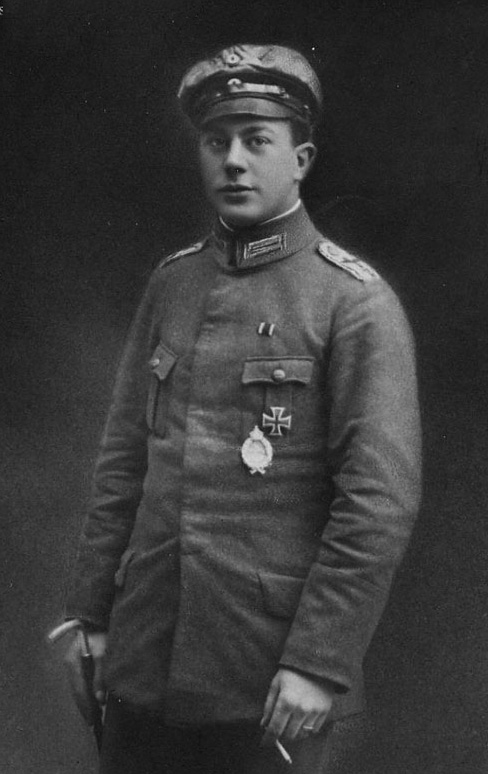
Paul Wilhelm Bäumer (11 May 1896 – 15 July 1927), also known as The Iron Eagle, was a German fighter ace in World War I. Bäumer died in an air crash at Copenhagen on 15 July 1927, age 31, while test flying a Rohrbach Ro IX fighter. Rohrbach's test pilot had already been involved in a spinning accident, and Bäumer, acting as a freelance test pilot, continued the testing and died after the aircraft entered a spin and crashed in the Øresund.

Background

[edit]

Bäumer was born on 11 May 1896 in Duisburg, Germany. He was a dental assistant before World War I, and earned a private pilot's license by the summer of 1914.[1]

Involvement in World War I

[edit]
Paul Bäumer's Albatros D.V fighter aircraft, 1917

At the start of the war, he joined the 70th Infantry Regiment. He served in both France and Russia, being wounded in the arm in the latter. He then transferred to the air service as a dental assistant before being accepted for military pilot training.[1]

By October 1916, he was serving as a ferry pilot and instructor at Armee Flugpark 1. On 19 February 1917, he was promoted to Gefreiter. On 26 March, he was assigned to Flieger Abteilung 7; he was promoted to Unteroffizier on the 29th.[1]

On 15 May 1917, he was awarded the Iron Cross Second Class. He subsequently received training on single-seaters, consequently being posted to fighter duty. Bäumer joined Jagdstaffel 5 on 30 June 1917, scoring three victories as a balloon buster in mid-July before going to the elite Jasta Boelcke.[1]

Albatros D.V of Paul Bäumer while with Jagdstaffel 5

Bäumer claimed heavily, reaching 18 victories by year end. He was commissioned in April 1918. On 29 May Bäumer was injured in a crash, breaking his jaw, and he returned to the Jagdstaffel in September. With the arrival of the Fokker D.VII he claimed even more success, including 16 in September. He flew with a personal emblem of an Edelweiss on his aircraft. He was one of the few pilots in World War I whose lives were saved by parachute deployment, when he was shot down in flames in September. He received the Pour le Mérite shortly before the Armistice and was finally credited with 43 victories, ranking ninth among German aces.[1]

Post-war career

[edit]

After the war, Bäumer worked briefly in the dockyards before he became a dentist, and reportedly one of his patients, Erich Maria Remarque, used Bäumer's name for the protagonist of his antiwar novel All Quiet on the Western Front.[1]

Bäumer was killed testing a Rohrbach Ro IX fighter.

Continuing his interest in flying, he founded his own aircraft company in Hamburg.[1] Bäumer died in an air crash at Copenhagen on 15 July 1927, age 31, while test flying a Rohrbach Ro IX fighter, Rohrbach's test pilot had already been involved in a spinning accident, and Bäumer, acting as a freelance test pilot, continued the testing and died after the aircraft entered a spin and crashed in the Øresund.[1][2][3]

References

[edit]
[edit]

Bibliography

[edit]

Further reading

[edit]
Revisions and contributorsEdit on WikipediaRead on Wikipedia
from Grokipedia
Paul Wilhelm Bäumer (11 May 1896 – 15 July 1927) was a prominent German during , renowned for achieving 43 confirmed aerial victories and earning the nickname "The " (Der Eiserne Adler) due to his resilience in combat and recovery from severe injuries. Born in Meiderich, near in the region of , Bäumer trained as a before enlisting in the in 1915, initially serving in an infantry regiment on the Western Front. Transferring to aviation in 1916, Bäumer first qualified as an observer with Feldflieger-Abteilung 7 (FA 7) before training as a , joining Jagdstaffel 5 (Jasta 5) in June 1917 where he scored his initial three balloon victories flying and D.Va aircraft. His tally rose dramatically after transferring to the elite Jagdstaffel Boelcke (Jasta 2) in August 1917, where he primarily flew fighters and became one of the squadron's leading scorers, downing 40 enemy aircraft by war's end. Bäumer's aggressive tactics and skill were recognized with the (both classes), the Military Merit Cross, and on 2 November 1918, the prestigious (Blue Max), making him one of only five pilots to also receive the Golden Military Merit Cross. Bäumer survived multiple close calls, including a May 1918 crash-landing that fractured his —ironically tying into his pre-war profession—and a September 1918 mid-air fire from which he escaped using one of service parachutes deployed in the , saving his life. Ranking ninth among German aces, his personal aircraft emblem of an edelweiss flower symbolized his Ruhr origins. Post-war, Bäumer pursued and , founding Bäumer Aero in in 1923 for aircraft construction and pilot training before working as a for Rohrbach Metallflugzeugbau; he tragically died at age 31 when the experimental Rohrbach Ro IX Rofix prototype he was demonstrating crashed into the Öresund strait near , , during from 3,000 meters altitude. His legacy endures as a symbol of the daring and peril faced by early aviators.

Early Life

Birth and Family

Paul Bäumer was born on 11 May 1896 in Meiderich, a district of in the region of the (now part of ). , a key industrial hub in the coal- and steel-rich Valley, provided the backdrop for his early years amid rapid and technological advancement. Historical records offer limited details on Bäumer's family background, with no confirmed information on his parents' occupations or siblings. He grew up in what appears to have been a modest household typical of the working-class communities in the heavily industrialized area. From a young age, Bäumer exhibited a keen interest in , a passion that foreshadowed his later career. As a child, he was so captivated by flight that he once secretly absconded from his in to visit Count Zeppelin's factory, earning an extended period of detention as punishment. This mechanical aptitude and curiosity about emerging technologies marked his adolescence in the dynamic pre-war era.

Education and Pre-War Career

Bäumer trained as a prior to , a that offered him steady amid the industrial environment of his hometown. This practical occupation highlighted his early aptitude for precise, hands-on work, allowing him financial independence as a young adult. His burgeoning passion for led him to pursue flight instruction independently, resulting in the attainment of a private pilot's license by the summer of 1914. This achievement, secured just months before the war's outbreak, underscored his mechanical skills and determination, as civilian in pre-war required rigorous self-funded training.

World War I Military Service

Infantry Enlistment

At the outbreak of World War I in August 1914, Paul Bäumer, then an 18-year-old dental assistant from Meiderich, voluntarily enlisted in the Imperial German Army, joining the Ersatz-Bataillon (replacement battalion) of the 8. Rheinisches Infanterie-Regiment Nr. 70, a Prussian infantry unit based in the Rhineland. Following roughly two months of basic training, Bäumer was deployed to the Western Front in France toward the end of 1914 as part of the regiment's active forces, participating in the initial German offensives and defensive actions in the region around St. Quentin during the early phases of the war. In early 1915, his unit was redeployed to the Eastern Front to counter Russian advances, where Bäumer served in and offensive operations, including the Winter Battle in (February 1915), a major German victory that halted Russian momentum in through harsh winter conditions and coordinated assaults. Bäumer's ground combat experience continued through mid-1915 with routine patrols and positional fighting against Russian forces until August, when during the Battle of —a fierce engagement where German troops repelled a Russian offensive—he suffered his first combat wound: a gunshot to the left forearm sustained while serving as a gunner in the front lines. The injury required several weeks of hospital treatment for the bullet , after which Bäumer returned to limited duty with the Ersatz-Bataillon of his regiment by late 1915, performing rear-area roles and further training assignments through 1916 amid ongoing shortages on both fronts.

Transition to Aviation

After recovering from a sustained during his service, Paul Bäumer transferred to the in October 1916. This move marked his shift from ground forces to , leveraging his pre-war interest in flying, where he had begun lessons in 1914 but was interrupted by the war. Bäumer's initial aviation role involved military pilot training, commencing in the summer of 1916 at a Flieger-Ersatz-Abteilung, the standard replacement and training unit for German army aviators. By October 1916, he had advanced to serving as a ferry pilot at Armee Flugpark 1 (AFP 1), a rear-area depot responsible for aircraft maintenance, repairs, and distribution to frontline units, where he transported newly built or repaired planes between factories and airfields. In this capacity, he gained practical experience in handling various aircraft types under non-combat conditions, accumulating early flight hours that built his proficiency. Subsequently, Bäumer was assigned as a at AFP 1, a role he held from late 1916 into early 1917, contributing to the training of novice pilots through ground school instruction and supervised flights on trainer aircraft such as the Rumpler C.I or . Training methods at the time emphasized basic maneuvers, engine management, and , often conducted at auxiliary fields near the Flugpark to simulate operational environments without risking frontline exposure. On 19 February 1917, he received a promotion to , reflecting his growing expertise. After his instructor role, on 26 March 1917, Bäumer was assigned to Feldflieger-Abteilung 7 (FA 7), where he flew two-seater , qualifying as an observer before volunteering for training in May 1917. He was promoted to on 29 March 1917. Bäumer's commissioning as a occurred later, in April 1918, after he had already logged significant non-combat hours—estimated at over 100 flights during his AFP 1 tenure—preparing him for frontline duties. This preparatory phase bridged his background to aviation, providing essential skills before his reassignment to and fighter units in mid-1917.

Fighter Pilot Achievements

Paul Bäumer joined 5 (Jasta 5) on 30 June 1917, where he quickly established himself as a formidable , downing three enemy observation balloons in mid-July. His first confirmed victory came on 12 July 1917, when he destroyed a French balloon near Nurlu while flying an . In August 1917, Bäumer transferred to the elite Boelcke (formerly Jasta 2), a unit renowned for its aggressive combat style and high-scoring pilots, where he continued to accumulate successes amid the intensifying air battles of the Western Front. Over the course of his frontline service from to , Bäumer amassed a total of 43 confirmed aerial victories, comprising 40 enemy and 3 balloons. These included diverse Allied types such as Sopwith Camels, R.E.8 reconnaissance planes, SPAD fighters, and Bristol F.2b two-seaters, with his final victory—a Bristol F.2b downed near Presau—recorded on 9 October . His tally reflected a rapid rise, particularly after his transfer to Jasta Boelcke, where he achieved the bulk of his destructions during the war's final months. Bäumer's combat approach emphasized bold, opportunistic engagements, often targeting vulnerable observation balloons early in his career before shifting to fighter-versus-fighter duels. He flew a series of and D.Va scouts for his initial 18 victories, including 3 balloons, transitioning to the more maneuverable in March 1918 for four additional kills, and ultimately the superior from September 1918 onward, in which he scored 21 triumphs. A brief stint with the experimental Pfalz D.VIII yielded no victories but ended in a crash that injured him in May 1918. His personal aircraft markings, including an edelweiss emblem, became recognizable symbols of his presence in the skies. With 43 victories, Bäumer ranked ninth among German fighter aces in , a conflict in which the as a whole confirmed thousands of aerial successes across its squadrons. This placed him among an elite cadre of pilots who helped establish air superiority tactics, though his contributions were part of a broader German effort that saw over 100 aces emerge by war's end.

Awards and Notable Incidents

Bäumer's military decorations reflected his exceptional service as a . He received the , Second Class, on 15 May 1917, shortly after joining the German Air Service. The , First Class, followed in early 1918, acknowledging his growing combat record. He was also awarded the , Knight's Cross with Swords, for bravery in aerial engagements. Additionally, Bäumer earned the Württemberg Golden Military Merit Order with Swords, a rare honor for non-commissioned officers equivalent to the . Bäumer was commissioned as a (lieutenant) in April 1918, marking his transition from non-commissioned ranks after enlisting as a in February 1917 and advancing to in March. Within Boelcke (Jasta 2), he rose to become the squadron's top-scoring pilot, leading flights and contributing to its elite reputation through his tactical skill and 43 confirmed victories. Several notable incidents underscored the risks of Bäumer's flying career. On 29 May 1918, he sustained injuries in a crash-landing at Vivaise airfield following a mission. Later, on 21 September 1918, after claiming a , Bäumer's aircraft was shot down in flames; he survived by deploying a Heinecke , becoming one of the first German fighter pilots to successfully use one in and evade capture. These events, along with minor forced landings earlier in his service, highlighted the perilous conditions he faced despite his 43 aerial triumphs. Bäumer's highest accolade, the (Blue Max), was bestowed on 2 November 1918, just days before the , in recognition of his overall contributions to the war effort.

Post-War Career

Civilian Professions

Following the end of , Paul Bäumer transitioned to civilian life by completing his training, building on his pre-war experience as a . He established and maintained a dental practice, serving patients during the economically turbulent years of the , a period marked by and widespread unemployment that posed significant challenges for professionals adapting to peacetime. Reports indicate that one of his notable patients was author , whose 1929 All Quiet on the Western Front featured a sharing Bäumer's name, possibly as a tribute. Bäumer's daily work as a involved routine oral care amid these hardships, reflecting his successful reintegration into civilian society before resuming aviation-related pursuits.

Aviation Ventures

Following , Paul Bäumer channeled his passion for aviation, honed as a , into entrepreneurial pursuits by co-founding Bäumer Aero GmbH in , , on 7 November 1922, alongside fellow ace Harry von Bülow-Bothkamp. The company established its operations at Flughafen Hamburg-Fuhlsbüttel, where it focused on designing and producing tailored for civilian flying, including touring and training models. Bäumer served as both manager and chief , leveraging his wartime expertise to oversee development and personally conduct initial flights, such as the maiden voyage of the company's first prototype on 15 August 1924. In 1927, Bäumer also worked as a for Rohrbach Metallflugzeugbau. Bäumer Aero emphasized aerodynamic innovation in the constrained post-war German landscape, where restrictions limited military production but spurred civilian advancements. Collaborating with designers like the Günter brothers—Walter and , who joined in —the firm produced a small series of , including the notable Bäumer Sausewind (B.IV), a tandem two-seat introduced in 1926. This model featured a dual-control for training, a wooden low-wing design powered by a 65 hp Wright L4 Gale , and pioneering elliptical wing and tail surfaces that minimized induced drag for superior efficiency, marking the first such application in . The elliptical planform, with a span of approximately 9 meters and high , enabled low stall speeds around 85 km/h while achieving maximum speeds up to 215 km/h, setting world records including an altitude of 6,782 meters on 8 July 1927 and a 100 km speed average of 191.2 km/h two days later. Production remained limited due to the era's economic challenges and high development costs, with only about four Sausewind variants completed (one B.II precursor, two B.IV, and one B.IVa with reduced wingspan for records). The company also operated a licensed flight school at Fuhlsbüttel from February 1924, training pilots on its designs amid the burgeoning German sport flying movement. Despite these innovations, Bäumer Aero faced mounting financial difficulties by late 1928, exacerbated by aircraft crashes and the onset of the global economic crisis, leading to liquidation in 1930.

Death and Legacy

Fatal Accident

On 15 July 1927, Paul Bäumer, serving as a guest for the Rohrbach company, was conducting a demonstration flight of the second Rohrbach Ro IX Rofix prototype fighter near , , to evaluate the aircraft for a potential order from the . The all-metal monoplane, powered by a 750 hp engine and designed by , had been constructed at Rohrbach's factory in Kastrup as part of efforts to secure export contracts. During the test, while performing spins at around 3,000 meters altitude over the strait, Bäumer suddenly lost control of the , causing it to enter an uncontrolled spin. The prototype plunged into the sea approximately 2 kilometers off the coast near , striking the water at a depth of 5 meters. Bäumer remained strapped in his seat and drowned in the impact; his body was recovered shortly after the crash. An official attributed the incident primarily to suspected but also faulted the monoplane's design for lacking the stability of a configuration, contributing to the loss of control. At the time of his death, Bäumer was 31 years old.

Recognition and Impact

Paul Bäumer earned the nickname "The " (Der Eiserne Adler) during due to his extraordinary resilience and combat prowess, exemplified by surviving multiple shootdowns, including a daring escape when his caught fire in 1918. This moniker reflected not only his 43 aerial victories but also his unyielding determination, distinguishing him among German aces as a symbol of indomitable spirit. Posthumously, Bäumer has been honored through memorials in his hometown, including a dedicated in Duisburg-Meiderich Stadtpark that commemorates his aviation legacy. In historical ace rankings, he is consistently placed ninth among German pilots, with modern analyses crediting his 43 confirmed victories—achieved primarily with Boelcke—as a testament to his tactical skill in contested skies over and the Western Front. Aviation histories often highlight his contributions alongside those of higher-scoring contemporaries like , noting Bäumer's focus on balloon-busting and fighter engagements as complementary to the Red Baron's squadron . Bäumer's impact extended into the through his ventures, particularly the Bäumer Sausewind series of , which pioneered elliptical wings and streamlined construction for superior . The Sausewind, first flown in , marked a milestone in German design by anticipating 1930s streamlined forms, influencing subsequent models like the and advancing sport flying under restrictions. Its innovative features, including a maximum speed of approximately 214 km/h in the B.IV variant achieved in a 1928 , underscored Bäumer's role in bridging wartime heroism with civilian innovation. In cultural depictions, Bäumer features prominently in aviation literature, such as Alex Imrie's detailed profile "Paul Bäumer: Iron Eagle" in the 1964 Cross & Cockade Journal, which analyzes his wartime tactics and postwar endeavors. He appears in broader histories like Airplanes that Transformed Aviation for his Sausewind's forward-thinking design, and in ace compilations that contextualize his achievements within the Pour le Mérite recipients. While no major films center on him, his story has inspired exhibits on German aces, and comparisons to Richthofen emphasize Bäumer's self-reliant style versus the latter's command-oriented fame.

References

Add your contribution
Related Hubs
User Avatar
No comments yet.