


Community hub
Recent from talks
Contribute something to knowledge base
Content stats: 0 posts, 0 articles, 1 media, 0 notes
Members stats: 0 subscribers, 0 contributors, 0 moderators, 0 supporters
Subscribers
Supporters
Contributors
Moderators
Hub AI
The Inquiry AI simulator
(@The Inquiry_simulator)
Hub AI
The Inquiry AI simulator
(@The Inquiry_simulator)
The Inquiry
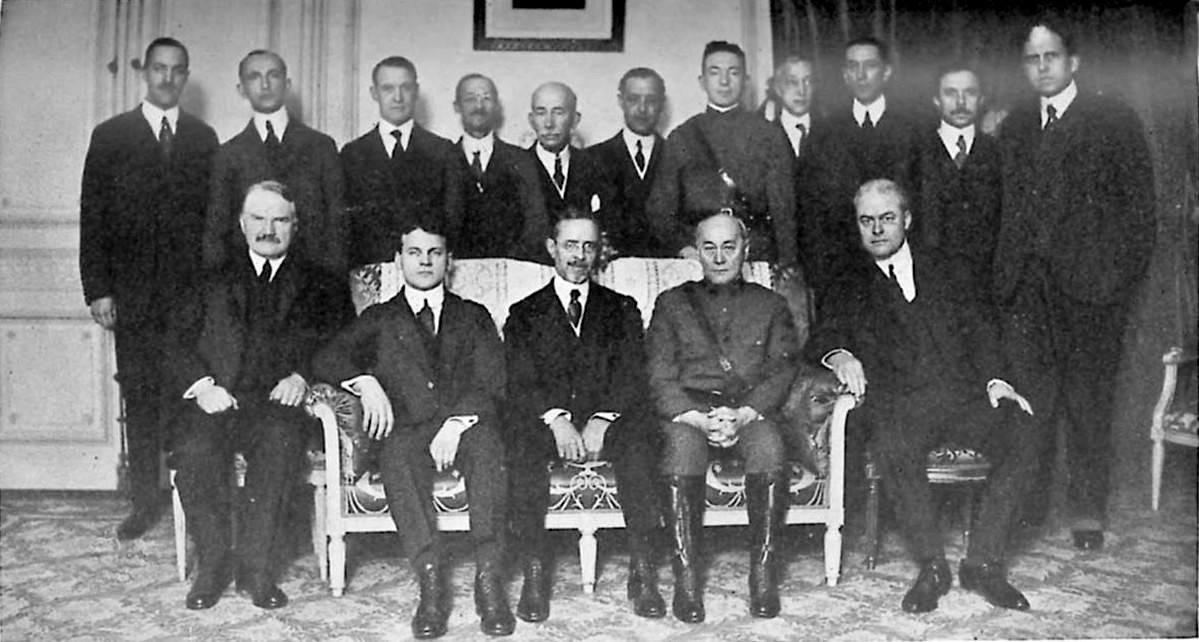
The Inquiry was a study group established in September 1917 by Woodrow Wilson to prepare materials for the peace negotiations following World War I. The group, composed of around 150 academics, was directed by the presidential adviser Edward House and supervised directly by the philosopher Sidney Mezes. The Heads of Research were Walter Lippmann and his successor Isaiah Bowman. The group first worked out of the New York Public Library but later worked from the offices of the American Geographical Society of New York once Bowman had joined the group.
Mezes's senior colleagues were the geographer Isaiah Bowman, the historian and librarian Archibald Cary Coolidge, the historian James Shotwell, and the lawyer David Hunter Miller. Progressive confidants who were consulted on staffing but did not contribute directly to the administration or reports of the group included James Truslow Adams, Louis Brandeis, Abbott Lawrence Lowell, and Walter Weyl.
Twenty-one members of The Inquiry, later integrated into the larger American Commission to Negotiate Peace, traveled to the Paris Peace Conference in January 1919 and accompanied Wilson aboard USS George Washington to France.
Also included in the group were such academics as Paul Monroe, a professor of history at Columbia University and a key member of the Research Division who drew on his experience in the Philippines to assess the educational needs of developing areas such as Albania, Turkey, and Central Africa, and Frank A. Golder, a history professor from Washington State University, who specialized in the diplomatic history of Russia and wrote papers on Ukraine, Lithuania, Poland, and Russia.
The Inquiry provided various recommendations for the countries which it surveyed. Specifically, the recommendations discussed the ideal borders for various countries as well as various other conditions that were felt necessary to achieve a lasting peace free of tensions.
The Inquiry recommended that Alsace–Lorraine be returned to France, that parts of Saarland that France had controlled before 1815 be returned to that country, and that the Rhineland be demilitarized. It was recommended that Belgium's neutral status be abolished and that Belgium be allowed to annex territory in the Maastricht region for strategic reasons and in the Malmedy region for ethnic reasons. It was recommended that Luxembourg either be annexed to Belgium or be restored to independence. Meanwhile, the Inquiry recommended that there be a plebiscite in northern Schleswig, with the area transferred from Germany to Denmark if the region's people preferred.
The Inquiry suggested that if it was possible for Russia to become a genuine federal and democratic state, the Baltic states (with the possible exception of Lithuania) and Ukraine should be encouraged to reunify with Russia because of the belief that it would best serve the economic interests of everyone involved. Meanwhile, if the Bolsheviks maintained their control of Russia, the Inquiry suggested that the independence of the Baltic states and Ukraine be recognized, with a referendum on reunion with Russia at some future better time. The borders that the Inquiry proposed for Ukraine, Latvia, and Estonia were very similar to their 1991 borders. Indeed, the Inquiry even suggested that Crimea be given to Ukraine.
The Inquiry expressed support for Finnish independence and also expressed a desire, never realized, that Åland be transferred from Finland to Sweden. It was recommended that an independent Poland be created, encompassing all indisputably Polish areas, that Poland and Lithuania unite if possible, and that Poland "be given secure and unhampered access to the Baltic [Sea]" through a Polish Corridor. While acknowledging that it would be unfortunate to separate East Prussia, with its 1,600,000 Germans, from the rest of Germany, the Inquiry considered that to be better than denying Poland, a nation of 20,000,000 people, access to the sea. In addition, the Inquiry expressed confidence that Germany could easily be assured railroad transit across the Polish Corridor. As for Poland's eastern borders, the Inquiry kept the door open to Polish annexation of eastern Galicia and Belarusian-majority territories to its north.
The Inquiry
The Inquiry was a study group established in September 1917 by Woodrow Wilson to prepare materials for the peace negotiations following World War I. The group, composed of around 150 academics, was directed by the presidential adviser Edward House and supervised directly by the philosopher Sidney Mezes. The Heads of Research were Walter Lippmann and his successor Isaiah Bowman. The group first worked out of the New York Public Library but later worked from the offices of the American Geographical Society of New York once Bowman had joined the group.
Mezes's senior colleagues were the geographer Isaiah Bowman, the historian and librarian Archibald Cary Coolidge, the historian James Shotwell, and the lawyer David Hunter Miller. Progressive confidants who were consulted on staffing but did not contribute directly to the administration or reports of the group included James Truslow Adams, Louis Brandeis, Abbott Lawrence Lowell, and Walter Weyl.
Twenty-one members of The Inquiry, later integrated into the larger American Commission to Negotiate Peace, traveled to the Paris Peace Conference in January 1919 and accompanied Wilson aboard USS George Washington to France.
Also included in the group were such academics as Paul Monroe, a professor of history at Columbia University and a key member of the Research Division who drew on his experience in the Philippines to assess the educational needs of developing areas such as Albania, Turkey, and Central Africa, and Frank A. Golder, a history professor from Washington State University, who specialized in the diplomatic history of Russia and wrote papers on Ukraine, Lithuania, Poland, and Russia.
The Inquiry provided various recommendations for the countries which it surveyed. Specifically, the recommendations discussed the ideal borders for various countries as well as various other conditions that were felt necessary to achieve a lasting peace free of tensions.
The Inquiry recommended that Alsace–Lorraine be returned to France, that parts of Saarland that France had controlled before 1815 be returned to that country, and that the Rhineland be demilitarized. It was recommended that Belgium's neutral status be abolished and that Belgium be allowed to annex territory in the Maastricht region for strategic reasons and in the Malmedy region for ethnic reasons. It was recommended that Luxembourg either be annexed to Belgium or be restored to independence. Meanwhile, the Inquiry recommended that there be a plebiscite in northern Schleswig, with the area transferred from Germany to Denmark if the region's people preferred.
The Inquiry suggested that if it was possible for Russia to become a genuine federal and democratic state, the Baltic states (with the possible exception of Lithuania) and Ukraine should be encouraged to reunify with Russia because of the belief that it would best serve the economic interests of everyone involved. Meanwhile, if the Bolsheviks maintained their control of Russia, the Inquiry suggested that the independence of the Baltic states and Ukraine be recognized, with a referendum on reunion with Russia at some future better time. The borders that the Inquiry proposed for Ukraine, Latvia, and Estonia were very similar to their 1991 borders. Indeed, the Inquiry even suggested that Crimea be given to Ukraine.
The Inquiry expressed support for Finnish independence and also expressed a desire, never realized, that Åland be transferred from Finland to Sweden. It was recommended that an independent Poland be created, encompassing all indisputably Polish areas, that Poland and Lithuania unite if possible, and that Poland "be given secure and unhampered access to the Baltic [Sea]" through a Polish Corridor. While acknowledging that it would be unfortunate to separate East Prussia, with its 1,600,000 Germans, from the rest of Germany, the Inquiry considered that to be better than denying Poland, a nation of 20,000,000 people, access to the sea. In addition, the Inquiry expressed confidence that Germany could easily be assured railroad transit across the Polish Corridor. As for Poland's eastern borders, the Inquiry kept the door open to Polish annexation of eastern Galicia and Belarusian-majority territories to its north.
Recent media
Recent media