Hubbry Logo
The FewThe FewMain
Open search
The Few
Community hub
The Few
logo
8 pages, 0 posts
0 subscribers
Be the first to start a discussion here.
The Few
The Few
from Wikipedia

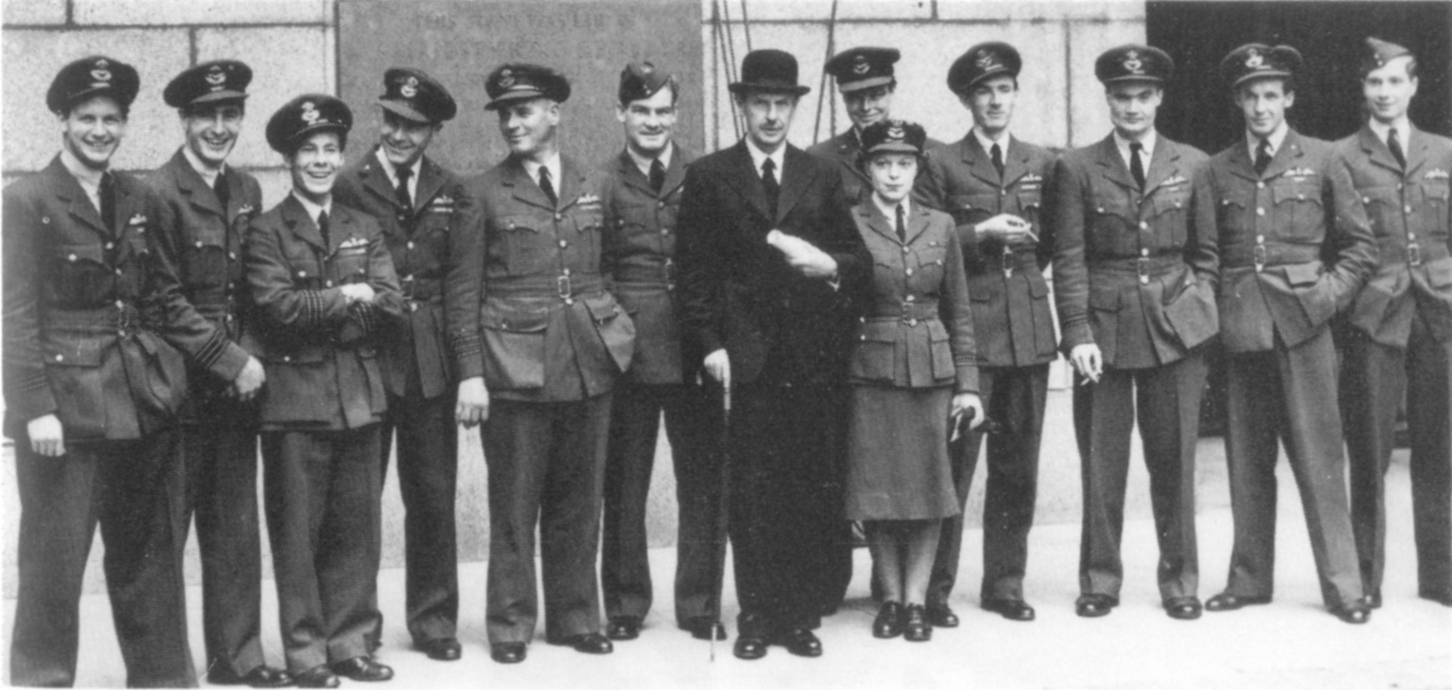
Hugh Dowding with some of "The Few"

The Few were the airmen of the Royal Air Force (RAF) and the aviators of the Fleet Air Arm, Royal Navy (RN) who fought the Battle of Britain in the Second World War. The term comes from Winston Churchill's phrase "Never, in the field of human conflict, was so much owed by so many to so few." It also alludes to Shakespeare's famous speech in his play, Henry V: "We few, we happy few, we band of brothers..."[1]

Aircrew

[edit]

Nearly 3,000 men were awarded the "Battle of Britain" clasp. Six of the seven longest surviving veterans of the battle (Squadron Leader John Hart, Flight Lieutenant Archie McInnes, Flight Lieutenant Maurice Mounsdon, Air Vice-Marshal John Thornett Lawrence, Wing Commander Paul Farnes and Flight Lieutenant William Clark) died between June 2019 and May 2020 as of 8 May 2020. The last survivor of The Few, Group Captain John Hemingway, died on 17 March 2025, aged 105.[2] The Royal Air Force called it "the end of an era".[3]

By one tally, British RAF aircrew numbered 2,353 (80%) of the total of 2,927 flyers involved, with 407 Britons killed from a total of 510 losses. The remainder were not British, many coming from parts of the British Empire (particularly New Zealand, Canada, Australia, and South Africa), as well as exiles from many conquered European nations, particularly from Poland and Czechoslovakia. Other countries supplying smaller numbers included Belgium, France, Ireland (serving in the RAF as Ireland was officially neutral), Southern Rhodesia and the United States.[4][5][6][7]

Legacy

[edit]
World War II poster containing the famous lines by Winston Churchill
The Battle of Britain anniversary parade at Buckingham Palace in 1943.

Winston Churchill summed up the effect of the battle and the contribution of RAF Fighter Command, RAF Bomber Command, RAF Coastal Command and the Fleet Air Arm with the words, "Never in the field of human conflict was so much owed by so many to so few".[8] Pilots who fought in the battle have been known as The Few ever since; at times being specially commemorated on 15 September, "Battle of Britain Day". On this day in 1940, the Luftwaffe embarked on their largest bombing attack yet, forcing the engagement of the entirety of RAF 11 Group in defence of London and the South East, which resulted in a decisive British victory that proved to mark a turning point in Britain's favour.[9][10]

Memorials

[edit]
The memorial to The Few at Capel-le-Ferne, atop the white cliffs of Dover...
... which faces the English Channel

The aircrew are remembered on the Battle of Britain Memorial, Capel-le-Ferne, Kent, and their names are listed on the Battle of Britain Monument in London. The Battle of Britain Roll of Honour is held in Westminster Abbey in the RAF Chapel, and is paraded annually during the Service of Thanksgiving and re-dedication on Battle of Britain Sunday[broken anchor].[11]

There is a preserved Hawker Hurricane fighter aircraft known as "The Last of The Many"—a reference to the 1942 film The First of the Few starring Leslie Howard as R.J. Mitchell, designer of the Spitfire—which flies as part of the Battle of Britain Memorial Flight, along with a Supermarine Spitfire that flew in the Battle (one of five Spitfires in the Memorial Flight). As the Hurricane was the last production model of that type, it did not itself fly in the Battle.

In 2022 a sculpture, the Spirit of the Few Monument, was unveiled at the Kent Battle of Britain Museum.[12]

Statistics

[edit]

The Battle of Britain was considered officially by the RAF[13] to have been fought between 10 July and 31 October 1940.

  • RAF pilots claimed to have shot down about 2,600 German aircraft, but figures compiled later suggest that Luftwaffe losses were more likely nearer 2,300.
  • Of 2,332 Allied pilots who flew fighters in the Battle, 38.90 per cent could claim some success in terms of enemy aircraft shot down.
  • The number of pilots claiming more than one victory amounted to no more than 15 per cent of the total RAF pilots involved.
  • To be proclaimed an "ace" a pilot had to have at least five confirmed victories. During the Battle of Britain just 188 RAF pilots achieved that distinction – eight per cent of the total involved. A further 237 of those RAF pilots claiming successes during the Battle became "aces" later in the war.
  • There were four pilots who were "ace in a day" in the Battle of Britain: Archie McKellar (British), Antoni Głowacki (Polish), Ronald Hamlyn (British) and Brian Carbury (New Zealander).

Leading aces

[edit]

The leading aces of the Battle of Britain (between 10 July and 31 October 1940) were: [14]

Rank Pilot Nationality Squadron Aircraft Kills Notes
1 Flt Lt Eric Lock United Kingdom United Kingdom 41 Spitfire 21 Total 26 kills. MIA 3 August 1941.
2 Sqn Ldr Archie McKellar United Kingdom United Kingdom 605 Hurricane 19 Total 21 (possibly 22) three probable and three damaged. 5 Bf 109's on 7 October 1940. KIA 1 November 1940.
3 Sgt James Lacey United Kingdom United Kingdom 501 Hurricane 18
(23 by end of November)
Total 28 kills.
4 Sgt Josef František Czech Republic Czechoslovakia 303 Hurricane 17 Killed 8 October 1940.
5 Fg Off Brian Carbury New Zealand New Zealand 603 Spitfire 15 + 12
6 Fg Off Witold Urbanowicz Poland Poland 145 and 303 Hurricane 15 Total 18 (possibly 20) kills.
7 Plt Off Colin Gray New Zealand New Zealand 54 Spitfire 14 + 12 Total 27.7 kills.
8 Plt Off Bob Doe United Kingdom United Kingdom 234 and 238 Spitfire / Hurricane 14 (+ 2 shared)
9 Flt Lt Paterson Hughes Australia Australia 234 Spitfire 14 + 56 KIA 7 September 1940.
10 Sqn Ldr Michael Crossley United Kingdom United Kingdom 32 Hurricane 14 Wartime total 22 victories.

Other notable Battle of Britain pilots

[edit]
[edit]

The Few, a novel by Alex Kershaw, tells the stories of the men who flew in the Battle of Britain. As of 2003, a Hollywood film similarly named The Few was in preparation for release in 2008, based on the story of real-life U.S. pilot Billy Fiske, who ignored his country's neutrality rules and volunteered for the RAF. A Variety magazine outline of the film's historical content[16] was said in The Independent to have been described by Bill Bond, who conceived the Battle of Britain Monument in London, as "Totally wrong. The whole bloody lot."[17]

"One of the Few", a song by British band Pink Floyd from their album The Final Cut (1983), describes a war veteran's return from the battlefield, specifically a pilot from the Battle of Britain, to pursue teaching, which connects to "The Hero's Return", another song from the album which is sung from the veteran's perspective. The Horrible Histories song called “The Few” commemorates the airmen and women, including Sir Douglas Bader.

References

[edit]
[edit]
Revisions and contributorsEdit on WikipediaRead on Wikipedia
from Grokipedia
The Few refers to the approximately 2,937 pilots and aircrew from the Royal Air Force (RAF) and allied forces who defended the against the German during the from July to October 1940. These airmen, averaging just 20 years old and hailing from 16 different nationalities including British, New Zealanders, Czechs, Poles, and Americans, flew multiple sorties daily in aircraft such as the and Hawker Hurricane to repel German bombing raids aimed at achieving air superiority for a potential . The term "The Few" was coined by Prime Minister in his August 20, 1940, speech to the , where he stated, "Never in the field of human conflict was so much owed by so many to so few," honoring their pivotal role in thwarting , Hitler's planned of Britain. The marked the first major military campaign fought entirely by air forces and represented a turning point in , as the RAF's success forced to abandon its invasion plans and shift focus to the Eastern Front. Despite being outnumbered—often facing up to four times as many German aircraft—these defenders inflicted heavy losses on the , with 544 of The Few killed and 422 . Their victory not only preserved British independence but also boosted Allied morale worldwide, symbolizing resilience against Nazi aggression. Post-war, The Few have been commemorated through memorials like the Battle of Britain Monument in and annual remembrances on (September 15), ensuring their legacy as heroes who shaped the course of history.

Historical Context

The Battle of Britain

The emerged as a critical campaign in the aftermath of the in late May 1940, when sought to consolidate its conquest of by planning an invasion of the under . Following the fall of , German military leaders, including , recognized that any cross-Channel assault required absolute air superiority to neutralize the Royal Navy and protect amphibious forces, a task assigned to the under . The Luftwaffe's objective was to dismantle the Royal Air Force (RAF) Fighter Command, thereby enabling the invasion fleet to cross the unopposed and secure beachheads in . Officially recognized as spanning from 10 July to 31 October 1940, the battle unfolded in distinct phases that escalated in intensity and shifted targets. The initial phase, often called the Channel fight or , ran from 10 July to 11 August, focusing on attacks against British shipping convoys in the to draw out and attrit RAF fighters. This transitioned into or Eagle Attack on 13 August, a major offensive targeting RAF airfields, stations, and infrastructure in to cripple Fighter Command's operational capacity. By early September, with airfields under severe pressure, the redirected efforts toward intensified daylight bombing of and other cities on 7 September, marking the start of and inadvertently relieving strain on Fighter Command by allowing it time to recover. Opposing the , which deployed approximately 4,000 aircraft including over 1,400 fighters, stood under the leadership of Sir , who coordinated defenses through an integrated system of , observer posts, and sector controls. The RAF as a whole began the battle with around 1,900 aircraft available, of which Fighter Command mustered roughly 900 fighters (including reserves), though only about 650-700 were serviceable at the outset in July 1940, supported by broader RAF resources but focused on intercepting intruders over Britain. The campaign's outcome carried profound implications for , marking the first major conflict conducted exclusively by air forces and thwarting Germany's ambitions for a western invasion. By failing to achieve air superiority, the Luftwaffe's losses—exceeding 1,700 aircraft—forced Hitler to indefinitely postpone in October 1940, preserving Britain as a base for future Allied operations and shifting the war's momentum. Prime Minister encapsulated the RAF's pivotal role in his 20 August speech, declaring that "never in the field of human conflict was so much owed by so many to so few," a tribute to the defenders amid the battle's .

Origin of the Term "The Few"

The term "The Few" originated in a speech delivered by British Prime Minister to the on 20 August 1940, during the height of the . In this address, Churchill paid tribute to the Royal Air Force (RAF) aircrew, particularly those of Fighter Command, for their critical role in defending the against the Luftwaffe's intense aerial assaults. The speech was given amid the early phases of the battle, known as the "Adlerangriff" or Eagle Attack, when German air raids were escalating and British morale faced significant strain. Churchill aimed to underscore the RAF's disproportionate impact in thwarting a potential , thereby bolstering national resolve and countering prior skepticism about the service's effectiveness in previous campaigns. The iconic phrase emerged in the following excerpt from Churchill's speech: "The gratitude of every home in our Island, in our Empire, and indeed throughout the world, except in the abodes of the guilty, goes out to the British airmen who, undaunted by odds, unwearied in their constant challenge and mortal danger, are turning the tide of the world war by their prowess and by their devotion. Never in the field of human conflict was so much owed by so many to so few. All hearts go out to the fighter pilots, whose brilliant actions we see with our own eyes day after day; but we must never forget that all the time, night after night, month after month, our bomber squadrons travel far into Germany, find their targets in the darkness by the highest navigational skill, aim their attacks, often under the heaviest fire, often with serious loss, with deliberate careful discrimination, and inflict shattering blows upon the whole German war machine." This rhetorical flourish echoed William Shakespeare's Henry V, specifically the St. Crispin's Day speech where King Henry inspires his outnumbered troops with "We few, we happy few, we band of brothers," evoking themes of heroic sacrifice by a small band against overwhelming odds. Initially, "The Few" specifically referred to the pilots and aircrew of , as emphasized in an pamphlet published in March 1941 and reaffirmed in Churchill's postwar memoirs. Over time, the term evolved to encompass all aircrew who participated in the , formalized through official recognition. In 1945, the announced the creation of the Battle of Britain clasp for the 1939-45 Star medal, awarded to qualifying personnel who flew operational sorties between 10 July and 31 October 1940—the officially designated battle period based on Sir Hugh Dowding's 1941 dispatch. This clasp, featuring a gilt rose emblem, was issued starting in 1946 to approximately 2,936 aircrew from Fighter Command and select other units, solidifying "The Few" as a collective honor for those who met the criteria. The speech's immediate reception was overwhelmingly positive, galvanizing public support for the and elevating the RAF's status, in stark contrast to earlier media and political critiques questioning the service's readiness and performance.

Composition of the Aircrew

Eligibility Criteria

The eligibility for recognition as one of "The Few" centers on the official criteria for the Battle of Britain Clasp to the , which was awarded exclusively to personnel of the Royal Air Force ( and who flew at least one operational with a qualifying squadron during the period from 10 July to 31 October 1940. This timeframe was formally defined in Sir Hugh Dowding's despatch submitted on 20 August 1941 and published in in 1946, marking the operational window for the battle's defense of the against attacks. The clasp, instituted in May 1945 as a silver-gilt rose emblem affixed to the , recognized participants based on verified squadron logs and operational records, with refinements to the award criteria issued in orders of 1946 and 1960. A total of 2,937 qualified for the clasp, encompassing pilots and other flying personnel but explicitly excluding , staff, or non-aircrew roles. Inclusion required individuals to be on the established strength of one of the 71 eligible fighter squadrons, flights, or units—such as Nos. 1, 17, 19, 234, 249, 601, and squadrons 804 and 808—and to have completed at least one authorized operational within the designated dates; posthumous awards were granted to those killed or mortally wounded during qualifying service. Qualifying hailed from diverse nationalities, including British, , Polish, and other Allied personnel, provided they met the RAF operational requirements. Exclusions covered non-operational flights, such as or sorties; service in non-fighter like bombers or planes; personnel from squadrons transferred to other commands, including Coastal Command (e.g., Nos. 53 and 59); and any operational activity extending beyond 31 October 1940. Historical debates have persisted over borderline cases, particularly auxiliary pilots or those with incomplete log documentation whose contributions fell short of verifiable operational proof, leading to occasional reviews but no significant expansions to the recipient list. Periodic verifications of records, including audits up to 2025 by historical commissions and memorials, have confirmed the total of 2,937 recipients without major revisions.

Demographics and Nationalities

The of "The Few," officially recognized by the Royal Air Force as comprising 2,937 who flew at least one operational during the from July 10 to October 31, 1940, reflected a predominantly British force augmented by significant international contributions. Of this total, 2,353 were from the , accounting for about 80% of the participants, while 584 hailed from overseas, from 15 other countries encompassing dominions and other Allied or neutral nations. The overseas contingent was diverse, with Commonwealth aircrew forming the largest group outside the UK. Key nationalities included 145 Poles—the largest non-Commonwealth contribution—followed by 88 Czechs (or Czechoslovaks), 126 New Zealanders, 98 Canadians, 33 Australians, and 25 South Africans. Smaller numbers came from other nations, such as 29 Belgians, 13 French, 11 Americans (including the notable volunteer Pilot Officer Billy Fiske, the first American to die in the battle), 10 Irish, and one Austrian, among others. This multinational makeup underscored the exile pilots' role, many fleeing Nazi-occupied Europe, alongside volunteers from neutral or Allied countries. Demographically, the aircrew were remarkably young, with an average age of 20 years, though those killed averaged 22. The group included a mix of pre-war RAF regulars, wartime volunteers, and exiled aviators; many had limited experience, often fewer than 200 flying hours upon entering combat, reflecting the urgent expansion of Fighter Command. Socially, most came from middle-class backgrounds, including professionals and skilled tradesmen, though some were from aristocratic families, and the force was entirely male—supported logistically by the Women's Auxiliary Air Force (WAAF). The last verified survivor, Irish-born Group Captain John "Paddy" Hemingway, who flew Hurricanes with No. 85 Squadron, died on March 17, 2025, at age 105.

Preparation and Equipment

Training Programs

The preparation of pilots for during the relied heavily on an expanded effort that built upon the peacetime of , which had trained only about 300 pilots annually by 1935. Following the outbreak of war in , intake surged through the Air Force Volunteer Reserve (RAFVR), established in to enable rapid mobilization, drawing in thousands of volunteers for at flying schools. By 1940, annual pilot production had escalated to around 7,000, supplemented by early contributions from the Empire Air Scheme (EATS), agreed in December 1939 and commencing intakes in April 1940, which trained personnel in Commonwealth countries like and to alleviate capacity constraints. This scheme provided a small but growing number of pilots for the battle, including trainees from abroad who formed about 20% of Fighter Command's aircrew. The standard training pipeline for fighter pilots began with initial ground school instruction in subjects such as , , and aircraft principles, followed by progression through specialized flying schools. At Elementary Flying Training Schools (EFTS), recruits learned basic flight controls and maneuvers on biplanes like the , achieving their first solo flights after about 8-10 hours. Service Flying Training Schools (SFTS) then provided advanced instruction on monoplanes such as the North American Harvard, focusing on instrument flying, , and formation tactics, with emphasis on gunnery practice using simulated targets. Due to wartime urgency, the overall pipeline for fighter qualification, which initially spanned 6-12 months and 150 flying hours at the war's start, was progressively abbreviated; by August 1940, EFTS courses lasted just 5 weeks (35 hours), and SFTS 10 weeks (72 hours). Graduates then attended Operational Training Units (OTUs) for 2-4 weeks of combat-specific preparation, including 40 hours on front-line fighters like the Hawker Hurricane, honing squadron-level formations and air-to-air gunnery before assignment. Specialized addressed the battle's unique demands, particularly through OTUs, which integrated pilots into operational squadrons with practical exercises in and teamwork. Night fighting preparation was rudimentary in 1940, involving limited familiarization at units like the Fighter Interception Unit, where pilots practiced vectoring from ground controllers using early AI (Airborne Interception) equipment on aircraft such as the , though full proficiency remained elusive amid equipment shortages. These programs faced significant challenges, including acute shortages of instructors, , and facilities that strained the UK's and necessitated reliance on EATS for overseas capacity. High washout rates, often around 50% across stages due to rigorous exams and reduced flying hours, resulted in only half of entrants qualifying as pilots, exacerbating the pilot deficit as losses mounted. By mid-1940, the RAF responded by establishing three additional fighter OTUs, boosting output from 39 to 115 pilots every two weeks, yet the abbreviated courses compromised overall proficiency and contributed to elevated accident rates during .

Aircraft and Technology

The primary fighter aircraft employed by RAF Fighter Command during the Battle of Britain were the Supermarine Spitfire and the Hawker Hurricane, both monoplane designs armed with eight .303-inch machine guns. The Spitfire, renowned for its high performance and distinctive elliptical wings that contributed to its maneuverability and low drag, entered service in 1938 and equipped 19 squadrons by mid-1940. In contrast, the Hurricane, introduced in 1937 as the RAF's first eight-gun monoplane, served as the workhorse of the force, equipping 32 squadrons and accounting for approximately 60% of enemy aircraft destroyed during the campaign. Other aircraft supplemented the fighters, including the , a two-seat turret fighter featuring a four-gun power-operated turret in place of forward-firing armament, which was deployed in limited numbers but proved vulnerable in daylight operations. For reconnaissance, light bombers were adapted for photographic and coastal patrol roles, providing essential intelligence despite their vulnerability to enemy fighters. Aircraft production rates ramped up critically during 1940; combined output of Spitfires and Hurricanes reached around 380 per month by mid-year, surpassing German production and enabling Fighter Command to maintain operational strength. By late 1940, monthly fighter production exceeded 400 units, supporting ongoing replacements and reinforcements. A pivotal technology was the Chain Home radar network, consisting of over 30 stations along the south and east coasts that provided early warning of incoming raids with a detection range of up to 200 miles for high-altitude . This system integrated with sector stations for , as well as the Royal Observer Corps for visual spotting of low-flying intruders, forming the core of the that allowed efficient scrambling of interceptors. Logistical challenges included maintenance under constant threat from bombing of airfields and factories, which strained repair capabilities and required rapid dispersal of operations. Upgrades such as constant-speed propellers were retrofitted to many Hurricanes and standard on Spitfires, improving climb rates and overall performance by automatically adjusting blade pitch for optimal engine efficiency. While fuel supplies remained adequate for combat sorties, broader affected flights, underscoring the resource pressures on the RAF.

Role in the Battle

Key Phases and Engagements

The commenced with Phase One on 10 July 1940, characterized by attacks on British shipping convoys in the and ports along the south and east coasts, alongside sporadic raids on coastal stations and night operations targeting ports and the industry. These convoy battles aimed to disrupt British supply lines and draw out , resulting in initial attrition for both sides as the Germans sought air superiority in preparation for , the planned invasion of Britain. Phase Two, from 13 to 18 August 1940, intensified with focused daylight raids on RAF airfields and radar installations, particularly in No. 11 Group covering southeast England. The campaign escalated on 13 August—Adlertag, or Eagle Day—when Luftflotten 2 and 3 launched mass attacks involving 485 bombers and over 1,000 fighter sorties against southern airfields, intending to destroy the RAF's operational capacity within weeks. Notable engagements included repeated bombings of key sites like RAF Biggin Hill, which endured heavy damage on 18 August (known as "The Hardest Day," with 750 German sorties across multiple airfields) and 30 August, straining sector operations but not breaking Fighter Command's defenses. The Luftwaffe's early emphasis on radar stations proved insufficient, as incomplete destruction allowed the RAF to maintain effective early warning, marking an initial strategic miscalculation. By late August, the had shifted primarily to airfield targets through early September, inflicting severe damage on five forward aerodromes and six sector stations while the RAF demonstrated resilience despite heavy tolls, losing 248 pilots between 26 August and 6 September amid ceaseless engagements. A pivotal occurred after accidental German bombing of on 24 August, prompting RAF Bomber Command's retaliatory raid on Berlin on 25 August, which infuriated Hitler and led to a Luftwaffe policy change. This error diverted attacks from RAF infrastructure to civilian targets starting 7 September, easing pressure on airfields but allowing Fighter Command to recover. The climax unfolded on 15 September 1940—designated —with massive raids on involving around 1,200–1,500 aircraft, resulting in intense dogfights over the capital. RAF pilots, averaging 800–1,000 daily sorties in response, suffered around 28 losses while inflicting approximately 41 losses on the (though RAF claims reached 185 German aircraft destroyed and claims around 60 RAF); this decisive RAF success prompted Hitler to postpone the invasion indefinitely two days later. The subsequent onset of from 7 September marked the battle's transition to night bombing of cities, reducing daylight threats to The Few and solidifying Britain's defense.

Tactics and Strategies

The formed the cornerstone of RAF Fighter Command's defensive doctrine during the , integrating radar detections from the Chain Home network with observations from the Royal Observer Corps to provide early warning and precise plotting of incoming raids. This centralized command structure at allowed for the efficient rotation of squadrons, ensuring that rested units could relieve fatigued ones in forward sectors like No. 11 Group, thereby maintaining continuous coverage without overcommitting forces. Forward basing of squadrons near the English coast further enabled rapid scrambles, minimizing response times to 10-15 minutes and allowing interceptors to engage enemies before they reached their targets. Defensive strategies emphasized gaining and maintaining a height advantage, with pilots instructed to climb to 15,000-20,000 feet to position above incoming formations and for initial attacks using the sun to mask their approach. Hit-and-run intercepts were prioritized, where squadrons would break off after a single pass to reform and re-engage, conserving fuel and while avoiding prolonged dogfights that could lead to unsustainable attrition. Mass battles were deliberately avoided under Keith Park's direction in No. 11 Group, as they risked overwhelming outnumbered RAF fighters; instead, smaller, flexible engagements targeted bomber vulnerabilities while limiting exposure to escorting Bf 109s. In dogfighting, the RAF adopted the "finger four" formation, consisting of two pairs of aircraft arranged like the fingers of a hand, which provided superior mutual support and all-around visibility compared to the rigid three-aircraft "vic" formation. This innovation, inspired by Luftwaffe Schwarm tactics and promoted by pilots like Group Captain Adolph "Sailor" Malan, enhanced situational awareness and enabled effective bouncing attacks on enemy formations. The controversy highlighted internal debates over tactics, with in No. 12 Group advocating massed formations of up to 60 aircraft to overwhelm raiders, contrasting Park's preference for immediate, smaller-scale responses under the . These "s" often arrived too late to influence engagements, achieving few successes while exposing forward airfields to undefended attacks. ultimately supported Park's approach, viewing as inefficient and disruptive to the system's emphasis on timely interception. Early Airborne Interception (AI) radar, fitted to a limited number of night fighters like the and by late 1940, represented an innovation for all-weather operations, though its day role remained marginal amid reliance on ground-based . Adaptations to tactics included assigning Hurricanes to penetrate and disrupt bomber streams while Spitfires engaged escorts, effectively countering the close protection of Ju 88s and Do 17s; against Ju 87 Stuka dive-bombers, RAF pilots exploited their low speed and vulnerability during recovery dives, contributing to high losses that prompted their withdrawal from daylight operations over Britain. Intelligence from Ultra decrypts provided supplementary confirmation of raid timings and compositions, augmenting plots but playing a secondary role to the Dowding System's real-time capabilities.

Statistics and Recognition

Overall Numbers and Losses

During the , a total of 2,937 from , Bomber Command, and Coastal Command participated by flying at least one operational between 10 July and 31 October 1940. RAF losses during the battle were significant but lower than those of the , with 544 , representing approximately 18.5% of the total participants. The RAF also lost 1,023 fighter aircraft in combat, primarily Hurricanes and Spitfires, though production and repairs allowed the force to remain operational. In contrast, German pilots claimed to have destroyed around 1,887 RAF aircraft, but verified records indicate they actually accounted for about 1,733 British planes. Roughly 81% of the RAF aircrew survived the battle itself, a figure bolstered by the proximity of operations over home territory, which facilitated rescues for downed pilots. However, many survivors faced further risks, with a substantial number continuing service through the remainder of and incurring higher overall losses in subsequent campaigns. Comparatively, the suffered approximately 2,585 aircrew killed, alongside the destruction of 1,733 aircraft, reflecting a higher attrition rate due to extended supply lines across the and the inability to quickly recover downed pilots. The RAF's lower fatality rate stemmed from advantages such as superior training, radar-directed intercepts, and the home defense position, which minimized long-term disruptions to pilot availability.

Leading Aces and Pilots

Among the pilots recognized as aces during the —defined as those credited with at least five confirmed aerial victories—188 members achieved this status, representing a small but elite fraction of the approximately 3,000 aircrew involved. Leading the aces in confirmed victories during the battle was Eric Lock of No. 41 Squadron, who downed 21 enemy aircraft between July and October 1940, including a remarkable streak of 15 kills in September alone while flying Spitfires from . Second was James "Ginger" Lacey of No. 501 Squadron, credited with 18 destructions, primarily Messerschmitt Bf 109s, in intense dogfights over southern England. Scottish pilot Archibald McKellar of No. 605 Squadron followed with 17.5 confirmed kills, excelling in Hurricane intercepts during the battle's height. Among Polish contributors, Stanisław Skalski of No. 501 Squadron added to his wartime total of 18.5 victories with three confirmed during the battle, including two Bf 109s in August 1940. Notable among non-British pilots was the first American volunteer, of No. 601 Squadron, who claimed six enemy aircraft destroyed before his death in action on August 17, 1940, exemplifying early international support for the RAF effort. Another key figure was , leader of No. 303 Polish Squadron, who amassed 15 confirmed kills during the battle, leading daring attacks that showcased aggressive tactics against formations. Four RAF pilots achieved "ace in a day" status by downing five or more enemy aircraft in a single , a testament to the ferocity of engagements; McKellar accomplished this on October 7, 1940, destroying five Bf 109s over . No. 303 Polish Squadron stood out as the highest-scoring unit, credited with 126 enemy aircraft destroyed in just 42 days of operations from late August to mid-October 1940, far surpassing other squadrons through coordinated Hurricane strikes. These aces and leading pilots were recognized with awards such as the Distinguished Flying Cross (DFC) and Distinguished Flying Medal (DFM), while all qualifying aircrew received the clasp to the 1939-1945 Star. Tragically, many aces did not survive the war; Lock, for instance, added five more victories before vanishing on a sweep over on August 3, 1941, presumed killed at age 22.

Legacy and Impact

Historical Significance

The victory achieved by "The Few"—the Royal Air Force (RAF) pilots during the —had profound strategic implications for the course of . By thwarting the Luftwaffe's attempt to gain air superiority over southern England, the RAF prevented , Adolf Hitler's planned invasion of the , which was indefinitely postponed and ultimately canceled by late October 1940. This defensive success compelled to redirect its military resources eastward, culminating in the invasion of the via in June 1941, a pivot that stretched German forces across multiple fronts and contributed to their eventual overextension. Furthermore, the retention of Britain as a sovereign base enabled the Allies to mount subsequent offensives, including the on D-Day in June 1944, which marked the beginning of the liberation of . Beyond its immediate military effects, the provided a crucial morale boost to the British populace and Allied cause at a moment of existential threat. The pilots' resilience symbolized unyielding defiance against Nazi domination, fostering national unity and determination to continue the fight despite the ongoing Blitz. Winston Churchill's address to on August 20, 1940—famously declaring that "never in the field of human conflict was so much owed by so many to so few"—encapsulated this heroism and served as a foundational element of British wartime , reinforcing public confidence and inspiring broader Allied resolve. This rhetorical emphasis on the RAF's role helped sustain civilian endurance through subsequent hardships, underscoring the battle's psychological significance in preventing despair or capitulation. The battle's broader legacy reshaped global understandings of air power, establishing air superiority as an indispensable prerequisite for successful military operations and influencing postwar doctrines on integrated air defense systems. It highlighted the effectiveness of radar-directed fighter intercepts and centralized command structures, principles that informed Allied strategies in later campaigns and even modern frameworks. In formal acknowledgment of these contributions, who participated between July 10 and October 31, 1940, received the Clasp attached to the 1939-1945 Star in 1945, marking the first instance of a specific battle clasp awarded with a and symbolizing the unique honor bestowed upon "The Few." Contemporary historical reassessments have critiqued aspects of the battle's , particularly regarding the inflation of victory claims. Postwar analyses indicate that RAF pilots overclaimed German aircraft destructions by approximately 50%, with initial reports of around 2,700 losses revised to about 1,733 actual aircraft destroyed, reflecting the challenges of verifying kills in chaotic dogfights. Such revisions temper the mythic scale of triumphs but affirm the battle's pivotal role in forestalling a rapid German victory, thereby extending the war in a manner that ultimately facilitated Allied mobilization and contributed to the conflict's resolution on terms favorable to the Western powers.

Modern Commemorations

The Battle of Britain is commemorated annually on , observed on 15 September, which marks the pivotal attacks over in 1940. The Royal Air Force (RAF) organizes flypasts featuring historic aircraft, such as Spitfires from the , to honor the pilots known as "The Few." These events, which have been held since the 1940s, include public displays and services that highlight the RAF's defensive role. The 80th anniversary in 2020 was adapted to virtual and limited formats due to the , with a scaled-down Service of Thanksgiving and Rededication at on 20 September and online streams of tributes across the . In contrast, the 85th anniversary in 2025 featured fuller in-person events, including a Service of Thanksgiving and Rededication at on 21 September, attended by RAF personnel and culminating in a Lancaster Bomber flypast. Additional commemorations included the 85: Anniversary Day at the (IWM) on 6 July and the Air Show on 6-7 September, showcasing wartime aircraft and RAF legacy articles. The death of John "Paddy" Hemingway on 17 March 2025 marked the passing of the last known surviving pilot, at the age of 105. Hemingway, an Irish-born RAF officer who flew Spitfires during the battle, had been a member of No. 249 Squadron. His passing underscored the diminishing number of veterans, contributing to the wind-down of related survivor groups as memberships reached zero. Educational initiatives continue to preserve the memory of "The Few" through school programs and museum exhibits that emphasize the diverse backgrounds of participants and the technological innovations of the era. The RAF Museum offers curriculum-linked workshops for Key Stage 3 students, exploring personal stories from the battle and the evolution of aerial warfare technology from biplanes to radar systems. The Battle of Britain Memorial's Geoffrey Page Centre provides immersive resources for schools, including hands-on activities that highlight contributions from Commonwealth pilots and ground crew. Similarly, the Kent Battle of Britain Museum runs guided tours for students, fostering understanding of the multinational effort in defending Britain.

Memorials and Honors

Physical Monuments

The National Memorial to the Few at Capel-le-Ferne in overlooks the from the and honors the RAF aircrew who participated in the between 10 July and 31 October 1940. Unveiled on 9 July 1993 by Queen Elizabeth The Queen Mother, its central feature is the Christopher Foxley-Norris Memorial Wall, an approximately 18-meter-long granite structure engraved with the names of the approximately 2,937 aircrew known to have flown at least one operational with an accredited RAF squadron or unit during the , with full-size replicas of a and a Hawker Hurricane located nearby. As of September 2024, ongoing research led to the addition of another name to the wall, demonstrating continued efforts to identify all eligible aircrew. The site includes a known as The , which displays artifacts such as aircraft parts recovered from the Channel and interactive exhibits on the pilots' experiences. In , the Monument on along the River Thames commemorates all who contributed to the air defense effort, including pilots, ground crews, and factory workers. Unveiled on 18 September 2005 by the Prince of Wales, the monument consists of a large bronze relief frieze by sculptor Paul Day, set within a 25-meter-long structure and depicting scenes of aerial , aircraft production, and daily life during the battle, against a backdrop with inscribed squadron badges. Within , the RAF Chapel features the Memorial Window, a stained-glass installation designed and crafted by Hugh Easton, which depicts symbolic elements like squadron crests from 63 RAF units, seraphim, and a rose tree motif representing sacrifice and victory. Dedicated on 10 July 1947 by King George VI, the 48-panel window honors the fallen aircrew from Britain, the , and Allied nations. Additional UK sites include the at the Kent Battle of Britain Museum in Hawkinge, unveiled on 29 July 2022 to replicate an iconic 1940 photograph of seven resting RAF pilots. This bronze sculpture group by artist Stephen Melton captures the airmen in a moment of respite, symbolizing their endurance and camaraderie during intense operations from nearby airfields. At , the Strongest Link Garden, dedicated in September 2022, features a 12-foot statue of a young pilot gazing skyward, paying tribute to the station's pivotal role as a key fighter base that repelled over 1,000 raids. Internationally, the Polish Air Force Memorial near in commemorates the contributions of Polish squadrons, particularly No. 303 (Polish) Fighter Squadron based at Northolt, which achieved notable successes against German aircraft. Unveiled on 2 November 1948, the obelisk-style monument bears inscriptions honoring the 1,903 Polish airmen killed in WWII service with the RAF, including those in the . In , the 1940 Plaque at the in recognizes the over 100 Canadian pilots who flew in the campaign, marking it as the first major battle fought solely by air forces. Installed in 2009 as part of a series on Ottawa's , the bilingual plaque highlights the battle's role in shaping the Royal Canadian Air Force. Many of these monuments incorporate inscriptions quoting Winston Churchill's tribute, "Never in the field of human conflict was so much owed by so many to so few," to evoke the pilots' profound impact. Visitor facilities at sites like Capel-le-Ferne and the Battle of Britain Museum preserve artifacts such as pilot logbooks, uniform remnants, and aircraft components, providing tangible connections to the era.

Ceremonies and Awards

The Clasp, a emblem attached to the ribbon of the 1939–45 Star, was instituted in 1945 to recognize aircrew members of who flew at least one operational in between 10 July and 31 October 1940. Approximately 2,936 individuals qualified for and received this rare distinction, which was limited to personnel from specified squadrons actively engaged in the defense. Gallantry awards were extensively bestowed upon pilots and aircrew for their valor during the battle, with more than 1,200 receiving the Distinguished Flying Cross (DFC) or its non-commissioned equivalent, the Distinguished Flying Medal (DFM), for acts of bravery in aerial combat. The Victoria Cross, the highest British military honor, was awarded to only one RAF Fighter Command pilot during the battle: Flight Lieutenant James Brindley Nicolson of No. 249 Squadron, recognized posthumously for his extraordinary courage on 16 August 1940, when he continued to engage enemy aircraft despite being severely burned. Allied pilots, particularly the 145 Polish airmen who flew in the battle, received their nation's highest decoration, the Order Virtuti Militari, with notable recipients including Wing Commander Stanisław Skalski and Squadron Leader Witold Urbanowicz for their exceptional combat leadership and confirmed victories. Annual ceremonies form a key part of the ongoing recognition for The Few, centered on formal thanksgiving services and commemorative rituals. The Royal Air Force holds an annual Service of Thanksgiving and Rededication at on Sunday, typically the third Sunday in September, where wreaths are laid in honor of the pilots and aircrew, including those who perished—over 500 in total during the battle. These services often include readings from Winston Churchill's famous speech and tributes from serving RAF personnel, with similar wreath-laying observances at memorials such as the Monument in . Post-1945 honors included formal investitures at , where surviving pilots received delayed wartime awards in the 1950s, reflecting the backlog of recognitions amid reconstruction efforts. For the 85th anniversary in 2025, commemorations featured a rededication service at attended by dignitaries and veterans' representatives, alongside official recognitions from government ministers emphasizing the enduring legacy of the pilots' sacrifices, though no new campaign medals were instituted.

Films and Literature

The 1969 film Battle of Britain, directed by , stands as a seminal cinematic portrayal of the RAF pilots known as "The Few," featuring an ensemble cast including , , and to depict the intense aerial combat and strategic tensions of the 1940 campaign. The production emphasized historical accuracy in tactics and aircraft, utilizing over 100 vintage planes—including 27 Spitfires and 6 Hurricanes—to recreate dogfights without relying on early , highlighting the pilots' bravery amid overwhelming odds. A planned biopic titled The Few, announced in , aimed to focus on American pilot , the first U.S. citizen to die in RAF service during the battle, with attached to star under director for ; however, the project remained unrealized due to scripting and development issues. In the documentary realm, the 80th anniversary in 2020 inspired several specials, such as Sky History's slate including David Jason: Flying for Britain, which explored pilot experiences through veteran interviews and Memorial Flight recreations, underscoring the multinational contributions to Fighter Command. Another, Channel 5's three-part The Battle of Britain, dramatized key days like August 15 using archival footage and expert analysis to illustrate the RAF's defensive resilience. Literature on "The Few" often blends factual accounts with narrative drama to capture the pilots' personal sacrifices. Alex Kershaw's 2006 non-fiction work The Few: The American "Knights of the Air" Who Risked Everything to Fight in Britain's Greatest Battle details the stories of U.S. volunteers who defied neutrality laws to join the RAF, emphasizing their thrill-seeking motivations and pivotal roles in turning the tide against the Luftwaffe. Derek Robinson's 1983 novel Piece of Cake offers a fictionalized view of Hornet Squadron's pilots from the Phoney War through the battle's climax, portraying their camaraderie, errors, and the harsh realities of aerial warfare in a satirical yet gritty tone. Memoirs provide intimate perspectives, such as Geoffrey Wellum's First Light (2002), where the author recounts his experiences as one of the youngest Spitfire pilots at age 18, conveying the exhilaration and terror of sorties over the Channel. Depictions in films and literature frequently explore themes of heroism and internationalism, celebrating the diverse coalition of British, Polish, Canadian, and other pilots who formed "The Few," while often balancing factual precision with dramatic license—such as the overemphasis on glamorous Spitfire duels at the expense of the workhorse Hurricanes, which downed more enemy aircraft. These works highlight the pilots' selflessness against Nazi aggression, though some critiques note romanticized portrayals that downplay the battle's logistical strains and higher Luftwaffe losses. Marking the 85th anniversary in 2025, new publications like David Willis's (85th Anniversary Edition) from Key Publishing revisit pilot narratives and aircraft innovations through updated analyses and images, tying into ongoing cultural reflections on the event's enduring legacy.

Music and Other Media

Musical tributes to "The Few" often draw on Winston Churchill's iconic speech, emphasizing the outnumbered RAF pilots' heroism and the narrative of Britain's survival. Pink Floyd's "One of the Few," the third track on their 1983 album The Final Cut, portrays a surviving pilot who transitions to teaching postwar, with lyrics directly echoing Churchill's phrase to highlight the rarity and sacrifice of these airmen. The song's sparse arrangement underscores the theme of quiet resilience amid wartime chaos. In a lighter, educational tone, the children's series released "The Few (RAF Pilots)" in 2012 as a of Take That's pop style, humorously recounting the pilots' exploits in Spitfires and Hurricanes while integrating Churchill's quote to celebrate their feats against the . The song aired in Series 4 and later specials, using satire to engage young audiences with the underdog victory's drama. Beyond music, video games have simulated the pilots' experiences, allowing players to relive the aerial dogfights. IL-2 Sturmovik: Cliffs of Dover Blitz Edition, released in 2017, recreates the Battle as a where users pilot RAF fighters like the Spitfire over the , capturing the strategic desperation of defending against German raids. Similarly, The Few (2014) tasks players with commanding RAF squadrons to repel bombers, emphasizing and the high stakes of the campaign. Television documentaries have preserved the narrative through archival material. The episode "Alone: May 1940–May 1941" from the 1973 series details the Battle's progression, including RAF intercepts and civilian impacts, with firsthand accounts illustrating the pilots' pivotal role in halting the invasion threat. Wartime propaganda reinforced the pilots' mythic status via visual media. The British Ministry of Information issued posters during 1940–1941 featuring RAF aircraft and motivational slogans to boost morale and recruitment, portraying the airmen as defiant guardians against aerial onslaughts. Postwar philatelic honors include the 1965 British stamps commemorating the 25th anniversary, depicting key aircraft like the Hurricane alongside Churchill's tribute to symbolize enduring gratitude. Recent media continues this legacy, particularly for the 85th anniversary in 2025. Podcasts such as "The Battle of Britain: Their Finest Hour," hosted by historian James Holland and comedian , dissect the campaign's myths and tactics across multiple episodes, focusing on the pilots' ingenuity and international contributions. The Airfix Workbench 's September 2025 episode broadens the scope to and support roles, reinforcing the underdog theme beyond aerial combat. Illustrated accounts of Polish contributions highlight No. 303 Squadron's outsized impact. Arkady Fiedler's 303 Squadron: The Legendary Fighter Squadron (originally published in Polish in 1942, English translation 2010) narrates the exiled pilots' daring missions through diaries and logs, accompanied by nearly 200 photos and maps that evoke their underdog triumphs, downing more enemy aircraft than any other unit. This work, blending narrative and visuals, underscores the multinational essence of "The Few." Across these formats, Churchill's quote recurs as a cultural motif, framing the RAF's story as a profound owed to a heroic minority, while the motif amplifies themes of resilience against overwhelming odds.

References

Add your contribution
Related Hubs
User Avatar
No comments yet.