
Recent from talks
Paul Brandon Barringer
Knowledge base stats:
Talk channels stats:
Members stats:
Paul Brandon Barringer
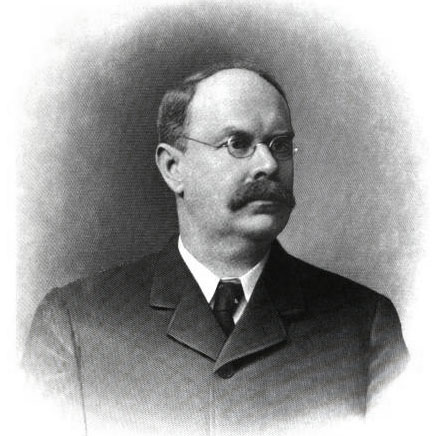
Paul Brandon Barringer (February 13, 1857 – January 9, 1941) was an American physician and college administrator, the sixth president of Virginia Tech, serving from September 1, 1907 through July 1, 1913. He was also chairman of the faculty at the University of Virginia (then equivalent to president) from 1895 through 1903. He made major changes to the medical curriculum at U.Va, adding requirements for clinical training, as was common in Europe.
Barringer gained national attention in 1900, when a talk he gave to a southern medical association was printed and distributed to other regional medical groups. It was entitled The American Negro: His Past and Future, and he explored what he described as "the Negro problem" in the South. At the time, prior to the Great Migration, African Americans made up the majority of population in numerous counties, and he advocated a practice of racial eugenics. In this period, southern states were passing laws to disenfranchise African Americans and exclude them from the political system, while passing Jim Crow laws and the one drop rule, which penalized persons of any known African ancestry. During Barringer's tenure as chairman of the faculty, U.Va., perceived by many Southerners as the region's flagship university, became a hotbed of eugenics teaching that continued under its first president Edwin Alderman who took over when the Jeffersonian system of faculty rule ended in 1904. Since its founding in 1819, U.Va traditionally was an academy for Virginia's planter class aristocracy whose interest in family lineage went hand in hand with the science of improving the human stock.
After resigning the VPI presidency, Barringer returned to Charlottesville and practiced medicine. He served the United States government for a few years during World War I by supervising public health in some mining towns. After the war he returned to his farm and medical practice.
Barringer was the son of Confederate General Rufus Clay Barringer and Eugenia (née Morrison) Barringer. He was named after his paternal grandfather, General Paul Barringer (1776-1835), a veteran of the War of 1812. His father was an attorney who became an officer in the Confederate Army during the Civil War. On the maternal side, Barringer was descended from Joseph Graham, one of the Revolutionary heroes of North Carolina. His maternal grandfather, Robert Hall Morrison, was a Presbyterian preacher and the first president of Davidson College.
Barringer was a nephew of Confederate Generals Stonewall Jackson and Daniel Harvey Hill who married his mother's sisters. He spent some of his childhood in Concord, North Carolina, near where his father had grown up. As an eight-year-old, the young Barringer beat Confederate States of America President Jefferson Davis in a game of chess in 1865. Davis had stopped with his family after fleeing Richmond, Virginia following the surrender of Robert E. Lee.
Barringer attended the Bingham School near Asheville, North Carolina, and the Kenmore University School in Amherst Courthouse, Virginia. He received his M.D. degree from the University of Virginia in 1877 and an M.D. from the University of the City of New York in 1878. Barringer later received an LL.D. from Davidson College in 1900 and an LL. D. from the University of South Carolina in 1904.
Barringer practiced medicine in Dallas, North Carolina for three years before going to Europe to study under medical specialists there. From 1881 to 1884 he studied in clinics in London, Paris, and Vienna. On his return from Europe, he settled on a farm near Charlotte, North Carolina. He both practiced medicine and supervised the Piedmont farm. From 1884 to 1889, he also established and headed a medical preparatory school at Davidson College.
In 1889 Barringer accepted a position as chair of Physiology and chair of Surgery at University of Virginia. He served as chairman of the faculty at UVA (a position then equivalent to president) from 1895 to 1903. As chairman of the faculty, Barringer oversaw a major revision of the medical curriculum. Clinical years of education were added to strengthen training, as was common in Europe. He also was the main driving force behind the construction and staffing of the first University of Virginia Hospital. He was succeeded by chairman James Morris Page.
Hub AI
Paul Brandon Barringer AI simulator
(@Paul Brandon Barringer_simulator)
Paul Brandon Barringer
Paul Brandon Barringer (February 13, 1857 – January 9, 1941) was an American physician and college administrator, the sixth president of Virginia Tech, serving from September 1, 1907 through July 1, 1913. He was also chairman of the faculty at the University of Virginia (then equivalent to president) from 1895 through 1903. He made major changes to the medical curriculum at U.Va, adding requirements for clinical training, as was common in Europe.
Barringer gained national attention in 1900, when a talk he gave to a southern medical association was printed and distributed to other regional medical groups. It was entitled The American Negro: His Past and Future, and he explored what he described as "the Negro problem" in the South. At the time, prior to the Great Migration, African Americans made up the majority of population in numerous counties, and he advocated a practice of racial eugenics. In this period, southern states were passing laws to disenfranchise African Americans and exclude them from the political system, while passing Jim Crow laws and the one drop rule, which penalized persons of any known African ancestry. During Barringer's tenure as chairman of the faculty, U.Va., perceived by many Southerners as the region's flagship university, became a hotbed of eugenics teaching that continued under its first president Edwin Alderman who took over when the Jeffersonian system of faculty rule ended in 1904. Since its founding in 1819, U.Va traditionally was an academy for Virginia's planter class aristocracy whose interest in family lineage went hand in hand with the science of improving the human stock.
After resigning the VPI presidency, Barringer returned to Charlottesville and practiced medicine. He served the United States government for a few years during World War I by supervising public health in some mining towns. After the war he returned to his farm and medical practice.
Barringer was the son of Confederate General Rufus Clay Barringer and Eugenia (née Morrison) Barringer. He was named after his paternal grandfather, General Paul Barringer (1776-1835), a veteran of the War of 1812. His father was an attorney who became an officer in the Confederate Army during the Civil War. On the maternal side, Barringer was descended from Joseph Graham, one of the Revolutionary heroes of North Carolina. His maternal grandfather, Robert Hall Morrison, was a Presbyterian preacher and the first president of Davidson College.
Barringer was a nephew of Confederate Generals Stonewall Jackson and Daniel Harvey Hill who married his mother's sisters. He spent some of his childhood in Concord, North Carolina, near where his father had grown up. As an eight-year-old, the young Barringer beat Confederate States of America President Jefferson Davis in a game of chess in 1865. Davis had stopped with his family after fleeing Richmond, Virginia following the surrender of Robert E. Lee.
Barringer attended the Bingham School near Asheville, North Carolina, and the Kenmore University School in Amherst Courthouse, Virginia. He received his M.D. degree from the University of Virginia in 1877 and an M.D. from the University of the City of New York in 1878. Barringer later received an LL.D. from Davidson College in 1900 and an LL. D. from the University of South Carolina in 1904.
Barringer practiced medicine in Dallas, North Carolina for three years before going to Europe to study under medical specialists there. From 1881 to 1884 he studied in clinics in London, Paris, and Vienna. On his return from Europe, he settled on a farm near Charlotte, North Carolina. He both practiced medicine and supervised the Piedmont farm. From 1884 to 1889, he also established and headed a medical preparatory school at Davidson College.
In 1889 Barringer accepted a position as chair of Physiology and chair of Surgery at University of Virginia. He served as chairman of the faculty at UVA (a position then equivalent to president) from 1895 to 1903. As chairman of the faculty, Barringer oversaw a major revision of the medical curriculum. Clinical years of education were added to strengthen training, as was common in Europe. He also was the main driving force behind the construction and staffing of the first University of Virginia Hospital. He was succeeded by chairman James Morris Page.
Recent media