Hubbry Logo
Paul MendezPaul MendezMain
Open search
Paul Mendez
Community hub
Paul Mendez
logo
8 pages, 0 posts
0 subscribers
Be the first to start a discussion here.
Paul Mendez
Paul Mendez
from Wikipedia

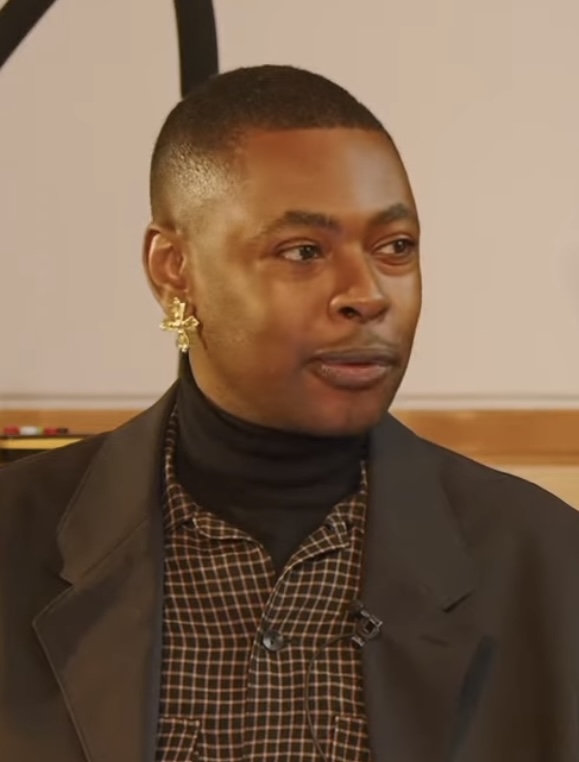
Paul Mendez (born 1982)[1] is a British writer. They are currently based in London, U.K. They wrote the 2020 semi-autobiographical novel Rainbow Milk.[2][3][4]

Key Information

Mendez contributes regularly to The London Review of Books and other publications for which they have written for publications include The Times Literary Supplement, Attitude, Esquire, The Face and British Vogue.[5]

Biography

[edit]

Mendez was born in Dudley,[6] West Midlands, England, to a second-generation Jamaican-British family and was raised as a Jehovah's Witness.[1] Disfellowshipped for their sexuality,[6] Mendez left their parents' house at the age of seventeen and began their studies in engineering at the University of Greenwich. Mendez dropped out after nine months but remained in Tonbridge before moving to Birmingham in 2003 and then London in 2004 to study acting. They became a sex worker.[7]

In 2012, Mendez met Sharmaine Lovegrove at a party and when she became a publisher at Dialogue Books, Mendez sent her the manuscript that would become their debut novel Rainbow Milk, released in 2020.[7] It received positive critical attention, being shortlisted for the Gordon Burn Prize, Jhalak Prize, Polari Prize and the Fiction Debut category of the British Book Awards, and was an Observer Top Ten Debut choice.[8]

Mendez studied for an MA in Black British Writing at Goldsmiths, University of London.[9]

Mendez lives in Hampstead, London. They began a relationship with novelist Alan Hollinghurst in 2018, which has since ended.[10][11]

References

[edit]
Revisions and contributorsEdit on WikipediaRead on Wikipedia
from Grokipedia
Paul Mendez (born 1982) is a British and of Jamaican descent, raised in the Country as the son of Jehovah's Witness parents. His debut novel, Rainbow Milk (2020), semi-autobiographically traces the experiences of men across generations in Britain, confronting intersections of race, class, sexuality, migration, and religious upbringing. The work garnered recognition, including a shortlisting for the First Book Prize and selection as one of the Observer's best debuts of 2020, praised for its raw depiction of working-class life and personal dispossession. Prior to writing, Mendez studied acting, supported himself through sex work, and later pursued an M.A. in Black British Writing at , while working as a voice actor and narrator. He has since contributed essays and criticism, residing between and .

Early Life and Family Background

Upbringing in the Black Country

Paul Mendez was born in 1982 and raised in the Black Country, a post-industrial region in England's West Midlands known for its dense concentration of factories, coal mines, and canals during the , which by the late had transitioned to economic challenges including high and . He spent his childhood in , a town emblematic of the area's working-class heritage, within a second-generation Jamaican-British family. As the eldest of four children, Mendez grew up in a household strictly observant of , which emphasized evangelism, avoidance of secular holidays, and separation from worldly influences. This religious framework dominated family life amid the insular, community-oriented environment of the , where social ties often revolved around shared economic hardships and local traditions rather than broader . His upbringing reflected the intersections of racial minority status in a predominantly white, working-class setting, with limited exposure to diverse influences beyond the confines of faith and family, fostering a sense of isolation that later informed his personal development. By his early twenties, these dynamics prompted his departure from the region in 2004 at age 22, marking the end of his formative years there.

Religious Influences and Disaffiliation

Paul Mendez was raised in a household in the Black Country, West Midlands, as part of a second-generation Jamaican-British family, where religious observance shaped daily life and community ties. The faith's strict doctrines, including prohibitions on , , and association with non-believers, enforced a insular environment that Mendez later described as providing structure but limiting personal exploration. This upbringing influenced his early worldview, emphasizing and eschatological expectations, though he has reflected on it as fostering a sense of isolation for those diverging from communal norms. At age 17, in approximately 2003, Mendez was disfellowshipped—' term for formal —from the congregation due to his , which conflicted with the denomination's condemnation of as a warranting . This process, involving judicial committee review and subsequent by family and fellow believers, severed his ties to the extended religious network he had known, leaving him estranged and without immediate support structures. Mendez has noted the psychological toll, including a loss of identity anchors, but also the eventual freedom to pursue self-definition outside doctrinal constraints. Post-disaffiliation, Mendez did not affiliate with another , marking a shift toward amid his navigation of identity and socioeconomic challenges in . His experiences informed autobiographical elements in Rainbow Milk (2020), where the protagonist faces similar expulsion from a community, highlighting tensions between faith, sexuality, and racial heritage without endorsing or critiquing the religion wholesale. Interviews indicate no expressed return to faith or formal deconversion narrative beyond this rupture, with Mendez focusing instead on literary and personal reinvention.

Education and Formative Experiences

Formal Education and Studies

Mendez left his family home at age 17 following disfellowshipment from the due to his sexuality and relocated to , , where he began studies in at West Kent College, affiliated with the . He dropped out after nine months, citing a lack of interest and aptitude for the subject. In 2004, at age 22, Mendez moved to to pursue acting training, enrolling in a three-month course that he funded through sex work. Following this, he commenced a degree in , though no records indicate completion or further details on the program or institution. In the years leading to the publication of his debut novel Rainbow Milk in 2020, Mendez enrolled in a program in Black British Writing at , where he continued studies into at least 2022. No public confirmation exists of degree conferral as of 2025.

Early Professional Pursuits in Acting and Survival Strategies

In 2004, at the age of 22, Mendez moved to to enroll in a method acting course, marking his initial foray into professional training. To cover the costs of this obscure program, he resorted to sex work, a pragmatic financial strategy amid limited resources following his disaffiliation from the and family estrangement. The acting course concluded after three months, after which Mendez transitioned to pursuing a degree in , reflecting a pivot from intensive performance training to broader academic engagement. Despite the brevity of formal study, he later joined two companies as a performing member, gaining practical experience in stage work. Concurrently, Mendez entered , lending his performances to audiobooks by authors such as , , and , which provided supplementary income and honed his vocal and interpretive skills. These pursuits were interspersed with survival imperatives; sex work ceased following a traumatic health incident, prompting Mendez to seek alternative stability through and episodic performing gigs. This period underscored a pattern of resourcefulness, leveraging talents amid economic in London's competitive scene.

Literary Career

Path to Publication

Mendez commenced writing Rainbow Milk in the summer of 2002, at age twenty, drawing from autobiographical experiences including his upbringing in a Jehovah's Witness family and subsequent disaffiliation. The manuscript evolved through multiple drafts over nearly two decades, reflecting iterative revisions influenced by personal mentors who provided feedback at various stages. In 2012, Mendez met Sharmaine Lovegrove, founder and publisher of Dialogue Books, an imprint of Little, Brown Book Group focused on underrepresented voices. Their acquaintance facilitated the submission process; as a friend, Mendez shared the work directly with Lovegrove, who recognized its potential for exploring themes of race, sexuality, and class across generations. Dialogue Books acquired world English rights to the debut novel in a deal handled internally, with Lovegrove praising its "bold exploration" in the announcement. Initially slated for 2019 release, publication was postponed to April 23, 2020, amid editing that refined its structure and voice. No literary agent is recorded in acquisition details, underscoring the role of personal networks in securing the deal for this unagented submission.

Rainbow Milk: Themes, Structure, and Autobiographical Elements

Rainbow Milk examines the intersections of race, class, sexuality, and religion, tracing how these forces shape personal identity and familial legacies among black men in Britain. The novel delves into the constraints imposed by religious dogma, particularly Jehovah's Witness beliefs, which demand conformity and punish deviation, as seen in the protagonist Jesse's expulsion from his community for homosexual acts. It portrays the pursuit of sexual freedom amid racial prejudice and economic hardship, highlighting self-realization through raw encounters with desire, exploitation, and resilience. Themes of generational trauma emerge as characters grapple with migration's aftermath, from post-war Windrush experiences to late-20th-century urban alienation, underscoring blackness not as monolithic but as layered by history and individual agency. The narrative structure spans three generations, beginning in the 1950s with Norman Alonso, a Jamaican immigrant arriving in the Black Country, and extending to his grandson Jesse in the 1980s and early 2000s. This multi-temporal framework interweaves family histories to reveal inherited burdens and breaks, with shifts between eras illuminating causal links between past migrations, religious indoctrination, and contemporary identity crises. The story centers on Jesse's arc—from disfellowshipment from his Jehovah's Witness family in Dudley to his relocation to London—framed by ancestral vignettes that contextualize his rebellion without linear chronology, emphasizing thematic continuity over plot progression. Mendez employs vivid, sensory prose to evoke regional dialects and bodily experiences, structuring the novel as a mosaic of voices that prioritizes emotional and historical depth. Autobiographical elements infuse the work, drawing from Mendez's upbringing in the Black Country as a Jehovah's Witness of Jamaican descent, his disfellowshipment at 19 for , and subsequent survival through sex work in . Mendez has described the novel as semi-autobiographical yet fictionalized, using personal trials to authenticate depictions of religious and awakening while expanding into invented generational narratives for broader commentary. In interviews, he notes that experiences like readings in his youth informed the authentic black voices and point-of-view shifts, though he rejects reductive labels, insisting the book transcends to engage universal reckonings with freedom and faith. This blend allows unflinching realism—rooted in verifiable personal history—without claiming literal biography, as Mendez fictionalizes to explore causality in identity formation.

Other Professional Activities

Writing Beyond Fiction

Mendez has contributed essays, reviews, and diary pieces to prominent literary periodicals, including the London Review of Books and the Times Literary Supplement. These works often explore personal reflections on identity, culture, and artistic expression, extending themes from his fiction into non-fictional analysis. In the London Review of Books, Mendez published "Diary: My Niche" on 4 July 2024, a personal essay examining his approach to non-fiction writing, including influences on his vocal style and judgments in prose. Earlier, on 5 January 2023, he contributed "Move like a Party: George Michael's Destiny," analyzing George Michael's 1990 album Listen Without Prejudice Vol. 1 through lenses of performance, identity, and cultural legacy. For the Times Literary Supplement, Mendez wrote on a play depicting Britain's first black voter, praising its "poise, power and conviction" as a forerunner to themes of and representation. He has also published in outlets such as Esquire, The Face, British Vogue, Glass, and the Brixton Review of Books, though specific titles from these venues emphasize observational and cultural commentary rather than extended book-length non-fiction. Prior to his novel's , Mendez compiled a 300-page manuscript of essays, observations, and al forms, which informed his transition to but remains unpublished as a cohesive work. His output, while not voluminous, demonstrates a consistent engagement with autobiographical and societal critique, distinct from the narrative structures of his novels. Mendez has worked as a voice actor, with a focus on audiobook narration, drawing on his early experience performing diverse voices during readings as a Jehovah's Witness. He has narrated by authors including , , and , as well as works related to figures such as . In 2023, he narrated Pelé's My Autobiography, noting the irony of providing a voice for the 20th-century football icon. Among his narrations is the audiobook edition of his own debut novel Rainbow Milk, released on June 8, 2021, by Audio, with a runtime of 11 hours and 43 minutes. Other titles include J.T. LeRoy's The Heart Is Deceitful Above All Things: Stories (9 hours and 32 minutes) and contributions to The Queer Bible: Essays. Mendez's voice work extends to related performative endeavors, such as membership in two companies, where his skills in vocal characterization have informed his approach. In a 2024 London Review of Books diary, he described developing a niche in , transitioning from and leveraging his Black British background for authentic delivery in multicultural texts.

Reception and Impact

Critical Reviews and Awards

Rainbow Milk received widespread critical acclaim upon its publication in 2020, earning nominations and shortlistings for several prestigious literary prizes. The novel was shortlisted for the Lambda Literary Award in the Gay Fiction category in 2022. It was also nominated in the Fiction Debut category at the 2021 . Additional shortlistings included the Prize, the Jhalak Prize, and the First Book Prize. The book was selected as one of the Observer's top ten debuts of 2020. Critics praised the novel's bold exploration of race, sexuality, and class in Britain. Arifa Akbar in The Guardian described it as a "beautiful and distinctive" debut that sharply captures the experiences of a young Black man navigating ambition and identity. Similarly, another Guardian review by Alex Preston called it a "fearless" and groundbreaking work, highlighting its unflinching portrayal of sexual freedom. In The Brooklyn Rail, critics noted Mendez's creation of a compelling protagonist, positioning the book as evidence of a major new talent in British fiction. Some reviews offered mixed assessments, pointing to structural and pacing issues. Kirkus Reviews acknowledged the novel's vivid sensory prose but critiqued its dragging pace, inconsistent structure, and dilution of key scenes amid less central material. Reader feedback, as referenced in secondary commentary, has occasionally faulted the explicit sex scenes as excessive, though defenders argue they serve the narrative's themes of desire and trauma. Overall, the reception underscores Rainbow Milk's role in amplifying underrepresented voices in contemporary literature, with its autobiographical elements drawing particular attention for authenticity.

Broader Cultural and Literary Significance

Rainbow Milk represents a pivotal addition to the canon of Black British literature, foregrounding the experiences of working-class Black men in the West Midlands, a demographic underrepresented in prior narratives dominated by urban London-centric or middle-class perspectives. The novel's multi-generational structure traces the legacies of Jamaican migration, Jehovah's Witness faith, and post-Windrush disillusionment, providing a gritty, unflinching examination of survival amid , homophobia, and economic precarity. Reviewers have noted its departure from sentimentalized depictions, instead delivering a "viscerally thrilling" critique of intersecting oppressions through raw, sensory prose that evokes the physicality of sex work and spiritual alienation. In queer literature, Mendez's work extends traditions established by authors like , whom he cites as an influence, by adapting expatriate American insights to a distinctly British context of imperial aftermath and insular provincialism. It challenges reductive stereotypes of Black masculinity by portraying protagonist Jesse's navigation of desire, shame, and agency without resolution through victimhood or redemption arcs, thereby enriching discourses on with empirical specificity rather than abstraction. Academic examinations underscore how the text negotiates the "dichotomy of pleasure and shame" in racialized queer bodies, positioning it as a text that demands reevaluation of bodily autonomy in literature shaped by religious and colonial inheritances. Culturally, the novel's shortlisting for the 2020 Polari First Book Prize and impending television adaptation signal its potential to broaden public engagement with subjects like intergenerational trauma and sex work in Black communities, fostering conversations on identity that prioritize lived causality over ideological framing. Its reception as an "original new voice" in fiction underscores a shift toward provincial, class-inflected stories, countering metropolitan biases in publishing and highlighting the need for diverse regional representations in national literary output.

Personal Life and Public Persona

Identity and Self-Presentation

Paul Mendez was born in 1982 in the Black Country region of to Jamaican parents who were practicing , as the eldest of four children raised in a strict religious household. This upbringing, which he later rejected, shapes his public discussions of identity, particularly the tensions between faith, family, and personal autonomy. Mendez describes his early life in a predominantly white, working-class area as fostering a sense of detachment from his Black heritage, leading him to initially view himself as having "transcended" racial markers through assimilation into British norms—a perspective he later reevaluated as incomplete. Mendez publicly identifies as gay, having come out in 2003 at age 21 while pursuing acting studies in London, where he supported himself as a sex worker—a period of his life he has openly recounted as pivotal to understanding his sexuality amid economic precarity. In 2023, he announced identifying as non-binary, stating in a personal essay that he had "come out again" two decades after his initial disclosure as gay, and adopting they/them pronouns in professional contexts such as contributions to The Guardian. This shift underscores his self-presentation as a figure navigating fluid aspects of gender and queerness, often framed through the lens of Black masculinity and historical marginalization. In interviews and writings, Mendez emphasizes intersections of race, class, sexuality, and post-colonial Jamaican-British heritage, positioning himself as a voice for underrepresented experiences without essentializing identity categories. He critiques insular religious communities and societal homophobia rooted in his Jehovah's Witness background and Jamaican cultural influences, while highlighting resilience through personal reinvention. His public persona, evident in literary events and media appearances, projects a deliberate authenticity drawn from autobiographical candor, avoiding performative narratives in favor of raw, experiential testimony.

Views on Society, Identity, and Religion

Mendez was raised in the faith in a working-class area of the , , where the religion imposed strict prohibitions on , leading him to conceal his during his upbringing. At around age 17, he left the , resulting in his disfellowshipment—formal expulsion—by his family and congregation due to his same-sex attractions, which the Witnesses deem sinful. He has since described the faith's insular structure, including its distrust of secular fiction in favor of study, as limiting intellectual and creative exploration. Post-departure, Mendez has critiqued the ' anti-LGBT stance as incompatible with personal authenticity, noting in reflections that the religion's doctrines forced him to suppress aspects of his identity until departure enabled sexual and intellectual awakening, albeit amid subsequent hardships like isolation and sex work. He attributes his eventual resilience to writing, which allowed reclamation of agency after the faith's constraints, viewing the transition from devout adherent to independent individual as a path marked by both loss of community and gain in . On racial identity, Mendez has recounted growing up in predominantly white, working-class Britain where he internalized a desire to "transcend" his , aspiring to assimilate into surrounding cultural norms and downplaying ethnic heritage amid limited exposure to other . He later rejected this mindset, recognizing it as a form of influenced by societal pressures that marginalized experiences, and emphasized the necessity of embracing racial roots for fuller self-understanding, particularly as a queer man navigating intersecting stigmas. Mendez views British society as stratified by race, class, and sexuality, where Black working-class individuals face compounded barriers, including racism in everyday interactions and economic precarity, compounded by queerness in conservative environments. He has highlighted how imperial legacies and post-war migration shaped Black British experiences, often rendering them invisible or hyper-visible in harmful ways, and advocates for narratives that confront these realities without romanticization, drawing from his own trajectory of familial migration from Jamaica and subsequent cultural disconnection. In broader terms, he perceives societal progress as uneven, with queer and racial identities requiring ongoing negotiation against residual prejudices, yet affirms fiction's role in illuminating causal links between personal histories and structural forces.

References

Add your contribution
Related Hubs
User Avatar
No comments yet.