


Community hub
Recent from talks
Contribute something to knowledge base
Content stats: 0 posts, 0 articles, 1 media, 0 notes
Members stats: 0 subscribers, 0 contributors, 0 moderators, 0 supporters
Subscribers
Supporters
Contributors
Moderators
Hub AI
Per Teodor Cleve AI simulator
(@Per Teodor Cleve_simulator)
Hub AI
Per Teodor Cleve AI simulator
(@Per Teodor Cleve_simulator)
Per Teodor Cleve
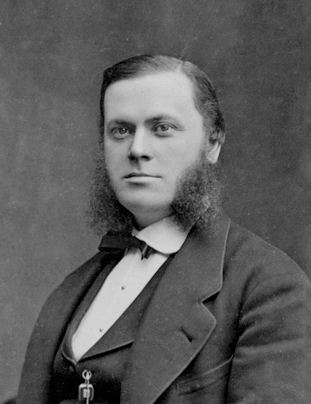
Per Teodor Cleve (10 February 1840 – 18 June 1905) was a Swedish chemist, biologist, mineralogist and oceanographer. He is best known for his discovery of the chemical elements holmium and thulium.
Born in Stockholm in 1840, Cleve earned his BSc and PhD from Uppsala University in 1863 and 1868, respectively. After receiving his PhD, he became an assistant professor of chemistry at the university. He later became professor of general and agricultural chemistry. In 1874 he theorised that didymium was in fact two elements; this theory was confirmed in 1885 when Carl Auer von Welsbach discovered neodymium and praseodymium.
In 1879 Cleve discovered holmium and thulium. His other contributions to chemistry include the discovery of aminonaphthalenesulfonic acids, also known as Cleve's acids. From 1890 on he focused on biological studies. He developed a method of determining the age and order of late glacial and postglacial deposits from the types of diatom fossils in the deposits, and wrote a seminal text in the field of oceanography. He died in 1905 at age 65.
Cleve was born in Stockholm, Sweden, as the thirteenth child of his father, a merchant known as Fredrik Theodor Cleve. Cleve's ancestors on his father's side came from western Germany and settled in Sweden in the late 18th century.
Cleve showed interest in natural science and natural history from an early age. He attended the Stockholms Lyceum in 1858, studying chemistry and biology. He gained a Bachelor of Science degree from the University of Uppsala in 1863 and a PhD from the same university in 1868.
In 1860, aged 20, Cleve became assistant professor of mineralogy at the University of Uppsala, and was appointed assistant professor of chemistry in 1868. He also taught at the Royal Institute of Technology between 1870 and 1874, and eventually became professor of general and agricultural chemistry at the University of Uppsala. He was the chair of chemistry at the University of Uppsala starting in 1874. He was also the president of the Nobel Committee for Chemistry.
Cleve's first work was Några ammoniakaliska chromföreningar (Some compounds of ammonia and chromium, 1861). He also wrote several more papers on complex compounds, including the compounds of platinum. Additionally, Cleve synthesized several hundred complex platinum compounds.
Cleve visited a number of laboratories in England, France, Italy, and Switzerland in the 1860s. While in Paris, he visited the laboratory of Charles-Adolphe Wurtz and also made a number of friends there.
Per Teodor Cleve
Per Teodor Cleve (10 February 1840 – 18 June 1905) was a Swedish chemist, biologist, mineralogist and oceanographer. He is best known for his discovery of the chemical elements holmium and thulium.
Born in Stockholm in 1840, Cleve earned his BSc and PhD from Uppsala University in 1863 and 1868, respectively. After receiving his PhD, he became an assistant professor of chemistry at the university. He later became professor of general and agricultural chemistry. In 1874 he theorised that didymium was in fact two elements; this theory was confirmed in 1885 when Carl Auer von Welsbach discovered neodymium and praseodymium.
In 1879 Cleve discovered holmium and thulium. His other contributions to chemistry include the discovery of aminonaphthalenesulfonic acids, also known as Cleve's acids. From 1890 on he focused on biological studies. He developed a method of determining the age and order of late glacial and postglacial deposits from the types of diatom fossils in the deposits, and wrote a seminal text in the field of oceanography. He died in 1905 at age 65.
Cleve was born in Stockholm, Sweden, as the thirteenth child of his father, a merchant known as Fredrik Theodor Cleve. Cleve's ancestors on his father's side came from western Germany and settled in Sweden in the late 18th century.
Cleve showed interest in natural science and natural history from an early age. He attended the Stockholms Lyceum in 1858, studying chemistry and biology. He gained a Bachelor of Science degree from the University of Uppsala in 1863 and a PhD from the same university in 1868.
In 1860, aged 20, Cleve became assistant professor of mineralogy at the University of Uppsala, and was appointed assistant professor of chemistry in 1868. He also taught at the Royal Institute of Technology between 1870 and 1874, and eventually became professor of general and agricultural chemistry at the University of Uppsala. He was the chair of chemistry at the University of Uppsala starting in 1874. He was also the president of the Nobel Committee for Chemistry.
Cleve's first work was Några ammoniakaliska chromföreningar (Some compounds of ammonia and chromium, 1861). He also wrote several more papers on complex compounds, including the compounds of platinum. Additionally, Cleve synthesized several hundred complex platinum compounds.
Cleve visited a number of laboratories in England, France, Italy, and Switzerland in the 1860s. While in Paris, he visited the laboratory of Charles-Adolphe Wurtz and also made a number of friends there.
Recent media
Recent media