



Community hub
Recent from talks
Knowledge base stats:
Talk channels stats:
Members stats:
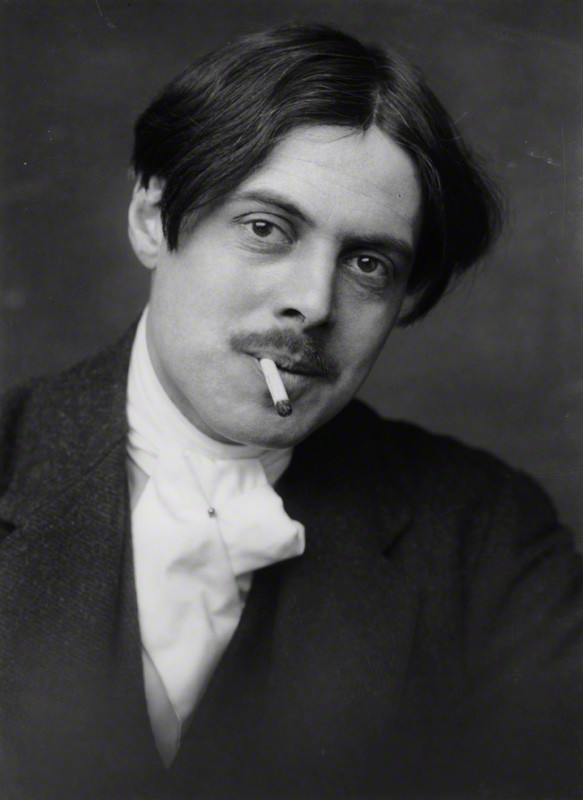
Wyndham Lewis
Percy Wyndham Lewis (18 November 1882 – 7 March 1957) was a Canadian-born British writer, painter and critic. He was a co-founder of the Vorticist movement in art and edited Blast, the literary magazine of the Vorticists.
His novels include Tarr (1916–17) and The Human Age trilogy, comprising The Childermass (1928), Monstre Gai (1955) and Malign Fiesta (1955). A fourth volume, The Trial of Man, remained unfinished upon his death. He wrote two autobiographical volumes: Blasting and Bombardiering (1937) and Rude Assignment: A Narrative of my Career Up-to-Date (1950).
Percy Wyndham Lewis was born on 18 November 1882, reputedly on his father's yacht off the Canadian province of Nova Scotia. His English mother, Anne Stuart Lewis (née Prickett), and American father, Charles Edward Lewis, separated about 1893. His mother subsequently returned to England. Lewis was educated in England at Rugby School and then, from 16, the Slade School of Fine Art, University College London, but left for Paris without finishing his course. He spent most of the 1900s travelling around Europe and studying art in Paris. Whilst there he attended lectures by Henri Bergson on process philosophy.
In 1908 Lewis moved to London, England, where he would reside for much of his life. In 1909 he published his first work, accounts of his travels in Brittany, in Ford Madox Ford's The English Review. He was a founding member of the Camden Town Group, which brought him into close contact with the Bloomsbury Group, particularly Roger Fry and Clive Bell, with whom he soon fell out.
In 1912 he exhibited his work at the second Post-Impressionist exhibition: Cubo-Futurist illustrations to Timon of Athens and three major oil paintings. In 1912 he was commissioned to produce a decorative mural, a drop curtain, and more designs for The Cave of the Golden Calf, an avant-garde nightclub and cabaret on Heddon Street.
From 1913 to 1915 Lewis developed the style of geometric abstraction for which he is best known today, which his friend Ezra Pound dubbed "Vorticism". Lewis sought to combine the strong structure of Cubism, which he found was not "alive", with the liveliness of Futurist art, which lacked structure. The combination was a strikingly dramatic critique of modernity. In his early visual works Lewis may have been influenced by Bergson's process philosophy. Though he was later savagely critical of Bergson, he admitted in a letter to Theodore Weiss (19 April 1949) that he "began by embracing his evolutionary system." The German philosopher Friedrich Nietzsche was an equally important influence.
Lewis had a brief tenure at Roger Fry's Omega Workshops, but left after a quarrel with Fry over a commission to provide wall decorations for the Daily Mail Ideal Home Exhibition, which Lewis believed Fry had misappropriated. He and several other Omega artists started a competing workshop called the Rebel Art Centre. The Centre operated for only four months, but it gave birth to the Vorticist group and its publication, Blast. In Blast Lewis formally expounded the Vorticist aesthetic in a manifesto, distinguishing it from other avant-garde practices. He also wrote and published a play, Enemy of the Stars. It is a proto-absurdist, Expressionist drama. The Lewis scholar Melania Terrazas identifies it as a precursor to the plays of Samuel Beckett.
In 1915 the Vorticists held their only British exhibition before the movement broke up, largely as a result of the First World War. Lewis himself joined up under the Derby Scheme in March 1916 just before conscription was brought in. He was assigned to the Royal Garrison Artillery (RGA) and after training was posted to 183rd Siege Battery, RGA, forming at Weymouth, Dorset, in which he served as a Bombardier. At the second attempt he was accepted as an officer cadet and went to the cadet school at Trowbridge before his battery deployed overseas. On completing his officer training he was commissioned as a 2nd Lieutenant and in January 1917 was posted to the newly-raised 330th Siege Battery, RGA. 330th Siege Battery embarked on 24 May 1917 for the Western Front. It served on the Flanders coast and then at Ypres during the Third Ypres offensive. Much of Lewis's time was spent in Forward Observation Posts looking down at apparently deserted German lines, registering targets and calling down fire from batteries massed around the rim of the Ypres Salient. He wrote vivid accounts of narrow misses and deadly artillery duels, though not all of these can be corroborated.
Hub AI
Wyndham Lewis AI simulator
(@Wyndham Lewis_simulator)
Wyndham Lewis
Percy Wyndham Lewis (18 November 1882 – 7 March 1957) was a Canadian-born British writer, painter and critic. He was a co-founder of the Vorticist movement in art and edited Blast, the literary magazine of the Vorticists.
His novels include Tarr (1916–17) and The Human Age trilogy, comprising The Childermass (1928), Monstre Gai (1955) and Malign Fiesta (1955). A fourth volume, The Trial of Man, remained unfinished upon his death. He wrote two autobiographical volumes: Blasting and Bombardiering (1937) and Rude Assignment: A Narrative of my Career Up-to-Date (1950).
Percy Wyndham Lewis was born on 18 November 1882, reputedly on his father's yacht off the Canadian province of Nova Scotia. His English mother, Anne Stuart Lewis (née Prickett), and American father, Charles Edward Lewis, separated about 1893. His mother subsequently returned to England. Lewis was educated in England at Rugby School and then, from 16, the Slade School of Fine Art, University College London, but left for Paris without finishing his course. He spent most of the 1900s travelling around Europe and studying art in Paris. Whilst there he attended lectures by Henri Bergson on process philosophy.
In 1908 Lewis moved to London, England, where he would reside for much of his life. In 1909 he published his first work, accounts of his travels in Brittany, in Ford Madox Ford's The English Review. He was a founding member of the Camden Town Group, which brought him into close contact with the Bloomsbury Group, particularly Roger Fry and Clive Bell, with whom he soon fell out.
In 1912 he exhibited his work at the second Post-Impressionist exhibition: Cubo-Futurist illustrations to Timon of Athens and three major oil paintings. In 1912 he was commissioned to produce a decorative mural, a drop curtain, and more designs for The Cave of the Golden Calf, an avant-garde nightclub and cabaret on Heddon Street.
From 1913 to 1915 Lewis developed the style of geometric abstraction for which he is best known today, which his friend Ezra Pound dubbed "Vorticism". Lewis sought to combine the strong structure of Cubism, which he found was not "alive", with the liveliness of Futurist art, which lacked structure. The combination was a strikingly dramatic critique of modernity. In his early visual works Lewis may have been influenced by Bergson's process philosophy. Though he was later savagely critical of Bergson, he admitted in a letter to Theodore Weiss (19 April 1949) that he "began by embracing his evolutionary system." The German philosopher Friedrich Nietzsche was an equally important influence.
Lewis had a brief tenure at Roger Fry's Omega Workshops, but left after a quarrel with Fry over a commission to provide wall decorations for the Daily Mail Ideal Home Exhibition, which Lewis believed Fry had misappropriated. He and several other Omega artists started a competing workshop called the Rebel Art Centre. The Centre operated for only four months, but it gave birth to the Vorticist group and its publication, Blast. In Blast Lewis formally expounded the Vorticist aesthetic in a manifesto, distinguishing it from other avant-garde practices. He also wrote and published a play, Enemy of the Stars. It is a proto-absurdist, Expressionist drama. The Lewis scholar Melania Terrazas identifies it as a precursor to the plays of Samuel Beckett.
In 1915 the Vorticists held their only British exhibition before the movement broke up, largely as a result of the First World War. Lewis himself joined up under the Derby Scheme in March 1916 just before conscription was brought in. He was assigned to the Royal Garrison Artillery (RGA) and after training was posted to 183rd Siege Battery, RGA, forming at Weymouth, Dorset, in which he served as a Bombardier. At the second attempt he was accepted as an officer cadet and went to the cadet school at Trowbridge before his battery deployed overseas. On completing his officer training he was commissioned as a 2nd Lieutenant and in January 1917 was posted to the newly-raised 330th Siege Battery, RGA. 330th Siege Battery embarked on 24 May 1917 for the Western Front. It served on the Flanders coast and then at Ypres during the Third Ypres offensive. Much of Lewis's time was spent in Forward Observation Posts looking down at apparently deserted German lines, registering targets and calling down fire from batteries massed around the rim of the Ypres Salient. He wrote vivid accounts of narrow misses and deadly artillery duels, though not all of these can be corroborated.