Hubbry Logo
Perisher Valley, New South WalesPerisher Valley, New South WalesMain
Open search
Perisher Valley, New South Wales
Community hub
Perisher Valley, New South Wales
logo
8 pages, 0 posts
0 subscribers
Be the first to start a discussion here.
Perisher Valley, New South Wales
from Wikipedia

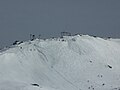
Perisher Valley, commonly called Perisher, is a valley formed below Mount Perisher, a mountain that is located in the Snowy Mountains of New South Wales, Australia.

Key Information

Located in the Snowy Monaro Regional Council, the valley is the site of one of four resort bases of the Perisher Ski Resort, which also comprises Guthega, Blue Cow and Smiggin Holes. It is located within the Kosciuszko National Park between Jindabyne and Charlotte Pass on the Kosciuszko Road. Access to the valley is via the Skitube Alpine Railway or by road. Although it is primarily a winter only resort village, year round accommodations are available, including tours, and bush walks.[1]

At the 2021 census, Perisher Valley had a population of 99 people.[2] In winter, the population is approximately 2,500 due to guests.

Climate

[edit]

Perisher has either a subarctic climate (Köppen climate classification: Dfc) or a subpolar oceanic climate (Köppen climate classification: Cfc), depending on whether the 0 °C (32 °F) or −3 °C (27 °F) isotherm is used, with cool summers and cold winters, although the higher peaks have a tundra climate (ET).

As expected of a ski resort there is a snowpack lasting for several months of the year, sometimes into early summer, however not as long-lasting as equivalent elevations over the western side of the range due to its sheltered location. Snow can be expected to fall on 60.2 days of the year on average.[3]

Climate data for Perisher Valley Ski Centre (1991–2010, extremes 1976–2010); 1,735 m (5,692 ft) AMSL; 36.40° S, 148.41° E
Month Jan Feb Mar Apr May Jun Jul Aug Sep Oct Nov Dec Year
Record high °C (°F) 28.2
(82.8)
29.8
(85.6)
25.4
(77.7)
22.0
(71.6)
18.0
(64.4)
14.0
(57.2)
10.5
(50.9)
13.5
(56.3)
16.0
(60.8)
21.0
(69.8)
25.5
(77.9)
25.2
(77.4)
29.8
(85.6)
Mean daily maximum °C (°F) 19.7
(67.5)
18.7
(65.7)
16.1
(61.0)
12.1
(53.8)
8.3
(46.9)
4.2
(39.6)
2.8
(37.0)
3.6
(38.5)
6.1
(43.0)
10.0
(50.0)
14.3
(57.7)
16.1
(61.0)
11.0
(51.8)
Daily mean °C (°F) 12.8
(55.0)
12.0
(53.6)
9.5
(49.1)
5.9
(42.6)
3.2
(37.8)
0.5
(32.9)
−1.0
(30.2)
−0.4
(31.3)
2.1
(35.8)
5.1
(41.2)
8.0
(46.4)
9.8
(49.6)
5.6
(42.1)
Mean daily minimum °C (°F) 5.9
(42.6)
5.2
(41.4)
2.8
(37.0)
−0.4
(31.3)
−1.9
(28.6)
−3.3
(26.1)
−4.7
(23.5)
−4.4
(24.1)
−1.9
(28.6)
0.1
(32.2)
1.6
(34.9)
3.4
(38.1)
0.2
(32.4)
Record low °C (°F) −5.0
(23.0)
−7.0
(19.4)
−7.0
(19.4)
−10.8
(12.6)
−9.8
(14.4)
−18.0
(−0.4)
−17.0
(1.4)
−15.0
(5.0)
−12.5
(9.5)
−11.6
(11.1)
−8.5
(16.7)
−5.9
(21.4)
−18.0
(−0.4)
Average precipitation mm (inches) 113.9
(4.48)
88.0
(3.46)
92.0
(3.62)
71.0
(2.80)
104.4
(4.11)
174.1
(6.85)
155.6
(6.13)
243.6
(9.59)
244.2
(9.61)
161.2
(6.35)
152.8
(6.02)
87.5
(3.44)
1,689.5
(66.52)
Average precipitation days (≥ 0.2 mm) 8.0 8.3 8.8 8.8 10.1 12.4 12.2 12.7 13.7 12.8 11.2 6.4 125.4
Average afternoon relative humidity (%) 61 65 62 65 73 85 88 84 79 68 61 56 71
Source: Bureau of Meteorology[4]

Snow depth

[edit]

Snow depth measurements are taken by Snowy Hydro at Spencers Creek, approximately 2 kilometres (1 mi) west of Perisher Valley.

Average depth curve
Full record

History

[edit]

The Snowy Mountains region is thought to have had Aboriginal occupation for some twenty thousand years. Large scale intertribal gatherings were held in the High Country during summer for collective feasting on the Bogong moth.

This practice continued until around 1865.[5] European explorers entered the district from 1835, and in 1840, Edmund Strzelecki ascended Mount Kosciuszko and named it after a Polish patriot. High country stockmen followed who used the Snowy Mountains for grazing during the summer months. Banjo Paterson's famous poem The Man From Snowy River recalls this era. The cattle graziers have left a legacy of mountain huts scattered across the area.[6] A story, which may be apocryphal, credits James Spencer, who settled in the area in the 1840s with saying 'What a perisher' when caught in a storm, giving origin to the Perisher area.[7]

The Kosciuszko National Park in which Perisher is situated came into existence as the National Chase Snowy Mountains on 5 December 1906. In 1944 this became the Kosciuszko State Park, and then the Kosciuszko National Park in 1967.[8]

Perisher snow fields

The development of Skiing in Australia began at Kiandra in the Northern Snowy Mountains around 1861, but in the 20th century, the focus of Skiing in New South Wales shifted towards the Mount Kosciuszko region. The first Kosciuszko Chalet was built at Charlotte Pass in 1930, giving relatively comfortable access to Australia's highest terrain.[9] The growing number of ski enthusiasts heading to Charlotte Pass led to the establishment of a cafe at Smiggin Holes, near Perisher Valley, around 1939, where horse-drawn sleighs would deliver skiers to be begin the arduous ski to the Kosciusko Chalet.[10] It was the construction of the vast Snowy Mountains Hydro-Electric Scheme from 1949 that really opened up the Snowy Mountains for large scale development of a ski industry and led to the establishment of Thredbo and Perisher as leading Australian resorts.[11][12] The Construction of Guthega Dam brought skiers to the isolated Guthega district and a rope tow was installed there in 1957.[13]

Oversnow transport in Perisher village

As the number of skiers increased, services, facilities and means of access were improved, and Perisher's first lodges were constructed. Telemark and the Snow Revellers Club being completed in 1952. In the winter of 1953 the first oversnow transport operated to Perisher Valley. It was greeted by the inhabitants with cheers and celebrations. In 1958, Svere Kaaten, another pioneer of the mountains, built a sophisticated rope tow at North Perisher. Ken Murray, an old friend of Svere's built another rope tow and Perisher's first T-bar. Development continued and Mount Perisher Double Chair was opened in 1962. After the opening of the first chairlift, T-bar expansion and rope tows, the Perisher area thrived. Murray Publishers Pty Limited was taken over by Australian Consolidated Press in 1972 and Kosciuszko Alpine Resorts was formed. Murray Publishers then traded under the name of Perisher Ski Resort which incorporated the resorts of Perisher and Smiggins. In 1995, Murray Publishers Pty Limited and the Alpine Australia Group Pty Limited merged to form Perisher Blue Pty Limited.[citation needed]

The last establishment of a major skifield in NSW came with the development of Mount Blue Cow in the 1980s. In 1987 the Swiss designed Skitube Alpine Railway opened to deliver skiers from Bullocks Flat, on the Alpine Way, to Perisher Valley and to Blue Cow, which also opened in 1987.[12] The operators of Blue Cow purchased Guthega in 1991, and the new combined resort later merged with Perisher-Smiggins to become the largest ski resort in the Southern Hemisphere.[14] In 2009 Perisher had 48 lifts covering 1,245 hectares and four village base areas: Perisher Valley, Blue Cow, Smiggin Holes and Guthega.[15]

Snowy Mountains of Music

[edit]

Since 2009, Perisher Valley has been the host of the Snowy Mountains of Music Festival, a folk festival created by the same people behind the Illawarra Folk Festival. The festival runs every year on the Queen's Birthday Weekend, which is also the official start of the Ski Season for the Snowy Mountains. It acts as both a promotional festival for the Australian Snow Season, specifically, Perisher Valley, but also as an outlet for all sorts of Australian and International talent across a diverse range of genres.[16]

Resort statistics

[edit]
Perisher Valley Climate
Average snow depth chart from Spencers Creek, near Perisher. Compiled by Snowy Hydro.

Perisher Valley is situated at 1,720 metres (5,640 ft) above sea level. The summit of Mount Perisher above the village reaches 2,054 metres (6,739 ft) of altitude. The highest lifted point is the Mt Perisher Six chairlift at 2,042m. According to statistics posted on the Perisher website in 2012, the recognised natural snow line in the region is at 1,650 metres (5,410 ft) and over the previous 15 years, the average maximum snow depth throughout the Resort had been about 1.9 metres (6.2 ft). Average minimum temperature during winter was stated as −3.7 °C (25.3 °F).[17]

As of 2025, the four resort bases of the Perisher Ski Resort contain a skiable area of 1,245 hectares (3,076 acres) and are serviced by 45 lifts, making Perisher the largest Australian ski resort.[17]

[edit]

See also

[edit]

References

[edit]
Revisions and contributorsEdit on WikipediaRead on Wikipedia
from Grokipedia
Perisher Valley is a premier alpine resort and the largest ski destination in the , situated in the of , , within Kosciuszko National Park. It encompasses four interconnected resort areas—Perisher Valley, Smiggin Holes, Blue Cow, and Guthega—spanning 1,245 hectares (3,076 acres) of skiable terrain with 45 lifts, over 100 trails, and a vertical drop of 355 meters (from the lowest point at 1,605 meters to the highest lift-served point at 1,960 meters), with the overall resort spanning from a base elevation of approximately 1,720 meters in Perisher Valley to a summit of 2,054 meters. Established as a hub in amid the rugged high country, the name "Perisher" originates from early graziers' perilous experiences rescuing during severe blizzards, evoking the idea of places where one might "perish." Development accelerated post-World War II, with the first lodges built in 1952, the inaugural rope tow in 1958, and the Mt Perisher Double Chairlift opening in 1961; by 1987, the connected remote areas, enhancing accessibility. In 1995, the resorts of Perisher Valley, Smiggin Holes, Mt Blue Cow, and Guthega merged under Perisher Blue Pty Limited; in 2015, Perisher Blue was acquired by , Inc., forming the modern and solidifying its status as Australia's most visited winter sports venue. Beyond and , Perisher offers year-round activities including bushwalking, , and sightseeing, supported by diverse accommodations, shops, cafes, and rental services catering to all budgets and ages. The resort is accessible via the Kosciuszko Road from Jindabyne, approximately 5 hours south of , though winter closures apply between Perisher and Charlotte Pass; entry fees are $29 per vehicle per day in season (as of 2025). Environmentally, it lies within a boasting over 200 species and serving as habitat for endangered wildlife, such as the southern corroboree frog, with ongoing conservation efforts addressing threats like chytrid through programs.

Geography

Location and boundaries

Perisher Valley is situated in the of , , at approximately 36°24′S 148°25′E. It lies within , the largest national park in , and falls under the administrative jurisdiction of the Snowy Monaro Regional Council. The valley serves as a key alpine zone in the park, contributing to its designation as a Biosphere Reserve for its unique high-country ecosystems. The village of Perisher Valley sits at an elevation of 1,720 metres (5,640 ft) above , with the surrounding terrain rising to the highest point at Mount Perisher, which reaches 2,054 metres (6,739 ft). Approximately 490 kilometres southwest of and about 95 kilometres from , the valley is accessible via the Kosciuszko Road, providing a central position within the broader range. Perisher Valley forms the core of the , encompassing significant terrain bordered to the south by Smiggin Holes and to the north by Blue Cow, with the overall resort spanning 1,245 hectares across interconnected areas. These natural and administrative boundaries define the valley's distinct geographical footprint, integrating it into the park's protected alpine landscape while supporting resort operations.

Terrain and natural features

Perisher Valley is characterized by a rugged alpine shaped by Pleistocene glaciation, featuring U-shaped glacial valleys, prominent ridges, and cirques that define the landscape of the . The valley itself sits at elevations above 1,700 meters, with gently sloping floors bisected by creeks and surrounded by higher plateaus and saddles. A key feature is Perisher Gap, a at approximately 1,830 meters that serves as a watershed divide and rises point for local streams, connecting the valley to broader ridgelines like Pipers Ridge. These landforms, including bowl-shaped cirques such as those near Mount Perisher, resulted from glacial erosion during the Pleistocene epoch (2.6 million to 11,700 years ago), when ice masses carved the resistant into the current high-relief terrain. Vegetation in Perisher Valley transitions across alpine and subalpine zones, dominated by fragile communities adapted to harsh conditions. Alpine herbfields and grasslands cover exposed plateaus and valley floors, supporting tussock grasses and low-growing herbs resilient to snow cover and wind. Scattered stands of snow gums ( subsp. niphophila), a hardy eucalypt with smooth, mottled bark, form subalpine woodlands along ridges and lower slopes, often interspersed with open heathlands. These ecosystems, including nationally significant bogs and around valley wetlands, are highly sensitive to disturbance due to slow growth rates and nutrient-poor soils, and are protected within to preserve . Hydrologically, the valley contributes to the catchment through snowmelt-driven streams. Perisher Creek, a originating at Perisher Gap, meanders through valley bogs before joining the broader system, with seasonal flows augmented by spring snowmelt that can cause localized flooding. Nearby streams like the Thredbo River follow similar patterns, channeling from the alpine terrain into downstream reservoirs and rivers. The underlying consists primarily of resistant granitic rocks from Silurian-Devonian intrusions (440-360 million years ago), interspersed with metamorphic schists and gneisses, which form steep slopes prone to avalanching where gradients exceed 30 degrees. These rocks weather into coarse soils that influence water infiltration and erosion patterns across the landscape.

Climate

Weather patterns

Perisher Valley features a classified as Köppen Cfc, characterized by mild summers and , snowy winters influenced by its high elevation in the . Summers from to see average maximum temperatures of 18–20°C, with daily means around 12–13°C, while winters from to bring average minimum temperatures of -5 to -3°C, often well below freezing at night. These seasonal cycles reflect the alpine environment's exposure to cool southerly air masses and occasional warm northerly inflows. Annual precipitation totals approximately 2,000 mm, distributed throughout the year but concentrated in winter months, with summer periods featuring frequent thunderstorms that contribute to convective rainfall. This pattern supports the region's lush subalpine vegetation during warmer months while enhancing winter moisture for snow accumulation. Prevailing westerly winds dominate due to the area's position in the path of mid-latitude weather systems, with average speeds of 10–15 km/h year-round but strengthening in winter to gusts exceeding 100 km/h during frontal passages. These winds, often southerly-westerly in direction, can generate blizzard conditions and influence local microclimates by redistributing moisture across the terrain. Temperature extremes underscore the variability of this highland setting, with a record high of 30.3°C recorded on 31 January 2020 and a record low of -18.0°C on 29 June 1994, based on data from stations 071072 and 071075 (1976–2025). Such outliers highlight the potential for rapid shifts driven by passing weather fronts and elevation-driven cooling. Climate change is impacting the region's weather patterns, with warming temperatures leading to reduced snow cover days (historically around 60–80, projected to decline to 38 by mid-century) and more variable seasons. The 2025 snow season, for example, saw abundant snow at higher elevations but challenges at lower areas due to warmer conditions.

Snow and precipitation

The snow season in Perisher Valley typically spans from early to early , offering an average of around 60 days of natural cover suitable for and each year. The natural begins at 1,650 m , where temperatures consistently drop below freezing to support reliable snowfall above this threshold. Average maximum snow depth across the Perisher resort reaches 1.9 m, while in Perisher Valley specifically, depths at key points average 1.5–2.0 m during peak winter months. These measurements are primarily recorded at the Perisher Valley (AWS) operated by the , with supplementary data from Snowy Hydro's monitoring at nearby Spencers Creek (elevation 1,830 m), which reports long-term peak depths aligning closely with resort averages of approximately 1.97 m. Snowfall is heaviest in , the peak month, with an average of 4.7 inches (119 mm) of accumulation and up to 5.9 inches (150 mm) per snowy day during the snowiest weeks. This pattern is driven by frequent frontal systems bringing moist air from the , resulting in 2.8 average snowy days that month. Natural snowfall is supplemented by extensive operations, which cover about 40% of the resort's beginner and intermediate terrain to extend coverage and maintain base depths during variable conditions. Winter (June to October) totals around 1,012 mm on average, with approximately 70% falling as due to sub-zero temperatures at ; this contributes to an annual snow water equivalent of roughly 1,400 mm when accounting for the full cycle. Higher terrain features, such as ridges and valleys, enhance accumulation by promoting and wind redistribution of .

History

Indigenous and early European use

The Perisher Valley, located within the , forms part of the traditional lands of the people, an Indigenous group whose territory encompassed the Monaro high plains and surrounding alpine regions for millennia. The , along with neighboring Walgalu people, relied on the area's diverse ecosystems for seasonal hunting of native animals such as and possums, gathering of , and cultural ceremonies including corroborees that reinforced spiritual connections to the landscape. These practices sustained communities by providing food, materials for tools and shelters, and sites for gatherings, with the valley's rivers and meadows serving as key resources during warmer months. European contact with the region began in the late 1830s, as explorers ventured into the remote . Polish explorer Paul Edmund Strzelecki led a significant expedition starting in late 1839, traversing the high country with companions and Indigenous guides, conducting surveys and identifying key geographical features, including the ascent of what he named in 1840. Although Strzelecki's route passed through areas near Perisher Valley, his work marked the first European documentation of the alpine interior, highlighting its rugged terrain and potential resources. The valley itself was named in the 1840s by surveyor and grazier James Spencer, who reportedly uttered "what a perisher" while enduring a fierce there, a reflecting the harsh conditions. By the 1860s, European settlement intensified through pastoral activities, with squatters establishing cattle and sheep runs in the high country to exploit summer pastures. James Spencer formalized this by securing the Excelsior Run lease in 1862, which covered extensive alpine areas including Perisher Valley, where stock were driven seasonally from lower plains. Grazers constructed rudimentary huts for shelter during mustering, but and associated burning practices rapidly degraded the fragile soils and vegetation, leading to widespread and loss of native grasslands by the early 1900s. Conservation efforts emerged in response to these impacts, culminating in protective measures during the early . Concerns over prompted initial restrictions on , transitioning the area toward preservation with the creation of the National Chase Snowy Mountains reserve in 1906, a precursor to . Further bans followed, including the termination of high-elevation leases in 1944 due to documented damage, paving the way for ecological recovery and formal park status.

Skiing development and resort origins

The origins of skiing in Perisher Valley trace back to 1939, when the Government constructed a basic shelter hut at Perisher Gap to provide rudimentary accommodation for early winter visitors exploring the . This modest facility marked the initial formal recognition of the area's potential as a destination, drawing intrepid adventurers from nearby Kiandra, where organized snow sports had begun in the 1860s. The hut facilitated overnight stays for those undertaking challenging tours to , though access remained arduous, relying on horse-drawn sleds or foot travel over rugged terrain. Post-World War II enthusiasm for spurred significant growth in the late and . In 1950, the Kosciuszko Snow Revellers Club established the first dedicated ski lodge in Perisher Valley, converting a temporary works into a functional base that accommodated up to 20 skiers and symbolized the shift toward organized club-based development. This was followed in 1952 by the installation of the Ski Haven Rope Tow at Smiggin Holes, the area's inaugural mechanical lift, which attracted pioneers from Kiandra's historic clubs and eased the physical demands of uphill travel. By 1958, further infrastructure emerged with the construction of Perisher's first T-bar lift by developer Ken Murray, alongside additional rope tows that expanded accessible terrain and supported the burgeoning local ski community. The Hydro-Electric Scheme, initiated in 1949 and spanning until 1974, played a pivotal role by constructing roads and power infrastructure that improved year-round access to the remote valley, enabling faster transport of materials and visitors while introducing skilled European migrant workers who brought advanced skiing techniques. The 1960s saw accelerated expansion, with the Mt Perisher Double Chairlift opening in 1961 as the resort's first fixed-grip chair, transporting skiers to higher elevations and catalyzing commercial investment. That same decade, the Smiggin Holes area was further developed starting in 1962, primarily as a beginner-friendly zone with gentler slopes and additional tows, broadening appeal to families and novice enthusiasts. By the 1980s, development reached a new phase with the opening of Mount Blue Cow in 1987, linked by the innovative —a 6.3-kilometer underground that connected Perisher Valley to the new terrain, reducing road congestion and environmental strain from surface vehicles. This era also introduced early environmental regulations under the management of , established in 1967, where 1980s resort expansions required environmental impact assessments to mitigate ecological disruption, such as erosion and habitat loss, aligning development with conservation principles outlined in the park's 1974 management plan.

Perisher Ski Resort

Amalgamation and ownership

In 1995, Perisher Valley, Smiggin Holes, Guthega, and Blue Cow underwent a significant merger orchestrated by media magnate Kerry Packer's Murray Publishers Pty Limited and engineering firm Transfield Services' Alpine Australia Group Pty Limited, forming Perisher Blue Pty Limited and creating the largest interconnected ski resort in the Southern Hemisphere with over 1,200 hectares of terrain accessible via lifts. This consolidation enabled seamless skiing across the four areas, previously operated independently, and positioned Perisher Blue as Australia's premier alpine destination under joint private ownership. Perisher Blue operated under a long-term lease from the Government, granted under the National Parks and Wildlife Act 1974, which permits resort activities within while requiring adherence to environmental protections; the lease extends until 2048 with a 20-year review option. In 2009, the resort rebranded from Perisher Blue to simply , reflecting a streamlined identity while maintaining the same ownership structure between Murray Publishers and Transfield. Ownership transitioned in 2015 when acquired 100% of Perisher for AU$176.6 million (approximately US$136 million) from Murray Publishers and Transfield Corporate, marking the company's first international expansion and integrating Perisher into its global network of over a dozen resorts. This acquisition facilitated Perisher's inclusion in Vail's Epic Pass program, offering multi-resort access to international visitors and enhancing operational synergies such as shared technology and marketing. The resort's development has been guided by the Perisher Range Resorts Master Plan of 2001, approved by the National Parks and Wildlife Service, which emphasizes sustainable practices including , preservation, and upgrades to minimize impacts within . Subsequent amendments to the plan have reinforced these goals, balancing tourism growth with conservation amid the park's World Heritage status.

Facilities and terrain

Perisher Valley serves as the primary hub of the , hosting a substantial portion of the resort's lift infrastructure, with over 20 lifts dedicated to the area, including the high-speed Village 8 Express quad and the International T-Bar for accessing intermediate and advanced terrain. In 2025, the Mt Perisher Double was upgraded to a high-speed detachable six-seater , providing faster access to the resort's highest lifted point at 2,054 meters and improving overall capacity. The , an underground , connects Perisher Valley to other resort sections like Blue Cow, facilitating efficient access across the amalgamated areas. The terrain in Perisher Valley encompasses about 44 runs within the resort's total 1,245 hectares of skiable area, with 60% classified as intermediate and 18% as advanced slopes, including the challenging Olympic run and the expansive bowls in Front Valley that offer varied pitches for experienced skiers and snowboarders. These runs provide a mix of groomed trails and natural features, emphasizing progression from beginner zones in adjacent Smiggin Holes to more demanding lines in Centre and Front Valleys. Non-ski facilities in Perisher Valley include the Perisher Snowsports School, which offers group and private lessons in and for all ages and skill levels, with priority lift access to support learning. The area features four terrain parks catering to different abilities, such as the advanced park in Front Valley with jumps, rails, and boxes, alongside beginner-friendly options like Piper Fun Park. Additionally, over 100 kilometers of marked cross-country trails radiate from Perisher Valley for , while summer activities encompass bushwalking and on designated paths through the surrounding landscape. Sustainability efforts in Perisher Valley incorporate 286 snow guns capable of covering 54.9 hectares, enabling early-season operations and snow supplementation with automated, energy-efficient systems upgraded since 2007. Post-2015 infrastructure improvements by Vail Resorts have enhanced lift energy efficiency across the resort, including modernized chairlifts that reduce operational emissions while maintaining high capacity.

Operations and visitor statistics

Perisher Ski Resort operates seasonally from early June to early October, typically spanning about 120 days, depending on conditions and weather patterns. Night skiing and boarding sessions are available on Tuesdays and Saturdays from 6 p.m., limited to select groomed runs in Front Valley, subject to operational conditions. reliability, influenced by regional patterns, can extend or shorten the season slightly to optimize visitor access. The resort manages daily operations through a dedicated mountain operations team, including nightly slope grooming with 19 machines to ensure safe and enjoyable conditions. measures are implemented by ski patrollers using standard protocols such as explosive charges and ski cuts to mitigate risks in areas. Seasonal staffing peaks at approximately 1,200 employees, covering roles in lift operations, , grooming, and guest services to support resort functionality. Visitor statistics indicate that Perisher averages a high number of skier visits annually, based on pre-2020 figures, with a significant portion consisting of day trippers from nearby urban centers like and . Peak periods, particularly long weekends, see significant crowds, prompting initiatives like PEAK Snow Days to manage demand and inform planning. Economically, Perisher contributes substantially to the region, generating 28 percent of the Shire's gross regional product through direct operations and induced spending as of 2006. Since its acquisition by in 2015, the resort has integrated into the Epic Pass system, with the Epic Australia Pass providing unlimited access and influencing pricing structures to attract international and repeat visitors. This model supports an estimated annual regional economic injection exceeding AUD 200 million when combined with ancillary activities.

Events and Culture

Snowy Mountains of Music Festival

The Snowy Mountains of Music Festival was launched in 2009 as a small-scale winter music event at Perisher Valley in , marking the inaugural edition of what would become a key seasonal attraction. Initially focused on folk and roots music, it quickly expanded to include a diverse range of genres such as indie, , , and bluegrass, aligning with the start of the Australian ski season. The festival originated as a way to blend live performances with the snowy alpine environment, drawing early crowds to the region during the June long weekend. Held annually over three to four days in early , the event showcased emerging and established Australian acts across multiple outdoor and indoor stages, emphasizing an intimate, community-oriented atmosphere with après-ski parties and interactive workshops like percussion sessions and guitar clinics. Venues centered in Perisher Valley's Front Valley area, including the Perisher Centre, Sundeck, and nearby Smiggins Hotel, allowed seamless integration with ski activities while accommodating capacities suitable for several thousand visitors per day through a combination of ticketed passes and free entry zones. Logistics featured shuttle services across the ski fields, ensuring accessibility amid the winter conditions. Notable editions highlighted the festival's growth and evolution. The 2012 event, its fourth year, featured a eclectic lineup including reggae group The Black Seeds, blues artist Claude Hay, and folk duo The Hussy Hicks, alongside workshops and family-friendly programming that enhanced its appeal as a multifaceted winter experience. By 2014, the festival underwent a significant revamp and rebranding to the Perisher Peak Festival—retaining its core identity—presenting over 100 performances across eight venues with headliners like hip-hop collective The Herd and orchestral ensemble The Public Opinion Afro Orchestra. This edition underscored its rising popularity. The festival has played a pivotal cultural role in positioning Perisher Valley as a dynamic winter hub beyond skiing, fostering a through music that celebrates the ' unique landscape. Evolving into the ongoing PEAK Music Festival under Perisher Ski Resort's management—owned by since 2015—it continues to partner with the resort for integrated ticketing bundles combining festival access with lift passes and accommodations, extending its reach as a year-round promotional draw for the area. The 2025 edition was held from June 6 to 9, featuring live music, snow sports, and family-friendly entertainment.

Sports competitions and activities

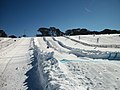
Perisher Valley hosts the Perisher Cup, an annual team-based ski competition established in 1953 by the Kosciuszko Snow Revellers Club as one of Australia's oldest snowsports events. Participants form teams of four, each member competing in , , and , with the giant slalom typically held on the Village 8 run. The event fosters inter-club rivalry, drawing teams from multiple Australian ski clubs and emphasizing both competitive and recreational participation. The resort also supports para-snowsports through events like the 2025 Adaptive Festival and associated Para Alpine competitions, held in September and welcoming athletes with disabilities in disciplines such as and slalom. These inclusive gatherings, organized by Snow Australia, provide opportunities for adaptive , , and cross-country events, promoting development from to levels in the alpine terrain. Recreational activities at Perisher Valley include night skiing and sessions on the illuminated Front Valley runs, offered Tuesdays and Saturdays during the season, often culminating in displays. Tobogganing is available at the dedicated Tube Town area near the Perisher Valley car park, a family-friendly snow play zone separate from ski slopes. Guided tours, provided by operators like Snowy Mountains , explore the surrounding wilderness via ski, snowboard, or snowshoe, catering to various skill levels with safety-focused instruction. In summer, Perisher Valley transforms into a hub for and , leveraging its high-altitude trails in . The Snowies Mountain Bike Festival, held in February, features multi-stage races and rides across the region, including routes accessible from Perisher. Hiking challenges encompass strenuous alpine paths like those to , offering scenic treks through subalpine environments for endurance enthusiasts.

Access and Infrastructure

Transportation options

Perisher Valley, located in the of , is accessible primarily by road, with supplementary options via and , particularly during the winter ski season from June to October. The resort's remote position necessitates preparation for alpine conditions, including mandatory for most vehicles and potential road closures due to heavy snowfall. Traveling by car is the most common method, with a drive of approximately 5 to 6 hours from covering about 485 kilometers via the , , and Snowy Mountains Highway, continuing through Jindabyne and up Kosciuszko Road to the valley. From , the journey is shorter at around 2.5 hours. All vehicles entering must pay a $29 daily entry fee per vehicle, purchasable online or at visitor centers, and 2WD cars require from the June long weekend to the October long weekend, even if roads are clear. Parking is free and abundant at Bullocks Flat terminal, but limited within Perisher Valley itself, encouraging use of the Skitube for final access. Roads may close due to or construction related to the Snowy 2.0 project, with updates available via ; as of 2025, Snowy 2.0 construction continues, with occasional road works on Kosciuszko Road. Oversnow vehicles, such as snowmobiles or tracked transports for lodge access, require special operator licenses and seasonal authorities from NSW National Parks and Wildlife Service during deep snow periods when standard roads are impassable. Public transport options include coach services from major cities, followed by local shuttles. Buses from , operated by companies like and Snowlink, take 6 to 8 hours to reach Jindabyne or Bullocks Flat, departing evenings during peak season for overnight travel. From , services like Snoexpress cover the 200-kilometer route in about 3 hours. Upon arrival in Jindabyne, the Bus Service provides daily shuttles to Perisher Valley terminals, operating 7 days a week in winter. The iconic then transports passengers from Bullocks Flat through an 8.5-kilometer tunnel (6.3 kilometers underground) to Perisher Valley in just 10 minutes, with frequent departures and free parking at the starting terminal; return tickets cost $58 for adults as of 2025 and are often bundled with lift passes, avoiding the national park vehicle fee. There is no direct rail service to the valley. For aerial access, flights arrive at near , approximately 100 kilometers from Perisher, with transfers via private shuttles like Snowy Mountains Shuttles taking about 1.5 hours; alternatively, offers more flight options but requires a 2.5-hour ground transfer. No commercial flights land directly at the valley, and all air travelers must arrange onward transport, with charters available for premium service during peak periods. Winter operations emphasize checking live road and weather reports to navigate restrictions effectively.

Accommodation and services

Perisher Valley offers a diverse range of accommodation options catering to skiers, snowboarders, and families, with approximately 4,200 beds available across the resort area. The Perisher Valley Hotel, located in the heart of the valley, provides ski-in/ski-out access just 100 meters from the Village 8 Express , featuring 31 heated guestrooms equipped with smart TVs, free , and individually controlled heating. For self-contained stays, options like Eiger Chalet offer boutique apartments and chalets with full kitchens, accommodating up to 50 or more units in similar properties, ideal for groups seeking independence while remaining close to ski lifts. The resort's lodging emphasizes family-friendly amenities, including access to kids' ski and snowboard programs for ages 3-14 through Perisher's Snowsports School, which focuses on safe, progressive learning in small groups. Day facilities such as the Mid Perisher Centre serve as warming huts with seating and basic refreshments for non-overnight visitors. While on-mountain childcare is not available, external babysitting services operate in the surrounding region to support family trips. Essential services support visitor needs throughout the stay. The Perisher Valley Medical Centre, situated in the Skitube Terminal, operates daily from 9 a.m. to 5 p.m. during the winter season, providing and care for injuries common to snow sports. Retail outlets, including hire shops at Perisher Sports and Rhythm Snowsports, offer gear rentals with daily rates starting at AUD 99 for adult or packages including boots as of 2025. Dining options exceed 10 outlets, ranging from casual cafes like Brunelli's for and light meals to upscale venues such as Snow Gums Restaurant at the Perisher Valley Hotel, offering dinners with valley views; free is widely available in lodges and public areas. Sustainability initiatives are integrated into operations, with Perisher's certified for ongoing audits to minimize impacts. Waste management includes recycling programs for paper, glass, plastics, and metals at Perisher Valley, aligning with ' EpicPromise goal of to by 2030; the promotes reduced emissions through encouragement of options to the site.

References

Add your contribution
Related Hubs
User Avatar
No comments yet.