Hubbry Logo
PhyllobatesPhyllobatesMain
Open search
Phyllobates
Community hub
Phyllobates
logo
8 pages, 0 posts
0 subscribers
Be the first to start a discussion here.
Phyllobates
Phyllobates
from Wikipedia

Phyllobates
P. terribilis
Scientific classification Edit this classification
Kingdom: Animalia
Phylum: Chordata
Class: Amphibia
Order: Anura
Family: Dendrobatidae
Subfamily: Dendrobatinae
Genus: Phyllobates
Duméril and Bibron, 1841
Species

7, see text

Phyllobates is a genus of poison dart frogs native to Central and South America. The genus contains seven known species, which are distributed from eastern Nicaragua to the Pacific coast of Colombia.

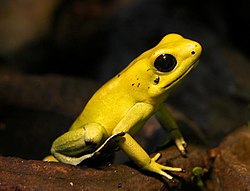
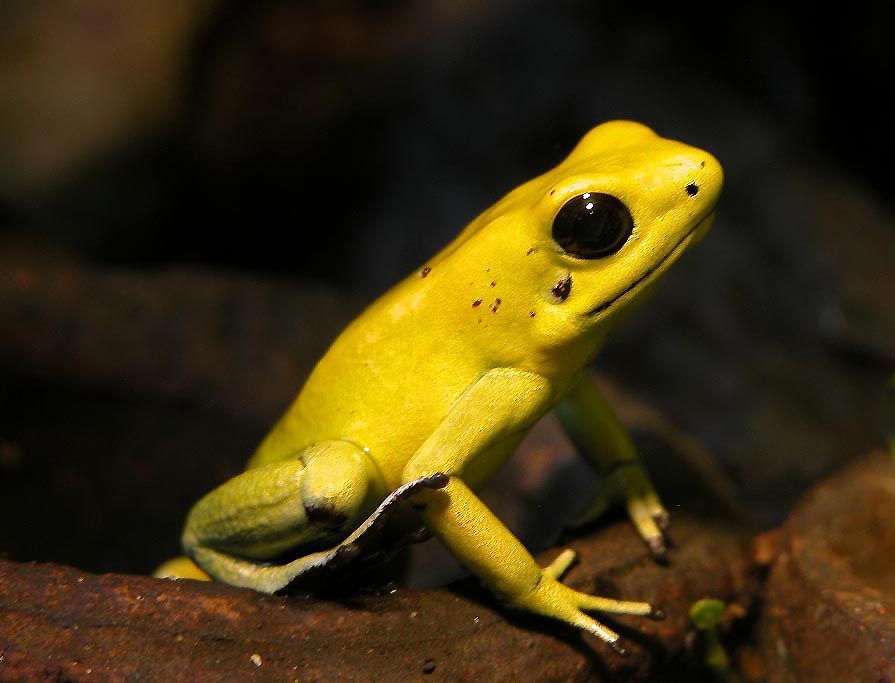
Phyllobates contains the most poisonous species of frog, the golden poison frog (P. terribilis). They are typical of the poison dart frogs, in that all species have bright warning coloration (aposematism), and have varying degrees of toxicity. Only species of Phyllobates are used by natives of South American tribes as sources of poison for their hunting darts. The most toxic of the many poisonous alkaloids these frogs contain (in glands in their skin) is batrachotoxin, alongside a wide variety of other toxic compounds. Some populations of Phyllobates lugubris in Central America are not known to be toxic.[1]

Taxonomy

[edit]

The genus name is derived from the Greek words φύλλον ("phyllon"; for "leaf") and βαίνω ("baino"; for "walk, step").[2] Phyllobates used to contain many of the species which are now within the genera Ranitomeya and Andinobates.[3] However, it now just contains seven member species within the Phyllobates bicolor and Phyllobates lugubris species groups. These are:

Group Image Common name Scientific name Distribution
P. bicolor species group Kokoe Poison Frog Phyllobates aurotaenia (Boulenger, 1913) Pacific coast of Colombia
Phyllobates bezosi (Amézquita et al., 2024) Pacific coast of Colombia
Black-legged poison frog Phyllobates bicolor (Duméril and Bibron, 1841) Chocó area in western Colombia
Phyllobates samperi Amézquita et al., 2024 Pacific coast of Colombia
Golden poison frog Phyllobates terribilis (Myers, Daly, and Malkin, 1978) Pacific coast of Colombia.
P. lugubris species group Lovely poison frog Phyllobates lugubris (Schmidt, 1857) southeastern Nicaragua through Costa Rica to northwestern Panama
Golfodulcean poison frog Phyllobates vittatus (Cope, 1893) Costa Rica.

All these different species within the genus exhibit a diversity in color. Some examples are, P. terribilis, with color morphs of "mint", "yellow", and "orange". P. vittatus, another example, is always black as a ground color, but can show yellow stripes, orange stripes, red stripes,(stripes of all colors can be seen in two forms, narrow- and wide-banded) and turquoise, green, or blue legs, etc. The bicolor dart frog (Phyllobates bicolor) can range from yellow to orange, from black legs to green legs, to almost a uniform color of any of the aforementioned color morphs. P. aurotaenia specimens are yellow-banded or orange. They are always smaller than P. vittatus, and beyond locality, this is the best way to differentiate between the two in the field or in the hobby.

Source of toxin

[edit]

The toxic alkaloid batrachotoxin is only present in frogs found in the wild; after extended captivity, they lose their toxin, indicating that they acquire it (or metabolize it) from their natural diet; this alkaloid has been found in Papuan beetle species in the family Melyridae, and other related genera can be found in Colombia and other areas where Phyllobates are found.[4]

See also

[edit]

References

[edit]
Revisions and contributorsEdit on WikipediaRead on Wikipedia
from Grokipedia
Phyllobates is a genus of small to medium-sized poison dart frogs in the family Dendrobatidae, endemic to the tropical humid forests of Central and South America, renowned for producing potent skin toxins known as batrachotoxins. These diurnal amphibians exhibit bright aposematic coloration, typically in shades of yellow, orange, or black with stripes, serving as a warning to predators of their toxicity; adults measure 21–47 mm in snout-vent length (SVL). The genus is distinguished by morphological traits such as finger I longer than finger II and the presence of maxillary teeth, and it includes species historically used by indigenous groups like the Chocó and Emberá in Colombia for crafting poisoned blow darts. Currently, Phyllobates encompasses seven recognized species: P. aurotaenia, P. bezosi, P. bicolor, P. lugubris, P. samperi, P. terribilis, and P. vittatus, with the two most recently described (P. samperi and P. bezosi) identified through in 2024. Three species (P. aurotaenia, P. bicolor, and P. terribilis) are distributed in the Pacific lowlands of up to 700 m elevation, while the others occur in , ranging from eastern through to . These frogs inhabit leaf litter and near streams in rainforests, displaying territorial behavior, vocalizations for mate attraction, and where males transport tadpoles to water bodies. The toxicity of Phyllobates species is unparalleled among amphibians, with P. terribilis (the ) being the most poisonous known, capable of secreting enough to kill multiple humans or large animals from a single encounter. Batrachotoxins, steroidal alkaloids acquired from dietary sources like mites, target sodium channels in nerves and muscles, causing and ; levels vary by species but are highest in wild individuals. Conservation concerns arise from loss and overcollection, with several species listed as Endangered by the IUCN due to their restricted ranges and vulnerability.

Description

Physical characteristics

Species in the genus Phyllobates are small anurans, with adult snout-vent lengths (SVL) typically ranging from 20 to 50 mm across the seven recognized species, though females are generally slightly larger than males. For instance, P. lugubris adults measure 21–24 mm SVL, while P. terribilis can reach up to 47 mm SVL. These frogs possess compact, streamlined bodies well-suited to both terrestrial locomotion and climbing in humid forest understories, featuring a rounded snout and a robust build relative to other dendrobatids. The skin of Phyllobates is smooth to slightly granular, maintaining moisture essential for cutaneous respiration in their tropical habitats, and is densely packed with specialized granular glands that secrete potent alkaloids for defense. Prominent eyes with horizontal pupils provide enhanced diurnal vision, aiding in foraging and predator detection during daylight hours. The digits bear expanded adhesive discs (or pads) on the tips, particularly well-developed on the toes, which facilitate adhesion to vertical surfaces and arboreal navigation without webbing between them. Hind limbs are relatively long and muscular compared to the body, enabling powerful jumps and agile movements across leaf litter and , while forelimbs are shorter and used for grasping. Males exhibit in the form of a subgular , which inflates during advertisement calls to amplify sound for territorial and mating purposes. Overall, these morphological traits reflect adaptations to a predatory, active in the leaf litter and low vegetation of Neotropical rainforests.

Coloration and variation

Species of the genus Phyllobates display vivid aposematic coloration, featuring bright s, greens, oranges, and contrasting black elements, which function as warning signals to deter predators by advertising their . For instance, Phyllobates terribilis typically exhibits a uniform golden or pale green dorsal surface, with black markings on the limbs, digits, and sometimes the venter, while Phyllobates bicolor shows a golden or orange dorsum and sides paired with black forearms, calves, and ventrum. Other species, such as Phyllobates aurotaenia and Phyllobates vittatus, feature prominent dorsolateral or orange stripes against a dark brown or black background, enhancing visibility in their forested habitats. Intraspecific variation in coloration is prominent within Phyllobates, often linked to geographic location and . Geographic morphs occur, with solid-colored forms (e.g., in P. bicolor) predominating at higher elevations ( m) and striped patterns more common at lower elevations (0–500 m), potentially reflecting adaptations to different predation pressures or visual environments. Ontogenetic color changes are widespread; tadpoles and juveniles are predominantly dark gray or black with yellowish dorsolateral bands, which fade post-metamorphosis as adults develop their bright, uniform hues, a transition completing by around 18 weeks in P. terribilis. These color patterns play a key evolutionary role in predator deterrence, where solid bright coloration provides high conspicuousness over longer distances, and stripes offer effective short-range signaling, both reinforcing the frogs' unpalatability through honest aposematic displays tied to their potent skin toxins. Such variation may also facilitate among species, further amplifying the survival benefit of these warning signals in sympatric communities.

Taxonomy and phylogeny

Etymology and history

The genus name Phyllobates derives from the Greek words phyllon (φύλλον), meaning "leaf," and bates (βατες), meaning "walker" or "one who treads," alluding to the frogs' characteristic habit of foraging and moving through leaf litter on the forest floor. This etymology reflects their ecological niche in humid tropical environments, where they are often observed navigating decaying vegetation. The name was coined by French herpetologist Gabriel Bibron in 1840, in the work Histoire Physique, Politique et Naturelle de l'Île de Cuba. Indigenous peoples of the Chocó region in western had long recognized the extreme of Phyllobates species, utilizing their skin secretions to poison blowgun darts for hunting well before European scientific contact; this knowledge was first documented in Western accounts as early as 1825 by explorer Charles Cochrane. Groups such as the Emberá Chocó specifically targeted species like P. terribilis, P. aurotaenia, and P. bicolor, rubbing the frogs' backs to extract potent batrachotoxins, a practice that predated formal taxonomic descriptions by centuries and highlighted the cultural significance of these amphibians in traditional hunting. Scientific interest in their toxicity emerged later, with early chemical analyses in the mid-20th century confirming the alkaloids' potency, but indigenous expertise provided the initial foundation for understanding their defensive adaptations. The formal scientific establishment of the genus stemmed from 19th-century natural history expeditions and collections across Central and South America, where specimens were gathered by European naturalists exploring tropical rainforests. Bibron's 1840 description was based on the type species Phyllobates bicolor, collected from regions in present-day Colombia, marking the first recognition of the group as distinct within dendrobatid frogs. Subsequent milestones included the description of P. lugubris by German zoologist Max Schmidt in 1857, from specimens obtained along the Caribbean coast of Central America, which expanded awareness of the genus's distribution. These early efforts, often tied to broader surveys of Neotropical biodiversity, laid the groundwork for later taxonomic revisions, though the full extent of the genus's diversity and phylogenetic relationships was not clarified until molecular studies in the late 20th century.

Classification

Phyllobates is classified within the order Anura, superfamily Dendrobatoidea, family Dendrobatidae, subfamily Dendrobatinae. Within the Dendrobatidae, the genus occupies a basal phylogenetic position as the to all other genera in the subfamily Dendrobatinae, a relationship supported by comprehensive phylogenomic analyses. Molecular evidence from mitochondrial genes, including partial sequences of 16S rRNA (582 bp), and ultraconserved elements (UCEs) across 1719 loci, has consistently recovered this topology, with high support for the of Phyllobates. Divergence time estimates, calibrated using Bayesian methods, indicate that the lineage leading to Phyllobates split from other dendrobatines approximately 32 ± 10 million years ago during the . The modern classification of as a distinct traces to revisions in the 1970s, when it was separated from based on morphological differences, such as the presence of maxillary teeth in some species, and the unique production of highly potent steroidal alkaloids like . Recent , including a 2024 study incorporating 16S rRNA, COI, and Cytb genes, has reaffirmed the of the genus and refined its internal clades among Colombian lineages.

Species

The genus Phyllobates includes seven recognized as of 2025: P. aurotaenia, P. bicolor, P. lugubris, P. terribilis, P. vittatus, P. samperi, and P. bezosi. These exhibit varying levels of , with P. terribilis being the most potent producer of batrachotoxins among them. Recent molecular analyses indicate that the Colombian form distinct clades: P. aurotaenia and P. bicolor are more basal, while P. samperi and P. bezosi form a sister clade to P. terribilis. Phyllobates aurotaenia is distributed in the low-elevation rainforests of the Chocó region in western , from the Atrato and San Juan river drainages at 60–520 m elevation. It is distinguished by its relatively large size (up to 35 mm snout-vent length in females) and a loud, bird-like advertisement call lasting 4–11 seconds with frequencies exceeding 2000 Hz, and it is one of the species used by Chocó indigenous groups to poison blow darts. Phyllobates bicolor occurs in the tropical rainforests along the western flank of the Occidental in northwestern , spanning elevations of 25–1525 m in the upper Atrato, San Juan, Río Raposo, and Río Sipí drainages. This species is notable for its bicolored dorsal pattern and moderate body size (females up to 42.7 mm snout-vent length), with toxin yields of 17–56 micrograms per individual, also making it suitable for use in indigenous dart poisoning. Phyllobates lugubris, the species with the broadest distribution in the , ranges from lowlands of eastern through and to northwestern , inhabiting elevations from to 650 m including offshore islands like those in Bocas del Toro. It is characterized by its small size (males up to 21 mm snout-vent length) and low toxin levels (0–0.8 micrograms), along with uniparental male care involving transport. Phyllobates terribilis is endemic to the Pacific coastal rainforests of western , specifically the foothills of the at 90–200 m near smaller streams in the departments of Chocó and Antioquia. Recognized as the most toxic known, it can produce up to 1900 micrograms of batrachotoxins per individual and features a robust build (females up to 47 mm snout-vent length) with bold diurnal activity, including male larval transport to water bodies. Phyllobates vittatus is restricted to the wet lowland forests of Costa Rica's Golfo Dulce region and southern , such as near Dominical in , at elevations of 20–550 m. This small species (females up to 31 mm snout-vent length) stands out for its terrestrial habits in leaf litter and low secretion, coupled with male behaviors like transport. Phyllobates samperi, described in 2024, is known from wet forests in the Valle del Cauca and Chocó Departments of Colombia, with the type locality near Buenaventura in Valle del Cauca, in humid forest habitats at low elevations. It is differentiated by its smaller body size and short, high-pitched advertisement calls that contrast with those of its close relative P. terribilis, representing a recent addition to the genus from molecular phylogenetic analysis. Phyllobates bezosi, also newly described in 2024, occurs in the of western , known from the type locality on the Garrapatas River in the municipality of Bolívar, within riverine at about 700 m elevation. This species is distinguished by a more robust morphology and longer, lower-frequency calls compared to P. samperi and P. terribilis, highlighting ongoing discoveries in Colombian dendrobatids through genetic studies.

Distribution and habitat

Geographic range

The genus Phyllobates is native to the lowland and premontane humid forests of Central and northwestern , with its range extending from southern through and to northern . This distribution spans approximately 1,500 km along the Pacific versant and lowlands, reflecting the genus's adaptation to neotropical wet environments. Populations are particularly concentrated in the Chocó biogeographic region of western , where multiple species overlap in Pacific coastal drainages such as the Atrato and San Juan rivers; the recently described P. samperi and P. bezosi are endemic to the Pacific lowlands of Valle del Cauca and Chocó departments in western . Biogeographic patterns show disjunct distributions, with the Andean cordillera serving as a primary barrier to and dispersal, leading to isolated western and central populations separated by topographic divides. Elevations across the genus typically range from to 800 m, with some species like P. bicolor extending up to 1,500 m in premontane zones. Historically, the geographic range of Phyllobates has remained relatively stable within intact corridors, as evidenced by long-term phylogenetic continuity in isolated populations. However, recent contractions have occurred due to widespread , reducing available and fragmenting distributions in key areas like the Colombian Pacific lowlands.

Habitat requirements

Species of the genus Phyllobates primarily occupy humid lowland rainforests and premontane wet forests, characterized by dense and proximity to water sources such as or slow-moving rivers. These environments provide the consistent essential for their survival, with individuals often observed in primary forests but also persisting in selectively logged where humidity remains high. Preferred sites include forest edges along watercourses and tops with moist slopes, avoiding drier, open, or cultivated areas that lack sufficient cover and dampness. Within these habitats, Phyllobates frogs utilize microhabitats on the , spending much of their time in dense leaf litter, under fallen logs, or in rock crevices and holes among tree roots. They are predominantly terrestrial and diurnal, perching occasionally on low vegetation, roots, or small saplings just centimeters above the ground for or calling, but rarely venturing higher into the canopy. Bromeliads and other epiphytes offer occasional shelter near banks, contributing to the moist they favor. These frogs depend on elevated levels of 80–100% and stable temperatures ranging from 24–28°C, conditions that mimic the of their range and support their and hydration. Annual rainfall in these habitats often exceeds 1.25 m, with some areas receiving up to 5 m, ensuring the persistent dampness required for daily activity. Phyllobates exhibit physiological adaptations such as highly permeable skin that facilitates but demands constant moisture to avoid , linking their tightly to these wet refugia. Males further demonstrate moisture dependence through hydric brooding, periodically urinating on egg clutches to maintain during development. This sensitivity renders them vulnerable to dry seasons, during which they reduce activity, seek deeper cover, or shift to more sheltered microhabitats to mitigate evaporative water loss.

Behavior and ecology

Daily activity and foraging

Phyllobates species are diurnal frogs, exhibiting peak activity during daylight hours when they on the forest or low in humid tropical environments. At night, they seek shelter in leaf litter, bromeliads, or small crevices to avoid predation and . This activity pattern enhances the visibility of their aposematic coloration, serving as a warning to potential predators. Males often incorporate territorial calls into their daily routines, producing short, repetitive vocalizations from perches on leaves or the ground to defend areas, with call durations varying from 4 to 11 seconds depending on the . Foraging in Phyllobates typically involves an active search strategy, where individuals move in short hops across the leaf litter, scanning for prey rather than employing a strict sit-and-wait ambush. They are opportunistic predators, capturing small, slow-moving through visual detection and rapid projection. The diet consists primarily of (Formicidae), mites (Acarina), and small beetles (Coleoptera), with often comprising over 50% of consumed prey items in wild populations; for example, in P. vittatus, dominate alongside occasional dipterans and collembolans. This myrmecophagous (ant-eating) specialization likely aids in sequestering alkaloids for toxicity, as certain prey like melyrid beetles serve as sources of batrachotoxins. Toxin uptake occurs via dietary absorption in the gut, concentrating defenses in skin glands. The ecology of Phyllobates reflects adaptations to resource-limited understories, with metabolic rates supporting sustained activity despite variable prey availability; wide- species in the exhibit elevated aerobic capacities compared to more sedentary anurans, enabling multiple prey captures per day while maintaining energy efficiency typical of ectotherms. Low overall metabolic demands allow adults to feed opportunistically, sometimes skipping days without nutritional stress. Interactions with sympatric dendrobatids, such as histrionica, involve spatial partitioning of foraging microhabitats to reduce competition, with Phyllobates favoring denser leaf litter zones. Territorial behaviors further minimize overlap, as vocal displays deter intruders from prime feeding territories.

Reproduction and parental care

Phyllobates species exhibit reproductive strategies adapted to their neotropical habitats, with breeding activity peaking during the rainy season when increased humidity and water availability facilitate egg development and survival. Males establish and defend territories on the , using advertisement calls to attract females; these calls typically feature dominant frequencies between 2.6 and 3.6 kHz, varying by such as P. bicolor (around 2.6 kHz) and P. aurotaenia (around 3.6 kHz). Females assess potential mates based on call quality and territory suitability, often approaching calling males that maintain high-quality sites with access to moist oviposition areas and nearby water bodies. involves the male leading the female to a sheltered site, such as under leaf litter or in a crevice, without , culminating in egg deposition after a brief of calling and physical contact. Eggs are laid in terrestrial clutches on land, typically in humid, concealed locations to protect against and predation. Clutch sizes range from 5 to 30 eggs depending on the species and female condition, with P. terribilis producing 10–30 eggs per clutch. Eggs undergo endotrophic development using reserves and develop for 10–25 days before into exotrophic tadpoles that rely on external nutrients. Upon , males provide essential by transporting the tadpoles on their backs to phytotelmata, such as water-filled bromeliad axils, tree holes, or fallen palm bracts, often carrying groups of 10–20 individuals over several days to suitable rearing sites. This transport behavior ensures tadpoles reach isolated, predator-poor water bodies where they can complete . Male extends to guarding the clutches, regularly wetting them with or environmental moisture to prevent during the embryonic stage. Unlike some dendrobatid relatives, Phyllobates males do not provision s with infertile eggs after deposition, relying instead on the nutritional quality of the phytotelmata for larval growth. development typically lasts 40–60 days, influenced by and food availability, after which juveniles emerge as fully metamorphosed froglets capable of terrestrial life. This uniparental male care enhances offspring survival in ephemeral pools, though females may occasionally compensate if males are absent, as observed in related taxa.

Toxicity

Toxins and their chemistry

Phyllobates frogs secrete a suite of steroidal alkaloids as their primary toxins, with batrachotoxin (BTX) serving as the dominant and most potent compound. BTX is a complex steroidal alkaloid featuring a reduced steroid nucleus integrated with a piperidine ring system and an ester linkage at the C-20 position to 2,4-dimethylpyrrole-3-carboxylic acid; its systematic structure can be described as (3α,9α)-9-hydroxy-3-methoxy-14β-(2,4-dimethylpyrrol-1-yl)-5β-pregn-20-ene, though this represents a simplified representation of its intricate fused ring architecture. This structural motif enables BTX to exhibit high specificity and affinity for neuronal targets. The exceptional potency of BTX stems from its on voltage-gated sodium channels (NaV1), where it binds irreversibly to receptor site 2, promoting channel opening at resting potentials and blocking inactivation. This leads to uncontrolled sodium influx, persistent membrane depolarization, and subsequent paralysis of skeletal muscles and cardiac tissue, culminating in and death. In mice, BTX has an LD50 of 2 μg/kg via , underscoring its status as one of the most lethal non-proteinaceous natural toxins. Closely related to BTX are other batrachotoxins, including homobatrachotoxin, a structural homolog with an extended alkyl chain (C32H44N2O6), which exhibits comparable potency and modulation, and batrachotoxin A (batrachotoxinin A), the aglycone derivative lacking the ester group and thus possessing reduced lipophilicity and (LD50 ≈ 1000 μg/kg in mice). These analogs occur alongside BTX in roughly equal proportions in wild specimens, contributing to the overall profile. Toxin concentrations vary significantly among Phyllobates species, peaking in P. terribilis, where and homobatrachotoxin together can total up to 1.9 mg per adult , equivalent to approximately 1.2 mg/g of —the highest recorded among poison dart frogs. In contrast, species like P. aurotaenia and P. bicolor exhibit lower levels, often 20- to 27-fold less per unit weight, reflecting evolutionary adaptations in sequestration.

Acquisition and function

Phyllobates species acquire their characteristic toxins, primarily batrachotoxins, via sequestration from their diet rather than through de novo . These steroidal alkaloids are obtained from specialized prey, such as myrmicine and oribatid mites, which accumulate the compounds from environmental sources including . Additional potential dietary contributors include melyrid beetles, as evidenced by the presence of batrachotoxins in these from regions overlapping the frogs' habitats. This dietary origin is confirmed by captivity experiments, where Phyllobates individuals raised on non-toxic prey like fruit flies show no detectable batrachotoxins in their skin, despite retaining s for years if captured as adults. In contrast, wild specimens consistently possess high levels, underscoring the absence of endogenous production and the reliance on specific prey for uptake. is thus unlikely, as the frogs lack the metabolic pathways observed in some other alkaloid-producing amphibians. The toxins primarily function as a potent chemical defense mechanism against predators. Batrachotoxins bind irreversibly to voltage-gated sodium channels, preventing channel inactivation and causing sustained membrane depolarization, which disrupts nerve impulses and leads to and in attackers. This neurotoxic effect makes the frogs highly lethal upon ingestion or contact, with a mouse LD50 of approximately 2 μg/kg subcutaneously. The defense is amplified by the frogs' vivid aposematic coloration, which advertises toxicity and promotes predator avoidance learning. Ecologically, these toxins reduce predation pressure on Phyllobates, enabling diurnal activity and occupation of exposed niches that would otherwise be risky. By deterring predators, the chemical defenses influence community dynamics, potentially stabilizing populations of toxic arthropods and cascading effects through trophic levels where predators may themselves become secondarily toxic.

Human interactions

The Chocó and Emberá peoples of western have extracted from Phyllobates frogs to poison blow for since pre-Columbian times. These indigenous groups, including the Emberá Chocó, target highly toxic species such as Phyllobates terribilis, P. aurotaenia, and P. bicolor, whose secretions contain potent steroidal alkaloids. Traditional preparation involves rubbing the tips of handmade darts along ' backs to collect the exuded , a non-lethal method that allows a single frog to coat 30 to 50 darts; hunters use waxy leaves as improvised gloves to avoid absorption during handling. This practice, integral to their subsistence, has been ethnographically documented since at least the . In contemporary research, serves as a pharmacological tool for developing painkillers, as it modulates Nav1.8 sodium channels critical to , with anecdotal reports of numbness from skin contact suggesting potential. Its structural and functional overlap with insecticides—binding to overlapping sites on voltage-gated sodium channels—has also spurred studies into novel insecticides targeting insect pests. The pet trade introduces handling risks, particularly with illegally sourced wild-caught specimens that may retain toxicity for up to two years, though captive-bred Phyllobates lose alkaloids due to non-toxic diets and pose no threat. Phyllobates frogs carry cultural significance for Chocó and Emberá communities, embodying through their role in rituals and symbolizing resilience in local lore. Ethical issues in dart collection center on ensuring non-harmful techniques preserve both and frog welfare, as intensified traditional use could strain small populations without sustainable oversight.

Conservation

Threats

Phyllobates species face severe habitat loss primarily due to for and logging, particularly in the Chocó region of , home to several species including P. aurotaenia, P. bicolor, and P. terribilis. This destruction has significantly reduced available rainforest cover, with experiencing tree cover loss of 3,400 hectares in 2024. Since the 1980s, such activities have contributed to broader range contractions for poison dart frogs, including Phyllobates, by converting humid lowland forests into farmland and plantations. Additional threats exacerbate population declines, including the illegal pet trade, which involves the collection of thousands of individuals annually from wild populations. Between 2004 and 2008, over 63,000 poison dart frogs from 32 species, encompassing Phyllobates, were documented in , often sourced illegally from Central and South American habitats. The chytrid fungus has also caused outbreaks, leading to mass die-offs among poison dart frogs by disrupting skin function and electrolyte balance in these moisture-dependent amphibians. Climate change further compounds risks by altering humidity levels in their tropical habitats, potentially reducing breeding success and increasing desiccation stress in species adapted to consistently high moisture environments. Cumulative impacts from these threats include , which isolates small populations and limits , increasing vulnerability to . Pollution from mining activities in the Chocó, particularly illegal , introduces like mercury into waterways and soils, contaminating breeding sites and food sources for Phyllobates. This fragmentation and pollution synergistically reduce population viability by degrading the interconnected forest-stream ecosystems essential for these frogs' survival.

Status and protection

The conservation statuses of Phyllobates species on the reflect varying levels of threat as of the latest assessments through 2025. P. terribilis is classified as Endangered due to its restricted range and ongoing pressures, while P. bicolor is also Endangered owing to similar vulnerabilities in its distribution. Among other species, P. vittatus is Vulnerable, primarily from , whereas P. aurotaenia and P. lugubris are assessed as Least Concern, benefiting from wider distributions. The recently described P. bezosi and P. samperi (2024) have not yet been formally assessed by IUCN, but P. samperi is proposed as Vulnerable due to its restricted range and threats. All Phyllobates species are included in Appendix II of the convention, which monitors and regulates international trade to ensure it does not threaten their survival. In Colombia, key habitats receive protection through national parks, such as Utria National Natural Park, which conserves lowland ecosystems supporting P. aurotaenia and related . programs, including those coordinated by organizations like ProAves, focus on species such as P. terribilis to maintain genetic diversity and reduce pressure on wild populations. Conservation initiatives emphasize sustainable propagation and habitat restoration. Research on toxin-free breeding demonstrates that captive-raised Phyllobates lack batrachotoxins when fed non-toxic diets, enabling safer handling and potential supplementation of wild stocks without introducing contaminants. Preliminary reintroduction trials for poison dart frogs, including Phyllobates species, test and in restored habitats to enhance viability. In indigenous communities along Colombia's , education programs foster awareness of the frogs' ecological role, encouraging alternatives to habitat-altering activities like cultivation and promoting collaborative monitoring in reserves.

References

Add your contribution
Related Hubs
User Avatar
No comments yet.