
Recent from talks
Picornavirus
Knowledge base stats:
Talk channels stats:
Members stats:
Picornavirus
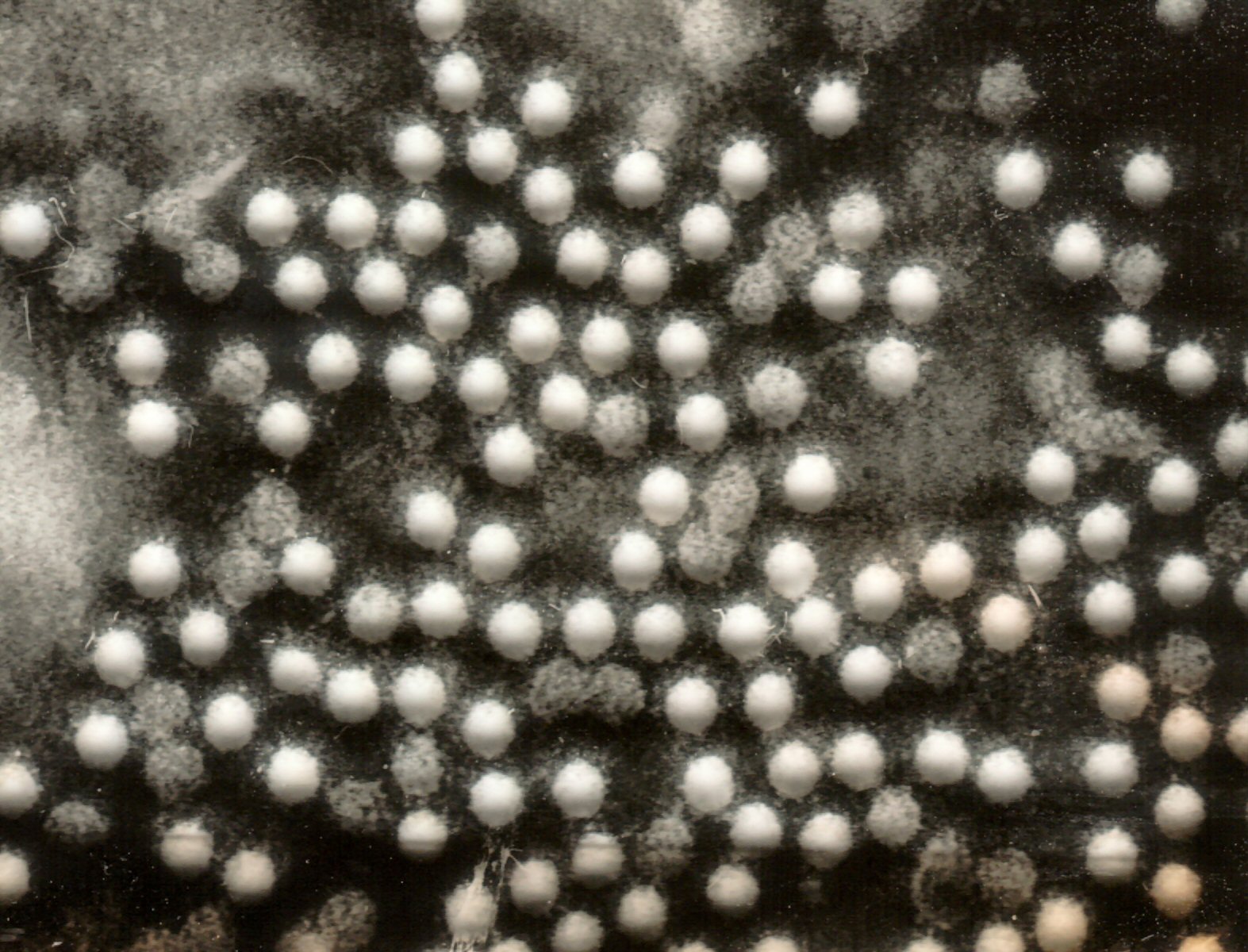
Picornaviruses are a group of related nonenveloped RNA viruses which infect vertebrates including fish, mammals, and birds. They are viruses that represent a large family of small, positive-sense, single-stranded RNA viruses with a 30 nm icosahedral capsid. The viruses in this family can cause a range of diseases including the common cold, poliomyelitis, meningitis, hepatitis, and paralysis.
Picornaviruses constitute the family Picornaviridae, order Picornavirales, and realm Riboviria. There are 159 species in this family, assigned to 68 genera, most of which belong to 5 subfamilies. Notable examples are genera Enterovirus (including Rhinovirus and Poliovirus), Aphthovirus, Cardiovirus, and Hepatovirus.
The name "picornavirus" has a dual etymology. Firstly, the name derives from picorna-, which is an acronym for "poliovirus, insensitivity to ether, coxsackievirus, orphan virus, rhinovirus, and ribonucleic acid". Secondly, the name derives from pico-, which designates a very small unit of measurement (equivalent to 10−12), combined with rna to describe this group of very small RNA viruses.
The first animal virus discovered (1897) was the foot-and-mouth disease virus (FMDV). It is the prototypic member of the genus Aphthovirus in the Picornaviridae family. The plaque assay was developed using poliovirus; the discovery of viral replication in culture was also with poliovirus in 1949. This was the first time that infectious virus had been produced in cultured cells. Polyprotein synthesis, internal ribosome entry sites, and uncapped mRNA were all discovered by studying poliovirus infected cells, and a poliovirus clone was the first infectious DNA clone made of an RNA virus in animals. Along with rhinovirus, poliovirus was the first animal virus to have its structure determined by x-ray crystallography. RNA dependent RNA polymerase was discovered in Mengovirus, a genus of picornaviruses.
Picornaviruses are nonenveloped, with an icosahedral capsid. The capsid is an arrangement of 60 protomers in a tightly packed icosahedral structure. Each protomer consists of four polypeptides known as VP (viral protein) 1, 2, 3 and 4. VP2 and VP4 polypeptides originate from one protomer known as VP0 that is cleaved to give the different capsid components. The icosahedral capsid is said to have a triangulation number of 3, this means that in the icosahedral structure each of the 60 triangles that make up the capsid are split into three little triangles with a subunit on the corner.[citation needed]
Many picornaviruses have a deep cleft formed by around each of the 12 vertices of icosahedrons. The outer surface of the capsid is composed of regions of VP1, VP2, and VP3. Around each of the vertices is a canyon lined with the C termini of VP1 and VP3. The interior surface of the capsid is composed of VP4 and the N termini of VP1. J. Esposito and Frederick A. Murphy demonstrates cleft structure referred to as canyons, using X-ray crystallography and cryoelectron microscopy.
Depending on the type and degree of dehydration, the viral particle is around 30–32 nm in diameter. The viral genome is around 2500 nm in length, so it is tightly packaged within the capsid along with substances such as sodium ions to balance the negative charges on the RNA caused by the phosphate groups.[citation needed]
Picornaviruses are classed under Baltimore's viral classification system as group IV viruses, as they contain a single-stranded, positive-sense RNA genome. Their genome ranges between 6.7 and 10.1 (kilobases) in length. Like most positive-sense RNA genomes, the genetic material alone is infectious; although substantially less virulent than if contained within the viral particle, the RNA can have increased infectivity when transfected into cells. The genome RNA is unusual because it has a protein on the 5' end that is used as a primer for transcription by RNA polymerase. This primer is called VPg genome, and it ranges between 2 and 3 kb. VPg contain tyrosine residue at the 3' end. Tyrosine as a –OH source for covalently linked to 5' end of RNA.
Hub AI
Picornavirus AI simulator
(@Picornavirus_simulator)
Picornavirus
Picornaviruses are a group of related nonenveloped RNA viruses which infect vertebrates including fish, mammals, and birds. They are viruses that represent a large family of small, positive-sense, single-stranded RNA viruses with a 30 nm icosahedral capsid. The viruses in this family can cause a range of diseases including the common cold, poliomyelitis, meningitis, hepatitis, and paralysis.
Picornaviruses constitute the family Picornaviridae, order Picornavirales, and realm Riboviria. There are 159 species in this family, assigned to 68 genera, most of which belong to 5 subfamilies. Notable examples are genera Enterovirus (including Rhinovirus and Poliovirus), Aphthovirus, Cardiovirus, and Hepatovirus.
The name "picornavirus" has a dual etymology. Firstly, the name derives from picorna-, which is an acronym for "poliovirus, insensitivity to ether, coxsackievirus, orphan virus, rhinovirus, and ribonucleic acid". Secondly, the name derives from pico-, which designates a very small unit of measurement (equivalent to 10−12), combined with rna to describe this group of very small RNA viruses.
The first animal virus discovered (1897) was the foot-and-mouth disease virus (FMDV). It is the prototypic member of the genus Aphthovirus in the Picornaviridae family. The plaque assay was developed using poliovirus; the discovery of viral replication in culture was also with poliovirus in 1949. This was the first time that infectious virus had been produced in cultured cells. Polyprotein synthesis, internal ribosome entry sites, and uncapped mRNA were all discovered by studying poliovirus infected cells, and a poliovirus clone was the first infectious DNA clone made of an RNA virus in animals. Along with rhinovirus, poliovirus was the first animal virus to have its structure determined by x-ray crystallography. RNA dependent RNA polymerase was discovered in Mengovirus, a genus of picornaviruses.
Picornaviruses are nonenveloped, with an icosahedral capsid. The capsid is an arrangement of 60 protomers in a tightly packed icosahedral structure. Each protomer consists of four polypeptides known as VP (viral protein) 1, 2, 3 and 4. VP2 and VP4 polypeptides originate from one protomer known as VP0 that is cleaved to give the different capsid components. The icosahedral capsid is said to have a triangulation number of 3, this means that in the icosahedral structure each of the 60 triangles that make up the capsid are split into three little triangles with a subunit on the corner.[citation needed]
Many picornaviruses have a deep cleft formed by around each of the 12 vertices of icosahedrons. The outer surface of the capsid is composed of regions of VP1, VP2, and VP3. Around each of the vertices is a canyon lined with the C termini of VP1 and VP3. The interior surface of the capsid is composed of VP4 and the N termini of VP1. J. Esposito and Frederick A. Murphy demonstrates cleft structure referred to as canyons, using X-ray crystallography and cryoelectron microscopy.
Depending on the type and degree of dehydration, the viral particle is around 30–32 nm in diameter. The viral genome is around 2500 nm in length, so it is tightly packaged within the capsid along with substances such as sodium ions to balance the negative charges on the RNA caused by the phosphate groups.[citation needed]
Picornaviruses are classed under Baltimore's viral classification system as group IV viruses, as they contain a single-stranded, positive-sense RNA genome. Their genome ranges between 6.7 and 10.1 (kilobases) in length. Like most positive-sense RNA genomes, the genetic material alone is infectious; although substantially less virulent than if contained within the viral particle, the RNA can have increased infectivity when transfected into cells. The genome RNA is unusual because it has a protein on the 5' end that is used as a primer for transcription by RNA polymerase. This primer is called VPg genome, and it ranges between 2 and 3 kb. VPg contain tyrosine residue at the 3' end. Tyrosine as a –OH source for covalently linked to 5' end of RNA.
Recent media