Hubbry Logo
PinnationPinnationMain
Open search
Pinnation
Community hub
Pinnation
logo
8 pages, 0 posts
0 subscribers
Be the first to start a discussion here.
Pinnation
Pinnation
from Wikipedia
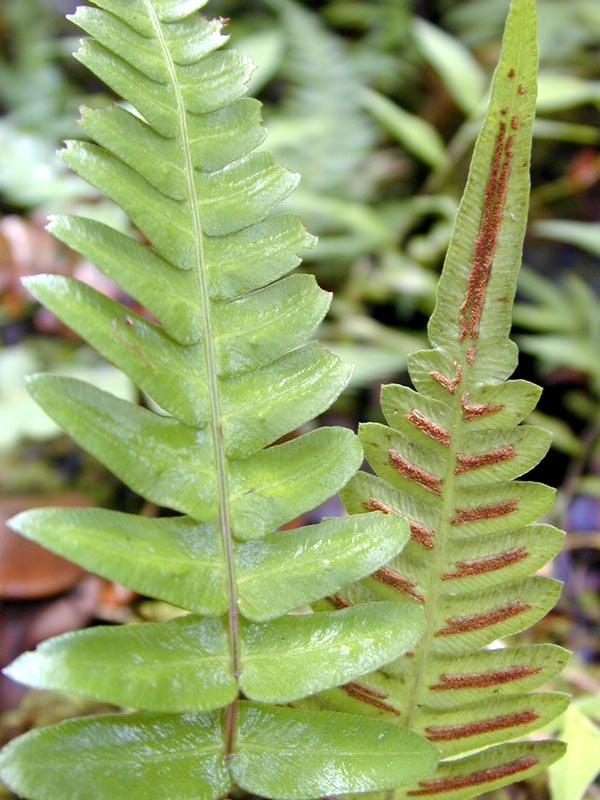
A simple pinnate (unipinnate) frond of the fern Blechnum appendiculatum.

Pinnation (also called pennation) is the arrangement of feather-like or multi-divided features arising from both sides of a common axis. Pinnation occurs in biological morphology, in crystals,[1] such as some forms of ice or metal crystals,[2][3] and in patterns of erosion or stream beds.[4]

The term derives from the Latin word pinna meaning "feather", "wing", or "fin". A similar concept is "pectination", which is a comb-like arrangement of parts (arising from one side of an axis only). Pinnation is commonly referred to in contrast to "palmation", in which the parts or structures radiate out from a common point. The terms "pinnation" and "pennation" are cognate, and although they are sometimes used distinctly, there is no consistent difference in the meaning or usage of the two words.[5][6]

Plants

[edit]

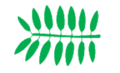
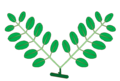
Botanically, pinnation is an arrangement of discrete structures (such as leaflets, veins, lobes, branches, or appendages) arising at multiple points along a common axis. For example, once-divided leaf blades having leaflets arranged on both sides of a rachis are pinnately compound leaves. Many palms (notably the feather palms) and most cycads and grevilleas have pinnately divided leaves. Most species of ferns have pinnate or more highly divided fronds, and in ferns, the leaflets or segments are typically referred to as "pinnae" (singular "pinna"). Plants with pinnate leaves are sometimes colloquially called "feather-leaved". Most of the following definitions are from Jackson's Glossary of Botanical Terms:[6]

Depth of divisions

[edit]
  • pinnatifid and pinnatipartite: leaves with pinnate lobes that are not discrete, remaining sufficiently connected to each other that they are not separate leaflets.
  • pinnatisect: cut all the way to the midrib or other axis, but with the bases of the pinnae not contracted to form discrete leaflets.
  • pinnate-pinnatifid: pinnate, with the pinnae being pinnatifid.

Number of divisions

[edit]
  • paripinnate: pinnately compound leaves in which leaflets are borne in pairs along the rachis without a single terminal leaflet; also called "even-pinnate".
  • imparipinnate: pinnately compound leaves in which there is a lone terminal leaflet rather than a terminal pair of leaflets; also called "odd-pinnate".

Iteration of divisions

[edit]
Bipinnate leaves of species of palm in the genus Caryota
  • bipinnate: pinnately compound leaves in which the leaflets are themselves pinnately compound; also called "twice-pinnate".
  • tripinnate: pinnately compound leaves in which the leaflets are themselves bipinnate; also called "thrice-pinnate".
  • tetrapinnate: pinnately compound leaves in which the leaflets are themselves tripinnate.
  • unipinnate: solitary compound leaf with a row of leaflets arranged along each side of a common rachis.

The term pinnula (plural: pinnulae) is the Latin diminutive of pinna (plural: pinnae); either as such or in the Anglicised form: pinnule, it is differently defined by various authorities. Some apply it to the leaflets of a pinna, especially the leaflets of bipinnate or tripinnate leaves.[7] Others also or alternatively apply it to second or third order divisions of a bipinnate or tripinnate leaf.[8] It is the ultimate free division (or leaflet) of a compound leaf, or a pinnate subdivision of a multipinnate leaf.

Animals

[edit]

In animals, pinnation occurs in various organisms and structures, including:

Geomorphology

[edit]

Pinnation occurs in certain waterway systems in which all major tributary streams enter the main channels by flowing in one direction at an oblique angle.[9]

References

[edit]
Revisions and contributorsEdit on WikipediaRead on Wikipedia
from Grokipedia
Pinnation, also spelled pennation, is the arrangement of feather-like or multi-divided features that arise from both sides of a common central axis, resembling the barbs of a . This structural pattern occurs in and , enhancing efficiency by optimizing space, force distribution, resource transport, or water flow. In , pinnation commonly refers to the organization of compound leaves or venation patterns where leaflets or secondary veins branch alternately or oppositely along a central rachis or midrib. For instance, pinnate leaves, such as those of the (Rosa spp.), feature an odd or even number of leaflets attached to the rachis, with odd-pinnate types ending in a terminal leaflet. This arrangement, derived from the Latin pinna meaning "feather," aids in maximizing photosynthetic surface area while minimizing wind resistance. Variations include bipinnate (twice-pinnate) leaves, like those in trees, where secondary rachises branch from the primary axis. In , a describes tributaries that join a main at acute angles, forming a feather-like , often in areas with uniform flanked by parallel faults or ridges. In muscle , pinnation describes the oblique orientation of muscle fibers relative to a central , which increases the and thus amplifies production without proportionally enlarging muscle volume. Pennate muscles are classified into types such as unipennate (fibers on one side of the tendon, e.g., extensor digitorum brevis), bipennate (fibers on both sides, e.g., rectus femoris), multipennate (multiple angled insertions, e.g., deltoid), and circumpennate (fibers surrounding the tendon, e.g., tibialis anterior). This design is prevalent in weight-bearing muscles like the gastrocnemius, where it enhances shortening velocity and power output during locomotion, though it may limit excursion range due to the angled fiber paths. The pennation angle, typically 0–30 degrees, directly influences force transmission efficiency and can vary with contraction or .

Definition and Etymology

General Definition

Pinnation, also spelled pennation, is the feather-like arrangement of multi-divided features or structures that arise alternately or oppositely from both sides of a common central axis, resembling the barbs extending from the shaft of a . This configuration emphasizes bilateral and serial branching or attachment along the axis, such as a rachis in leaves or a in muscles. The term derives from the Latin pinna, meaning "," "," or "," which captures the visual to avian morphology where barbs radiate from a central rachis. The concept of pinnation entered English scientific usage in the , drawn from the Latin pinnatus ("feathered"), to describe branching patterns observed in natural forms during the era's burgeoning studies in and . Early naturalists employed it to characterize organic structures exhibiting this repetitive, axis-based division, distinguishing it from other patterns like palmate or radial arrangements. The feather structure in birds serves as the archetypal model, with its symmetrical barbs providing an efficient, that inspired the terminological adoption across disciplines. Pinnation manifests across multiple fields of study, offering a unifying structural in diverse natural systems. In , it denotes the organization of leaflets or veins along a midrib, as seen in many compound leaves. In animal , it describes the oblique attachment of muscle fascicles to a central , enhancing force generation. In , it characterizes drainage networks where tributaries branch acutely from a main , reflecting underlying influences. This interdisciplinary applicability underscores pinnation's role as a fundamental motif in evolutionary and morphological adaptations.

Etymology

The term "pinnation" derives from the Latin pinna, meaning "feather" or "wing," through the adjectival form pinnātus (feathered or winged), which evokes the feather-like arrangement of structures in nature. This linguistic root entered botanical Latin to describe divided or segmented forms resembling a feather's barbs. Carl Linnaeus formalized the term pinnātus in botanical nomenclature within his seminal 1753 work Species Plantarum, applying it to characterize leaf arrangements that branch out symmetrically from a central axis, such as in species like Bromus pinnatus and Salvia pinnata. In English anatomical contexts, the "pennate" or "penniform" (from Latin penna, denoting a ) was used from the early to describe the oblique, feather-like orientation of muscle fibers relative to a . The noun "pennation" entered usage later in the , with the first recorded instance in 1873. Related terms include the "pinnate," directly borrowed for similar feathered patterns, and "pinnule," referring to smaller secondary divisions akin to a 's secondary barbs. The term's in followed a timeline beginning with 18th-century and extending to 19th-century , reflecting its cross-disciplinary to avian structures.

In Botany

Depth of Pinnation

The depth of pinnation in botanical contexts refers to the hierarchical levels of branching or segmentation in compound leaves, measured by the number of successive divisions from the primary rachis to the ultimate leaflets. This structural complexity allows for varying degrees of dissection, influencing leaf functionality in different environments. In once-pinnate (or unipinnate) leaves, there is a single level of division, where leaflets arise directly from the primary rachis without further branching. This form is exemplified by the leaves of roses (Rosa spp.), in which pairs of leaflets are arranged oppositely or alternately along the central axis. Bipinnate leaves involve a secondary level of division, where the primary leaflets (pinnae) from the rachis further branch into smaller secondary leaflets known as pinnules. This twice-pinnate creates a more intricate, feathery appearance, as seen in many species, such as and Acacia baileyana, as well as in Albizia julibrissin (Persian silk tree), where the pinnules enhance overall leaf fineness. Tripinnate or decompound leaves extend to a tertiary level or beyond, with pinnules themselves dividing into even smaller segments, resulting in highly dissected forms that approach a fern-like delicacy. Examples include the leaves of (Gleditsia triacanthos), which can exhibit this thrice-pinnate arrangement, allowing for maximal segmentation while maintaining structural integrity. Deeper pinnation, such as bipinnate or tripinnate forms, provides adaptive advantages by increasing the total surface area available for without proportionally enlarging the overall profile, thereby optimizing capture in shaded or variable conditions. Additionally, the segmented minimizes resistance and reduces the risk of mechanical damage in exposed habitats, as the leaflets can flex independently. In arid environments, bipinnate leaves of species exemplify this adaptation, where the fine pinnules create a thicker around the canopy, limiting rates while supporting midday photosynthetic peaks under hyper-arid stress.

Number of Leaflets

Pinnate leaves in botany are classified by the number and arrangement of leaflets along the rachis into odd-pinnate (imparipinnate) and even-pinnate (paripinnate) types. Imparipinnate leaves feature a terminal leaflet at the rachis apex, resulting in an odd total number of leaflets arranged in pairs below it. This configuration provides mechanical balance and stability to the leaf structure, as the terminal leaflet counteracts asymmetry from wind or gravity. For instance, rose species (Rosa spp.) typically exhibit 5 to 11 leaflets in an imparipinnate arrangement. In contrast, paripinnate leaves lack a terminal leaflet, with leaflets borne in opposite pairs along the entire rachis, yielding an even total count. This even configuration may offer greater flexibility in leaflet deployment but can introduce slight instability at the rachis tip without the balancing terminal element. The tamarind tree (Tamarindus indica) exemplifies paripinnate leaves, with 10 to 20 pairs of small, oblong leaflets. The number of leaflets in pinnate leaves shows considerable variation across species, ranging from 3 in trifoliolate forms—sometimes regarded as pinnate when leaflets attach to a short rachis—to over 100 in highly divided examples. Trifoliolate leaves, such as those in certain , represent a minimal pinnate state with three leaflets, while species like jacaranda () achieve extensive counts through numerous small leaflets in their bipinnate structure, enhancing overall leaf area without excessive size. Greater leaflet numbers serve a critical functional role by increasing the total photosynthetic surface area and permitting light penetration through gaps between leaflets, thereby optimizing light capture in varied light regimes. This adaptation reduces self-shading and supports higher , particularly in competitive environments. Evolutionary trends favor higher leaflet counts in tropical plants compared to temperate ones, where denser canopies select for finer divisions to access diffuse light in understories.

Iteration of Divisions

In , iterative pinnation refers to the repeated branching of structures at successive scales, resulting in compound leaves with multiple orders of division that often exhibit fractal-like . This pattern is particularly prominent in , where the frond divides into primary pinnae, which further subdivide into secondary pinnules, and sometimes tertiary segments, creating intricate, lacy architectures. Many fern species feature bipinnate fronds that appear feathery. For instance, in the lady fern (), the fronds display this repetition, with each level of division mirroring the overall pinnate form, enhancing structural complexity without abrupt termination. Such iterations are genetically regulated in some species; in chickpeas (Cicer arietinum), the MULTI-PINNATE LEAF1 (MPL1) gene promotes higher-order leaflet production, leading to 2–3 levels of subdivision in mutant forms, demonstrating how iterative patterns can arise from proximal-to-distal developmental gradients. In contrast, non-iterative pinnation involves a single level of division or an abrupt cessation of branching, producing simpler pinnate structures without further subdivision. This is common in certain gymnosperms, such as cycads in the genus , where leaves are once-pinnate with leaflets arranged along a rachis but lacking additional iterations, resulting in a more uniform, non-fractal morphology. Similarly, needles (Pinus spp.), while not truly pinnate, represent a non-iterative extreme in leaf evolution, with elongated, undivided forms that prioritize durability over repeated division. Pinnatifid and pinnatisect leaves represent intermediate forms of pinnation where is partial or incised rather than fully , with the degree of repetition influencing the depth of . Pinnatifid leaves are deeply lobed along the margins but remain connected by a narrow strip of lamina, allowing limited iteration in lobe formation without complete separation into leaflets; this is evident in many , where the lobing depth varies taxonomically and affects overall frond . Pinnatisect leaves extend this incision to the midrib, producing segments attached at their base, with iterative degrees determining whether subdivisions stop after one level or continue shallowly, as seen in transitional fern fronds that blend lobed and divided patterns. These forms highlight how iteration scales can modulate leaf integrity, from subtle marginal repetitions to near-compound complexity. Ecologically, iterative pinnation patterns contribute to defenses against herbivores by fragmenting the surface into smaller, harder-to-consume units, reducing the impact of feeding damage compared to non-iterative forms. In ferns and other , this repetition also facilitates efficient water shedding and light capture in shaded understories, as the fractal-like divisions promote drainage and maximize photosynthetic area within constrained spaces. For example, the multi-level iterations in Athyrium enhance adaptability in moist, forested habitats by balancing with resource flux regulation.

In Animal Anatomy

Pennate Muscles

Pennate muscles represent a key architectural configuration in , characterized by short muscle fibers that insert obliquely onto a central or at a pennation (θ). This oblique arrangement, analogous to the barbs of a , enables the packing of a greater number of fibers within a constrained volume compared to parallel-fibered muscles, thereby enhancing force production potential. The fibers typically run diagonally from the surfaces of the or , converging toward the muscle's and allowing for efficient force transmission despite the angular attachment. The pennation angle θ, defined as the angle between the fiber orientation and the muscle's , typically ranges from 0° to 30° at resting muscle lengths. This angle influences key biomechanical properties, particularly the (PCSA), which quantifies the muscle's force-generating capacity by representing the total cross-sectional area perpendicular to the fibers. The PCSA is calculated using the : PCSA=muscle volumefiber length\text{PCSA} = \frac{\text{muscle volume}}{\text{fiber length}} where muscle volume is derived from mass divided by density, and fiber length is the optimal length along the fascicles. Greater pennation angles increase PCSA relative to anatomical cross-sectional area, permitting higher force output in a compact structure. Pennate muscles are prevalent in the limbs of vertebrates, where high force generation is essential for locomotion and posture maintenance; for instance, the human exhibits this architecture, with fibers attaching obliquely to its to produce substantial plantarflexion force during activities like walking and . This design optimizes the trade-off between force and excursion, making pennate muscles ideal for roles requiring powerful contractions over short distances.

Types of Pennation

Pennate muscles are classified into several types based on the arrangement of their fascicles relative to the central , which influences their mechanical properties such as force generation and packing density. Unipennate muscles feature fascicles attached obliquely to one side of a central tendon, resembling a single row of feathers on a . This configuration allows for moderate force multiplication compared to parallel-fibered muscles, as the angled fibers enable greater (PCSA) relative to muscle volume. A representative example is the extensor digitorum of the , which extends the fingers and . In bipennate muscles, fascicles insert obliquely on both sides of the central , doubling the number of attachments and thereby increasing PCSA and potential force output beyond that of unipennate designs. This bilateral arrangement enhances force production while maintaining a compact muscle belly. The rectus femoris of the group exemplifies this type, contributing to extension and flexion. Multipennate, or fan-shaped, muscles involve multiple tendons or tendon sheets with fascicles radiating outward from a central point, allowing for maximal fiber packing within a limited space and optimizing power for rotational movements. This architecture is particularly suited for broad coverage over joints requiring multi-directional force. The of the demonstrates this pattern, enabling abduction and of the arm. A notable variation is the circum-pennate arrangement, where fascicles converge circularly from the walls of a cylindrical muscle mass onto a buried central , providing uniform force distribution around the tendon's axis. This design supports balanced tension in muscles acting across cylindrical structures. The tibialis anterior of the lower leg illustrates this variation, aiding in foot dorsiflexion and inversion. Across these types, pennate configurations generally trade shortening velocity for increased force capacity due to shorter fiber lengths and greater PCSA, with unipennate offering balanced performance, bipennate and multipennate emphasizing higher force at the expense of excursion, and circum-pennate facilitating even load sharing in rotational tasks.

Functional Implications

Pennate muscle architecture provides a key biomechanical advantage by maximizing force production through an increased (PCSA), which packs more sarcomeres in parallel within a given muscle volume, enabling force outputs up to 2-3 times greater than those of parallel-fibered muscles of equivalent size. This enhancement arises from the oblique orientation of fibers relative to the , allowing greater recruitment of contractile elements without proportionally increasing muscle . However, this design incurs a trade-off in velocity, as the angled fibers reduce the effective change along the muscle's ; the effective fiber contributing to muscle is shortened by a factor of cosθ\cos \theta, where θ\theta is the pennation . The relationship between muscle and fiber shortening velocities further illustrates this trade-off. The maximum shortening velocity of the muscle VmV_m is given by Vm=Vfcosθ,V_m = V_f \cos \theta, where VfV_f is the maximum shortening velocity, demonstrating that pennation reduces overall muscle speed to prioritize . For instance, in unipennate or multipennate configurations, this velocity reduction can be substantial at higher angles (e.g., 20-30°), shifting muscle performance toward power generation at lower speeds. This architecture optimizes energy efficiency for sustained contractions during locomotion, as the high force capacity allows muscles to operate near the plateau of the force-velocity curve, minimizing metabolic cost for repetitive movements like walking or running. In vertebrate evolution, increased pennation angles in mammalian limb muscles, such as the gastrocnemius, have supported terrestrial adaptations by enhancing force for and against , contrasting with the more parallel arrangements in aquatic ancestors. Pathological changes in pennation angle can impair muscle performance; for example, aging is associated with decreased pennation angles in muscles like the vastus lateralis, reducing PCSA and thus force-generating capacity by up to 20-30%, contributing to and diminished mobility. Similarly, injuries such as muscle strains or immobilization lead to alterations in fiber angle, further compromising velocity and power output during recovery.

In Geomorphology

Pinnate Drainage Patterns

Pinnate drainage patterns represent a distinctive fluvial morphology in , where subparallel tributaries converge on a central main at acute angles, typically between 20 and 45 degrees, creating a feather-like configuration. This arrangement mimics the barbs extending from the shaft of a , with the primary channel functioning analogously to the rachis and the tributaries to the pinnules or barbs. Key characteristics include the even spacing and parallelism of secondary tributaries, which join primary at these acute angles, promoting a structured within the network. Such patterns commonly develop in areas of homogeneous and uniform , where lithological consistency allows for symmetrical without structural disruptions. In contrast to dendritic drainage patterns, which exhibit more random, treelike branching with variable angles and orientations, pinnate systems display greater organization and angular precision, reflecting controlled flow dynamics on inclined terrains. These patterns occur across a wide range of scales, from small-scale networks spanning mere meters in mountainous headwaters to expansive river basins extending kilometers in valley floors.

Formation Conditions

Pinnate drainage patterns develop primarily under topographic controls that favor the alignment of parallel tributaries to a dominant main . Uniform dip slopes, where sedimentary layers incline consistently in one direction, guide tributaries to flow downhill in parallel fashion before converging at acute angles. Similarly, fault lines in structurally controlled terrains can channel parallel streams, especially in regions of folded sedimentary rocks where tectonic features impose linear guidance without significant divergence. These conditions ensure the feather-like configuration characteristic of pinnate systems. Lithological homogeneity is essential for pinnate pattern formation, as uniform rock resistance across the minimizes variations in rates that could cause tributaries to spread or . In such settings, the lack of differential or resistant barriers allows to incise linearly, maintaining close spacing and parallel orientation while joining the main trunk at sharp angles. This contrasts with heterogeneous substrates that promote more irregular or rectangular patterns.

Examples and Applications

Pinnate drainage patterns are observed in landscapes of the , such as in glacial lakebed regions of , where eroding silty soils support parallel tributaries joining at acute angles. They also form on uniform dip slopes in regions, such as parts of the , where homogeneous sedimentary layers promote the feather-like arrangement. Submarine analogs of pinnate drainage occur as gullies on continental slopes, forming small-scale networks that facilitate sediment transport from shelf edges to deeper basins; for instance, toe gullies in submarine canyons create restricted pinnate systems that channel gravity-driven flows and enhance deep-water deposition. These features, observed in regions like the northwestern Mediterranean Sea, aid studies of sediment dynamics by revealing how fine-scale branching influences overall canyon evolution and material flux. Pinnate drainage patterns inform geomorphic mapping and hydrological applications, where and GIS techniques analyze network structures—such as tributary orientations relative to main channels—to classify landscapes and delineate subsurface , supporting automated recognition via graph convolutional networks for large-scale assessment. Studies as of 2025 highlight climate change impacts on drainage , with intensified causing episodic shifts in networks, potentially affecting integrity in vulnerable slopes.

References

Add your contribution
Related Hubs
User Avatar
No comments yet.