Hubbry Logo
WeatheringWeatheringMain
Open search
Weathering
Community hub
Weathering
logo
8 pages, 0 posts
0 subscribers
Be the first to start a discussion here.
Weathering
Weathering
from Wikipedia
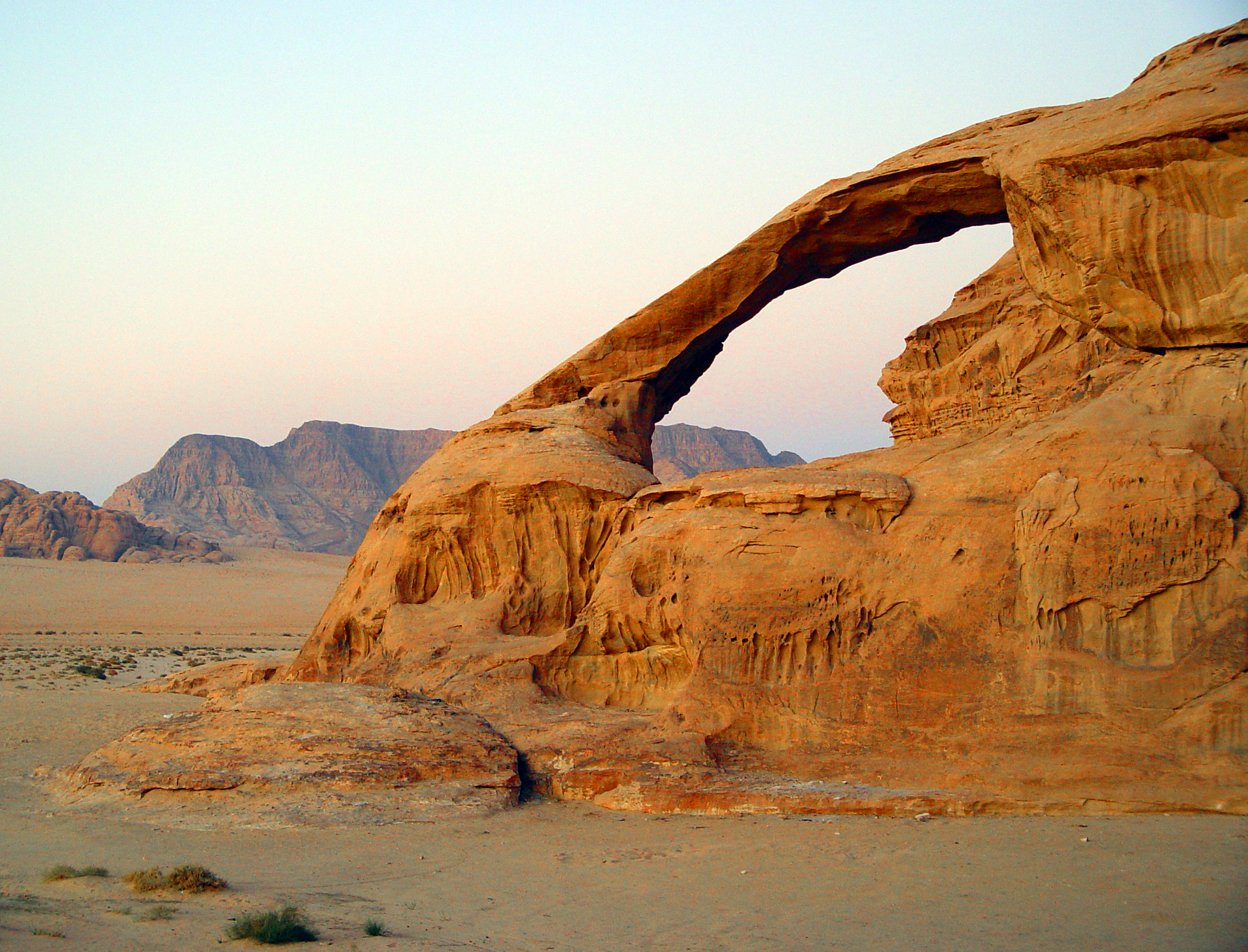
A natural arch produced by erosion of differentially weathered rock in Jebel Kharaz (Jordan)

Weathering is the deterioration of rocks, soils and minerals (as well as wood and artificial materials) through contact with water, atmospheric gases, sunlight, and biological organisms. It occurs in situ (on-site, with little or no movement), and so is distinct from erosion, which involves the transport of rocks and minerals by agents such as water, ice, snow, wind, waves and gravity.

Weathering processes are either physical or chemical. The former involves the breakdown of rocks and soils through such mechanical effects as heat, water, ice, and wind. The latter covers reactions to water, atmospheric gases and biologically produced chemicals with rocks and soils. Water is the principal agent behind both kinds,[1] though atmospheric oxygen and carbon dioxide and the activities of biological organisms are also important.[2] Biological chemical weathering is also called biological weathering.[3]

The materials left after the rock breaks down combine with organic material to create soil. Many of Earth's landforms and landscapes are the result of weathering, erosion and redeposition. Weathering is a crucial part of the rock cycle; sedimentary rock, the product of weathered rock, covers 66% of the Earth's continents and much of the ocean floor.[4]

Physical

[edit]

Physical weathering, also called mechanical weathering or disaggregation, is the class of processes that causes the disintegration of rocks without chemical change. Physical weathering involves the breakdown of rocks into smaller fragments through processes such as expansion and contraction, mainly due to temperature changes. Two types of physical breakdown are freeze-thaw weathering and thermal fracturing. Pressure release can also cause weathering without temperature change. It is usually much less important than chemical weathering, but can be significant in subarctic or alpine environments.[5] Furthermore, chemical and physical weathering often go hand in hand. For example, cracks extended by physical weathering will increase the surface area exposed to chemical action, thus amplifying the rate of disintegration.[6]

Frost weathering is the most important form of physical weathering. Next in importance is wedging by plant roots, which sometimes enter cracks in rocks and pry them apart. The burrowing of worms or other animals may also help disintegrate rock, as can "plucking" by lichens.[7]

Frost

[edit]
A rock in Abisko, Sweden, fractured along existing joints possibly by frost weathering or thermal stress

Frost weathering is the collective name for those forms of physical weathering that are caused by the formation of ice within rock outcrops. It was long believed that the most important of these is frost wedging, which is the widening of cracks or joints in rocks resulting from the expansion of porewater when it freezes. A growing body of theoretical and experimental work suggests that ice segregation, whereby supercooled water migrates to lenses of ice forming within the rock, is the more important mechanism.[8][9][10]

When water freezes, its volume increases by 9.2%. This expansion can theoretically generate pressures greater than 200 megapascals (29,000 psi), though a more realistic upper limit is 14 megapascals (2,000 psi). This is still much greater than the tensile strength of granite, which is about 4 megapascals (580 psi). This makes frost wedging, in which pore water freezes and its volumetric expansion fractures the enclosing rock, appear to be a plausible mechanism for frost weathering. Ice will simply expand out of a straight open fracture before it can generate significant pressure. Thus, frost wedging can only take place in small tortuous fractures.[5] The rock must also be almost completely saturated with water, or the ice will simply expand into the air spaces in the unsaturated rock without generating much pressure. These conditions are unusual enough that frost wedging is unlikely to be the dominant process of frost weathering.[11] Frost wedging is most effective where there are daily cycles of melting and freezing of water-saturated rock, so it is unlikely to be significant in the tropics, in polar regions or in arid climates.[5]

Ice segregation is a less well characterized mechanism of physical weathering.[8] It takes place because ice grains always have a surface layer, often just a few molecules thick, that resembles liquid water more than solid ice, even at temperatures well below the freezing point. This premelted liquid layer has unusual properties, including a strong tendency to draw in water by capillary action from warmer parts of the rock. This results in growth of the ice grain that puts considerable pressure on the surrounding rock,[12] up to ten times greater than is likely with frost wedging. This mechanism is most effective in rock whose temperature averages just below the freezing point, −4 to −15 °C (25 to 5 °F). Ice segregation results in growth of ice needles and ice lenses within fractures in the rock and parallel to the rock surface, which gradually pry the rock apart.[9]

Thermal stress

[edit]

Thermal stress weathering results from the expansion and contraction of rock due to temperature changes. Thermal stress weathering is most effective when the heated portion of the rock is buttressed by surrounding rock, so that it is free to expand in only one direction.[13]

Thermal stress weathering comprises two main types, thermal shock and thermal fatigue. Thermal shock takes place when the stresses are so great that the rock cracks immediately, but this is uncommon. More typical is thermal fatigue, in which the stresses are not great enough to cause immediate rock failure, but repeated cycles of stress and release gradually weaken the rocks. Block disintegration, when rock joints weaken from temperature fluctuations and the rock splits into rectangular blocks, can be attributed to thermal fatigue.[13][10]

Thermal stress weathering is an important mechanism in deserts, where there is a large diurnal temperature range, hot in the day and cold at night.[14] As a result, thermal stress weathering is sometimes called insolation weathering, but this is misleading. Thermal stress weathering can be caused by any large change of temperature, and not just intense solar heating. It is likely as important in cold climates as in hot, arid climates.[13] Wildfires can also be a significant cause of rapid thermal stress weathering.[15]

The importance of thermal stress weathering has long been discounted by geologists,[5][9] based on experiments in the early 20th century that seemed to show that its effects were unimportant. These experiments have since been criticized as unrealistic, since the rock samples were small, were polished (which reduces nucleation of fractures), and were not buttressed. These small samples were thus able to expand freely in all directions when heated in experimental ovens, which failed to produce the kinds of stress likely in natural settings. The experiments were also more sensitive to thermal shock than thermal fatigue, but thermal fatigue is likely the more important mechanism in nature. Geomorphologists have begun to reemphasize the importance of thermal stress weathering, particularly in cold climates.[13]

Pressure release

[edit]
Exfoliated granite sheets in Texas, possibly caused by pressure release

Pressure release or unloading is a form of physical weathering seen when deeply buried rock is exhumed. Intrusive igneous rocks, such as granite, are formed deep beneath the Earth's surface. They are under tremendous pressure because of the overlying rock material. When erosion removes the overlying rock material, these intrusive rocks are exposed and the pressure on them is released. The outer parts of the rocks then tend to expand. The expansion sets up stresses which cause fractures parallel to the rock surface to form. Over time, sheets of rock break away from the exposed rocks along the fractures, a process known as exfoliation. Exfoliation due to pressure release is also known as sheeting.[16]

As with thermal weathering, pressure release is most effective in buttressed rock. Here the differential stress directed toward the unbuttressed surface can be as high as 35 megapascals (5,100 psi), easily enough to shatter rock. This mechanism is also responsible for spalling in mines and quarries, and for the formation of joints in rock outcrops.[17]

Retreat of an overlying glacier can also lead to exfoliation due to pressure release. This can be enhanced by other physical wearing mechanisms.[18]

Salt-crystal growth

[edit]
Tafoni at Salt Point State Park, Sonoma County, California

Salt crystallization (also known as salt weathering, salt wedging or haloclasty) causes disintegration of rocks when saline solutions seep into cracks and joints in the rocks and evaporate, leaving salt crystals behind. As with ice segregation, the surfaces of the salt grains draw in additional dissolved salts through capillary action, causing the growth of salt lenses that exert high pressure on the surrounding rock. Sodium and magnesium salts are the most effective at producing salt weathering. Salt weathering can also take place when pyrite in sedimentary rock is chemically weathered to iron(II) sulfate and gypsum, which then crystallize as salt lenses.[9]

Salt crystallization can take place wherever salts are concentrated by evaporation. It is thus most common in arid climates where strong heating causes strong evaporation and along coasts.[9] Salt weathering is likely important in the formation of tafoni, a class of cavernous rock weathering structures.[19]

Biomechanical relationship

[edit]

Living organisms may contribute to mechanical weathering, as well as chemical weathering (see § Biological weathering below). Lichens and mosses grow on essentially bare rock surfaces and create a more humid chemical microenvironment. The attachment of these organisms to the rock surface enhances physical as well as chemical breakdown of the surface microlayer of the rock. Lichens have been observed to pry mineral grains loose from bare shale with their hyphae (rootlike attachment structures), a process described as plucking,[16] and to pull the fragments into their body, where the fragments then undergo a process of chemical weathering not unlike digestion.[20] On a larger scale, seedlings sprouting in a crevice and plant roots exert physical pressure as well as providing a pathway for water and chemical infiltration.[7]

Chemical

[edit]
Comparison of unweathered (left) and weathered (right) limestone

Most rock forms at elevated temperature and pressure, and the minerals making up the rock are often chemically unstable in the relatively cool, wet, and oxidizing conditions typical of the Earth's surface. Chemical weathering takes place when water, oxygen, carbon dioxide, and other chemical substances react with rock to change its composition. These reactions convert some of the original primary minerals in the rock to secondary minerals, remove other substances as solutes, and leave the most stable minerals as a chemically unchanged resistate. In effect, chemical weathering changes the original set of minerals in the rock into a new set of minerals that is in closer equilibrium with surface conditions. True equilibrium is rarely reached, because weathering is a slow process, and leaching carries away solutes produced by weathering reactions before they can accumulate to equilibrium levels. This is particularly true in tropical environments.[21]

Water is the principal agent of chemical weathering, converting many primary minerals to clay minerals or hydrated oxides via reactions collectively described as hydrolysis. Oxygen is also important, acting to oxidize many minerals, as is carbon dioxide, whose weathering reactions are described as carbonation.[22]

The process of mountain block uplift is important in exposing new rock strata to the atmosphere and moisture, enabling important chemical weathering to occur; significant release occurs of Ca2+ and other ions into surface waters.[23]

Dissolution

[edit]
Limestone core samples at different stages of chemical weathering, from very high at shallow depths (bottom) to very low at greater depths (top). Slightly weathered limestone shows brownish stains, while highly weathered limestone loses much of its carbonate mineral content, leaving behind clay. Limestone drill core taken from the carbonate West Congolian deposit in Kimpese, Democratic Republic of Congo.

Dissolution (also called simple solution or congruent dissolution) is the process in which a mineral dissolves completely without producing any new solid substance.[24] Rainwater easily dissolves soluble minerals, such as halite or gypsum, but can also dissolve highly resistant minerals such as quartz, given sufficient time.[25] Water breaks the bonds between atoms in the crystal:[26]

Hydrolysis of a silica mineral

The overall reaction for dissolution of quartz is

SiO2 + 2 H2O → H4SiO4

The dissolved quartz takes the form of silicic acid.

A particularly important form of dissolution is carbonate dissolution, in which atmospheric carbon dioxide enhances solution weathering. Carbonate dissolution affects rocks containing calcium carbonate, such as limestone and chalk. It takes place when rainwater combines with carbon dioxide to form carbonic acid, a weak acid, which dissolves calcium carbonate (limestone) and forms soluble calcium bicarbonate. Despite a slower reaction kinetics, this process is thermodynamically favored at low temperature, because colder water holds more dissolved carbon dioxide gas (due to the retrograde solubility of gases). Carbonate dissolution is therefore an important feature of glacial weathering.[27]

Carbonate dissolution involves the following steps:

CO2 + H2O → H2CO3
carbon dioxide + water → carbonic acid
H2CO3 + CaCO3 → Ca(HCO3)2
carbonic acid + calcium carbonate → calcium bicarbonate

Carbonate dissolution on the surface of well-jointed limestone produces a dissected limestone pavement. This process is most effective along the joints, widening and deepening them.[28]

In unpolluted environments, the pH of rainwater due to dissolved carbon dioxide is around 5.6. Acid rain occurs when gases such as sulfur dioxide and nitrogen oxides are present in the atmosphere. These oxides react in the rain water to produce stronger acids and can lower the pH to 4.5 or even 3.0. Sulfur dioxide, SO2, comes from volcanic eruptions or from fossil fuels, and can become sulfuric acid within rainwater, which can cause solution weathering to the rocks on which it falls.[29]

Hydrolysis and carbonation

[edit]
Olivine weathering to iddingsite within a mantle xenolith

Hydrolysis (also called incongruent dissolution) is a form of chemical weathering in which only part of a mineral is taken into solution. The rest of the mineral is transformed into a new solid material, such as a clay mineral.[30] For example, forsterite (magnesium olivine) is hydrolyzed into solid brucite and dissolved silicic acid:

Mg2SiO4 + 4 H2O ⇌ 2 Mg(OH)2 + H4SiO4
forsterite + water ⇌ brucite + silicic acid

Most hydrolysis during weathering of minerals is acid hydrolysis, in which protons (hydrogen ions), which are present in acidic water, attack chemical bonds in mineral crystals.[31] The bonds between different cations and oxygen ions in minerals differ in strength, and the weakest will be attacked first. The result is that minerals in igneous rock weather in roughly the same order in which they were originally formed (Bowen's Reaction Series).[32] Relative bond strength is shown in the following table:[26]

Bond Relative strength
Si–O 2.4
Ti–O 1.8
Al–O 1.65
Fe+3–O 1.4
Mg–O 0.9
Fe+2–O 0.85
Mn–O 0.8
Ca–O 0.7
Na–O 0.35
K–O 0.25

This table is only a rough guide to order of weathering. Some minerals, such as illite, are unusually stable, while silica is unusually unstable given the strength of the silicon–oxygen bond.[33]

Carbon dioxide that dissolves in water to form carbonic acid is the most important source of protons, but organic acids are also important natural sources of acidity.[34] Acid hydrolysis from dissolved carbon dioxide is sometimes described as carbonation, and can result in weathering of the primary minerals to secondary carbonate minerals.[35] For example, weathering of forsterite can produce magnesite instead of brucite via the reaction:

Mg2SiO4 + 2 CO2 + 2 H2O ⇌ 2 MgCO3 + H4SiO4
forsterite + carbon dioxide + water ⇌ magnesite + silicic acid in solution

Carbonic acid is consumed by silicate weathering, resulting in more alkaline solutions because of the bicarbonate. This is an important reaction in controlling the amount of CO2 in the atmosphere and can affect climate.[36]

Aluminosilicates containing highly soluble cations, such as sodium or potassium ions, will release the cations as dissolved bicarbonates during acid hydrolysis:

2 KAlSi3O8 + 2 H2CO3 + 9 H2O ⇌ Al2Si2O5(OH)4 + 4 H4SiO4 + 2 K+ + 2 HCO3
orthoclase (aluminosilicate feldspar) + carbonic acid + water ⇌ kaolinite (a clay mineral) + silicic acid in solution + potassium and bicarbonate ions in solution

Oxidation

[edit]
A pyrite cube has dissolved away from host rock, leaving gold particles behind.
Oxidized pyrite cubes

Within the weathering environment, chemical oxidation of a variety of metals occurs. The most commonly observed is the oxidation of Fe2+ (iron) by oxygen and water to form Fe3+ oxides and hydroxides such as goethite, limonite, and hematite. This gives the affected rocks a reddish-brown coloration on the surface which crumbles easily and weakens the rock. Many other metallic ores and minerals oxidize and hydrate to produce colored deposits, as does sulfur during the weathering of sulfide minerals such as chalcopyrites or CuFeS2 oxidizing to copper hydroxide and iron oxides.[37]

Hydration

[edit]

Mineral hydration is a form of chemical weathering that involves the rigid attachment of water molecules or H+ and OH- ions to the atoms and molecules of a mineral. No significant dissolution takes place. For example, iron oxides are converted to iron hydroxides and the hydration of anhydrite forms gypsum.[38]

Bulk hydration of minerals is secondary in importance to dissolution, hydrolysis, and oxidation,[37] but hydration of the crystal surface is the crucial first step in hydrolysis. A fresh surface of a mineral crystal exposes ions whose electrical charge attracts water molecules. Some of these molecules break into H+ that bonds to exposed anions (usually oxygen) and OH- that bonds to exposed cations. This further disrupts the surface, making it susceptible to various hydrolysis reactions. Additional protons replace cations exposed on the surface, freeing the cations as solutes. As cations are removed, silicon-oxygen and silicon-aluminium bonds become more susceptible to hydrolysis, freeing silicic acid and aluminium hydroxides to be leached away or to form clay minerals.[33][39] Laboratory experiments show that weathering of feldspar crystals begins at dislocations or other defects on the surface of the crystal, and that the weathering layer is only a few atoms thick. Diffusion within the mineral grain does not appear to be significant.[40]

A freshly broken rock shows differential chemical weathering (probably mostly oxidation) progressing inward. This piece of sandstone was found in glacial drift near Angelica, New York.

Biological

[edit]

Mineral weathering can also be initiated or accelerated by soil microorganisms. Soil organisms make up about 10 mg/cm3 of typical soils, and laboratory experiments have demonstrated that albite and muscovite weather twice as fast in live versus sterile soil. Lichens on rocks are among the most effective biological agents of chemical weathering.[34] For example, an experimental study on hornblende granite in New Jersey, US, demonstrated a 3x – 4x increase in weathering rate under lichen covered surfaces compared to recently exposed bare rock surfaces.[41]

Biological weathering of basalt by lichen, La Palma

The most common forms of biological weathering result from the release of chelating compounds (such as certain organic acids and siderophores) and of carbon dioxide and organic acids by plants. Roots can build up the carbon dioxide level to 30% of all soil gases, aided by adsorption of CO2 on clay minerals and the very slow diffusion rate of CO2 out of the soil.[42] The CO2 and organic acids help break down aluminium- and iron-containing compounds in the soils beneath them. Roots have a negative electrical charge balanced by protons in the soil next to the roots, and these can be exchanged for essential nutrient cations such as potassium.[43] Decaying remains of dead plants in soil may form organic acids which, when dissolved in water, cause chemical weathering.[44] Chelating compounds, mostly low molecular weight organic acids, are capable of removing metal ions from bare rock surfaces, with aluminium and silicon being particularly susceptible.[45] The ability to break down bare rock allows lichens to be among the first colonizers of dry land.[46] The accumulation of chelating compounds can easily affect surrounding rocks and soils, and may lead to podsolisation of soils.[47][48]

The symbiotic mycorrhizal fungi associated with tree root systems can release inorganic nutrients from minerals such as apatite or biotite and transfer these nutrients to the trees, thus contributing to tree nutrition.[49] It was also recently evidenced that bacterial communities can impact mineral stability leading to the release of inorganic nutrients.[50] A large range of bacterial strains or communities from diverse genera have been reported to be able to colonize mineral surfaces or to weather minerals, and for some of them a plant growth promoting effect has been demonstrated.[51] The demonstrated or hypothesised mechanisms used by bacteria to weather minerals include several oxidoreduction and dissolution reactions as well as the production of weathering agents, such as protons, organic acids and chelating molecules.

Ocean floor

[edit]

Weathering of basaltic oceanic crust differs in important respects from weathering in the atmosphere. Weathering is relatively slow, with basalt becoming less dense, at a rate of about 15% per 100 million years. The basalt becomes hydrated, and is enriched in total and ferric iron, magnesium, and sodium at the expense of silica, titanium, aluminum, ferrous iron, and calcium.[52]

Buildings

[edit]
Concrete damaged by acid rain

Buildings made of any stone, brick or concrete are susceptible to the same weathering agents as any exposed rock surface. Also statues, monuments and ornamental stonework can be badly damaged by natural weathering processes. This is accelerated in areas severely affected by acid rain.[53]

Accelerated building weathering may be a threat to the environment and occupant safety. Design strategies can moderate the impact of environmental effects, such as using of pressure-moderated rain screening, ensuring that the HVAC system is able to effectively control humidity accumulation and selecting concrete mixes with reduced water content to minimize the impact of freeze-thaw cycles.[54]

Soil

[edit]

Granitic rock, the most abundant crystalline rock exposed at the Earth's surface, begins weathering with the destruction of hornblende. Biotite then weathers to vermiculite, and finally oligoclase and microcline are destroyed. All are converted into a mixture of clay minerals and iron oxides.[32] The resulting soil is depleted in calcium, sodium, and ferrous iron compared with the bedrock, and magnesium is reduced by 40% and silicon by 15%. At the same time, the soil is enriched in aluminium and potassium by at least 50%; by titanium, whose abundance triples, and ferric iron, whose abundance increases by an order of magnitude compared with the bedrock.[55]

Basaltic rock is more easily weathered than granitic rock due to its formation at higher temperatures and drier conditions. The fine grain size and presence of volcanic glass also hasten weathering. In tropical settings, it rapidly weathers to clay minerals, aluminium hydroxides, and titanium-enriched iron oxides. Because most basalt is relatively poor in potassium, the basalt weathers directly to potassium-poor montmorillonite, then to kaolinite. Where leaching is continuous and intense, as in rain forests, the final weathering product is bauxite, the principal ore of aluminium. Where rainfall is intense but seasonal, as in monsoon climates, the final weathering product is iron- and titanium-rich laterite.[56] Conversion of kaolinite to bauxite occurs only with intense leaching, as ordinary river water is in equilibrium with kaolinite.[57]

Soil formation requires between 100 and 1,000 years, a brief interval in geologic time. As a result, some formations show numerous paleosol (fossil soil) beds. For example, the Willwood Formation of Wyoming contains over 1,000 paleosol layers in a 770 meters (2,530 ft) section representing 3.5 million years of geologic time. Paleosols have been identified in formations as old as Archean (over 2.5 billion years in age). They are difficult to recognize in the geologic record.[58] Indications that a sedimentary bed is a paleosol include a gradational lower boundary and sharp upper boundary, the presence of much clay, poor sorting with few sedimentary structures, rip-up clasts in overlying beds, and desiccation cracks containing material from higher beds.[59]

The degree of weathering of soil can be expressed as the chemical index of alteration, defined as 100 Al2O3/(Al2O3 + CaO + Na2O + K2O). This varies from 47 for unweathered upper crust rock to 100 for fully weathered material.[60]

Wood, paint and plastic

[edit]

Wood can be physically and chemically weathered by hydrolysis and other processes relevant to minerals and is highly susceptible to ultraviolet radiation from sunlight. This induces photochemical reactions that degrade its surface.[61] These also significantly weather paint[62] and plastics.[63]

[edit]

See also

[edit]

References

[edit]
[edit]
Revisions and contributorsEdit on WikipediaRead on Wikipedia
from Grokipedia
Weathering is the process of disintegration and of rocks, minerals, and at or near the Earth's surface, primarily through physical, chemical, and biological mechanisms, without the transport of material to other locations. This breakdown contrasts with , which involves the subsequent movement of weathered particles by agents like , , or . Weathering plays a foundational role in geomorphic processes, contributing to landscape evolution, development, and cycling essential for ecosystems. The main categories of weathering include physical weathering, chemical weathering, and biological weathering. Physical weathering, also known as mechanical weathering, breaks rocks into smaller fragments without altering their chemical composition; key processes include frost wedging (where water expands upon freezing in cracks), and contraction due to temperature fluctuations, pressure release from removal leading to exfoliation. Chemical weathering involves reactions that change the composition of rocks, such as (reaction with water to form new minerals like clays), oxidation (reaction with oxygen, often rusting iron-bearing minerals), dissolution (soluble minerals like dissolving in acidic water), and (reaction with from rainwater to dissolve ). Biological weathering, sometimes considered a of the other two, is driven by living organisms; examples include prying apart cracks, lichens producing acids that etch rock surfaces, and burrowing animals exposing material to further breakdown. Factors influencing weathering rates include (with higher and accelerating chemical processes), rock composition and (feldspars weather faster than ), (steeper slopes increase exposure), and ( enhances both physical and chemical breakdown). Products of weathering, such as clays, oxides, and soluble ions, form and ultimately soils, which support life and . On a global scale, chemical weathering regulates Earth's by consuming atmospheric through reactions that produce ions, which are transported to oceans and contribute to long-term . This process acts as a natural thermostat, balancing CO2 levels over geological timescales.

Overview

Definition and General Processes

Weathering is the physical, chemical, or biological disintegration and alteration of rocks and minerals at or near Earth's surface, primarily driven by interactions with the atmosphere, , and living organisms. This process occurs without significant displacement of material, distinguishing it from , which involves the of weathered products by agents such as , , or , and from , which entails gravity-driven downslope movement of rock and soil. The general processes of weathering can be broadly categorized into mechanical fragmentation and chemical transformation. Mechanical weathering breaks rocks into smaller particles, often producing —a layer of loose, unconsolidated and rock fragments overlying —through mechanisms such as the expansion and spalling of rock surfaces exposed to environmental stresses. Chemical weathering, in contrast, alters the mineral composition of rocks by reactions involving , oxygen, , and other substances, leading to ; for instance, the breakdown of primary minerals like into secondary clays. Biological weathering contributes to both by incorporating organic acids and physical disruption from roots or burrowing organisms. Early recognition of weathering as a key geological process dates to the 19th century, when naturalists like Charles Darwin documented its effects during the HMS Beagle voyage (1831–1836), noting the breakdown of volcanic rocks and cliff faces in regions such as South America and the Cape Verde Islands. Darwin's observations, detailed in works like his 1846 Geological Observations on South America, highlighted weathering's role in landscape denudation alongside figures such as Charles Lyell, who integrated it into uniformitarian principles of gradual Earth change. By the mid-20th century, pedology—the study of soil formation—advanced modern understanding through quantitative frameworks, such as Hans Jenny's 1941 state factor model, which positioned weathering as a fundamental driver influenced by climate, organisms, relief, parent material, and time. Regolith represents the initial product of weathering, comprising fragmented material without substantial organic content, whereas develops from regolith through further biotic accumulation and horizon differentiation./The_Environment_of_the_Earths_Surface_(Southard)/02%3A_Introduction_and_Geology/2.07%3A_Regolith) Weathering thus serves as the foundational step in , with its rates modulated by climatic factors like and .

Significance

Weathering is fundamental to geological processes, as it transforms solid into , the unconsolidated layer of and weathered material that covers much of Earth's surface. This production facilitates the breakdown of rocks into particles suitable for further transport and deposition in sedimentary environments. Moreover, weathering releases essential nutrients such as , magnesium, and calcium from minerals, directly contributing to and supporting terrestrial ecosystems. By disintegrating rocks, it prepares materials for and subsequent transport, playing a key integrative role in the rock cycle where weathered products are recycled into new sedimentary rocks. Environmentally, weathering exerts profound influence on global biogeochemical cycles, particularly through chemical processes that sequester atmospheric . Silicate weathering reacts with CO₂ to form ions, effectively removing carbon from the atmosphere and storing it in oceans or sediments over geological timescales. This mechanism helps regulate Earth's long-term by counteracting accumulation. Weathering also mobilizes elements critical to nutrient cycles; for instance, it liberates from minerals, sustaining primary in soils and aquatic systems, while bedrock nitrogen release via weathering provides a previously underappreciated input to the terrestrial , influencing dynamics. From a perspective, weathering underpins by driving development, where the gradual alteration of creates fertile horizons capable of supporting crop growth. In , supergene weathering concentrates economic ores through secondary enrichment, as descending waters leach metals from upper oxidized zones and redeposit them in richer, lower horizons, making deposits viable for extraction. It also contributes to climate regulation by modulating atmospheric CO₂ levels, as seen in historical events like the Paleocene-Eocene Thermal Maximum around 56 million years ago, when intensified silicate weathering drew down excess carbon and aided post-warming recovery. The pace of weathering underscores its significance in landscape evolution, with denudation rates—combining chemical and physical breakdown—typically ranging from 10 to 100 mm per millennium in temperate zones, reflecting a balance between rock resistance and environmental drivers that shapes over millennia.

Controlling Factors

Climatic Influences

exerts a profound influence on weathering processes through variations in , , and related atmospheric conditions, which dictate both the type and intensity of rock breakdown. plays a central role, as higher values accelerate chemical weathering reactions following the , which describes an exponential increase in reaction rates with rising ; for many , this results in weathering rates approximately doubling for every 10°C increase. In contrast, thermal cycling—daily or seasonal fluctuations—promotes physical weathering by inducing stresses that fracture rocks, particularly in environments with significant diurnal swings. Precipitation and moisture availability are equally critical, with water acting as both a solvent and a reactive agent in chemical weathering; abundant rainfall enhances dissolution and hydrolysis, making wet climates conducive to rapid chemical alteration. In humid regions, this leads to deeper soil profiles and extensive mineral decomposition, whereas arid environments, with limited water, favor physical processes such as salt crystal growth, where evaporation concentrates salts that exert expansive pressures on rock pores. Empirical observations confirm that chemical weathering fluxes, such as those of silica and sodium, increase systematically with precipitation and runoff, underscoring water's role in transporting reaction products. Additional climatic elements, including , , and seasonal variations, further modulate weathering dynamics. High sustains moisture films on rock surfaces, facilitating ongoing chemical reactions, while strong contribute to physical abrasion by propelling particles like against exposed surfaces. Seasonal shifts amplify these effects through cycles of wetting-drying or freezing-thawing, which can intensify both chemical and physical breakdown. For instance, tropical rainforests experience intense chemical weathering due to consistently high and rainfall, producing thick, leached soils, whereas polar regions are dominated by physical processes like frost action amid low and minimal . Quantitative models from geochemical studies, such as those developed in the , illustrate how chemical weathering rates are broadly proportional to both and runoff, providing a framework for predicting global variations in response to climatic gradients.

Lithological Properties

The susceptibility of rocks to weathering is fundamentally governed by their mineral composition, with individual minerals exhibiting varying degrees of stability under surface conditions. minerals such as and , which form early in magmatic at high temperatures, are highly reactive and prone to rapid chemical alteration due to their instability in low-temperature, hydrous environments. In contrast, minerals like and display high resistance to both physical and chemical weathering, persisting as residual components in weathered profiles because of their low solubility and strong Si-O bonds. This ranking follows Goldich's weathering series, which parallels but inverts , placing as the most vulnerable and as the most stable among common silicates. Rock type variations further modulate weathering rates based on primary and fabric. Igneous rocks, particularly intrusive varieties like with interlocking coarse crystals, weather slowly due to their compact structure and dominance of resistant and . Sedimentary rocks, however, often exhibit accelerated breakdown because of soluble cements (e.g., in limestones) or friable grains, allowing easier disaggregation and leaching. Metamorphic rocks display intermediate behavior, with anisotropic and schistosity promoting preferential fracturing along planes, which enhances physical disintegration but varies with composition—e.g., quartzites resist strongly, while marbles dissolve readily. Texture and structure play critical roles by influencing fluid ingress and mechanical stress distribution. Larger grain sizes in rocks like granite reduce initial surface area for reaction, slowing chemical weathering compared to finer-grained equivalents, though beyond a critical size threshold, rates stabilize. Bedding planes in sedimentary rocks and fractures in all lithologies serve as primary pathways for water and solutes, accelerating both physical wedging and chemical attack; jointing, in particular, increases effective porosity and exposes fresh surfaces. Porosity, whether primary (intergranular) or secondary (from early dissolution), amplifies weathering by facilitating capillary action and reaction space, with higher porosity correlating to faster overall breakdown. A qualitative weathering potential index can be derived from mineral hardness (), solubility (e.g., in weak acids), and position in Goldich's series, highlighting mafic igneous rocks like as highly susceptible—due to and content—versus felsic , which endures longer. This index underscores differential weathering patterns, such as the rapid alteration of columns versus the slower etching of tors in mixed outcrops.

Biotic and Topographic Factors

Biotic factors significantly influence weathering processes by facilitating both physical and chemical breakdown of rocks through organismal activities. Lichens, as pioneer colonizers on bare rock surfaces, excrete organic acids such as , which chelate metal ions and promote dissolution, accelerating chemical weathering rates. Plant roots contribute to physical weathering via root wedging, where expanding roots exert pressure on cracks in , fragmenting rock and increasing surface area for further degradation. Microbial biofilms, formed by and fungi, enhance retention on rock surfaces, maintaining hydration levels that sustain chemical even during dry periods and potentially increasing weathering efficiency. Burrowing animals, such as rodents and earthworms, expose fresh rock surfaces by displacing soil and , thereby intensifying exposure to atmospheric and hydrological agents. Topographic position modulates weathering intensity by altering exposure to environmental drivers. Steeper slopes promote physical weathering through enhanced runoff and gravitational forces that remove weathered material, preventing protective buildup and sustaining high rates. aspect influences microclimatic conditions; south-facing slopes in the receive more solar radiation, leading to drier conditions that favor physical processes, while north-facing slopes retain longer, supporting chemical weathering. gradients create variations in and , with higher elevations often experiencing cooler, wetter conditions that can accelerate chemical weathering in humid regimes, though extreme altitudes may limit it due to reduced and harsher climates. Interactions between biotic and topographic factors create complex dynamics in weathering. Vegetation cover on moderate slopes reduces physical by stabilizing but enhances chemical weathering through the release of organic acids from root exudates and decaying matter, which lower and promote dissolution. Feedback loops emerge as weathering releases nutrients like calcium and magnesium, fostering growth that in turn intensifies biological weathering; for example, nutrient mobilization from supports denser , perpetuating the cycle. In landscape examples, talus slopes exhibit rapid physical weathering due to steep angles and minimal biotic cover, producing coarse debris, whereas valley bottoms accumulate finer sediments under sheltered conditions, allowing biotic influences to dominate and enhance chemical processes over time.

Physical Weathering Processes

Frost Wedging

Frost wedging, also known as ice wedging or cryofracturing, is a mechanical weathering process that occurs when infiltrates cracks or pores in and subsequently freezes, exerting expansive forces that propagate fractures and dislodge rock fragments. This process begins with the seepage of liquid into preexisting fissures, often facilitated by or , followed by a drop in that causes the to freeze into . The freezing induces tensile stresses on the surrounding rock matrix, leading to the widening of cracks and, over multiple cycles, the eventual detachment of blocks or slabs from the parent . The core mechanism relies on the anomalous expansion of water upon freezing, which increases its volume by approximately 9%, generating substantial internal pressure within confined spaces like rock cracks. This volumetric expansion creates forces that can produce pressures ranging from 2 to 9 MPa in experimental settings, often exceeding the tensile strength of common rock types such as granite (typically 5-20 MPa) or sandstone (around 5 MPa), thereby promoting crack propagation. The pressure buildup is fundamentally described by the relation P=FAP = \frac{F}{A}, where PP is pressure, FF is the force generated by the expanding ice, and AA is the surface area of the crack walls against which the ice pushes; this simple hydrostatic principle illustrates how even modest expansion translates to high localized stresses in narrow fissures. In addition to direct expansion, ice segregation—where supercooled water migrates to the freezing front and forms new ice lenses—can amplify these forces, further contributing to wedging efficacy. Effective frost wedging demands specific environmental conditions, including recurrent freeze-thaw cycles to repeatedly infiltrate and expand within cracks, a reliable from rainfall, , or , and rocks with adequate or microfractures to accommodate initial water entry. It is particularly prevalent in periglacial zones near glaciers or in high-altitude regions where temperatures fluctuate around the freezing point, with activity enhanced by frequent cycles, often 10 or more annually in susceptible regions, that allow for gradual crack enlargement without excessive sublimation or drainage. Porous lithologies like , , or fractured igneous rocks are especially susceptible, as they permit greater retention compared to dense, impermeable materials. In such settings, the process is enhanced by cold climatic influences that promote frequent temperature oscillations, though topographic slopes can aid water runoff and debris accumulation at the base. Prominent examples of frost wedging include the formation of slopes—loose accumulations of angular rock debris at the foot of steep mountain faces—observed in alpine environments worldwide. In the , historical geological surveys from the documented extensive development attributed to intense frost action during periglacial periods, with blocks detached by wedging contributing to talus aprons below cliffs in areas like the . These features highlight the process's role in landscape evolution, where repeated wedging over centuries or millennia breaks down into transportable , influencing and sediment supply to valleys.

Thermal Stress

Thermal stress weathering, also known as insolation weathering, involves the physical disintegration of rocks due to repeated cycles of expansion and contraction caused by diurnal or seasonal fluctuations. This process is particularly effective in environments where rocks are exposed to intense solar radiation without significant moisture interference, leading to the development of microfractures and eventual spalling or granular disintegration. The differential among constituent minerals, such as expanding more readily than upon heating, generates internal stresses that exceed the rock's tensile strength, promoting crack propagation along grain boundaries. The mechanism relies on the heterogeneous response of rock minerals to changes; for instance, when a surface heats rapidly during the day, outer layers expand more than the cooler interior, creating compressive stresses that can cause or flaking. Upon cooling at night, contraction induces tensile stresses, further widening fractures. This cyclic stressing is amplified in arid regions with large swings, often ranging from 30°C to 50°C between day and night, where the absence of prevents other weathering agents from dominating. properties like color and composition play a key role, with darker rocks absorbing more and experiencing greater expansion due to higher surface temperatures. Optimal conditions for weathering occur in hot, dry climates with high insolation, such as deserts, where clear skies allow for extreme diurnal variations and low minimizes chemical alteration. These settings are common in mid-latitude arid zones, including parts of the and , where bare rock surfaces are directly exposed to the sun without vegetative cover. The process is most pronounced on steeply inclined or vertical faces that receive direct for extended periods, enhancing the thermal gradient across the rock. Notable examples include the inselbergs of the Australian , where rounded boulders exhibit cavernous weathering and exfoliation sheets due to prolonged cycling, resulting in smooth, dome-like forms. In the Namib Desert, stress contributes to the granular disintegration of , producing ventifacts—wind-polished stones with faceted surfaces—that highlight the combined but distinct role of thermal fracturing in preparing rock for abrasion. These features underscore the process's role in shaping arid landscapes over millennia. Conceptually, the physics of can be understood through the relationship between change and induced stress, where the thermal expansion coefficient (α, typically around 10^{-5} /°C for ) determines the linear strain ε = α ΔT from a differential . This strain translates to stress σ via the material's E (often 50-100 GPa for rocks), approximated as σ = E α , which can reach values sufficient to brittle rocks when exceeds 20-30°C. Such stresses, accumulating over repeated cycles, lead to fatigue failure without requiring external loads.

Unloading and Exfoliation

Unloading and exfoliation, a key physical weathering process, occurs when or other removal of overlying material reduces the confining pressure on , allowing the rock to expand and fracture into sheet-like layers parallel to the surface. This pressure release, often following tectonic uplift or glacial retreat, causes the rock—originally formed under high lithostatic pressure deep in the crust—to undergo elastic expansion. The expansion generates tangential tensile stresses that exceed the rock's tensile strength, leading to the formation of exfoliation joints, also known as sheet joints or sheeting s. These joints produce concentric slabs resembling onion skins, which progressively spall off, rounding the rock surface over time. The mechanism relies on the rock's elastic strain recovery, where the reduction in overburden stress allows compressed minerals to revert toward their uncompressed volume, creating differential stresses near the surface. Fracture spacing and sheet thickness typically range from 1 to 10 meters near the surface, increasing with depth as the influence of surface-parallel stresses diminishes; this pattern reflects the original burial depth, with deeper-seated rocks forming thicker sheets to accommodate greater accumulated strain. Exfoliation is most effective in massive, low-porosity igneous rocks like granite and granodiorite, which can expand coherently without significant internal disruption from pre-existing weaknesses. In contrast, highly jointed or foliated rocks are less prone to this process due to easier stress dissipation along existing planes. This process is prevalent in uplifted or post-glacial landscapes where rapid erosion exposes fresh bedrock. A prominent example is in the Sierra Nevada, , where exfoliation has shaped granodiorite domes like since the park's geological exposure following uplift and Pleistocene glaciation. The rounded contours of result from successive peeling of exfoliation sheets after the removal of overlying volcanic and sedimentary cover, a phenomenon first systematically observed in 19th-century surveys by geologists such as Josiah D. Whitney, who noted the parallel fracturing in granitic outcrops. These sheets exploit the rock's elastic response to unloading, contributing to the park's characteristic domed without significant chemical alteration.

Salt Crystal Growth

Salt crystal growth, a key mechanism of physical weathering, occurs when saline solutions infiltrate the pores and cracks of rocks, leading to the precipitation and expansion of salt crystals that mechanically disrupt the rock matrix. This process, often termed haloclasty, is initiated by the capillary rise of or into porous materials, followed by that concentrates dissolved salts such as (NaCl) and (CaSO₄·2H₂O). As the solution becomes supersaturated, crystals nucleate and grow within confined spaces, generating wedging forces that propagate fractures. The expansive pressure from these growing can attain values up to 220 MPa for NaCl in confined conditions, substantially surpassing the tensile strength of common rocks—such as 0.9 MPa for —resulting in spalling, pitting, and eventual disintegration. This exceeds the rock's capacity to withstand internal stress, as the crystals continue to enlarge until the material yields. The process is amplified in environments with fluctuating , where repeated wetting-drying cycles promote ongoing without significant dissolution. Salt crystal growth thrives in arid climates and coastal zones, where high evaporation rates and access to saline water sources—such as groundwater or marine spray—facilitate salt deposition, while low precipitation limits flushing. Rocks with high porosity, like sandstone and certain limestones, are especially vulnerable, as their interconnected pore networks allow efficient solution ingress and crystal accommodation. In such settings, the weathering manifests as granular disintegration or cavernous hollows on rock surfaces. Notable examples include the breakdown of volcanic rocks in the Atacama Desert's , , where recurrent salt crystal expansion erodes formations under hyperarid conditions, contributing to the region's stark, pitted landscapes. Similarly, ancient Roman-era monuments in Pompeii, , exhibit severe deterioration of limestone masonry due to salt crystallization from subsurface moisture and atmospheric salts, leading to surface flaking and structural weakening over centuries. Conceptually, the pressure propelling in pore spaces relates to effects in supersaturated solutions, approximated as P=2γrP = \frac{2\gamma}{r}, where γ\gamma denotes and rr the ; smaller pores thus amplify the pressure, enhancing weathering efficacy.

Biomechanical Weathering

Biomechanical weathering involves the physical disruption of structures through mechanical forces generated by living organisms, primarily via expansion, penetration, and displacement activities that exploit pre-existing fractures without involving chemical alterations. This process enhances fragmentation by increasing surface area exposure and promoting further breakdown, particularly in environments where organisms can access weaknesses in the substrate. A primary mechanism is the growth of plant roots into rock cracks, where turgor-driven expansion exerts radial pressures ranging from 0.5 to 1 MPa, sufficient to widen joints and pry apart rock material over time. This root wedging is amplified by hydraulic effects, as roots absorb water and swell, generating additional wedging forces analogous to hydrostatic pressure in fissures. Lichens contribute similarly through hyphal penetration into micropores and thallus expansion during hydration cycles, which mechanically lifts and detaches thin rock flakes from surfaces. Burrowing animals, including earthworms and , further drive biomechanical weathering by excavating and , thereby exposing unweathered rock interiors to atmospheric and erosive agents. In grasslands, burrowing fragments particles and translocates material to the surface, accelerating overall rock disintegration. These processes are most pronounced in vegetated landscapes with developed profiles and on jointed or fractured , where organisms can readily colonize and exploit structural discontinuities. For instance, in temperate forests, expansive root systems infiltrate boulder crevices, applying sustained pressure that can topple large masses after years of growth. Biomechanical actions in such biotic zones can amplify physical breakdown rates by factors of 2 to 5 compared to abiotic settings, underscoring their role in landscape evolution.

Chemical Weathering Processes

Dissolution and Leaching

Dissolution involves the chemical removal of highly soluble minerals from rocks through direct ion-by-ion dissociation in water, without additional chemical reactions altering the mineral structure. This process primarily affects minerals like (NaCl), where the mineral lattice breaks down into ions: NaClNa++Cl\text{NaCl} \rightarrow \text{Na}^+ + \text{Cl}^- Leaching follows dissolution by transporting these ions downward through and rock via percolating water, depleting the of mobile elements and concentrating less soluble residues. The process thrives in environments with ample water flow, such as humid or coastal settings where or rainfall mobilizes ions. Soluble lithologies, such as deposits composed mainly of or , are most vulnerable, as their ionic bonds promote rapid breakdown. In such settings, dissolution rates can be high, though varying with water chemistry and flow. Prominent examples include the formation of salt karst landscapes in evaporite-rich regions. In deposits, dissolution enlarges joints and creates sinkholes and caverns over geological time; notable instances occur in the Permian Basin, , such as Wink Sink, where rapid dissolution has formed large features. In humid environments, leaching removes soluble ions from various parent materials, including bases and silica as from prior , leading to the development of lateritic soils enriched in iron and aluminum oxides, as seen in regions like parts of and . Key aspects of the chemistry hinge on equilibrium , though for simple salts like , solubility is high (~360 g/L at 25°C) and relatively pH-independent, unlike reactive systems. This underscores why dissolution dominates in evaporite terrains with , distinct from processes in less soluble rocks (as in Lithological Properties).

is a fundamental chemical weathering process in which molecules dissociate into (H⁺) and hydroxide (OH⁻) ions that react with structures, particularly silicates, through . This replaces alkali or cations (such as K⁺ or Ca²⁺) with H⁺ or OH⁻, leading to the breakdown of the original lattice and the formation of new, more stable secondary minerals like clays. The process restructures the without complete dissolution, altering its composition and physical properties, and is especially prevalent in silicate-rich rocks where it transforms primary minerals into hydrous aluminosilicates. A classic example of hydrolysis involves the weathering of minerals, which are abundant in igneous rocks. For (KAlSi₃O₈), the reaction proceeds as follows: 2KAlSi3O8+2H++9H2OAl2Si2O5(OH)4+4H4SiO4+2K+2 \text{KAlSi}_3\text{O}_8 + 2 \text{H}^+ + 9 \text{H}_2\text{O} \rightarrow \text{Al}_2\text{Si}_2\text{O}_5(\text{OH})_4 + 4 \text{H}_4\text{SiO}_4 + 2 \text{K}^+ This incongruent reaction produces (Al₂Si₂O₅(OH)₄), (H₄SiO₄), and releases ions (K⁺) into solution, effectively converting the rigid framework into a softer . Under different conditions, such as higher and availability, can instead convert to , a mica-like clay that retains more within its structure. These transformations are key to producing clays from silicates, weakening the rock and facilitating further . Hydrolysis thrives in environments with neutral to acidic waters ( typically 4–7) and moderate temperatures (10–30°C), where water availability promotes without extreme or freezing. It is widespread on granitic terrains, as these rocks contain high proportions of hydrolyzable feldspars, leading to deep weathering profiles over geological timescales. In humid subtropical climates, hydrolysis drives the formation of —a porous, clay-enriched residue that retains the bedrock's structure but loses much of its original strength—exemplifying how the process contributes to soil development in regions like the southeastern United States or southern China. The kinetics of hydrolysis reactions are governed by factors like and , with rates accelerating in more acidic conditions due to increased H⁺ availability and following the conceptually: k=AeEa/RTk = A e^{-E_a / RT}, where kk is the rate constant, AA is the , EaE_a is the , RR is the , and TT is in . Lower reduces EaE_a barriers for , while higher temperatures exponentially increase molecular collisions, making hydrolysis more efficient in warm, wet settings. Unlike simple dissolution, which removes ions without forming new structures, hydrolysis involves mineral restructuring; in distinction from hydration, it relies on rather than direct water molecule incorporation into the lattice. Products like soluble K⁺ or may later leach away, enhancing .

Oxidation and Reduction

Oxidation and reduction processes in chemical weathering involve reactions that alter the valence states of metal ions, particularly iron, within rock minerals exposed to surface environments. Oxidation occurs when ferrous iron (Fe²⁺) in minerals loses an to become ferric iron (Fe³⁺), often in the presence of atmospheric oxygen, leading to the formation of stable iron oxides such as (Fe₂O₃) or rust-like compounds. This transformation is represented by the half-reaction: Fe²⁺ → Fe³⁺ + e⁻./08%3A_Weathering_Sediment_and_Soil/8.02%3A_Chemical_Weathering) The overall oxidation of iron in aqueous settings commonly proceeds via the balanced reaction: 4Fe2++O2+4H+4Fe3++2H2O4\text{Fe}^{2+} + \text{O}_2 + 4\text{H}^{+} \rightarrow 4\text{Fe}^{3+} + 2\text{H}_2\text{O} This process weakens mineral structures by producing less soluble and more voluminous ferric compounds, facilitating further breakdown. These reactions are favored in aerated, wet environments where oxygen availability is high, such as in humid climates affecting iron-rich rocks like basalts containing ferromagnesian minerals (e.g., olivine or pyroxene). The presence of water is essential, as it acts as a medium for ion transport and provides protons (H⁺) to drive the reaction. In contrast, reduction reverses this process in anoxic settings, where Fe³⁺ gains electrons to reform Fe²⁺, often mediated by organic matter or low-oxygen groundwater, stabilizing reduced minerals and slowing overall weathering rates. A prominent example is the development of reddish soils from the oxidation of ferromagnesian minerals in basaltic terrains, where Fe²⁺ oxidizes to Fe³⁺, imparting a characteristic rust color to the regolith as hematite accumulates. Another illustration is the formation of bog iron deposits in waterlogged, low-oxygen wetlands, where initial reduction mobilizes Fe²⁺ from surrounding rocks, followed by oxidation upon exposure to air at the surface, precipitating iron-rich layers. The key chemistry hinges on potentials, with oxidation dominant when the environmental exceeds approximately 0.4 V for the Fe²⁺/Fe³⁺ couple under near-neutral conditions typical of weathering profiles, ensuring Fe³⁺ stability over Fe²⁺. This threshold reflects the thermodynamic favorability of from iron to oxygen, modulated by and oxygen levels, and is critical for predicting stability in soils and regoliths.

Carbonation

Carbonation is a chemical weathering process in which atmospheric (CO₂) dissolves in to form (H₂CO₃), which then reacts with minerals in rocks, leading to their dissolution. This process primarily affects rocks rich in (CaCO₃), such as , and magnesium carbonate (MgCO₃), such as dolomite. The mechanism begins with the reaction of CO₂ and water: CO2+H2OH2CO3\text{CO}_2 + \text{H}_2\text{O} \rightleftharpoons \text{H}_2\text{CO}_3 Carbonic acid dissociates into hydrogen ions (H⁺) and bicarbonate (HCO₃⁻): H2CO3H++HCO3\text{H}_2\text{CO}_3 \rightleftharpoons \text{H}^+ + \text{HCO}_3^- with the first dissociation constant having a pK₁ of approximately 6.35 at 25°C. These ions then react with calcite (CaCO₃): CaCO3+H2CO3Ca2++2HCO3\text{CaCO}_3 + \text{H}_2\text{CO}_3 \rightleftharpoons \text{Ca}^{2+} + 2\text{HCO}_3^- resulting in the release of calcium ions and bicarbonate into solution. The overall rate of this reaction depends strongly on the partial pressure of CO₂ (P_CO₂), as higher concentrations drive the equilibrium toward greater acid production and faster dissolution. Carbonation is most effective in humid environments where water is abundant to facilitate the reactions, and in soils enriched with CO₂ from microbial respiration and root activity, which can elevate soil P_CO₂ to levels 10–100 times higher than atmospheric concentrations (0.03%). Limestone and dolomite are the primary substrates, as their solubility increases markedly in carbonic acid solutions compared to other minerals. Prominent examples include the formation of landscapes and cave systems in carbonate-rich regions. In karsts, acidic rainwater seeps into joints and bedding planes, enlarging them into underground passages, sinkholes, and caverns over thousands to millions of years; notable instances occur in , , where dissolution has created over 400 miles of passages, and the Appalachian region with extensive cave systems and underground drainage networks. In urban settings, pollution from —containing additional acids alongside —further accelerates of carbonate building stones, as observed in studies of facades exposed to atmospheric and oxides.

Hydration

Hydration is a form of chemical weathering in which minerals incorporate molecules into their lattices, forming hydrated minerals that often exhibit substantial volume expansion and structural instability. This process alters the mineral's internal bonding and lattice parameters, leading to mechanical stress that contributes to rock disintegration. A primary example involves the transformation of (CaSO₄) to (CaSO₄·2H₂O) through the reaction CaSO₄ + 2H₂O → CaSO₄·2H₂O, which increases the mineral's volume by approximately 61% in open systems where is readily available. This weathering occurs predominantly under conditions of fluctuating , such as alternating wet and dry cycles in semi-arid to arid environments, where episodic rainfall or contact allows water absorption followed by partial drying. deposits, including , are highly susceptible due to their prevalence in such settings, while certain oxides in rocks, like those in , also undergo hydration leading to clay formation. For instance, in basaltic terrains, primary minerals alter to clays through low-temperature hydration, weakening the rock matrix and facilitating further breakdown. These cycles enhance the process by promoting repeated expansion and contraction, amplifying fracturing without requiring constant saturation. The chemistry of hydration involves reversible reactions driven by changes in , where water incorporation lowers the stability of the anhydrous phase under humid conditions, but can reverse the process in arid settings, forming the original . This reversibility, observed in sulfate systems like gypsum-anhydrite, underscores the role of environmental in controlling mineral stability and weathering rates. Such dynamics highlight hydration's contribution to landscape evolution in regions with variable , distinct from dissolution processes by emphasizing structural rather than solubilization effects.

Biological Weathering

Microbial Contributions

Microorganisms, particularly and fungi, contribute to chemical weathering through the production of organic acids that facilitate mineral dissolution. and fungi secrete acids such as citric and , which chelate metal ions and lower the of the surrounding environment, promoting the breakdown of silicates and carbonates. These acids enhance proton-driven dissolution, with fungi often producing higher concentrations in nutrient-limited settings. Biofilms formed by microbial communities play a key role in physical and chemical processes, trapping moisture to support reactions and creating microenvironments conducive to sustained weathering. These biofilms, composed of and fungi, retain on rock surfaces, accelerating the reaction of with minerals like feldspars. Additionally, sulfur-oxidizing mediate reactions by oxidizing minerals, releasing and influencing the weathering of iron-bearing silicates through processes. Microbial activity is prominent on soil surfaces and in lichens colonizing rock substrates, where it is enhanced in moist, organic-rich environments that provide carbon sources and optimal temperatures for metabolic processes. Lichens, combining fungal hyphae with cyanobacterial or algal partners, target mineral-rich surfaces, amplifying dissolution in humid conditions. For instance, cyanobacteria such as Anabaena cylindrica accelerate silicate breakdown in basalts by increasing weathering rates of elements like silicon and calcium by over fivefold compared to abiotic controls, primarily through pH elevation, likely via photosynthetic removal of CO2. Recent 21st-century studies, including those on cultivable bacteria and fungi, demonstrate that microbial communities can enhance overall chemical weathering rates by factors of 10 to 100 times under laboratory conditions simulating natural soils. A central concept in microbial weathering is the role of extracellular polymeric substances (EPS), sticky matrices secreted by and fungi that aid physical abrasion by binding particles and facilitating their detachment during wet-dry cycles. EPS also concentrates enzymes on surfaces, catalyzing reactions such as and oxidation more efficiently than abiotic processes. These enzyme-catalyzed mechanisms, including siderophore production for iron mobilization, underscore microbes' ability to target specific minerals like feldspars in moist climates.

Macrobiotic Effects

Macrobiotic effects in chemical weathering refer to the contributions of larger organisms, such as and animals, through the production and release of chemical agents that facilitate dissolution and alteration. These effects primarily occur via the of protons, organic acids, and chelating compounds that lower , form soluble complexes with metal ions, and enhance the breakdown of silicates, carbonates, and oxides in soils. Unlike microbial processes at the cellular scale, macrobiotic activities involve visible-scale exudation and metabolic outputs from , animal excretions, and products, often amplifying weathering in vegetated or faunal-influenced environments. Plant roots play a central role by exuding protons (H⁺ ions) and chelating agents into the , creating acidic microenvironments that promote dissolution. Organic acids such as citrate and malate, along with siderophores—high-affinity iron chelators—complex with metals like Fe³⁺, destabilizing lattices and increasing . For instance, siderophores facilitate the of iron from primary , enhancing overall weathering in iron-limited soils. These exudates are particularly active in zones, where they synergize with physical penetration to expose fresh surfaces, though the chemical dissolution dominates the transformative process. In grazed lands, animal can further concentrate these effects by compacting soils and promoting localized exudation. Animals contribute through , fecal matter, and , which introduce acidic compounds and reactive substances into . from mammals introduces and other nitrogenous compounds; subsequent microbial can produce , lowering and accelerating the dissolution of carbonates and silicates, while of organic remains generates humic and fulvic acids that chelate aluminum and iron. Burrowing activities by earthworms and mix oxidants like atmospheric oxygen into deeper soil layers, facilitating redox-driven weathering of reduced minerals upon exposure. These processes are pronounced in grazed or burrowed landscapes, where animal-derived acids enhance proton-mediated reactions. In ecosystems, weathering rates are notably elevated compared to bulk due to concentrated exudates and associated microbial symbionts that amplify production. Termite mounds exemplify animal-driven exposure, where construction brings unweathered minerals to the surface, subjecting them to acidic and oxidation, resulting in enriched secondary minerals like clays. These examples illustrate how macrobiotic chemical outputs create hotspots of intensified weathering. A key mechanism underlying these effects is organic ligand-promoted dissolution, where ligands like bind to surface metal sites on minerals, accelerating the release of elements such as aluminum from aluminosilicates. , exuded by certain and fungi in , forms stable Al-oxalate complexes that prevent re-precipitation and sustain dissolution under near-neutral pH conditions. This process feeds back into cycling, as released ions (e.g., K⁺, Ca²⁺, P) support growth, leading to greater exudation and further weathering intensification in a self-reinforcing loop.

Applications and Impacts

Soil Formation

Weathering plays a central role in , or pedogenesis, by transforming into through physical and chemical breakdown, followed by the integration of and the development of distinct soil horizons. Initially, physical weathering fragments into loose, unconsolidated via processes like frost action and , while chemical weathering alters minerals, releasing nutrients and forming secondary clays. This then undergoes further pedogenic modifications, including humification—the decomposition of organic residues into stable that enriches the surface horizon—and horizonation, which organizes the soil into A (organic-rich ), B (subsoil with accumulated clays and oxides), and C (weathered ) profiles. Clay translocation, or illuviation, occurs as percolating water leaches finer particles from the A horizon and deposits them in the B horizon, enhancing and fertility. The stages of soil formation progress from initial fragmentation of , dominated by physical processes that increase surface area for subsequent reactions, to mineral alteration through chemical weathering that solubilizes and removes mobile elements like calcium and sodium. Organic integration follows, as adds and promotes bioturbation, fostering a dynamic soil matrix over extended periods. These processes typically unfold over timescales ranging from 10^3 to 10^6 years, depending on and ; for instance, initial formation may occur in thousands of years, while mature horizon development requires hundreds of thousands to millions of years in stable landscapes. Representative examples illustrate how weathering intensity shapes soil types. Podzols, often developing from granitic parent material in cool, humid climates, exhibit strong leaching that eluviates iron and aluminum, forming a bleached E horizon above an illuvial B horizon enriched in sesquioxides. In contrast, ferralsols in tropical regions arise from intense, prolonged chemical weathering of various parent rocks, resulting in deep, highly oxidized profiles dominated by and iron oxides with low nutrient retention. The USDA Soil Taxonomy classifies soils into 12 orders that reflect varying degrees of weathering intensity; for example, show minimal alteration with weak horizons, while (equivalent to ferralsols) represent extreme weathering with stable, low-activity clays. A key metric for assessing soil maturity is the Chemical Index of Alteration (CIA), which quantifies the extent of chemical weathering by measuring the loss of labile cations relative to stable aluminum. The CIA is calculated as: CIA=100×Al2O3Al2O3+CaO+Na2O+K2O\text{CIA} = 100 \times \frac{\text{Al}_2\text{O}_3}{\text{Al}_2\text{O}_3 + \text{CaO} + \text{Na}_2\text{O} + \text{K}_2\text{O}} using molar concentrations of oxides; values range from near 50 for unweathered rocks to over 90 for highly altered tropical s, providing a proxy for pedogenic advancement.

Landscape Evolution

Weathering fundamentally drives landscape evolution by disintegrating into transportable , which integrates with erosional processes to facilitate and the development of diverse landforms over geological timescales. Differential weathering, arising from variations in rock resistance, preferentially weakens susceptible layers, leading to their faster breakdown and the creation of topographic such as valleys carved from softer strata while harder layers persist as elevated features like ridges. This process is enhanced by structural discontinuities like joints and fractures, which accelerate weathering in specific zones and amplify relief contrasts. Regolith production rates, governed by weathering intensity, often impose an upper limit on incision and broader , particularly in tectonically active settings where sustained deformation promotes topographic . For example, shallow erosion involving only is limited by typical regolith production rates of 0.01–0.1 mm/year. Over Pleistocene timescales (approximately 2.6 million to 11,700 years ago), periglacial weathering in the smoothed ridgelines through repeated freeze-thaw cycles and solifluction, transforming rugged terrain into subdued, rounded summits at rates that balanced episodic glacial advances. Steady-state landscape models conceptualize as a dynamic balance where weathering-generated flux equals erosional removal, sustaining against uplift or base-level changes over millions of years. In such systems, achieves equilibrium when chemical and physical weathering rates match tectonic inputs, as observed in ancient orogens like the Appalachians. Prominent examples highlight differential weathering's role in sculpting distinctive features. Hoodoos in arise from caprock layers of resistant and dolomite that shield underlying softer, porous sediments from rapid dissolution and ice wedging, resulting in isolated spires amid eroded basins. In landscapes, inselbergs form through deep subsurface weathering that decomposes surrounding , followed by erosional stripping that isolates resistant cores as steep-sided hills, as seen in East African pediplains. Central to these dynamics is the humped curve, which describes weathering rates peaking at intermediate thicknesses—where exposure to atmospheric agents is optimal—before declining under thicker soil mantles that insulate , thereby modulating long-term landscape lowering. Qualitative applications of G.K. Gilbert's theory further frame this as dynamic equilibrium, wherein landscapes self-adjust through weathering and to counter variations in rock resistance and intensity, maintaining form without net change unless perturbed by or .

Deterioration of Structures and Materials

Weathering significantly contributes to the deterioration of human-made structures and materials through physical, chemical, and biological mechanisms, often accelerated by urban pollution. Physical weathering, such as frost action, occurs when water infiltrates porous materials like and freezes, expanding up to 9% in volume and exerting pressure that leads to cracking and spalling. In urban environments, de-icing salts exacerbate this process by lowering the freezing point and promoting further moisture ingress. Chemical weathering involves reactions like , formed from (SO₂) and nitrogen oxides, which dissolve in and , causing pitting and surface . Biological weathering includes microbial activity, such as mold growth on damp surfaces, where fungi break down structural components like through enzymatic . Stone facades, commonly made of or , suffer pitting and discoloration from chemical attacks; for instance, from industrial emissions reacts with moisture to form , accelerating gypsum formation and material loss. Wood undergoes delignification via photooxidation, where (UV) light and oxygen degrade , the binding cellulose fibers, resulting in surface roughening, cracking, and loss of structural integrity. Plastics used in modern building elements, such as siding or roofing, experience UV-oxidation cracking, where photo-initiated free radicals cause chain scission, embrittlement, and eventual fragmentation. A prominent example is the , where SO₂ emissions from nearby refineries and factories have caused yellowing and corrosion of its white marble facade through deposition, prompting protective measures like a surrounding since the . In the , exterior paints on buildings often exhibited chalking, a powdery surface degradation from UV-induced binder breakdown, reducing adhesion and aesthetic quality. To mitigate these effects, modern coatings incorporate biocides to inhibit mold growth on and other substrates, preventing biological colonization in humid conditions. Durability indices for materials are assessed using accelerated weathering tests, such as those outlined in ASTM D4587, which expose samples to cycles of UV radiation, , and fluctuations in xenon-arc lamps to simulate 10-50 years of outdoor exposure, allowing prediction of long-term performance without real-time waiting. These standards help engineers select resistant formulations, emphasizing the role of urban pollution in hastening weathering rates by factors of 2-5 in high-SO₂ areas.

Submarine Weathering

Submarine weathering refers to the breakdown and alteration of rocks on the ocean floor, primarily driven by interactions between oceanic crust and seawater under low-oxygen, high-pressure conditions. Unlike terrestrial weathering, this process occurs in a stable, cold environment (typically 1–4°C) with alkaline, calcium-rich seawater that facilitates chemical reactions over physical ones. Chemical mechanisms dominate, involving the dissolution of primary minerals in basalt and the precipitation of secondary phases, while physical abrasion from wave action is limited to nearshore areas and biogenic activity contributes through burrowing organisms on the seafloor. A key chemical process is the low-temperature alteration of basaltic , where ions interact with rock surfaces to form clay minerals such as . For instance, iron-rich smectite (nontronite-like) forms in subseafloor fractures through the oxidative dissolution of , releasing silica and iron that recombine with sodium, calcium, potassium, and magnesium from under oxidizing conditions with limited oxygen availability. This alteration is prominent in Layer 2 of the , the extrusive basaltic layer, where low-temperature fluids (<100°C) produce minerals like Mg-saponite, celadonite, phillipsite, , and , progressively modifying the crust's and composition as it ages. Rates of this alteration are slow, on the order of meters per million years, though penetration can reach hundreds of meters over tens of millions of years. Seawater-rock reactions are central to submarine weathering, exemplified by the uptake of magnesium into secondary clays, which removes Mg from seawater and alters its isotopic composition. In low-temperature settings, basalt dissolution supplies elements for clay formation, with magnesium preferentially incorporated into smectites and chlorites during fluid circulation in the upper crust. This process contributes to global geochemical cycles, with estimates indicating a flux of approximately 10^{12} moles of magnesium exchanged annually through low-temperature alteration of the oceanic crust. Hydrothermal vents, where fluids reach 200–400°C, accelerate these reactions near mid-ocean ridges by enhancing mineral dissolution and precipitation, though such high-temperature alteration is localized compared to the widespread low-temperature regime. Notable examples include the aging of , where Layer 2 undergoes pervasive alteration, increasing seismic velocity and reducing permeability over time, and the formation of ferromanganese nodules on the seafloor. These nodules grow through the oxidation of dissolved and iron from and sediments, precipitating as concentric layers of oxyhydroxides in oxygen-rich bottom waters, often reaching several centimeters in diameter over millions of years. Globally, basalt weathering represents a significant for atmospheric CO₂, with low-temperature alteration of surficial s consuming CO₂ at rates comparable to continental processes in some models, underscoring its role in long-term climate regulation.

References

Add your contribution
Related Hubs
User Avatar
No comments yet.