Hubbry Logo
DissectionDissectionMain
Open search
Dissection
Community hub
Dissection
logo
8 pages, 0 posts
0 subscribers
Be the first to start a discussion here.
Contribute something
Dissection
Dissection
from Wikipedia
Dissection
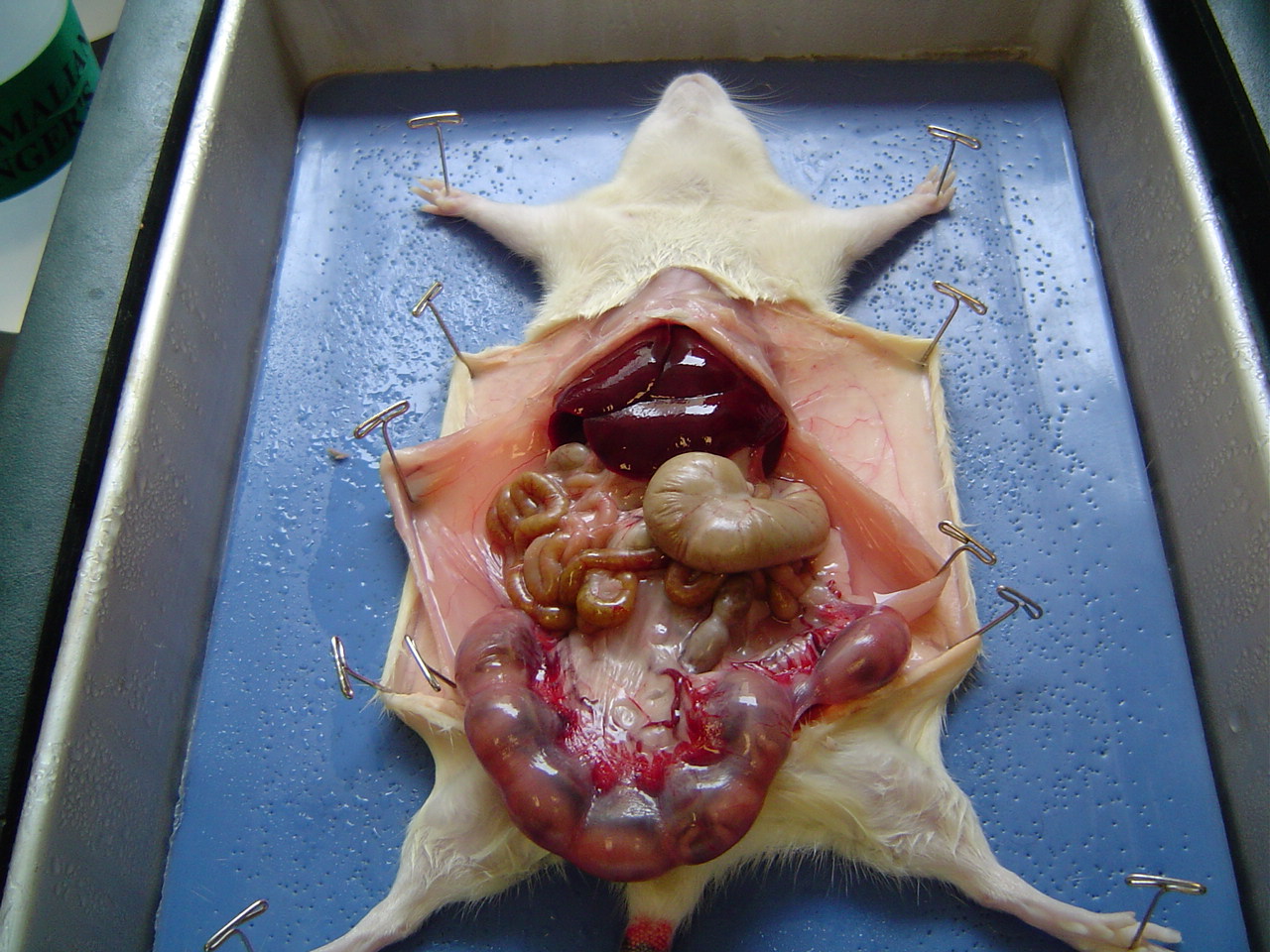
Dissection of a pregnant rat in a biology class
Ginkgo seed in dissection, showing embryo and gametophyte
Identifiers
MeSHD004210
Anatomical terminology

Dissection (from Latin dissecare "to cut to pieces"; also called anatomization) is the dismembering of the body of a deceased animal or plant to study its anatomical structure. Autopsy is used in pathology and forensic medicine to determine the cause of death in humans. Less extensive dissection of plants and smaller animals preserved in a formaldehyde solution is typically carried out or demonstrated in biology and natural science classes in middle school and high school, while extensive dissections of cadavers of adults and children, both fresh and preserved are carried out by medical students in medical schools as a part of the teaching in subjects such as anatomy, pathology and forensic medicine. Consequently, dissection is typically conducted in a morgue or in an anatomy lab.

Dissection has been used for centuries to explore anatomy. Objections to the use of cadavers have led to the use of alternatives including virtual dissection of computer models.

In the field of surgery, the term "dissection" or "dissecting" means more specifically the practice of separating an anatomical structure (an organ, nerve or blood vessel) from its surrounding connective tissue in order to minimize unwanted damage during a surgical procedure.

Overview

[edit]

Plant and animal bodies are dissected to analyze the structure and function of its components. Dissection is practised by students in courses of biology, botany, zoology, and veterinary science, and sometimes in arts studies. In medical schools, students dissect human cadavers to learn anatomy.[1] Zoötomy is sometimes used to describe "dissection of an animal".

Human dissection

[edit]

A key principle in the dissection of human cadavers (sometimes called androtomy) is the prevention of human disease to the dissector. Prevention of transmission includes the wearing of protective gear, ensuring the environment is clean, dissection technique[2] and pre-dissection tests to specimens for the presence of HIV and hepatitis viruses.[3] Specimens are dissected in morgues or anatomy labs. When provided, they are evaluated for use as a "fresh" or "prepared" specimen.[3] A "fresh" specimen may be dissected within some days, retaining the characteristics of a living specimen, for the purposes of training. A "prepared" specimen may be preserved in solutions such as formalin and pre-dissected by an experienced anatomist, sometimes with the help of a diener.[3] This preparation is sometimes called prosection.[4]

Dissection tools. Left to right: scalpels with No. 20 and No. 12 blades, two forceps and scissors

Most dissection involves the careful isolation and removal of individual organs, called the Virchow technique.[2][5] An alternative more cumbersome technique involves the removal of the entire organ body, called the Letulle technique. This technique allows a body to be sent to a funeral director without waiting for the sometimes time-consuming dissection of individual organs.[2] The Rokitansky method involves an in situ dissection of the organ block, and the technique of Ghon involves dissection of three separate blocks of organs - the thorax and cervical areas, gastrointestinal and abdominal organs, and urogenital organs.[2][5] Dissection of individual organs involves accessing the area in which the organ is situated, and systematically removing the anatomical connections of that organ to its surroundings. For example, when removing the heart, connects such as the superior vena cava and inferior vena cava are separated. If pathological connections exist, such as a fibrous pericardium, then this may be deliberately dissected along with the organ.[2]

Autopsy and necropsy

[edit]

Dissection is used to help to determine the cause of death in autopsy (called necropsy in other animals) and is an intrinsic part of forensic medicine.[6]

History

[edit]
Galen (129 – c. 200 AD), Opera omnia, dissection of a pig. Engraving made in Venice, 1565

Classical antiquity

[edit]

Human dissections were carried out by the Greek physicians Herophilus of Chalcedon and Erasistratus of Chios in the early part of the third century BC.[7][8] Before then, animal dissection had been carried out systematically starting from the fifth century BC.[9] During this period, the first exploration into full human anatomy was performed rather than a base knowledge gained from 'problem-solution' delving.[10] While there was a deep taboo in Greek culture concerning human dissection, there was at the time a strong push by the Ptolemaic government to build Alexandria into a hub of scientific study.[10] For a time, Roman law forbade dissection and autopsy of the human body,[11] so anatomists relied on the cadavers of animals or made observations of human anatomy from injuries of the living. Galen, for example, dissected the Barbary macaque and other primates, assuming their anatomy was basically the same as that of humans, and supplemented these observations with knowledge of human anatomy which he acquired while tending to wounded gladiators.[8][12][13][14]

Celsus wrote in On Medicine I Proem 23, "Herophilus and Erasistratus proceeded in by far the best way: they cut open living men - criminals they obtained out of prison from the kings and they observed, while their subjects still breathed, parts that nature had previously hidden, their position, color, shape, size, arrangement, hardness, softness, smoothness, points of contact, and finally the processes and recesses of each and whether any part is inserted into another or receives the part of another into itself."

Galen was another such writer who was familiar with the studies of Herophilus and Erasistratus.

India

[edit]
The Ayurvedic Man., c. 18th century

The ancient societies that were rooted in India left behind artwork on how to kill animals during a hunt.[15] The images showing how to kill most effectively depending on the game being hunted relay an intimate knowledge of both external and internal anatomy as well as the relative importance of organs.[15] The knowledge was mostly gained through hunters preparing the recently captured prey. Once the roaming lifestyle was no longer necessary it was replaced in part by the civilization that formed in the Indus Valley. Unfortunately, there is little that remains from this time to indicate whether or not dissection occurred, the civilization was lost to the Aryan people migrating.[15]

Early in the history of India (2nd to 3rd century), the Arthashastra described the 4 ways that death can occur and their symptoms: drowning, hanging, strangling, or asphyxiation.[16] According to that source, an autopsy should be performed in any case of untimely demise.[16]

The practice of dissection flourished during the 7th and 8th century. It was under their rule that medical education was standardized. This created a need to better understand human anatomy, so as to have educated surgeons. Dissection was limited by the religious taboo on cutting the human body. This changed the approach taken to accomplish the goal. The process involved the loosening of the tissues in streams of water before the outer layers were sloughed off with soft implements to reach the musculature. To perfect the technique of slicing, the prospective students used gourds and squash. These techniques of dissection gave rise to an advanced understanding of the anatomy and the enabled them to complete procedures used today, such as rhinoplasty.[15]

During medieval times the anatomical teachings from India spread throughout the known world; however, the practice of dissection was stunted by Islam.[15] The practice of dissection at a university level was not seen again until 1827, when it was performed by the student Pandit Madhusudan Gupta.[15] Through the 1900s, the university teachers had to continually push against the social taboos of dissection, until around 1850 when the universities decided that it was more cost effective to train Indian doctors than bring them in from Britain.[15] Indian medical schools were, however, training female doctors well before those in England.[15]

The current state of dissection in India is deteriorating. The number of hours spent in dissection labs during medical school has decreased substantially over the last twenty years.[15] The future of anatomy education will probably be an elegant mix of traditional methods and integrative computer learning.[15] The use of dissection in early stages of medical training has been shown more effective in the retention of the intended information than their simulated counterparts.[15] However, there is use for the computer-generated experience as review in the later stages.[15] The combination of these methods is intended to strengthen the students' understanding and confidence of anatomy, a subject that is infamously difficult to master.[15] There is a growing need for anatomist—seeing as most anatomy labs are taught by graduates hoping to complete degrees in anatomy—to continue the long tradition of anatomy education.[15]

Islamic world

[edit]
Page from a 1531 Latin translation by Peter Argellata of Al-Zahrawi's c. 1000 treatise on surgical and medical instruments

From the beginning of the Islamic faith in 610 A.D.,[17] Shari'ah law has applied to a greater or lesser extent within Muslim countries,[17] supported by Islamic scholars such as Al-Ghazali.[18] Islamic physicians such as Ibn Zuhr (Avenzoar) (1091–1161) in Al-Andalus,[19] Saladin's physician Ibn Jumay during the 12th century, Abd el-Latif in Egypt c. 1200,[20] and Ibn al-Nafis in Syria and Egypt in the 13th century may have practiced dissection,[18][21][22] but it remains ambiguous whether or not human dissection was practiced. Ibn al-Nafis, a physician and Muslim jurist, suggested that the "precepts of Islamic law have discouraged us from the practice of dissection, along with whatever compassion is in our temperament",[3] indicating that while there was no law against it, it was nevertheless uncommon. Islam dictates that the body be buried as soon as possible, barring religious holidays, and that there be no other means of disposal such as cremation.[17] Prior to the 10th century, dissection was not performed on human cadavers.[17] The book Al-Tasrif, written by Al-Zahrawi in 1000 A.D., details surgical procedure that differed from the previous standards.[23] The book was an educational text of medicine and surgery which included detailed illustrations.[23] It was later translated and took the place of Avicenna's The Canon of Medicine as the primary teaching tool in Europe from the 12th century to the 17th century.[23] There were some that were willing to dissect humans up to the 12th century, for the sake of learning, after which it was forbidden. This attitude remained constant until 1952, when the Islamic School of Jurisprudence in Egypt ruled that "necessity permits the forbidden".[17] This decision allowed for the investigation of questionable deaths by autopsy.[17] In 1982, the decision was made by a fatwa that if it serves justice, autopsy is worth the disadvantages.[17] Though Islam now approves of autopsy, the Islamic public still disapproves. Autopsy is prevalent in most Muslim countries for medical and judicial purposes.[17] In Egypt it holds an important place within the judicial structure, and is taught at all the country's medical universities.[17] In Saudi Arabia, whose law is completely dictated by Shari'ah, autopsy is viewed poorly by the population but can be compelled in criminal cases;[17] human dissection is sometimes found at university level.[17] Autopsy is performed for judicial purposes in Qatar and Tunisia.[17] Human dissection is present in the modern day Islamic world, but is rarely published on due to the religious and social stigma.[17]

Tibet

[edit]

Tibetan medicine developed a rather sophisticated knowledge of anatomy, acquired from long-standing experience with human dissection. Tibetans had adopted the practice of sky burial because of the country's hard ground, frozen for most of the year, and the lack of wood for cremation. A sky burial begins with a ritual dissection of the deceased, and is followed by the feeding of the parts to vultures on the hill tops. Over time, Tibetan anatomical knowledge found its way into Ayurveda[24] and to a lesser extent into Chinese medicine.[25][26]

Christian Europe

[edit]
A dissection in Realdo Colombo's De Re Anatomica, 1559

Throughout the history of Christian Europe, the dissection of human cadavers for medical education has experienced various cycles of legalization and proscription in different countries. Dissection was rare during the Middle Ages, but it was practised,[27] with evidence from at least as early as the 13th century.[28][29][30] The practice of autopsy in Medieval Western Europe is "very poorly known" as few surgical texts or conserved human dissections have survived.[31] A modern Jesuit scholar has claimed that the Christian theology contributed significantly to the revival of human dissection and autopsy by providing a new socio-religious and cultural context in which the human cadaver was no longer seen as sacrosanct.[28]

A non-existent edict[32] Ecclesia abhorret a sanguine of the 1163 Council of Tours and an early 14th-century decree of Pope Boniface VIII have mistakenly been identified as prohibiting dissection and autopsy; misunderstanding or extrapolation from these edicts may have contributed to reluctance to perform such procedures.[33][a] The Middle Ages witnessed the revival of an interest in medical studies, including human dissection and autopsy.[8][34]

Mondino de Luzzi's Anathomia, 1541

Frederick II (1194–1250), the Holy Roman Emperor, decreed that any that were studying to be a physician or a surgeon must attend a human dissection, which would be held no less than every five years.[10] Some European countries began legalizing the dissection of executed criminals for educational purposes in the late 13th and early 14th centuries. Mondino de Luzzi carried out the first recorded public dissection around 1315.[10] At this time, autopsies were carried out by a team consisting of a Lector, who lectured; the Sector, who did the dissection; and the Ostensor, who pointed to features of interest.[10]

The Italian Galeazzo di Santa Sofia made the first public dissection north of the Alps in Vienna in 1404.[35]

Vesalius with a dissected cadaver in his De humani corporis fabrica, 1543

Vesalius in the 16th century carried out numerous dissections in his extensive anatomical investigations. He was attacked frequently for his disagreement with Galen's opinions on human anatomy. Vesalius was the first to lecture and dissect the cadaver simultaneously.[10][36]

The Catholic Church is known to have ordered an autopsy on conjoined twins Joana and Melchiora Ballestero in Hispaniola in 1533 to determine whether they shared a soul. They found that there were two distinct hearts, and hence two souls, based on the ancient Greek philosopher Empedocles, who believed the soul resided in the heart.[37]

Renaissance artists such as Antonio del Pollaiuolo studied anatomy to improve their artwork, as seen in this figurine of Hercules, 1470.

Human dissection was also practised by Renaissance artists. Though most chose to focus on the external surfaces of the body, some like Michelangelo Buonarotti, Antonio del Pollaiuolo, Baccio Bandinelli, and Leonardo da Vinci sought a deeper understanding. However, there were no provisions for artists to obtain cadavers, so they had to resort to unauthorised means, as indeed anatomists sometimes did, such as grave robbing, body snatching, and murder.[10]

Anatomization was sometimes ordered as a form of punishment, as, for example, in 1806 to James Halligan and Dominic Daley after their public hanging in Northampton, Massachusetts.[38]

In modern Europe, dissection is routinely practised in biological research and education, in medical schools, and to determine the cause of death in autopsy. It is generally considered a necessary part of learning and is thus accepted culturally. It sometimes attracts controversy, as when Odense Zoo decided to dissect lion cadavers in public before a "self-selected audience".[39][40]

Britain

[edit]
Body snatching headstone of an 1823 grave in Stirling

In Britain, dissection remained entirely prohibited from the end of the Roman conquest and through the Middle Ages to the 16th century, when a series of royal edicts gave specific groups of physicians and surgeons some limited rights to dissect cadavers. The permission was quite limited: by the mid-18th century, the Royal College of Physicians and Company of Barber-Surgeons were the only two groups permitted to carry out dissections, and had an annual quota of ten cadavers between them. As a result of pressure from anatomists, especially in the rapidly growing medical schools, the Murder Act 1752 allowed the bodies of executed murderers to be dissected for anatomical research and education. By the 19th century this supply of cadavers proved insufficient, as the public medical schools were growing, and the private medical schools lacked legal access to cadavers. A thriving black market arose in cadavers and body parts, leading to the creation of the profession of body snatching, and the infamous Burke and Hare murders in 1828, when 16 people were murdered for their cadavers, to be sold to anatomists. The resulting public outcry led to the passage of the Anatomy Act 1832, which increased the legal supply of cadavers for dissection.[41]

By the 21st century, the availability of interactive computer programs and changing public sentiment led to renewed debate on the use of cadavers in medical education. The Peninsula College of Medicine and Dentistry in the UK, founded in 2000, became the first modern medical school to carry out its anatomy education without dissection.[42]

United States

[edit]
A teenage school pupil dissecting an eye

In the United States, dissection of frogs became common in college biology classes from the 1920s, and were gradually introduced at earlier stages of education. By 1988, some 75 to 80 percent of American high school biology students were participating in a frog dissection, with a trend towards introduction in elementary schools. The frogs are most commonly from the genus Rana. Other popular animals for high-school dissection at the time of that survey were, among vertebrates, fetal pigs, perch, and cats; and among invertebrates, earthworms, grasshoppers, crayfish, and starfish.[43] About six million animals are dissected each year in United States high schools (2016), not counting medical training and research. Most of these are purchased already dead from slaughterhouses and farms.[44]

Dissection in U.S. high schools became prominent in 1987, when a California student, Jenifer Graham, sued to require her school to let her complete an alternative project. The court ruled that mandatory dissections were permissible, but that Graham could ask to dissect a frog that had died of natural causes rather than one that was killed for the purposes of dissection; the practical impossibility of procuring a frog that had died of natural causes in effect let Graham opt out of the required dissection. The suit gave publicity to anti-dissection advocates. Graham appeared in a 1987 Apple Computer commercial for the virtual-dissection software Operation Frog.[45][46] The state of California passed a Student's Rights Bill in 1988 requiring that objecting students be allowed to complete alternative projects.[47] Opting out of dissection increased through the 1990s.[48]

In the United States, 17 states[b] along with Washington, D.C. have enacted dissection-choice laws or policies that allow students in primary and secondary education to opt out of dissection. Other states including Arizona, Hawaii, Minnesota, Texas, and Utah have more general policies on opting out on moral, religious, or ethical grounds.[49] To overcome these concerns, J. W. Mitchell High School in New Port Richey, Florida, in 2019 became the first US high school to use synthetic frogs for dissection in its science classes, instead of preserved real frogs.[50][51][52]

As for the dissection of cadavers in undergraduate and medical school, traditional dissection is supported by professors and students, with some opposition, limiting the availability of dissection. Upper-level students who have experienced this method along with their professors agree that "Studying human anatomy with colorful charts is one thing. Using a scalpel and an actual, recently-living person is an entirely different matter."[53]

Acquisition of cadavers

[edit]

The way in which cadaveric specimens are obtained differs greatly according to country.[54] In the UK, donation of a cadaver is wholly voluntary. Involuntary donation plays a role in about 20 percent of specimens in the US and almost all specimens donated in some countries such as South Africa and Zimbabwe.[54] Countries that practice involuntary donation may make available the bodies of dead criminals or unclaimed or unidentified bodies for the purposes of dissection.[54] Such practices may lead to a greater proportion of the poor, homeless and social outcasts being involuntarily donated.[54] Cadavers donated in one jurisdiction may also be used for the purposes of dissection in another, whether across states in the US,[3] or imported from other countries, such as with Libya.[54] As an example of how a cadaver is donated voluntarily, a funeral home in conjunction with a voluntary donation program identifies a body who is part of the program. After broaching the subject with relatives in a diplomatic fashion, the body is then transported to a registered facility. The body is tested for the presence of HIV and hepatitis viruses. It is then evaluated for use as a "fresh" or "prepared" specimen.[3]

Disposal of specimens

[edit]

Cadaveric specimens for dissection are, in general, disposed of by cremation. The deceased may then be interred at a local cemetery. If the family wishes, the ashes of the deceased are then returned to the family.[3] Many institutes have local policies to engage, support and celebrate the donors. This may include the setting up of local monuments at the cemetery.[3]

Use in education

[edit]
Cadaveric dissection at Siriraj Medical School, Thailand

Human cadavers are often used in medicine to teach anatomy or surgical instruction.[3][54] Cadavers are selected according to their anatomy and availability. They may be used as part of dissection courses involving a "fresh" specimen so as to be as realistic as possible—for example, when training surgeons.[3] Cadavers may also be pre-dissected by trained instructors. This form of dissection involves the preparation and preservation of specimens for a longer time period and is generally used for the teaching of anatomy.[3]

Alternatives

[edit]

Some alternatives to dissection may present educational advantages over the use of animal cadavers, while eliminating perceived ethical issues.[55] These alternatives include computer programs, lectures, three dimensional models, films, and other forms of technology. Concern for animal welfare is often at the root of objections to animal dissection.[56] Studies show that some students reluctantly participate in animal dissection out of fear of real or perceived punishment or ostracism from their teachers and peers, and many do not speak up about their ethical objections.[57][58]

One alternative to the use of cadavers is computer technology. At Stanford Medical School, software combines X-ray, ultrasound and MRI imaging for display on a screen as large as a body on a table.[59] In a variant of this, a "virtual anatomy" approach being developed at New York University, students wear three dimensional glasses and can use a pointing device to "[swoop] through the virtual body, its sections as brightly colored as living tissue." This method is claimed to be "as dynamic as Imax [cinema]".[60]

Advantages and disadvantages

[edit]

Proponents of animal-free teaching methodologies argue that alternatives to animal dissection can benefit educators by increasing teaching efficiency and lowering instruction costs while affording teachers an enhanced potential for the customization and repeat-ability of teaching exercises. Those in favor of dissection alternatives point to studies which have shown that computer-based teaching methods "saved academic and nonacademic staff time ... were considered to be less expensive and an effective and enjoyable mode of student learning [and]  ... contributed to a significant reduction in animal use" because there is no set-up or clean-up time, no obligatory safety lessons, and no monitoring of misbehavior with animal cadavers, scissors, and scalpels.[61][62][63]

With software and other non-animal methods, there is also no expensive disposal of equipment or hazardous material removal. Some programs also allow educators to customize lessons and include built-in test and quiz modules that can track student performance. Furthermore, animals (whether dead or alive) can be used only once, while non-animal resources can be used for many years—an added benefit that could result in significant cost savings for teachers, school districts, and state educational systems.[61]

Several peer-reviewed comparative studies examining information retention and performance of students who dissected animals and those who used an alternative instruction method have concluded that the educational outcomes of students who are taught basic and advanced biomedical concepts and skills using non-animal methods are equivalent or superior to those of their peers who use animal-based laboratories such as animal dissection.[64][65]

Some reports state that students' confidence, satisfaction, and ability to retrieve and communicate information was much higher for those who participated in alternative activities compared to dissection. Three separate studies at universities across the United States found that students who modeled body systems out of clay were significantly better at identifying the constituent parts of human anatomy than their classmates who performed animal dissection.[66][67][68]

Another study found that students preferred using clay modeling over animal dissection and performed just as well as their cohorts who dissected animals.[69]

In 2008, the National Association of Biology Teachers (NABT) affirmed its support for classroom animal dissection stating that they "Encourage the presence of live animals in the classroom with appropriate consideration to the age and maturity level of the students ... NABT urges teachers to be aware that alternatives to dissection have their limitations. NABT supports the use of these materials as adjuncts to the educational process but not as exclusive replacements for the use of actual organisms."[70]

The National Science Teachers Association (NSTA) "supports including live animals as part of instruction in the K-12 science classroom because observing and working with animals firsthand can spark students' interest in science as well as a general respect for life while reinforcing key concepts" of biological sciences. NSTA also supports offering dissection alternatives to students who object to the practice.[71]

The NORINA database lists over 3,000 products which may be used as alternatives or supplements to animal use in education and training.[72][non-primary source needed] These include alternatives to dissection in schools. InterNICHE has a similar database and a loans system.[73][non-primary source needed]

Additional images

[edit]

See also

[edit]

Notes

[edit]

References

[edit]

Further reading

[edit]
[edit]
Revisions and contributorsEdit on WikipediaRead on Wikipedia
from Grokipedia
Dissection is the process of cutting apart or separating tissue, particularly to study anatomical structure in deceased organisms or during surgical procedures. This practice enables direct empirical observation of internal organs and systems, forming the basis for advancements in , , and surgical techniques. Human cadaveric dissection originated systematically in ancient around the 3rd century BCE, where anatomists like Herophilus conducted public dissections, yielding precise descriptions of structures such as the and vascular system that surpassed prior speculative knowledge. Religious and cultural taboos curtailed the practice in medieval , leading to reliance on animal dissections and erroneous Galenic models, until its revival in the at universities like and Bologna, culminating in the with Andreas Vesalius's De humani corporis fabrica (1543), which corrected centuries of inaccuracies through meticulous human dissections. In modern , dissection remains a cornerstone for acquiring three-dimensional anatomical knowledge and psychomotor skills essential for , despite the rise of digital alternatives that cannot fully replicate tactile and . Cadaver shortages historically drove unethical practices like , sparking riots in 18th- and 19th-century Britain and America, while contemporary controversies involve ensuring for donors and scrutinizing the use of unclaimed bodies, which some view as violating principles.

Definition and Scope

Core Principles and Techniques

Anatomical dissection relies on systematic incision and separation of tissues to expose internal structures for direct and study, enabling precise mapping of anatomical relationships that underpin physiological function. This process adheres to principles of minimal tissue trauma, proceeding layer by layer from superficial to deep to preserve of underlying elements, as excessive force or improper cuts can distort or destroy delicate features like nerves and vessels. Orientation and positional must guide cuts, typically starting with standardized incisions such as the midline Y-shaped pattern in cadavers to access thoracic and abdominal cavities without compromising key landmarks. Core techniques emphasize the use of specialized instruments: scalpels for initial sharp incisions through and , forceps for grasping and retracting tissues, dissecting for curved or straight cuts in confined spaces, and probes for gentle exploration without laceration. Blunt dissection, employing fingers or tools to separate natural tissue planes, complements sharp methods to reduce hemorrhage risk and maintain vascular integrity in preserved specimens. Specimens are prepared via fixation in preservatives like 10% formalin to inhibit decay and firm tissues, followed by positioning on trays or tables with pins for stability during prolonged sessions. Safety protocols form an integral principle, mandating personal protective equipment including gloves, lab coats, and to mitigate biohazards from pathogens or fixatives, with immediate handwashing post-handling and proper sharps disposal to prevent injuries. Instruments must be cleaned and stored dry after use, while excess fluids are wiped from surfaces to maintain a sterile field, underscoring the causal link between procedural and reduced transmission in settings. Post-dissection, ethical disposal of remains adheres to regulations ensuring dignified handling, reflecting the balance between educational utility and respect for biological material. Dissection, in the context of anatomical study, involves the systematic separation and exposure of tissues and organs in deceased specimens to elucidate normal structural relationships, primarily for educational or research purposes. This differs from , which is a specialized post-mortem examination focused on identifying pathological changes or causes of death, often prioritizing forensic or clinical diagnostic outcomes over comprehensive anatomical mapping. While both may employ similar incisions, such as , the intent of dissection emphasizes pedagogical demonstration of healthy morphology, whereas autopsy targets anomalies or lethal mechanisms, frequently incorporating or tailored to legal or medical inquiry. Unlike , which entails surgical intervention on living organisms—typically anesthetized animals—to observe dynamic physiological processes , dissection occurs exclusively on non-viable subjects, avoiding ethical and technical challenges associated with maintaining life support or minimizing suffering during exposure. , historically employed in experiments by figures like in the , seeks insights into function and response, such as blood flow or neural activity, rendering it distinct from the static, preservative-based analysis of dissection. Surgical procedures, conducted on living , aim at therapeutic correction of —such as excision of tumors or repair of trauma—prioritizing functional restoration and survival over detailed structural documentation. In contrast, dissection permits unhurried, repetitive exploration without concern for , facilitating the identification of variant anatomies across populations, a process incompatible with operative constraints like control or risk. Gross dissection in , involving specimen processing for microscopic , shares procedural elements but serves diagnostic rather than holistic anatomical instruction. Dissection also contrasts with evisceration or butchery, which involve organ removal primarily for disposal, food preparation, or ritual without methodical layering to reveal interconnections. Evisceration, as in certain variants like the Virchow method, extracts viscera en bloc for subsequent examination, but lacks the layered, expository precision of dissection intended to preserve contextual relationships for teaching. Butchery, evident in practices since antiquity, fragments tissues for utilitarian ends, eschewing the scientific scrutiny of dissection.

Types of Dissection

Human Anatomical Dissection

Human anatomical dissection entails the methodical incision and separation of preserved human tissues to expose and study internal structures, organs, and their spatial relationships. This practice serves primarily as a cornerstone of education in medical, dental, and allied health programs, enabling learners to develop three-dimensional comprehension of human morphology beyond what models or digital simulations provide. Cadavers, sourced through voluntary programs governed by laws such as the Uniform Anatomical Gift Act in the United States, are embalmed typically with formalin-based solutions to retard and facilitate prolonged study. In educational settings, dissection proceeds layer by layer, beginning with and subcutaneous tissues, progressing to muscles, vessels, , and viscera, guided by standardized protocols to ensure systematic exploration. Techniques include sharp dissection with scalpels and for precise cuts, blunt dissection using probes or fingers to separate planes without damage, and retraction to maintain visibility. Groups of students, often 4-8 per , collaborate over semesters, with prosections—pre-dissected specimens—supplementing to demonstrate complex regions like the or . This hands-on approach fosters not only anatomical knowledge but also manual dexterity and respect for human variation, including pathological findings such as tumors or congenital anomalies observable in real tissues. Empirical studies affirm dissection's efficacy; for instance, participants report superior retention and spatial awareness compared to lecture-based or virtual methods, with examination scores improving post-dissection. Despite alternatives like or gaining traction amid shortages—exacerbated by declining donation rates in some regions—dissection remains the gold standard, integrated in over 90% of U.S. medical schools as of , underscoring its irreplaceable role in bridging didactic learning with clinical application. Regulations mandate ethical handling, including donor verification, protocols to mitigate formalin exposure risks for dissectors, and respectful disposition via post-use.

Autopsy and Forensic Necropsy

An is a postmortem examination of a , involving systematic to determine the cause, manner, and circumstances of , often including external , internal organ removal, and histopathological . Performed by board-certified pathologists, the procedure typically follows standardized protocols such as those outlined by the National Association of Medical Examiners, encompassing incision of the (Y-incision), evisceration, and organ weighing to identify pathologies like trauma, , or toxins. In clinical settings, confirm premortem diagnoses and contribute to , with historical data showing rates declining from over 50% in the mid-20th century to under 5% by due to advanced imaging alternatives, though they remain essential for unresolved cases. Forensic autopsies, a subset conducted for medicolegal purposes, emphasize evidence preservation in suspicious, unnatural, or violent deaths, such as homicides or accidents, where findings like gunshot wounds or asphyxiation patterns inform criminal investigations. These examinations integrate , , and , with pathologists documenting chain-of-custody for specimens to withstand legal scrutiny; for instance, medical examiner offices handle over 500,000 such cases annually, prioritizing objectivity amid potential institutional pressures. Unlike hospital autopsies, forensic ones require legal authorization and avoid to prevent artifactual changes, ensuring causal accuracy in . Forensic necropsy applies analogous principles to non-human animals, involving detailed postmortem dissection by veterinary pathologists to gather for legal matters like animal cruelty, wildlife , or neglect prosecutions. The process mirrors techniques—external exam, incision, organ dissection, and sample collection—but adapts to species-specific , such as avian skeletal structures or equine gastrointestinal tracts, with emphasis on documenting injuries like blunt force trauma or . In veterinary forensics, necropsies support cases under laws like the U.S. Animal Welfare Act, where findings have substantiated over 10,000 cruelty convictions since 2010, highlighting patterns of often linked to predictors. While "" conventionally denotes human examinations and "necropsy" animal ones, the terms overlap in describing dissection-based postmortem , with forensic variants distinguished by evidentiary rigor over diagnostic focus. Both prioritize minimizing effects, using and rapid processing—ideally within 24-48 hours—to preserve tissue integrity, though forensic contexts demand additional and for . Challenges include inter-pathologist variability in interpretations, underscoring the need for peer-reviewed protocols to counter subjective biases in reporting.

Animal and Comparative Dissection

Animal dissection entails the methodical incision and exploration of non-human animal cadavers to reveal internal morphology, serving educational and scientific objectives. In curricula, it facilitates direct observation of organ systems, vascular networks, and tissue textures, offering tactile insights unattainable through simulations alone. Specimens such as frogs, earthworms, , fetal pigs, and cats predominate in settings due to their affordability, compatibility, and representation of and diversity. Annually, millions of such animals undergo dissection globally, underscoring its persistence as a core pedagogical tool despite alternatives. Comparative dissection amplifies this by juxtaposing anatomical features across taxa to discern homologies indicative of shared ancestry and adaptations driven by selective pressures. Laboratory protocols often sequence dissections of dogfish sharks, mudpuppies or frogs, or snakes, pigeons, and quadrupedal mammals to trace evolutionary transitions in traits like limb girdles, neural architecture, and circulatory patterns. Such analyses reveal, for example, the persistence of from to mammals, evidencing descent with modification rather than independent origins. Historically, animal dissection underpinned comparative anatomy's foundations, with Aristotle's examinations of over 500 species in the 4th century BCE establishing principles of structural variation and function. This tradition persisted through ’s porcine models in the 2nd century CE and informed 18th-century systematists like Cuvier, who correlated and extant forms via dissected homologies. In contemporary research, it supports phylogenetic inference and biomedical modeling, as interspecies dissections elucidate physiological divergences exploitable for zoonotic disease studies or prosthetic design. Techniques emphasize precision to preserve relational integrity, employing scalpels for incisions, probes for separations, and pins for specimen stabilization on dissection trays. Preservation via formalin immersion maintains structural fidelity, though ethical sourcing from licensed suppliers mitigates wild capture impacts. Comparative protocols quantify metrics like organ mass ratios or lengths to test hypotheses on allometric scaling and ecological niches, yielding data robust against interpretive bias.

Historical Evolution

Ancient Origins in Classical Antiquity and India

![Galen, Opera omnia, dissection of a pig. Wellcome L0020565.jpg][float-right] In , systematic human dissection emerged in the at the medical school of , founded under Ptolemaic rule. Herophilus of (c. 335–280 BCE), often regarded as the father of , conducted the first known public dissections of human cadavers, reportedly examining several hundred bodies and distinguishing structures such as the brain's ventricles, nerves, and reproductive organs with unprecedented detail. His contemporary Erasistratus of Chios (c. 304–250 BCE) complemented these efforts by dissecting human and animal specimens to explore physiological functions, including the cardiovascular and nervous systems, though human vivisections—allegedly performed on condemned criminals—ceased after their era due to renewed ethical prohibitions. Prior to , figures like (c. 460–377 BCE) relied primarily on clinical observation and animal analogies, as cultural taboos against disturbing human remains limited direct anatomical inquiry. In the , dissection practices shifted toward animals owing to persistent bans on human cadavers. of (129–c. 216 CE), the preeminent physician to emperors, performed extensive vivisections and postmortem examinations on species including Barbary macaques, pigs, and dogs to infer human , documenting over 500 treatises on topics from skeletal structure to neural pathways. His reliance on yielded accurate descriptions of many systems but introduced errors, such as overstating the role of perforations in the heart's , which persisted in medical doctrine for centuries due to the authority of his empirical yet species-limited observations. Parallel developments occurred in ancient , where the , attributed to the surgeon (c. BCE), mandated cadaveric dissection as essential preparation for surgical training. Aspiring physicians were instructed to exhume and systematically dissect human bodies—preserved in water or on anthills—to study , including muscles, vessels, and organs, alongside animal and botanical equivalents for comprehensive understanding. This pragmatic approach, integrated with surgical techniques like and removal, underscored dissection's role in advancing procedural precision, predating similar emphases in Western traditions and reflecting a cultural acceptance of anatomical exploration for therapeutic ends.

Medieval Advances in Islamic and Tibetan Contexts

During the (roughly 8th to 13th centuries CE), scholars in regions spanning the advanced anatomical knowledge primarily through translations of Greek texts like those of and , combined with surgical observations and limited empirical methods, though systematic human dissection remained constrained by religious prohibitions against postmortem mutilation of the body. Abu al-Qasim (c. 936–1013 CE), in his 30-volume Kitab al-Tasrif, emphasized the necessity of anatomical understanding for surgical precision, describing over 200 instruments including scalpels, , and retractors for procedures involving tissues and organs, and illustrated techniques for and wound management that implied familiarity with internal structures from animal vivisections or accidental exposures during . However, al-Zahrawi did not document personal dissections, relying instead on observational to critique and refine prior errors, such as Galen's misconceptions about certain vessels. Ibn al-Nafis (1213–1288 CE), a Syrian physician, made a pivotal correction to Galenic theory in his Commentary on Anatomy in Avicenna's Canon (written c. 1242 CE), accurately describing pulmonary circulation: blood passes from the right ventricle to the lungs via the pulmonary artery, is refined there, and returns to the left ventricle through the pulmonary vein, explicitly rejecting invisible septal pores based on "dissection" evidence that confirmed the interventricular septum's solidity. While Ibn al-Nafis referenced dissection—likely of animal hearts and possibly the human brain, as he noted the brain's vascular supply and meninges—historical accounts debate the extent of human cadaveric work due to Islamic legal norms prioritizing bodily integrity for burial, suggesting inferences from animal models or rare opportunistic examinations. These contributions preserved and incrementally improved classical anatomy, influencing later European scholars via translations, but lacked the routine human dissections that characterized Renaissance Europe. In medieval Tibetan contexts (7th–15th centuries CE), anatomical knowledge developed within the framework of Sowa Rigpa (Tibetan medicine), formalized in the Four Tantras (rGyud-bzhi, attributed to 8th-century synthesis but compiled later), which detailed the body's three humors (rlung, mkhris-pa, bad-kan), , and organ systems including channels (tsa), winds, and drops, derived from Indian Ayurvedic roots, , and empirical observation rather than dissection. Texts described visceral arrangements, such as the heart's position and vascular networks, through diagrammatic representations and tantric meditative visualizations of subtle anatomy, enabling therapeutic interventions like and herbal remedies without reliance on invasive postmortem analysis. No historical records confirm systematic dissection practices, as Tibetan traditions favored noninvasive diagnostics— reading, , and —over cutting into cadavers, which conflicted with Buddhist reverence for the body as a vessel for enlightenment; anatomical accuracy stemmed from clinical correlations and inherited Indic models, with pictorial thangkas emerging later (17th century) to visualize these concepts for training. This approach yielded practical medical efficacy, as evidenced by enduring pharmacopeias, but prioritized holistic causation over mechanistic dissection-driven .

Renaissance to Enlightenment in Europe

The Renaissance marked a revival of anatomical dissection in Europe, shifting from reliance on ancient texts to empirical observation of human cadavers, primarily in Italian universities such as Bologna and Padua. This period saw anatomists like Andreas Vesalius (1514–1564) challenge Galenic doctrines, which were based largely on animal dissections, by conducting direct human cadaver examinations. Vesalius, appointed professor at the University of Padua in 1537, emphasized hands-on dissection by both instructors and students, correcting numerous inaccuracies in prior works through meticulous layer-by-layer dissections. His seminal 1543 publication, De humani corporis fabrica, illustrated precise dissections with detailed woodcuts, disseminating anatomical knowledge via the printing press and establishing a foundation for modern anatomy. Dissections during this era often occurred in temporary settings within universities, with public demonstrations attracting scholars and artists, fostering interdisciplinary insights into human structure. The construction of permanent anatomical theaters facilitated structured teaching; the first, at the , was inaugurated in 1595 under Girolamo Fabrici d'Acquapendente, allowing tiered viewing of dissections for larger audiences. Similar facilities emerged elsewhere, such as in around 1610, promoting comparative studies between human and animal specimens to highlight anatomical differences. Cadavers were sourced mainly from executed criminals, though shortages persisted, limiting frequency to one or two per in many institutions. Transitioning into the Enlightenment (roughly 1685–1815), dissection practices became more systematic and integrated into medical curricula across , emphasizing observation and experimentation to advance and . Figures like (1578–1657) built on methods, using vivisections and postmortem exams to elucidate blood circulation in 1628, influencing subsequent generations. In the , anatomists refined techniques, including vessel injections with colored waxes to visualize circulatory systems, and expanded studies to include and . Institutions in and Britain increasingly relied on hospital-supplied bodies alongside criminals, though ethical tensions arose from irregular sourcing, prefiguring later reforms. Innovations like Anna Morandi's (1713–1775) detailed wax anatomical models in complemented cadaver work, enabling repeated study without decay. By the late , dissection had solidified as a cornerstone of empirical science, underpinning surgical advancements and challenging humoral theories through verifiable evidence.

Industrial Era Developments in Britain and the United States

In Britain, the expansion of medical education during the late 18th and early 19th centuries, driven by Enlightenment influences and the need for skilled surgeons amid industrial urbanization, intensified demand for cadavers for dissection. Prior to 1832, the only legal source was bodies of executed criminals, limited to about 50-60 annually despite dozens of anatomy schools requiring hundreds. This scarcity fueled widespread body snatching, with resurrectionists exhuming fresh graves from cemeteries, often targeting the poor or unmarked plots, and selling bodies for £4-£16 each to anatomists. High-profile scandals, such as the 1828 Burke and Hare murders in Edinburgh—where 16 victims were killed and sold to Dr. Robert Knox—exposed the ethical perils and prompted public outrage, culminating in the Anatomy Act of 1832. The legalized the use of unclaimed bodies from workhouses, hospitals, and prisons for anatomical study, establishing inspectors to regulate distribution and aiming to end illicit trade. It increased supply to over 600 in the first year, enabling systematic dissection in medical curricula and advancing surgical knowledge, though critics noted it disproportionately affected the impoverished by incentivizing neglect of paupers' burials. By the mid-19th century, this reform professionalized anatomy teaching in institutions like and , integrating dissection as a core component of physician training amid Britain's industrial medical demands. In the United States, parallel pressures from proliferating medical schools—rising from seven in 1800 to over 20 by 1820—created acute cadaver shortages, as legal supplies were similarly restricted to executed felons, yielding fewer than 10 bodies yearly per state. Students and professors resorted to grave robbing, often from or pauper cemeteries, with "resurrection men" charging $10-20 per body; this practice sparked anatomy riots, such as the 1788 New York event killing medical students and the 1878 disturbances protesting desecration of African American graves. At least 17 such riots occurred between 1765 and 1854, reflecting public fury over class and racial targeting in cadaver procurement. Reform followed Britain's model, with states enacting anatomy acts: in 1831 permitted unclaimed bodies for dissection, followed by New York in 1854 and others by century's end, formalizing supply from public institutions and reducing but not eliminating grave robbing. These laws supported the integration of hands-on dissection into curricula at schools like the and Harvard, where by the 1840s, students dissected multiple cadavers per term, correlating with improved surgical outcomes during the Civil War era. However, persistent ethical issues, including the exploitation of marginalized groups, underscored tensions between scientific progress and in American .

Sourcing and Ethical Frameworks

Historical Acquisition Methods

In and Ptolemaic , the earliest recorded human dissections around the BCE by Herophilus of and Erasistratus of relied on bodies likely obtained from condemned criminals or unclaimed deceased individuals, as systematic acquisition was not formalized and cultural taboos limited access. Dissection practices in often prioritized animal subjects due to religious and societal prohibitions against disturbing human remains, with figures like in (2nd century CE) primarily using pigs, apes, and other animals sourced from markets or hunts. Human use remained sporadic and ethically contested until the . During the medieval period in the Islamic world, anatomists such as Ibn Sina () may have conducted limited human dissections using bodies from natural deaths or executions, though textual evidence suggests reliance on animal models and observational anatomy prevailed due to Islamic legal interpretations prohibiting desecration of graves. In and , ancient traditions referenced dissection in medical texts, with cadavers possibly acquired from unclaimed bodies or war dead, but practical implementation was rare and overshadowed by humoral theories that did not necessitate routine . European medieval practices mirrored this restraint, confining legal human supplies to executed felons under church oversight, which severely restricted anatomical progress. The and early modern era in saw increased demand outstripping the supply of legally executed criminals, prompting anatomists like in the late to employ grave robbers for clandestine acquisitions. By the , "resurrectionists" or body snatchers emerged as organized networks in Britain and America, exhuming freshly buried corpses from graveyards—often of the poor—and selling them to medical schools for £4 to £16 per body, fueling scandals like the in New York over perceived thefts from potter's fields. Extreme cases included the 1828 in , where 16 victims were killed to supply "fresh" cadavers, exposing the ethical perils and leading to the British Anatomy Act of 1832, which legalized unclaimed pauper bodies for dissection to curb illegal trade. Similar practices persisted in the United States until state laws in the mid-19th century mirrored Britain's reforms, shifting acquisition toward institutionalized systems. In the United States, the Uniform Anatomical Gift Act (UAGA), first enacted in 1968 and revised in 2006, provides the primary legal framework for whole-body to anatomical programs for and , including dissection. The UAGA permits competent adults to document for post-mortem donation via driver's licenses, state registries, or written forms, superseding family objections in cases of prior donor registration, though programs often consult to honor potential dissent. All 50 states and the District of Columbia have adopted versions of the UAGA, standardizing processes while allowing state-specific variations, such as Michigan's Public Act 368 of 1978 authorizing bequests to medical institutions. Donation programs must ensure bodies are used solely for transplantation, therapy, , or education, with ethical guidelines from bodies like the American Association for Anatomy emphasizing donor dignity, traceability, and final disposition such as and return of remains. In the , the Human Tissue Act 2004 mandates explicit written for body donation to science, prohibiting use without it and requiring licensed establishments like universities to obtain approval from the Human Tissue Authority. can be given by the individual during life or, post-mortem, by designated relatives in a , but anatomical examination for demands prior donor authorization to align with principles post-scandals like Alder Hey in 1999. Devolved nations vary slightly; for instance, under the Human Transplantation () Act 2013 introduced soft for organs in 2015 but retains opt-in for whole-body anatomical gifts. Across the , national laws govern donation without a unified directive for anatomical purposes, leading to diverse consent models: opt-in systems predominate, as in Denmark's Health Act of 2010 allowing bequests from those over 17, while countries like Italy's 2023 reforms enforce strict and prohibit commercial use. In contrast, some nations such as permit limited use of unclaimed bodies under the National Health Act 2003 if claimed within 30 days, though voluntary donation is increasingly prioritized globally to address ethical concerns and shortages. Internationally, frameworks emphasize and non-commercialization; for example, Australia's state-based laws require witnessed donor forms, and India's Anatomy Act amendments since 2010 promote registered voluntary programs amid past reliance on unclaimed indigents. These systems reflect a post-20th-century consensus on as ethically foundational, reducing reliance on coercive historical methods while facing ongoing challenges like donor shortages prompting inter-institutional sharing or imports under strict protocols.

Religious, Cultural, and Philosophical Objections

In , postmortem dissection is generally prohibited as a form of of the sacred , which must remain intact for to honor the deceased and facilitate ; exceptions are permitted only if the procedure could directly save another life or fulfill legal mandates. Orthodox Jewish communities have historically resisted autopsies and dissections, viewing them as violations of the principle of nivul ha'met (mutilation of the dead), though rabbinic opinions since the have occasionally condoned limited examinations for forensic or epidemiological necessity. Islamic teachings emphasize rapid of the intact body as an act of dignity, leading to widespread objections to dissection unless required by law or to determine , with scholars like those in the permitting it under strict duress but prohibiting non-essential mutilation to preserve the body's purity for judgment in the . In contrast, lacks a doctrinal ban on dissection; claims of medieval Catholic prohibitions are historically inaccurate, as papal bulls like Detestande feritatis (1299) targeted unauthorized grave-robbing rather than the practice itself, and dissections occurred in Christian from the 13th century onward under ecclesiastical oversight. Hinduism and present varied stances influenced by karmic and beliefs, where the body is transient but dissection may disrupt the soul's departure or ritual purity; Hindu texts do not explicitly forbid it for alleviating suffering, yet cultural practices in have delayed widespread until recent reforms, with only 0.02% of deaths leading to anatomical gifts as of due to taboos against fragmentation. In , or dissection is allowable once the consciousness has fully departed, as determined by a teacher, prioritizing over bodily integrity. Culturally, objections often intersect with religious norms but extend to indigenous and ethnic groups; Hmong communities in the United States, for instance, view as trapping the soul and preventing ancestral rituals, prompting legal exemptions in states like as of 2012. Similarly, some African and Asian societies maintain taboos rooted in ancestor veneration, where body alteration impedes spiritual transitions, though empirical surveys indicate most cultures permit dissection when justified by needs, with opposition rates below 20% in diverse global samples. Philosophically, objections to animal dissection invoke arguments from moral status, contending that vertebrates possess warranting avoidance of exploitation even postmortem, as procurement often involves killing; utilitarian frameworks, as articulated by since 1975, prioritize minimizing harm when viable alternatives like simulations exist, citing studies showing equivalent learning outcomes without ethical costs. For human dissection, Kantian critiques historical sourcing via grave-robbing or unclaimed bodies as violations of and , though proponents counter that consented donation aligns with categorical imperatives by advancing knowledge for societal benefit. These views have fueled policies in , with surveys of U.S. students revealing 20-30% ethical discomfort, often leading to alternative accommodations.

Applications in Education and Research

Role in Medical and Surgical Training

Cadaveric dissection serves as a foundational component in , providing students with direct, tactile experience of human anatomy that emphasizes three-dimensional spatial relationships and individual variations not fully replicable through textbooks or digital models. In anatomy courses, typically undertaken in the first year of , students systematically dissect preserved human cadavers to identify and understand organ systems, vasculature, and , fostering manual dexterity and precise instrument handling essential for . This hands-on approach has been integral since ancient times but persists in contemporary curricula due to its role in bridging theoretical knowledge with practical visualization. In surgical training, dissection extends beyond initial into residency programs and specialized workshops, where fresh or lightly embalmed simulate operative conditions more accurately than animal models or synthetics by offering realistic tissue resistance, analogs, and anatomical . Surgical residents practice procedures such as flap elevation, vessel ligation, and tissue plane separation, enhancing procedural confidence and reducing intraoperative errors through repeated exposure to human variability. For instance, cadaver labs in orthopedic and head-and-neck fellowships allow trainees to refine techniques like or tumor resection, directly correlating with improved operative performance. Beyond technical skills, dissection cultivates by exposing learners to human mortality, promoting and ethical reflection on patient consent and , which are critical for future physicians. Studies indicate that participants in dissection-based training report higher retention of anatomical details and better integration of structure-function relationships compared to prosection-only methods, underscoring its pedagogical value despite resource demands. While some programs supplement with virtual tools, cadaveric dissection remains prioritized for its irreplaceable sensory feedback in preparing surgeons for real-world complexities.

Use in Biological and Veterinary Studies

In biological studies, dissection serves as a primary method for examining anatomical structures in living organisms, enabling students to observe organ systems, tissue arrangements, and evolutionary adaptations firsthand. Common specimens include invertebrates such as earthworms, crayfish, and grasshoppers, which illustrate basic circulatory, digestive, and nervous systems, as well as vertebrates like frogs, perch, fetal pigs, and rats, which facilitate comparative anatomy with human structures. For instance, frog dissections in secondary education reveal amphibian adaptations for terrestrial and aquatic life, including dual breathing mechanisms, while fetal pig dissections highlight mammalian organ homology due to similarities in gestation and development. These exercises develop manual dexterity and spatial reasoning, allowing learners to correlate macroscopic views with microscopic histology when combined with prepared slides. Dissection in biology curricula emphasizes empirical exploration over rote memorization, promoting understanding of physiological functions through direct manipulation, such as tracing neural pathways in earthworms or dissecting ink sacs to study defensive mechanisms. In higher education, dissections extend to specialized organisms like dogfish for elasmobranch gill arches or for regeneration, underscoring phylogenetic relationships. Educational protocols often involve sequential incisions to minimize tissue damage, using tools like scalpels and probes to expose cavities without distortion, thereby ensuring accurate representation of conditions. In veterinary studies, cadaver dissection forms the cornerstone of anatomical training, providing tactile familiarity with species-specific variations essential for clinical practice. Veterinary students typically dissect cadavers of dogs, cats, horses, and ruminants like cows to master musculoskeletal, cardiovascular, and reproductive systems tailored to animal health interventions. For example, equine dissections highlight limb anatomy critical for lameness diagnosis, while bovine procedures reveal ruminal structures unique to herbivores, informing surgical techniques and pathology assessments. This hands-on approach cultivates procedural skills, such as suturing and incision precision, directly transferable to spay-neuter operations or orthopedic repairs in practice. Veterinary programs integrate dissection with imaging modalities, like , to bridge with diagnostic tools, though use persists due to its irreplaceable role in understanding three-dimensional spatial relationships amid . Studies affirm that such dissections enhance retention of anatomical knowledge, with students reporting reduced anxiety after initial exposure and improved confidence in handling real cases. Despite alternatives like virtual models, -based remains standard in accredited curricula, as it simulates the variability of live tissues, including from preserved diseased specimens.

Empirical Evidence on Learning Efficacy

Empirical studies indicate that hands-on cadaver dissection enhances students' spatial awareness and three-dimensional comprehension of anatomical structures compared to passive observation methods. A 2019 study comparing medical and non-medical students found that participants who actively dissected outperformed those who only observed prosections on practical anatomy examinations, with dissecting students scoring significantly higher on identification tasks (p < 0.05). Similarly, a 2020 retrospective analysis showed that peer-taught dissection groups retained anatomical knowledge better over time than prosection groups, as measured by follow-up quizzes. Randomized controlled trials comparing dissection to alternatives reveal mixed results on knowledge acquisition but consistent advantages in skill development. A 2021 randomized trial with 80 medical students demonstrated no significant differences in immediate or long-term exam scores between dissection and prosection groups, though dissection participants reported greater confidence in surgical applications. In contrast, a 2024 study of nursing students exposed to cadaveric dissection reported improved understanding of anatomy-physiology integration, with qualitative data highlighting deeper conceptual links formed through tactile exploration. Comparisons with digital alternatives, such as virtual reality (VR), show equivalence in short-term learning outcomes but potential superiority of dissection for retention and emotional preparedness. A 2018 meta-analysis of 10 studies found no significant differences in test scores between cadaver-based and digital anatomy learning modalities. However, a 2024 randomized trial comparing virtual and donor dissections in medical students yielded comparable academic performance, with virtual groups expressing higher satisfaction; dissection groups, nonetheless, exhibited better performance in haptic-related tasks simulating clinical procedures. Surveys consistently affirm dissection's role, with over 90% of students in a 2023 study agreeing that cadaver exposure is essential for effective anatomy learning. Limitations in existing research include small sample sizes, reliance on self-reported data, and focus on short-term metrics, underscoring the need for longitudinal studies tracking clinical performance post-dissection exposure. While alternatives mitigate logistical challenges, empirical evidence supports dissection's unique contributions to kinesthetic learning and procedural readiness in medical and biological education.

Alternatives and Technological Substitutes

Prosections, Plastination, and Physical Models

Prosections involve the expert dissection of cadaveric specimens by trained anatomists to demonstrate specific anatomical structures for educational purposes, allowing students to observe prepared views without performing the initial cuts themselves. These specimens can be fully dissected bodies or isolated parts, often preserved through embalming or further techniques, and are employed in anatomy labs to highlight regional anatomy while minimizing the time and skill required for student-led dissection. Preparation typically requires skilled technicians to maintain tissue integrity and positional accuracy, with prosections rated highly by students for aiding visualization of complex relationships, though they may limit tactile learning compared to active dissection. Plastination, a preservation method developed by Gunther von Hagens in 1977 at Heidelberg University, replaces bodily fluids and lipids in tissues with curable polymers such as silicone or epoxy resins, resulting in dry, odorless, and durable specimens that retain natural color and flexibility. The process involves fixation, dehydration with acetone, forced impregnation under vacuum, and polymerization, enabling long-term storage without refrigeration and safe handling in teaching environments. In medical education, plastinated prosections facilitate repeated use and detailed study of structures difficult to preserve otherwise, such as vascular or neural pathways, serving as supplements to fresh cadavers by providing consistent, non-decomposing models for review outside labs. Studies indicate plastinates enhance understanding of spatial anatomy but do not fully replicate the sensory feedback of dissection, positioning them as complementary tools rather than direct substitutes. Physical models, including synthetic replicas and 3D-printed anatomical structures derived from CT or MRI scans, offer scalable, cost-effective alternatives for visualizing pathology or rare variants without relying on donor tissues. 3D printing enables patient-specific models, with a 2023 meta-analysis of 16 studies showing significant positive effects on anatomy knowledge acquisition, including improved test scores and spatial comprehension, particularly for complex regions like the pelvis or heart. These models support hands-on manipulation and customization, such as color-coding tissues, and have demonstrated knowledge gains of up to 44.65% in interventional groups versus 32.16% in controls using traditional methods. While effective for preclinical training, their efficacy varies by learner experience, with novices benefiting more from the tangible interaction, though they lack the biological realism of cadaveric material.

Digital and Virtual Simulations

Digital and virtual simulations encompass computer-based technologies that replicate the process of anatomical dissection, enabling users to interact with three-dimensional models of human or animal bodies without physical specimens. These tools include virtual dissection tables, such as the Anatomage Table, which provide life-size, high-definition representations derived from real CT and MRI scans for layer-by-layer exploration and procedural practice. Other examples feature virtual reality (VR) headsets for immersive skull or neuroanatomy simulations and augmented reality (AR) applications overlaying digital models on physical spaces. Software platforms like BodyViz allow dissection via swipe gestures on tablets or projectors, supporting personalized learning paths. These simulations emerged prominently in the early 2010s, with widespread adoption accelerating post-2020 due to cadaver shortages and pandemic-related restrictions, as institutions like Stanford Medicine integrated multi-screen virtual tables alongside traditional labs. They facilitate unlimited repetitions, precise zooming into microstructures, and integration of pathology or physiology data, addressing limitations of cadaver degradation and ethical sourcing concerns. In veterinary and biological training, similar tools simulate animal dissections, such as frog or dogfish models, via web-based or app platforms. Empirical studies indicate mixed but generally positive outcomes on learning efficacy. A 2024 meta-analysis found VR simulations significantly improved anatomy knowledge and student attitudes compared to traditional methods like lectures or atlases, though AR showed equivalent effects to 3D physical models. Another 2024 study reported virtual dissections enhanced comprehension of structures, with satisfaction rates comparable to donor-based methods, particularly when curricula followed structured models like ADDIE. However, some research highlights inferior spatial understanding versus cadaveric dissection, attributing this to the absence of tactile feedback and real tissue variability. Long-term retention benefits VR for neuroanatomy, as demonstrated in a 2024 trial where VR groups outperformed controls in memory tasks six months post-training. Multiplayer VR deployments, such as an 8-week course at in 2023, supported large-scale remote anatomy instruction with high engagement. Despite advantages in accessibility and cost-efficiency over time, virtual simulations face challenges including high initial hardware costs—often exceeding $50,000 for tables—and dependency on technical infrastructure, which may exacerbate inequities in under-resourced settings. Peer-reviewed evaluations emphasize their role as supplements rather than replacements, best suited for pre-dissection orientation or for students averse to physical handling. Ongoing innovations, like AI-enhanced interactivity, aim to bridge sensory gaps, but causal evidence from randomized trials remains limited, with many studies relying on self-reported metrics over objective skill assessments.

Comparative Effectiveness Studies

A systematic review of 22 studies on virtual dissection tables (VDTs) in anatomy education found that VDTs improved knowledge scores by 8–31% compared to traditional methods such as lectures, textbooks, and atlases, with particular gains in musculoskeletal (up to 30.5%) and neuroanatomy (up to 23%) modules. Pass rates reached 100% with VDTs versus 87.5% with traditional approaches, though VDT users performed better on digital exams while cadaver-trained students excelled in practical dissection assessments. Student satisfaction with VDTs ranged from 64–95%, driven by enhanced spatial understanding and repeatability, but most preferred hybrid models over VDTs alone due to the absence of tactile feedback. In a randomized controlled trial involving medical students, virtual dissection yielded higher initial quiz scores in human anatomy observation (p < 0.05) and neuroanatomy knowledge (p < 0.05 overall, p < 0.01 in advanced classes) compared to donor (cadaver) dissection, with differences attenuating in subsequent assessments. Satisfaction surveys indicated virtual tools scored higher in aesthetics, understanding, and spatial ability (Likert scale means >4.0, p < 0.05–0.0001), while cadavers rated superior in vividness and reality (p < 0.05). The trial concluded virtual methods serve as viable supplements or replacements, especially for observation-based learning. A of 24 randomized controlled trials showed (VR) exerted a moderate effect on (standardized mean difference = 0.58, 95% CI 0.22–0.95, p < 0.01) relative to traditional methods including dissection, with VR deemed more useful (p = 0.01) but not necessarily more enjoyable. showed no significant knowledge gains (SMD = -0.02, p = 0.90). High heterogeneity (I² = 87.44%) underscored the need for standardized comparisons. For animal dissection in secondary biology education, an empirical study with 218 students comparing sheep eye dissection to video viewing and plastic models found dissection produced the highest scores (mean 13.5/15 vs. 12.8 and 12.3, p < 0.05) but elicited greater (mean 1.09 vs. 0.73 and 0.40, p < 0.01). and remained comparable across methods, suggesting videos as emotionally neutral alternatives with near-equivalent outcomes. A review of 10 empirical studies on dissection versus alternatives (e.g., software, models, videos) in high and settings reported equivalence in seven cases, superiority of alternatives in two, and inferiority in one (later critiqued for methodological flaws). Overall, alternatives matched or exceeded dissection in retention while enabling repeatability and reducing ethical concerns, though the review draws from advocacy-affiliated sources emphasizing .
Study TypeKey ComparisonKnowledge OutcomeOther OutcomesSource
Systematic Review (VDTs)VDTs vs. lectures/textbooks/cadavers+8–31% scores for VDTs; better digital exam performanceHigher satisfaction (64–95%); hybrid preferred
RCT (Virtual vs. Cadaver)Virtual vs. donor dissectionVirtual superior initially (p < 0.05)Virtual better aesthetics/spatial; cadaver more realistic
Meta-Analysis (VR/AR)VR/AR vs. traditional (incl. dissection)VR moderate effect (SMD 0.58); AR noneVR more useful (p=0.01)
Empirical (Animal)Dissection vs. video/modelDissection highest scores (p<0.05)Less disgust with alternatives
Review (Alternatives)Animal dissection vs. variousEquivalence in 70%; alternatives often superiorCost-effective, repeatable
Heterogeneity in assessments, small sample sizes, and focus on short-term knowledge limit generalizability; long-term skill retention and surgical proficiency favor multimodal integration of dissection with digital tools.

Benefits, Risks, and Criticisms

Scientific and Pedagogical Advantages

Dissection enables learners to acquire a three-dimensional comprehension of anatomical structures through direct manipulation, revealing spatial relationships and tissue textures that static images or digital models often obscure. This hands-on approach facilitates the of inter-individual anatomical variations, which are critical for clinical applications, as evidenced by studies demonstrating superior topographical retention in dissection groups compared to those using prosected specimens alone. Furthermore, the tactile feedback from dissecting cadavers or models enhances manual dexterity and procedural familiarity, preparing trainees for surgical interventions by simulating real tissue resistance and vascular patterns. Pedagogically, cadaveric dissection promotes and deeper cognitive engagement, with empirical data indicating improved examination scores and long-term anatomical recall among participants. It fosters professional by confronting students with the reality of human mortality and ethical considerations in , leading to heightened and respect for patient autonomy. In educational settings, dissection correlates with increased student confidence in identifying structures and performing procedures, outperforming lecture-based methods in building practical competencies essential for medical and veterinary curricula. These advantages persist despite alternatives, as dissection uniquely integrates sensory and motor skills that underpin causal understanding of physiological functions.

Health, Ethical, and Practical Drawbacks

Health risks associated with dissection primarily stem from exposure to and potential pathogens. , commonly used to preserve cadavers, is classified as a human carcinogen by regulatory bodies, with chronic exposure linked to nasopharyngeal cancer and in occupational settings. Acute effects on students and instructors in dissection halls include respiratory , eye discomfort, headaches, and , observed in studies of preclinical trainees where vapor levels often exceed safe thresholds during active dissection. High concentrations above 25 ppm can induce , while even lower levels contribute to degradation in labs. Animal dissections in educational settings carry risks from bacterial persisting in formalin-fixed specimens or untreated tissues, potentially exposing students to pathogens like during handling of non-mammalian specimens. Psychological impacts represent another health dimension, with first-year medical students frequently reporting anxiety, , , and somatic symptoms such as and upon initial exposure. These reactions can interfere with learning and competency development, as emotional stress elevates levels and impairs retention, though occurs over sessions for most. Dissection-based courses correlate with higher rates of avoidance behaviors and negative emotions compared to prosection or virtual alternatives. Ethical drawbacks center on the use of animals and remains, raising questions of necessity and moral cost in light of viable alternatives. dissections involve the killing of millions of vertebrates annually for educational purposes, including frogs, pigs, and rats sourced from breeding facilities or wild capture, prompting concerns over unnecessary suffering and ecological impact when digital models achieve comparable outcomes. Proponents of animal rights argue that such practices desensitize students to , fostering callousness, though empirical support for this claim varies and some studies find no long-term ethical erosion. For cadavers, while modern programs emphasize , historical sourcing via grave robbing underscores persistent ethical tensions, and even consented use prompts debates on of bodies. Practical challenges include high costs, logistical burdens, and inefficiencies in resource-limited environments. acquisition and preservation demand significant expense—often thousands per specimen—coupled with storage and disposal regulations, rendering full dissection infeasible for many institutions amid donor shortages. The process is time-intensive, requiring weeks for comprehensive sessions that disrupt curricula, and poses handling difficulties like specimen rigidity limiting 3D visualization. discomfort and uneven skill distribution further complicate group-based dissections, with some reporting stress as outweighing benefits despite overall retention of anatomical . In resource-constrained settings, cadaveric methods lag behind scalable alternatives in and .

Major Controversies and Debates

Animal dissection in educational settings has sparked significant ethical debate, primarily centered on and the necessity of killing vertebrates for pedagogical purposes. Critics argue that the practice normalizes the view of animals as disposable resources, potentially desensitizing students to suffering, with surveys indicating that up to 30-50% of students at various levels express discomfort or when alternatives are available. Proponents counter that regulated sourcing from excess lab animals or humane minimizes harm, and empirical studies show no long-term psychological detriment while providing irreplaceable tactile learning. Regulations in places like (since ) and parts of mandate options, reflecting concessions to ethical concerns without banning the practice outright. Human cadaver dissection carries its own historical and ongoing controversies, rooted in past unethical procurement methods such as grave robbing in 18th-19th century and America, which led to public outrage and anatomical acts like the UK's 1832 Anatomy Act to legalize unclaimed bodies. In the , coerced use of executed prisoners' bodies and Holocaust victims further tainted the field, prompting modern shifts toward voluntary body donation programs that emphasize and dignity. Contemporary debates include student ethical qualms in labs, with one study finding 20-40% of medical students voicing concerns over anonymity or perceived disrespect, though most affirm its value for spatial anatomy comprehension. Public exhibitions of plastinated bodies, as in ' , have faced lawsuits over consent verification, highlighting tensions between educational outreach and commodification. A core debate revolves around dissection's pedagogical superiority versus alternatives like virtual simulations or prosections. Comparative studies yield mixed results: some meta-analyses indicate equivalent knowledge retention between hands-on dissection and digital tools for basic anatomy, with virtual methods preferred by students averse to ethics or odors (e.g., 75% satisfaction in virtual vs. cadaver groups). Others, including randomized trials, demonstrate dissection's edge in developing fine motor skills and 3D spatial reasoning critical for , where virtual tables underperform in haptic feedback despite technological advances. This has fueled institutional shifts, with some U.S. medical schools reducing cadaver use post-2020 due to supply shortages and costs, yet surveys of surgeons emphasize dissection's enduring role in training procedural competence. Religious and cultural objections add layers, with Orthodox Jewish and Muslim traditions historically prohibiting dissection absent dire necessity, leading to tailored curricula in diverse institutions; for instance, some Israeli medical schools integrate virtual alternatives to accommodate halachic rulings. Environmental critiques point to the resource intensity of breeding animals solely for dissection, though data show it accounts for a negligible fraction of lab animal use compared to biomedical research. These debates underscore a tension between tradition's empirical grounding in causal anatomical understanding and progressive pushes for , scalable education, with no consensus as efficacy evidence remains context-dependent.

Contemporary Practices and Innovations

Post-2020 Adaptations and Multimodal Approaches

The , beginning in early 2020, necessitated rapid adaptations in anatomical dissection education, as physical laboratory access was curtailed due to mandates, reduced cadaver donations, and biosafety concerns, leading many medical schools to pivot toward virtual simulations and digital resources. By the 2020-2021 academic year, institutions implemented socially distanced in-person sessions where feasible, supplemented by online lectures, pre-recorded dissection videos, and (VR) platforms to maintain curriculum continuity. These shifts persisted into post-2020 recovery phases, with educators emphasizing hybrid models to address learning gaps identified in fully remote formats, such as diminished tactile feedback from cadaveric work. Multimodal approaches gained prominence after 2020, combining physical dissection with digital tools like VR, , 3D anatomical models, and mixed reality (MR) applications to foster comprehensive spatial understanding and clinical relevance. For instance, models integrating multimodal digital resources—such as interactive 3D models, anatomical atlases, and peer-assisted virtual dissections—demonstrated improved student learning outcomes and satisfaction in both undergraduate and graduate courses, with quantitative assessments showing enhanced retention of structural details compared to traditional lectures alone. Blended protocols often sequence pre-lab virtual explorations (e.g., via VR simulations) followed by limited hands-on ic or prosected specimen sessions, enabling scalable personalization while mitigating resource constraints like shortages. Empirical evaluations from 2021 onward highlight the efficacy of these hybrids: a 2022 study found that active physical dissection reintegrated into multimodal boosted students' self-assurance in identifying anatomical structures, outperforming purely virtual alternatives in psychomotor skill development. Similarly, hybrid virtual-physical models employing 3D-printed replicas alongside MR overlays in orthopedic yielded higher procedural comprehension scores, with participants reporting greater through interactive digital-physical fusion. Virtual dissection tables (VDTs), adopted widely by 2025, provide scalable 3D interactivity without consumable specimens, though comparative trials indicate they complement rather than fully supplant traditional methods, as physical dissection better conveys tissue variability and ethical dimensions of human . Innovations like AI-enhanced VR simulations, piloted in programs such as Wake Forest University's 2025 medical curriculum, further integrate and real-time feedback, aiming to standardize exposure amid fluctuating donor supplies. These adaptations reflect a causal shift toward resilient, evidence-based , prioritizing empirical learning metrics over pre-pandemic norms.

Future Prospects in Anatomy Education

Emerging technologies such as (VR) and (AR) are poised to transform anatomy education by providing scalable, ethical alternatives to traditional cadaver dissection, addressing cadaver shortages and ethical concerns while enhancing accessibility. Studies indicate that virtual dissection tables (VDTs) improve academic performance in 86% of evaluated cases, with score increases ranging from 8% to 31% compared to conventional methods. Similarly, VR-based simulations have demonstrated superior knowledge retention and student satisfaction over donor dissections in controlled trials, suggesting potential for partial replacement in curricula constrained by resource limitations. Hybrid models integrating digital tools with physical dissection represent a likely future , optimizing learning by accommodating diverse preferences and improving . on blended approaches shows that combining 3D digital models with traditional resources boosts , spatial understanding, and long-term retention, particularly in pre-clinical . For instance, AR applications overlaid on physical specimens enable interactive visualization of layered structures, fostering deeper comprehension without solely relying on scarce cadavers. This multimodal strategy mitigates drawbacks of pure virtual methods, such as limited haptic feedback, while leveraging data from VR sessions to personalize instruction via AI algorithms. Advancements in AI-driven platforms and immersive simulations signal broader prospects for global standardization and equity in education, especially in regions with limited access to dissection facilities. Pilot frameworks for VR anatomy applications emphasize cost-effective development, projecting widespread adoption by 2030 as hardware affordability declines and empirical validation accumulates. However, sustained integration will require longitudinal studies to confirm equivalence in surgical skill transfer, as current evidence primarily supports cognitive gains over psychomotor proficiency. Ethical shifts favoring non-invasive learning, coupled with post-2020 multimodal adaptations, position these innovations as central to evolving pedagogical standards, potentially reducing reliance on animal and specimens by over 50% in hybrid curricula.

References

Add your contribution
Related Hubs
Contribute something
User Avatar
No comments yet.