Recent from talks
Nothing was collected or created yet.
Piper PA-24 Comanche
View on Wikipedia
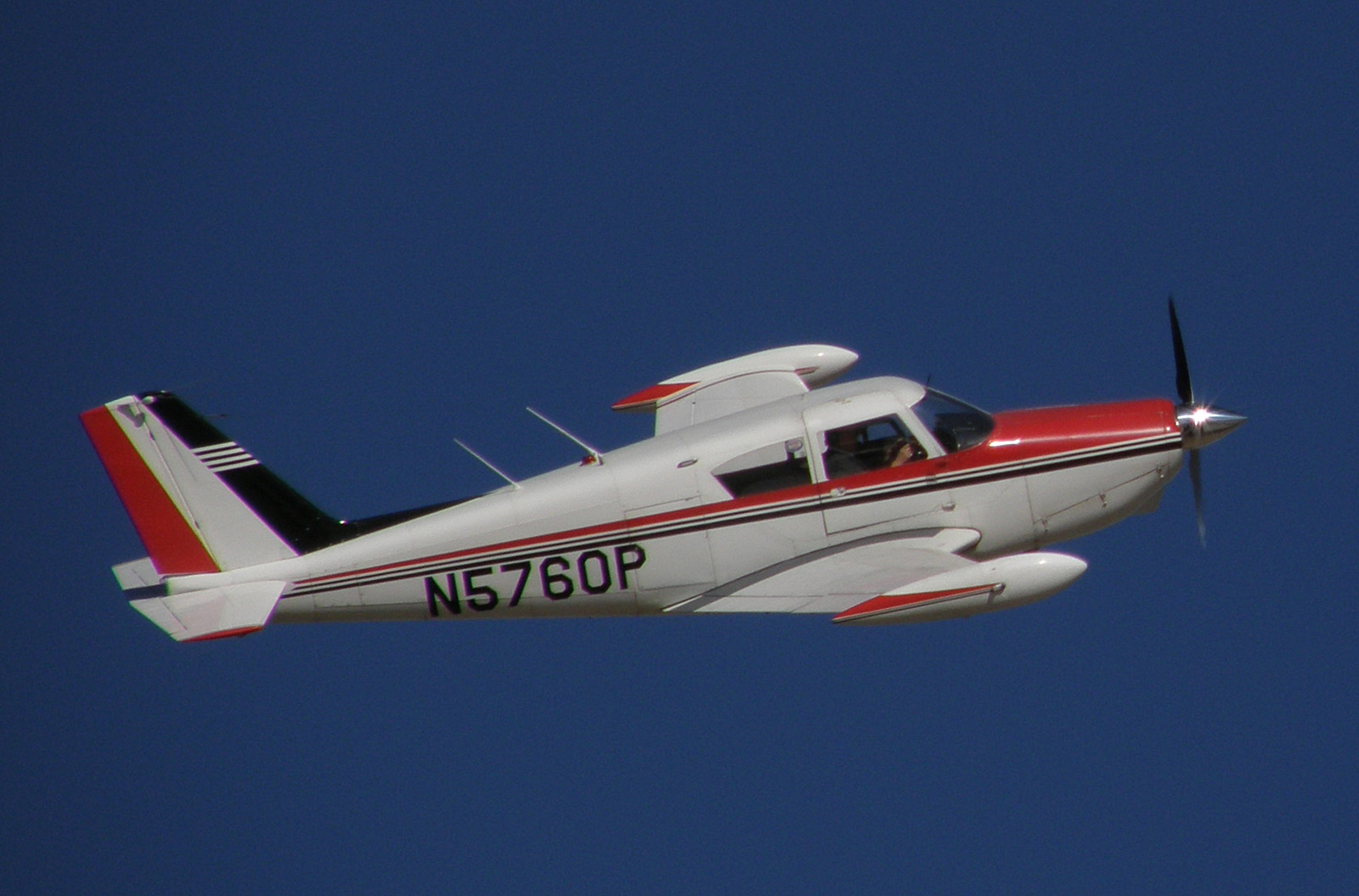
The Piper PA-24 Comanche is an American single-engine, low-wing, all-metal monoplane of semimonocoque construction with tricycle retractable landing gear and four or six seats.[2] The Comanche was designed and built by Piper Aircraft and first flew on May 24, 1956. Together with the PA-30 and PA-39 Twin Comanches, it made up the core of Piper's lineup until 1972, when the production lines for both aircraft were destroyed in the 1972 Lock Haven flood.
Key Information
Design and development
[edit]
Two prototypes were built in 1956, with the first being completed by June 20, 1956.[2] The first production aircraft, powered by a 180 hp (134 kW) Lycoming O-360-A1A engine, first flew on October 21, 1957. In 1958, it was joined by a higher-powered PA-24-250 with a 250 hp (186 kW) Lycoming O-540-A1A5 engine; this model was originally to be known as the PA-26, but Piper decided to keep the PA-24 designation.[2][3]
In 1964, the 400 hp (298 kW) PA-24-400 was introduced.[1] The following year, the PA-24-250 was superseded by the PA-24-260, featuring the Lycoming IO-540D or E engine of 260 hp (194 kW). A turbocharged version using a Rajay turbocharger was introduced in 1970.[4]
Production of the Comanche ended in 1972, when torrential rains from Hurricane Agnes caused the great Susquehanna River flood of 1972, flooding the manufacturing plant and destroying airframes, parts, and much of the tooling necessary for production. Rather than rebuild the tooling, Piper chose to abandon production of the Comanche and Twin Comanche and continue with two newer designs already in production at Piper's other plant in Vero Beach, Florida - the PA-28R-200 Arrow and the twin-engined PA-34 Seneca.[5]
Variants
[edit]Comanche 180
[edit]
The original version of the Comanche was the PA-24-180, which featured a carbureted 180 hp (134 kW) Lycoming O-360-A1A engine, swept tail, laminar flow airfoil, and all-flying stabilator.
The standard fuel capacity of the PA-24-180 was 60 US gallons (230 L). The flaps were manually actuated, controlled by the same Johnson bar actuator as the Piper Cherokee. The aircraft specifications were for cruise speeds of 116 to 139 knots (215 to 257 km/h) and fuel burns between 7.5 and 10.5 gallons per hour (28 and 40 L/h) at 55 and 75% power settings, respectively. Full-fuel payload with standard fuel was 715 lb (324 kg), with a gross weight of 2,550 lb (1,160 kg) and range with 45-minute reserve of 700 nmi (1,300 km; 810 mi).[citation needed]
When new, standard, typically equipped Comanche 180s sold between $17,850 (1958) and $21,580 (1964). A total of 1,143 were built.[citation needed]
Comanche 250
[edit]In 1958, Piper introduced a 250 hp (190 kW) version using a Lycoming O-540 engine, giving the PA-24-250 Comanche a top cruise speed of 160 kn (180 mph; 300 km/h). Most 250s had carbureted Lycoming O-540-AIA5 engines, but a small number were fitted out with fuel-injected versions of the same engine. Early Comanche 250s had manually operated flaps and carried 60 US gal (230 L) of fuel. Auxiliary fuel tanks (90 US gal (340 L) total) became available in 1961. Electrically actuated flaps were made standard with the 1962 model year.[citation needed]
The PA-24-250 was the most numerous of the single Comanches; 2,537 were built.
Comanche 260
[edit]

Four 260-horsepower (194 kW) versions of the Comanche were introduced beginning in 1965. They were:
- PA-24-260 (1965)
- PA-24-260B (1966 to 1968)
- PA-24-260C (1969 to 1972)
- PA-24-260TC (Turbocharged 260C) (1970 to 1972)
A total of 1,029 airplanes were sold from the Comanche 260 line, including the 260TC.
The 260 had an empty weight around 1,700 lb (770 kg) and a maximum gross weight of 2,900 lb (1,300 kg). It had four seats, and a 90-US-gallon (340 L)-capacity auxiliary fuel system was available as an option. Cruise speed was advertised as 142–161 kn (263–298 km/h; 163–185 mph) with fuel burn of 10 to 14 gal/h (38 to 53 L/h).
The 260B had an overall length 6 in (150 mm) more than the previous models due to a longer propeller spinner, not a longer fuselage. The 260B had a third side window and a provision for six seats. The fifth and sixth seats take up the entire baggage area and seat smaller adults, placarded to a total weight of 250 lb (110 kg). Typical empty weight was 1,728 lb (784 kg) and gross weight was 3,100 lb (1,400 kg). Fuel burn was 11 to 14 gal/h (42 to 53 L/h) and advertised speed was 140–160 kn (260–300 km/h; 160–180 mph).
The 260C introduced a new "Tiger Shark" cowling, maximum gross weight of 3,200 lb (1,500 kg), cowl flaps, and an aileron-rudder interconnect. Cruise speed was advertised as 150–161 kn (278–298 km/h; 173–185 mph) with fuel flow of 12.5 to 14.1 gal/h (47 to 53 L/h). To prevent possible aft center-of-gravity problems due to the increased gross weight and its fifth and sixth seats, the propeller shaft was extended. This moved the center of gravity slightly forward. With a useful load of 1,427 lb (647 kg), it has the largest payload of all of the Comanches except the 400. Often mistaken on the ramp for the 400 model, the slightly longer cowling includes a distinctively longer nose gear door, as compared to the B models and older versions.
Starting in 1970, Piper offered a turbo-normalized variant of the PA-24-260 known as the 260TC with a Lycoming IO-540-R1A5 engine and dual Rajay turbochargers. Twenty-six were produced between 1970 and 1972. Advertised by Piper as a "second throttle", the turbochargers are controlled using a manual wastegate assembly that places an additional handle labeled "boost" next to the throttle handle in the cockpit, effectively creating a secondary throttle. The TC model is certified for flight to 25,000 ft (7,600 m), with an advertised turbo critical altitude of 20,000 ft (6,100 m), giving a maximum true airspeed of 223 mph (194 kn; 359 km/h).[6]
PA-24-300
[edit]In 1967, one aircraft was modified with a 300 hp (224 kW) Lycoming engine for trials. It did not enter production.[2]
PA-24-380
[edit]Two prototype aircraft were built in 1961. They were standard Comanche airframes, but had 380 hp (283 kW) Lycoming IO-720-A1A engines with a three-bladed propeller. The design was modified with an even larger 400 hp (298 kW) engine and produced as the PA-24-400.[7]
Comanche 400
[edit]The PA-24-400 Comanche 400[8] was produced from 1964 to 1966.[1] Only 148 PA-24-400s were built.
The Comanche 400 is powered by the 400 hp (298 kW), horizontally opposed, eight-cylinder Lycoming IO-720 engine, developed specifically for the model.[9] Cooling problems have happened with the rear cylinders.

The Comanche 400 has a three-bladed propeller and carries 100 US gal (380 L) of fuel, or 130 US gal (490 L) with optional extended tanks. Fuel burn was advertised as 16 to 23 gal/h (61 to 87 L/h), at 55-75% power. The high fuel burn means that it is expensive to operate. The 400 had a typical empty weight of 2,110 lb (960 kg) and a maximum gross weight of 3,600 lb (1,600 kg).
Book speeds for the PA-24-400 included a cruising speed of 185 kn (343 km/h; 213 mph) and a top speed of 194 kn (359 km/h; 223 mph).[10]
While identical in planform to other PA-24 models, the 400 is structurally strengthened, primarily in the tail, with an extra nose rib in the stabilator and the vertical fin. The stabilator, vertical fin, and rudder of the 400 share virtually no common parts with the 180, 250, or 260 hp (190 kW) Comanches.
Twin Comanche
[edit]PA-33
[edit]
In 1967, a single Comanche was modified by Swearingen with a pressurized cabin. The prototype, powered by a 260 hp (190 kW) Lycoming O-540 engine and equipped with Twin Comanche landing gear, was designated the PA-33.[11] First flown on March 11, 1967, the prototype later crashed on takeoff in May 1967 and the project was cancelled.[11]
World records
[edit]Max Conrad
[edit]In June 1959, Max Conrad flew a Comanche 250 on a record-breaking distance flight in Fédération Aéronautique Internationale C1-D Class, for aircraft from 3,858 lb (1,750 kg) to less than 6,614 lb (3,000 kg). Having removed the interior seats and replaced them with fuel tanks, Conrad flew nonstop from Casablanca, Morocco, to Los Angeles, a distance of 7,668 mi (12,340 km). When the aircraft took off from Casablanca, it was heavily overloaded and just cleared the airport fence.[12] The Comanche 250 Max Conrad flew for this flight is now located in the museum at the Liberal, Kansas, airport.
On November 24–26, 1959, Conrad flew a Comanche 180 on a distance record flight in FAI C1-C Class for aircraft taking off at weights from 2,204 lb (1,000 kg) to less than 3,858 lb (1,750 kg) that still stands: Casablanca to El Paso, Texas, 6,966 mi (11,211 km) nonstop, a distance of 6,967 mi (6,054 nmi; 11,212 km), in 56 hours 26 minutes.[12][13] He set a closed-circuit distance record in the same aircraft on July 4–6 November 1960, flying 6,921 mi (6,014 nmi; 11,138 km).[13]
Kenneth Walker
[edit]On 14 May 1962, Kenneth Walker arrived in Brisbane, Australia, in a PA-24-250 on a delivery flight from San Francisco. Walker's flight was the first ever solo single-engine crossing of the Pacific, and the third solo crossing from the US to Australia. From Brisbane, Walker continued south to deliver the Comanche to the Royal Newcastle Aero Club at Maitland, New South Wales, Australia. [14]
Toku-Hana
[edit]
In July 1964, Henry Ohye, flying a 1961 PA-24-250, made the first successful trans-Pacific flight from the United States to Japan in a single-engined aircraft. He flew from Los Angeles to Tokyo with stops in Honolulu, Midway, Wake, Guam, and Okinawa.[15][16]
Myth Too
[edit]A 1966 Comanche 260B, named Myth Too and registered as G-ATOY, was owned by English aviator Sheila Scott. The aircraft, flown by Scott, holds 90 world-class light aviation records. It is on public display at the National Museum of Flight, Scotland.[17]
Oldest circumnavigator
[edit]The circumnavigation by the oldest pilot on record in 1994 was made by Fred Lasby at age 82 in a Comanche 260B.[18]
Accidents
[edit]- The 1963 Camden PA-24 crash – On March 5, 1963, country music singers Patsy Cline, Lloyd "Cowboy" Copas, and Hawkshaw Hawkins were on board a Comanche owned and piloted by Cline's manager, Randy Hughes, when it crashed in deteriorating weather near Camden, Tennessee, killing all on board.[19]
Specifications (PA-24-260C)
[edit]
Data from Jane's All the World's Aircraft 1971–72[20]
General characteristics
- Crew: 1
- Capacity: 3–5 passengers
- Length: 25 ft 0 in (7.62 m)
- Wingspan: 36 ft 0 in (10.97 m)
- Height: 7 ft 6 in (2.29 m)
- Wing area: 178 sq ft (16.5 m2)
- Aspect ratio: 7.28:1
- Airfoil: NACA642A215
- Empty weight: 1,773 lb (804 kg)
- Max takeoff weight: 3,200 lb (1,451 kg)
- Fuel capacity: 60 US gal (50 imp gal; 230 L) normal, additional 30 US gal (25 imp gal; 110 L) in optional auxiliary tanks
- Powerplant: 1 × Lycoming IO-540 air-cooled six-cylinder horizontally-opposed engine, 260 hp (190 kW)
- Propellers: 2-bladed Hartzell HC82XK1D metal constant-speed propeller, 6 ft 5 in (1.96 m) diameter
Performance
- Maximum speed: 195 mph (314 km/h, 169 kn) at sea level
- Cruise speed: 185 mph (298 km/h, 161 kn) at 6,300 ft (1,900 m) (max. cruise, 75% power)
- Never exceed speed: 227 mph (365 km/h, 197 kn)
- Range: 1,225 mi (1,971 km, 1,064 nmi) at 10,500 ft (3,200 m) (auxiliary fuel tanks, 65% power)
- Service ceiling: 19,500 ft (5,900 m)
- Rate of climb: 1,320 ft/min (6.7 m/s)
- Takeoff run to 50 ft (15 m): 1,400 ft (430 m)
- Landing run from 50 ft (15 m): 1,200 ft (370 m)
References
[edit]- ^ a b c Plane and Pilot: 1978 Aircraft Directory, page 64. Werner & Werner Corp, Santa Monica CA, 1977. ISBN 0-918312-00-0
- ^ a b c d Peperell & Smith 1987, pp. .105–110
- ^ The PA-26 was later used as a designation for the Comanche 400, although it also retained the PA-24 designation for marketing.
- ^ Taylor, John WR, editor: Jane's Light Aircraft, page 165. Jane's Publishing Company, 1982. ISBN 0-7106-0195-6
- ^ "The Piper Aircraft Corporation, out of its Lock Haven, Pennsylv". Archived from the original on April 13, 2010. Retrieved July 26, 2013.
- ^ Killough, Douglas L. (1996). Pilot's Operating Handbook Piper PA-24-260C. Austin, Texas: Aircraft Publications. pp. numerous.
- ^ Peperell & Smith 1987, pp. 111–112
- ^ Federal Aviation Administration (August 2006). "PA-24-400 Type Certificate". Retrieved November 30, 2007.
- ^ Lycoming Engines (n.d.). "Lycoming IO-720". Retrieved December 19, 2008.
- ^ Demand Media (2008). "The Piper PA-24 Comanche". Retrieved December 20, 2008.
- ^ a b Peperell & Smith 1987, p. 225
- ^ a b Meunier, Claude (December 2007). "Max Conrad". Archived from the original on November 23, 2008. Retrieved August 15, 2009.
- ^ a b Taylor 1962, p. 263
- ^ "First Solo Single-Engined Crossing of the South Pacific". Pacific Islands Monthly. XXXII (11): 139. June 1, 1962.
- ^ "Trans-Pacific Flier Returns on Airliner". Los Angeles Times. October 5, 1964.
- ^ AWA Airways: 6. Summer 2012.
{{cite journal}}: Missing or empty|title=(help) - ^ "National Museum of Flight Scotland - Our aircraft" (PDF). National Museums of Scotland. Archived from the original (PDF) on August 6, 2009. Retrieved July 5, 2009.
- ^ "Around the World in a Comanche 260B". Comanche Flyer. Vol. 31, no. 3. March 2004. p. 34.
- ^ Anderson, Sherry (January 2001). "Patsy Cline". Archived from the original on September 27, 2008. Retrieved October 9, 2008.
- ^ Taylor 1971, pp. 381–382
- Peperell, Roger W; Smith, Colin M. (1987). Piper Aircraft and their forerunners. Tonbridge, Kent, England: Air-Britain. ISBN 0-85130-149-5.
- Taylor, John W. R. (1962). Jane's All the World's Aircraft 1962–63. London: Sampson Low, Marston & Company, Ltd.
- Taylor, John W. R., ed. (1971). Jane's All The World's Aircraft 1971-72. London: Sampson Low. ISBN 0-354-00094-2.
External links
[edit]Piper PA-24 Comanche
View on GrokipediaDevelopment
Origins and initial design
Following World War II, Piper Aircraft held a strong market position in the general aviation sector, renowned for producing affordable, fabric-covered, tube-and-fuselage aircraft like the J-3 Cub and PA-22 Tri-Pacer, which appealed to a broad range of recreational and training pilots. However, the company faced intensifying competition from rivals such as Cessna, with its all-metal, high-wing Model 182 offering superior speed and payload, and Beechcraft, whose V-tailed Bonanza set benchmarks for retractable-gear performance in the four-seat category.[4][2][5] In response, John H. Piper, then-president of the company, issued a directive in the mid-1950s to develop a high-performance, low-drag, four-seat aircraft with retractable tricycle landing gear, aimed at providing a high-performance single-engine retractable-gear aircraft between Piper's simpler fixed-gear models, such as the Tri-Pacer, and the more complex twin-engine PA-23 Apache. This initiative sought to modernize Piper's lineup by prioritizing aerodynamic efficiency and speed over the simplicity of earlier rag-and-tube designs, positioning the new model as a direct competitor to the Bonanza and Cessna 182 in the growing demand for sophisticated single-engine cruisers.[6][7] The PA-24 design was developed by Piper engineers from a preliminary concept by Al Mooney, who had previously designed the Mooney M20. Drawing inspiration from Al Mooney's low-wing concepts—after Piper unsuccessfully attempted to acquire the Mooney M20 design in 1952—the emphasis was on overall aerodynamic refinement rather than basic affordability. The core design innovations centered on an all-metal semi-monocoque fuselage for structural integrity and reduced drag, a low-wing configuration with a laminar-flow airfoil to enhance high-altitude efficiency, and retractable tricycle landing gear to improve ground handling and reduce takeoff/landing speeds compared to taildraggers.[8][2][7] Initial sketches emerged in 1956 at Piper's Lock Haven, Pennsylvania facility, evolving through wind tunnel testing in 1956-1957 to validate the low-drag profile and stabilator tail assembly, which replaced traditional elevators for better control harmony. These efforts culminated in the prototype's designation as the PA-24, with the selection of the Lycoming O-360-A1A four-cylinder engine providing a 180 hp baseline for the initial variant. The higher-powered 250 hp O-540 engine was introduced in the PA-24-250 model in 1958.[8][2]Testing and certification
The prototype Piper PA-24 Comanche, serial number 24-1 and registered as N2024P, conducted its maiden flight on May 24, 1956, from Lock Haven, Pennsylvania, with company test pilot Jay Myer at the controls.[8] This initial flight lasted approximately 45 minutes and confirmed the aircraft's basic handling qualities, paving the way for a comprehensive testing regimen.[9] The testing program encompassed structural load evaluations, aerodynamic assessments, and performance trials, including stall and spin recovery tests, to ensure compliance with Civil Air Regulations Part 3.[2] Engineers implemented modifications during this phase, such as refined engine cowling designs to optimize cooling airflow and adjusted flap configurations to improve low-speed handling and landing characteristics.[10] Early prototypes experienced vibration concerns, particularly in the propeller and airframe, as well as intermittent issues with landing gear retraction reliability, which were resolved through reinforced mounting points and hydraulic system tweaks prior to final approval.[11] Following successful completion of the flight tests, the Civil Aeronautics Administration approved Type Certificate 1A15 for the PA-24 on June 20, 1957, certifying the initial PA-24-180 variant for production.[12] This certification marked the culmination of nearly two years of development testing, enabling Piper to deliver the first production Comanches in 1958.[2]Production
Manufacturing timeline
Production of the Piper PA-24 Comanche began in late 1957 at Piper Aircraft's facility in Lock Haven, Pennsylvania, with the first customer delivery occurring on January 7, 1958.[13] The initial models included the PA-24-180 and PA-24-250, marking Piper's entry into high-performance single-engine retractables.[1] These aircraft were assembled at the Lock Haven plant, which had been Piper's primary manufacturing site since 1937.[14] During the 1960s, Comanche production peaked as the model served as Piper's flagship four-seat retractable, with output increasing from an initial goal of one aircraft per day to five per day by the mid-decade.[13] This expansion supported the introduction of enhanced variants, including the PA-24-400 with a 400-horsepower engine in 1964 and the PA-24-260 with a 260-horsepower Lycoming IO-540 in 1965; the latter replaced the earlier PA-24-250 and featured a slightly increased overall length due to a longer propeller spinner in its "B" model starting in 1966.[15] Components such as propellers were subcontracted from suppliers like Hartzell Propeller, which provided constant-speed units for the various engine options.[16] By the late 1960s, Piper began shifting emphasis toward simpler fixed-gear models like the PA-28 Cherokee series, which offered lower production costs and appealed to a broader market amid rising insurance premiums for retractables.[17] Single-engine Comanche production continued until 1972, when Hurricane Agnes caused severe flooding of the Susquehanna River, inundating the Lock Haven plant and destroying tooling and inventory, effectively halting assembly.[3] No significant restarts occurred afterward, though Piper relocated larger production to Vero Beach, Florida, focusing on successors like the PA-28R Arrow.[15]Production totals and economics
Piper produced approximately 4,834 single-engine PA-24 Comanches between 1958 and 1972, marking a significant output for a premium retractable-gear aircraft during general aviation's post-war boom.[17] Production began strongly, with 336 units (combining initial 180- and 250-horsepower models) delivered in the debut year of 1958 alone, reflecting robust initial demand for the Comanche's advanced design.[18] Output peaked in the late 1950s and early 1960s, exceeding 1,200 units across 1959 and 1960, before tapering off amid market shifts; by the early 1970s, annual figures had fallen below 100 as economic pressures mounted.[18] Economically, the Comanche represented a high-investment endeavor for Piper, with original base pricing underscoring its positioning as a step up from entry-level models. A new 1958 PA-24-180 started at around $17,850, while the more powerful PA-24-250 added roughly $4,000, appealing to buyers seeking performance comparable to pricier competitors like the Cessna 210.[19] Adjusted for inflation, these figures equate to approximately $180,000 and $200,000 in 2023 dollars, respectively, highlighting the aircraft's premium status and the era's escalating costs for complex retractables.[19] Profitability was bolstered by international sales, though domestic demand drove the majority; export markets contributed meaningfully to sustaining production through the 1960s.[17] The program's end in 1972 stemmed from intertwined economic challenges, including surging product liability insurance premiums that strained manufacturers across general aviation.[3] Intensifying competition from lower-cost fixed-gear alternatives, such as Piper's own PA-28 Cherokee series, further eroded the Comanche's market share as buyers prioritized affordability over retractable performance. Piper's strategic pivot toward these more economical lines, coupled with a devastating factory flood from Hurricane Agnes that disrupted operations at the Lock Haven plant, ultimately sealed the fate of single-engine Comanche production.[18]Design features
Airframe and aerodynamics
The Piper PA-24 Comanche employs a low-wing cantilever monoplane design, which contributes to its clean aerodynamic profile and efficient handling characteristics. The wings utilize a laminar flow NACA 64A215 airfoil, with the section's maximum thickness positioned approximately 40% aft of the leading edge to promote smooth airflow and reduce drag.[20] This airfoil selection enhances the aircraft's overall efficiency, enabling higher cruise speeds relative to contemporaries with conventional airfoils.[21] The airframe is of all-metal semi-monocoque construction, primarily using sheet aluminum for the fuselage and stressed-skin aluminum for the wings, which span 36 feet (10.97 meters).[20] The structure is zinc chromate primed and finished with acrylic lacquer, designed to withstand ultimate load factors exceeding FAA normal category requirements.[20] The fuselage integrates the main wing spar beneath the center seating position, ensuring an unobstructed cabin floor for improved passenger comfort.[20] The retractable tricycle landing gear is electrically actuated via a motor-driven mechanism, with the nose gear providing 40 degrees of steering authority.[20] This system retracts the gear into the wings and fuselage, reducing parasitic drag and yielding a cruise speed increase of nearly 30 mph compared to fixed-gear equivalents. The gear configuration includes a wheelbase of 6.55 feet and tread of 9.66 feet, with main tires rated at 600x6 (6-ply) and nose at 600x6 (4-ply).[20] The cabin accommodates four occupants in a configuration emphasizing space and accessibility, with dimensions including a length of 108 inches, width of 45 inches, and height of 47 inches.[22] A dedicated baggage compartment aft of the cabin offers 20 cubic feet of volume and supports up to 250 pounds, accessible via a 19x21-inch external door.[20] Additional aerodynamic refinements include flush riveting throughout the skin panels to minimize surface irregularities and promote laminar flow, as well as retractable landing lights integrated into the wing leading edges.[21] Optional aftermarket wingtip fuel tanks can serve as structural fairings, further streamlining the wingtips and reducing induced drag.[2] These features collectively underscore the Comanche's emphasis on aerodynamic efficiency within its light aircraft class.[23]Powerplant and systems
The powerplant of the Piper PA-24 Comanche series varies by variant; in the PA-24-260, it is the Lycoming IO-540 series engine, a six-cylinder, fuel-injected, air-cooled unit producing 250 to 260 horsepower at 2,700 RPM.[20] This engine features a displacement of 541.5 cubic inches, an 8.5:1 compression ratio, and requires 91/96 octane aviation fuel for optimal operation.[20] Paired with a two-blade, constant-speed Hartzell propeller, it provides efficient power delivery across a range of altitudes, contributing to the aircraft's reputation for smooth performance and reliability.[1] The fuel system employs integral wing tanks with a standard capacity of 60 gallons (30 gallons per wing, 56 gallons usable), supplemented by optional auxiliary tanks adding 30 gallons (30 usable) for a total of 90 gallons (86 usable).[20] Fuel flows via gravity feed from the tanks to the engine, augmented by an electric boost pump for starting, takeoff, and emergency use, ensuring consistent supply even under high-demand conditions.[20] This setup supports extended operations, with fuel selectors allowing pilot control between main, auxiliary, and off positions to manage consumption and balance. Electrical power is supplied by a 12-volt DC system, featuring a 60- to 70-amp alternator (depending on model year and configuration) and a 25- to 35-amp-hour battery mounted aft of the baggage compartment.[20] The alternator, driven by the engine, maintains system voltage through a transistorized regulator, powering essential components including lights, instruments, and starter via circuit breakers for protection.[20] This setup adequately supports basic instrument flight rules (IFR) avionics, such as Narco or Bendix King radios, vacuum-driven gyros, and turn coordinators, enabling all-weather capability without excessive complexity.[1] Actuation for the retractable tricycle landing gear and wing flaps is provided electrically, with a reversible motor driving a gear mechanism for extension and retraction in approximately 7 seconds.[24] Hydraulic elements are limited to the brake system, utilizing a master cylinder with MIL-H-5606 fluid for toe-operated caliper brakes on the main wheels, complemented by a hand-operated parking brake.[20] Environmental controls include a combustion heater drawing from the left exhaust muffler shroud for cabin warmth, fresh air vents from wing roots and a dorsal scoop, and a defroster directing heated air to the windshield, maintaining occupant comfort across varying conditions.[20] These integrated systems yield strong performance metrics, including true airspeeds approaching 200 mph at 75% power in optimal cruise configurations and ranges exceeding 800 nautical miles with standard fuel loads, balancing efficiency with the aircraft's payload capacity.[25][20]Variants
PA-24-180
The Piper PA-24-180 Comanche, introduced in 1958 as the entry-level variant in the Comanche lineup, featured a Lycoming O-360-A1A engine producing 180 horsepower.[18][1] This economy-oriented model shared the core airframe design of the broader PA-24 series but emphasized affordability for general aviation users.[26] Performance characteristics included a maximum speed of 167 mph and a useful load of 1,200 pounds, making it well-suited for shorter missions and routine operations rather than long-range travel.[27] To achieve cost savings, the PA-24-180 incorporated design simplifications such as a standard constant-speed propeller, though options for basic configurations were available to further reduce expenses.[24] A total of 1,143 units were produced between 1958 and 1964, primarily targeting flight schools, personal owners, and budget-conscious buyers seeking reliable retractable-gear performance without premium pricing.[26] The aircraft received positive market reception for delivering the Comanche's renowned handling qualities—stable controls and forgiving stall behavior—at an introductory price of $17,900, which positioned it as an accessible alternative to higher-powered competitors.[7][7]PA-24-250
The Piper PA-24-250 Comanche, introduced in 1958 as the more powerful successor to the initial PA-24-180, featured a Lycoming O-540-A1A six-cylinder air-cooled engine rated at 250 horsepower at 2,575 rpm, paired with a two-blade Hartzell constant-speed controllable propeller.[1][28] This configuration allowed for a maximum gross weight of 2,800 pounds, enabling enhanced performance for four occupants in cross-country operations.[28] The aircraft's standard fuel capacity was 60 gallons of usable fuel, with an optional expansion to 90 gallons introduced in 1961 for extended range.[18] Key performance characteristics included a typical cruise speed of 185 mph at 75% power, a useful load averaging 1,200 pounds, and a range of approximately 520 nautical miles at economy settings with standard fuel.[1][29] These specifications positioned the PA-24-250 as a capable retractable-gear single for efficient personal and business travel, with a service ceiling of 17,000 feet and a rate of climb of 1,350 feet per minute at sea level.[30] Approximately 2,500 units of the PA-24-250 were produced between 1958 and 1964, accounting for the majority of early Comanche sales and establishing the model as the line's bestseller.[1] A notable innovation was the availability of an optional turbo-normalized engine configuration via supplemental type certificate, using dual Rajay turbochargers on the Lycoming IO-540 for improved high-altitude performance up to 17,500 feet.[31] Pilots have long praised the PA-24-250 for its smooth and stable ride, responsive handling, and cross-country efficiency, making it a favored choice for long-distance flights despite its higher approach speeds.[18][32]PA-24-260
The Piper PA-24-260 Comanche variant was introduced in 1965 as an upgraded version of the earlier PA-24-250, featuring a more powerful fuel-injected Lycoming IO-540 engine rated at 260 horsepower to address demands for enhanced climb performance and overall efficiency in personal and business aviation.[23][33] This model retained the low-wing, retractable-gear design of its predecessor but incorporated refinements such as improved cowling airflow management, including optional cowl flaps for better engine cooling during high-power operations, contributing to a sea-level climb rate of approximately 1,320 feet per minute.[23][34] Optional wingtip extensions were also available to enhance longitudinal stability, particularly beneficial for instrument flight rules (IFR) operations in varying weather conditions.[35] Production of the PA-24-260 spanned from 1965 to 1972, with a total of 1,028 units built, making it the most numerous variant in the Comanche lineup and a dominant presence in the 1960s general aviation fleet due to its balance of speed, range, and payload capacity.[36][37] The aircraft achieved a typical cruise speed of around 185 miles per hour at 75% power, enabling efficient cross-country flights while accommodating four passengers and baggage in a comfortable cabin suitable for family travel or business use.[1] Its robust airframe and reliable powerplant made it particularly favored for IFR missions, where the improved climb allowed quicker ascents through turbulent lower altitudes.[23] Aftermarket supplemental type certificates (STCs) became popular for upgrading earlier PA-24-180 and PA-24-250 airframes to the 260-horsepower IO-540 engine, providing owners with enhanced performance without requiring a full aircraft replacement.[38] These modifications, often including propeller and cowling adjustments, extended the operational life of older Comanches and were widely adopted by the owner community for their cost-effectiveness and proven reliability in diverse flying environments.[35]PA-24-300 and PA-24-380
The PA-24-300 represented Piper's attempt to boost the Comanche's performance beyond the standard 260 hp models by installing a 300 hp Lycoming engine in a modified airframe for evaluation in 1967. This experimental configuration aimed to achieve higher cruise speeds, reportedly around 240 mph, but faced significant challenges with propeller clearance due to the low-slung engine and landing gear design, limiting ground operations and practicality. Only a single aircraft was modified for these trials, and the variant never progressed to full production, with estimates suggesting no more than a handful of custom conversions were completed by owners or shops over the years. In 1961, Piper explored even greater power with the PA-24-380 prototype, fitting a normally aspirated Lycoming IO-720-A1A engine rated at 380 hp to a standard Comanche airframe. Flight testing demonstrated potential cruise speeds approaching 280 mph, but the project was abandoned due to excessive vibration from the larger engine, high fuel consumption rates exceeding 20 gallons per hour at full power, and structural concerns with the existing airframe. Just two prototypes were built, neither advancing to certification or production.[37] Both variants shared structural enhancements to handle the increased power, including reinforced landing gear to accommodate larger propellers and improve prop clearance, as well as an enlarged rudder for better directional stability during high-speed flight and engine-out scenarios. These modifications addressed control authority issues inherent to the original Comanche design when scaled up in power.[2] Development and potential production were hampered by escalating costs, with equipped prices surpassing $50,000 in late 1960s dollars, making them viable only for custom orders from affluent buyers seeking maximum performance. The limited market demand and engineering hurdles contributed to their short lifespan as projects. The experiences with the PA-24-300 and PA-24-380 ultimately informed Piper's shift toward more balanced high-performance singles, influencing features in later models like the pressurized PA-46 Malibu, which incorporated advanced powerplants and airframe reinforcements for similar speed goals.[18]PA-24-400
The Piper PA-24-400, commonly known as the Comanche 400, represented the pinnacle of power in the single-engine Comanche series, debuting in 1964 as Piper Aircraft's attempt to deliver high-altitude performance through a large-displacement, normally aspirated engine rather than turbocharging. Developed under the leadership of Howard "Pug" Piper, son of company founder William T. Piper, the variant utilized a strengthened version of the standard Comanche airframe to support the significantly more powerful powerplant. This included reinforcements to the tail structure, an aerodynamically balanced rudder, and an enlarged stabilator derived from the Piper Apache to handle the increased loads.[39][40] At the heart of the PA-24-400 was the Lycoming IO-720-A1A, an eight-cylinder, fuel-injected, horizontally opposed engine rated at 400 horsepower—the largest piston engine ever certified for a light general aviation aircraft at the time. It drove a three-bladed Hartzell constant-speed tractor propeller, providing robust takeoff performance with a climb rate exceeding 1,600 feet per minute. The design prioritized speed and ceiling, achieving a maximum cruise of 195 knots and a true airspeed of 185 knots at 75% power, alongside a service ceiling of 19,500 feet. Fuel capacity was 100 gallons standard (expandable to 130 gallons optionally), enabling a range of approximately 800 nautical miles, though at the cost of high consumption rates often surpassing 20 gallons per hour. Gross weight stood at 3,600 pounds, with an empty weight around 2,110 pounds, allowing for a useful load of about 1,490 pounds including full fuel.[40][15][18] Despite its impressive specifications, the PA-24-400 encountered significant design challenges that limited its appeal and production. Engine cooling proved inadequate during cruise, resulting in frequent issues such as burned valves, overheated cylinders, rapid starter motor wear, and battery failures. Hot-starting the IO-720 was notoriously difficult, exacerbating operational frustrations for pilots. These quirks, combined with the model's voracious fuel appetite, drew negative feedback from the aviation community and hindered sales. Piper produced only 148 units between 1964 and 1966 before discontinuing the variant in 1966, shifting focus to more efficient turbo-normalized options in subsequent Comanche models like the PA-24-260B. The low production volume has since endowed surviving examples with a dedicated following, many modified by owners to mitigate the original cooling and starting deficiencies through aftermarket kits.[39][40][15]Twin-engine derivatives
The Piper PA-30 Twin Comanche, introduced in 1963, represented the primary twin-engine adaptation of the Comanche family, featuring a fuselage derived from the single-engine PA-24 but modified with engine nacelles mounted on short booms extending from the wings.[41] This design shared the Comanche's low-wing configuration and four-seat cabin while incorporating twin Lycoming IO-320-B1A engines, each rated at 160 horsepower, to provide enhanced safety and performance for pilots transitioning from singles to multi-engine aircraft.[42] The aircraft's wingspan measured 36 feet, including optional tip tanks for extended range, and production continued at Piper's Lock Haven facility until 1972, with approximately 2,150 units built across the Twin Comanche line.[41] Performance emphasized efficiency in the light twin market, with a typical cruise speed of around 190 miles per hour at 75% power and a range exceeding 900 nautical miles on standard 90-gallon fuel capacity.[43] A notable variant, the PA-39 introduced in 1967, incorporated counter-rotating propellers on left- and right-hand Lycoming engines, eliminating the critical engine scenario during single-engine operations and improving handling in asymmetric thrust conditions.[42] The Twin Comanche appealed to general aviation pilots seeking a step-up from singles like the PA-24, offering lower operating costs than competitors such as the Beechcraft Baron, though it faced market challenges from more powerful rivals.[41] The PA-33 prototype, first flown in March 1967, extended the Comanche derivative concept with a stretched fuselage for six seats and a pressurized cabin, but retained a single-engine layout based on the PA-24 airframe with shared forward sections and a new empennage.[15] Only one example was completed before a crash during takeoff in May 1967 at Lock Haven, Pennsylvania, prompted Piper to cancel the program due to high development costs and technical complexities.[15]Operational history
Commercial and general aviation use
The Piper PA-24 Comanche has primarily served as a versatile aircraft for cross-country travel in general aviation, favored by private pilots and business executives for its efficient cruise speeds and comfortable four-seat cabin suitable for family outings or professional trips.[44][19] Designed from the outset as a high-performance single-engine piston aircraft, it excels in longer-distance flights, offering reliable performance with ranges exceeding 700 nautical miles when equipped with standard fuel capacity.[45] The majority of the surviving fleet, estimated at several thousand airframes from the original production run of approximately 4,857 units, remains in private hands, underscoring its enduring appeal for personal and light business operations.[9] In addition to recreational and business roles, the Comanche series, particularly the Twin Comanche variant, has found a niche in flight training programs, where it supports instrument training and multi-engine transitions due to its stable handling and responsive controls.[46][47] Flight schools value its balance of performance and safety for building proficiency in complex operations, with the aircraft's Lycoming powerplants providing a forgiving platform for student pilots advancing beyond single-engine basics.[48] The Comanche's international footprint is notable in export markets such as Europe and Australia, where it has been adapted with local regulatory modifications to meet certification standards like those from the European Union Aviation Safety Agency and the Civil Aviation Safety Authority.[23][15] These regions host active communities of owners who appreciate the aircraft's speed and efficiency for regional travel, often incorporating upgrades to comply with noise and emissions rules. A robust aftermarket for Supplemental Type Certificates (STCs) sustains the fleet's airworthiness, including installations for auxiliary tip tanks to extend range and modern autopilot systems for enhanced avionics integration.[49][50] Owner enthusiasm is bolstered by dedicated groups like the International Comanche Society, established in 1972, which fosters knowledge sharing through its monthly Comanche Flyer magazine and annual conventions, helping maintain thousands of airworthy examples worldwide.[51][41]Military applications
The Piper PA-24 Comanche had limited military applications, with the twin-engine PA-30 Twin Comanche variant used primarily in research roles. A PA-30, designated NASA 808, served at the NASA Dryden Flight Research Center (now Armstrong Flight Research Center) as a utility aircraft for various research projects from the 1960s until the 1980s.[52] No formal military operators adopted the Comanche family for training or combat roles.Notable achievements
World record flights
The Piper PA-24 Comanche established multiple Fédération Aéronautique Internationale (FAI) world records in Class C-1c for piston-engine landplanes with takeoff weights between 1,000 and 1,750 kg during the 1960s, primarily in speed-over-course and distance categories, showcasing its aerodynamic efficiency and extended range. These accomplishments, certified by the National Aeronautic Association (NAA) as the FAI's U.S. delegate, often fell within light aircraft and women's divisions, underscoring the design's balance of speed and fuel economy for cross-country operations.[53] A prominent example of speed records came in 1966, when pilot Sheila Scott set several FAI benchmarks over recognized courses using a PA-24-260 variant. These included an average speed of 258.13 km/h (160.40 mph) from London to Rome, and 244 km/h (151.62 mph) from Lisbon to London, both ratified in the women's light aircraft subclass. Additional records encompassed longer segments, such as London to Darwin at 45.67 km/h (28.38 mph), highlighting the Comanche's ability to maintain consistent performance across diverse routes while emphasizing its role in advancing records for female aviators in general aviation.[54] Distance records further demonstrated the Comanche's long-range prowess, with pilot Max Conrad achieving FAI-accredited feats in a PA-24-250. On June 2–4, 1959, he completed a non-stop flight from Casablanca, Morocco, to Los Angeles, California, spanning 12,340 km (7,668 mi) in 58 hours and 38 minutes, establishing a class record for maximum distance without landing. In 1960, Conrad set a closed-circuit distance record of 11,138.72 km over multiple laps, also certified by the NAA. These efforts, involving non-stop transcontinental legs exceeding 2,200 nautical miles, validated the aircraft's fuel-efficient Lycoming engine and airframe for endurance flights in the 1,000–1,750 kg category.[55] The turbocharged PA-24-260 variants, introduced in 1965, enabled operations up to a certified service ceiling of 25,000 ft with modifications allowing altitudes approaching 32,000 ft under optimal conditions, contributing to the aircraft's record-setting potential in high-altitude efficiency trials, though formal FAI altitude benchmarks were less emphasized compared to speed and distance achievements.[15]Endurance and circumnavigation feats
The Piper PA-24 Comanche demonstrated exceptional endurance capabilities through several pioneering long-distance flights that showcased its reliability for transoceanic and global journeys. In June 1959, aviator Max Conrad piloted a modified PA-24-250 Comanche nonstop from Casablanca, Morocco, to Los Angeles, California, covering 7,668 miles (12,340 km) in 58 hours and 38 minutes, establishing a class record for light aircraft and proving the type's viability for crossing the Atlantic Ocean under challenging conditions.[56] This flight, supported by auxiliary fuel tanks increasing capacity to over 200 gallons, highlighted the Comanche's efficient Lycoming engine and stable handling during extended overwater operations.[19] Building on such achievements, the Comanche enabled further endurance feats across the Pacific. In May 1962, pilot Kenneth Walker completed the first solo single-engine crossing of the Pacific Ocean in a PA-24-250, flying from the United States to Australia and covering approximately 7,500 nautical miles over multiple legs, with the longest nonstop segment exceeding 30 hours; this marked the third such solo trans-Pacific journey overall and underscored the aircraft's range potential with ferry tanks.[19] Similarly, in July 1964, Henry Ohye flew the PA-24-250 named Toku-Hana from Los Angeles to Tokyo, the first successful trans-Pacific flight in a single-engine light aircraft from the U.S. to Japan, with stops in Honolulu, Wake Island, Guam, and other locations.[57] Circumnavigation efforts further exemplified the Comanche's global prowess. British aviator Sheila Scott accomplished the first solo around-the-world flight by a British woman in May–June 1966 aboard her PA-24-260B Myth Too, traversing 28,658 miles (46,121 km) in 189 flight hours over 33 days, visiting 25 countries and setting multiple Fédération Aéronautique Internationale records for speed on various segments.[58] This expedition relied on the Comanche's 260-horsepower engine and modified fuel system for sustained performance across diverse terrains and weather. Decades later, in 1994, American pilot Fred Lasby set a record as the oldest person to circumnavigate the globe solo in a light aircraft at age 82, departing Fort Myers, Florida, on June 30 and completing the journey in his single-engine PA-24-260B Comanche with 21 stops in 13 countries, covering 23,218 miles (37,366 km) and returning on August 20.[59]Safety and incidents
Accident statistics
The Piper PA-24 Comanche has experienced fatal accidents, as documented by the National Transportation Safety Board (NTSB) and the Aviation Safety Network database.[60] The overall fatal accident rate for the Comanche fleet is below the average for comparable retractable-gear single-engine aircraft but higher than fixed-gear models in general aviation.[61] Primary causes of Comanche accidents, based on NTSB investigations, include gear-up landings, often due to pilot distraction or checklist oversight during approach.[62] Engine failures are frequently linked to fuel system malfunctions such as selector valve issues or exhaustion from improper planning.[63] Pilot error in instrument flight rules (IFR) conditions is prevalent, with loss of control in instrument meteorological conditions (IMC) being common; the Comanche recorded 17 accidents per 100,000 IMC hours as of a 1997 analysis, more than double the rate for similar aircraft.[61] Accident rates were notably higher in the 1960s, coinciding with the aircraft's introduction and initial fleet growth, due to unfamiliarity with its high performance and retractable gear.[61] Safety improved over subsequent decades through airworthiness directives (ADs) addressing key vulnerabilities, such as AD 83-19-03 requiring inspections of the fuel system for water contamination and bladder tank integrity, and ADs mandating landing gear bungee replacements and fastener checks to prevent collapse.[64] Enhanced maintenance programs and pilot training initiatives further reduced incidents.[65] In comparative terms, the Comanche demonstrates a safer overall record than the Beechcraft Bonanza, which has a fatal accident rate of about 1.81 per 100,000 hours, though both share risks from high-speed handling and gear-related issues.[65] It is riskier than fixed-gear Pipers like the Cherokee series, which benefit from simpler systems and lower stall speeds, resulting in fatal rates closer to the general aviation average of 1.0 per 100,000 hours.[66]Notable accidents
During the early development of the Piper PA-24 Comanche, several prototype crashes occurred in 1961 while conducting spin testing, which revealed inadequate recovery characteristics and prompted a major redesign of the aircraft's tail and control surfaces to enhance spin resistance and recovery performance.[67] A notable mid-air collision involving a PA-24-200 Comanche occurred on January 1, 1965, over Folsom Lake in California, where the aircraft collided with another plane during visual flight rules (VFR) operations at approximately 2,500–3,000 feet, resulting in the destruction of both aircraft and highlighting risks associated with VFR traffic conflicts in uncontrolled airspace.[68] Throughout the 1990s, a series of landing gear collapses in PA-24 Comanches were traced to corrosion and fatigue cracks in the main gear side brace studs and trunnions, leading to incidents where the gear failed during landing or taxiing; these events prompted the Federal Aviation Administration (FAA) to issue airworthiness directives mandating repetitive inspections and reinforcements to prevent further collapses.[64] These accidents collectively influenced safety enhancements for the Comanche series, including refined stall warning systems, updated emergency checklists, and mandatory corrosion prevention measures, thereby improving overall operational safety. As of 2025, the Comanche remains supported by active owner associations like the International Comanche Society, which provide resources for ongoing maintenance and safety training.Specifications
PA-24-260 performance
The Piper PA-24-260 Comanche, the most produced variant of the series, delivers solid performance for general aviation use, with a focus on efficient cruise speeds, reasonable range, and capable climb rates suitable for its class of four-seat retractable singles. Powered by a 260 hp Lycoming IO-540 engine, it achieves a typical cruise of 182 mph true airspeed at 8,000 feet, making it a competitive traveler in its era. Its design emphasizes a balance of speed and economy, with usable fuel capacity supporting extended flights at 75% power. Initial climb performance is strong at 1,370 feet per minute, enabling quick ascent to cruise altitude even at gross weight.[20][28][1]| Specification | Value |
|---|---|
| Crew | 1–4 |
| Length | 25 ft 3 in |
| Height | 7 ft 6 in |
| Wing area | 178 sq ft |
| Empty weight | 1,728 lb |
| Gross weight | 3,100 lb |
| Maximum takeoff weight | 3,100 lb |
| Engine power | 260 hp at 2,575 rpm |
| Usable fuel capacity | 84 gal (long range) |
| Never exceed speed (Vne) | 203 mph |
| Cruise speed | 182 mph TAS at 8,000 ft |
| Range | 963 nm at 75% power |
| Initial climb rate | 1,370 fpm |
Comparative variant data
The Piper PA-24 Comanche variants share a common low-wing, retractable-gear design but differ in engine power, performance, and payload capabilities to suit various mission profiles. The single-engine models range from entry-level cruisers to high-performance options, while the Twin Comanche (PA-30) introduces redundancy with dual engines at the cost of higher operating complexity. The table below summarizes key specifications for the major variants, using representative values from manufacturer data and aviation performance charts.| Model | Engine HP | Cruise Speed (mph) | Range (nm) | Gross Weight (lbs) | Production Total |
|---|---|---|---|---|---|
| PA-24-180 | 180 | 160 | 730 | 2,550 | 1,143 |
| PA-24-250 | 250 | 178 | 739 | 2,900 | 2,537 |
| PA-24-260 | 260 | 182 | 963 | 3,100 | 1,028 |
| PA-24-400 | 400 | 190 | 840 | 3,600 | 148 |
| Twin (PA-30) | 320 (2×160) | 184 | 775 | 3,600 | 2,155 |
