



Community hub
Recent from talks
Knowledge base stats:
Talk channels stats:
Members stats:
Planets beyond Neptune
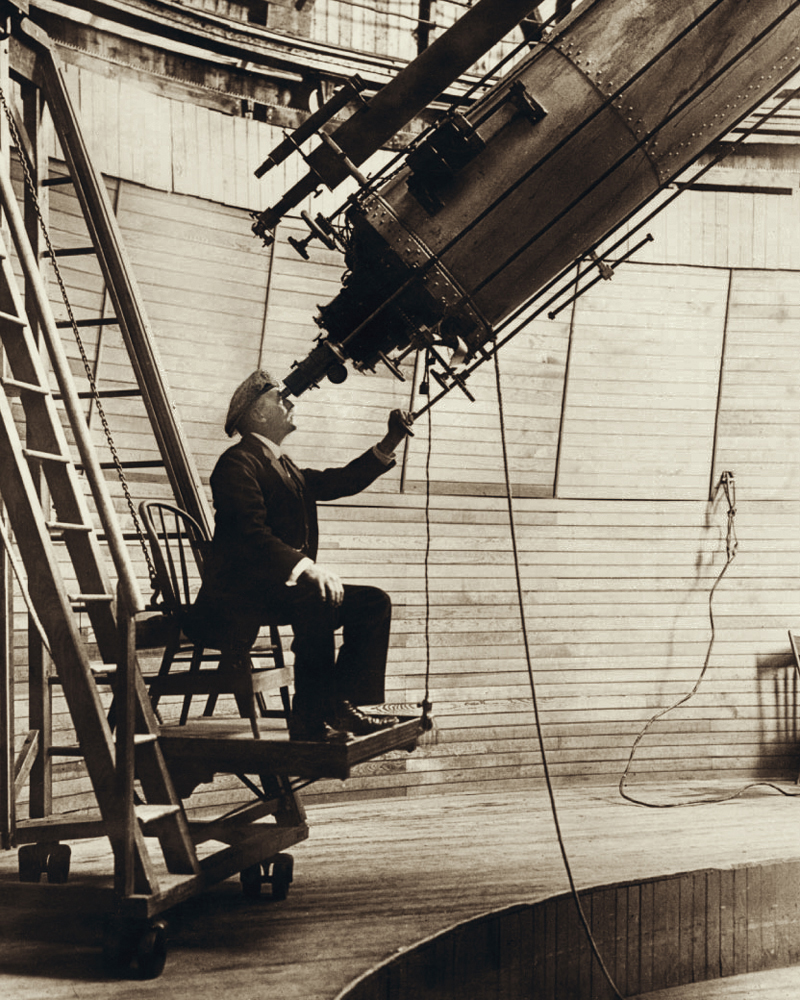
Following the discovery of the planet Neptune in 1846, there was considerable speculation that another planet might exist beyond its orbit. The search began in the mid-19th century and continued at the start of the 20th with Percival Lowell's quest for Planet X. Lowell proposed the Planet X hypothesis to explain apparent discrepancies in the orbits of the giant planets, particularly Uranus and Neptune, speculating that the gravity of a large unseen ninth planet could have perturbed Uranus enough to account for the irregularities.
Clyde Tombaugh's discovery of Pluto in 1930 appeared to validate Lowell's hypothesis, and Pluto was officially named the ninth planet. In 1978, Pluto was conclusively determined to be too small for its gravity to affect the giant planets, resulting in a brief search for a tenth planet. The search was largely abandoned in the early 1990s, when a study of measurements made by the Voyager 2 spacecraft found that the irregularities observed in Uranus's orbit were due to a slight overestimation of Neptune's mass. After 1992, the discovery of numerous small icy objects with similar or even wider orbits than Pluto led to a debate over whether Pluto should remain a planet, or whether it and its neighbours should, like the asteroids, be given their own separate classification. Although a number of the larger members of this group were initially described as planets, in 2006 the International Astronomical Union (IAU) reclassified Pluto and its largest neighbours as dwarf planets, leaving Neptune the farthest known planet in the Solar System.
While the astronomical community widely agrees that Planet X, as originally envisioned, does not exist, the concept of an as-yet-unobserved planet has been revived by a number of astronomers to explain other anomalies observed in the outer Solar System. As of March 2014, observations with the WISE telescope have ruled out the possibility of a Saturn-sized object (95 Earth masses) out to 10,000 AU, and a Jupiter-sized (≈318 Earth masses) or larger object out to 26,000 AU.
In 2014, based on similarities of the orbits of a group of recently discovered extreme trans-Neptunian objects, astronomers hypothesized the existence of a super-Earth or ice giant planet, 2 to 15 times the mass of the Earth and beyond 200 AU with possibly a highly inclined orbit at some 1,500 AU. In 2016, further work showed this unknown distant planet is likely to be on an inclined, eccentric orbit that goes no closer than about 200 AU and no farther than about 1,200 AU from the Sun. The orbit is predicted to be anti-aligned to the clustered extreme trans-Neptunian objects. Because Pluto is no longer considered a planet by the IAU, this new hypothetical object has become known as Planet Nine.
In the 1840s, the French mathematician Urbain Le Verrier used Newtonian mechanics to analyse perturbations in the orbit of Uranus, and hypothesised that they were caused by the gravitational pull of a yet-undiscovered planet. Le Verrier predicted the position of this new planet and sent his calculations to German astronomer Johann Gottfried Galle. On 23 September 1846, the night following his receipt of the letter, Galle and his student Heinrich d'Arrest discovered Neptune, exactly where Le Verrier had predicted. There remained some slight discrepancies in the giant planets' orbits. These were taken to indicate the existence of yet another planet orbiting beyond Neptune.
Even before Neptune's discovery, some speculated that one planet alone was not enough to explain the discrepancy. On 17 November 1834, the British amateur astronomer the Reverend Thomas John Hussey reported a conversation he had had with French astronomer Alexis Bouvard to George Biddell Airy, the British Astronomer Royal. Hussey reported that when he suggested to Bouvard that the unusual motion of Uranus might be due to the gravitational influence of an undiscovered planet, Bouvard replied that the idea had occurred to him, and that he had corresponded with Peter Andreas Hansen, director of the Seeberg Observatory in Gotha, about the subject. Hansen's opinion was that a single body could not adequately explain the motion of Uranus, and postulated that two planets lay beyond Uranus.
In 1848, Jacques Babinet raised an objection to Le Verrier's calculations, claiming that Neptune's observed mass was smaller and its orbit larger than Le Verrier had initially predicted. He postulated, based largely on simple subtraction from Le Verrier's calculations, that another planet of roughly 12 Earth masses, which he named "Hyperion", must exist beyond Neptune. Le Verrier denounced Babinet's hypothesis, saying, "[There is] absolutely nothing by which one could determine the position of another planet, barring hypotheses in which imagination played too large a part."
In 1850 James Ferguson, Assistant Astronomer at the United States Naval Observatory, noted that he had "lost" a star he had observed, GR1719k, which Lt. Matthew Maury, the superintendent of the Observatory, claimed was evidence that it must be a new planet. Subsequent searches failed to recover the "planet" in a different position, and in 1878, CHF Peters, director of the Hamilton College Observatory in New York, showed that the star had not in fact vanished, and that the previous results had been due to human error.
Hub AI
Planets beyond Neptune AI simulator
(@Planets beyond Neptune_simulator)
Planets beyond Neptune
Following the discovery of the planet Neptune in 1846, there was considerable speculation that another planet might exist beyond its orbit. The search began in the mid-19th century and continued at the start of the 20th with Percival Lowell's quest for Planet X. Lowell proposed the Planet X hypothesis to explain apparent discrepancies in the orbits of the giant planets, particularly Uranus and Neptune, speculating that the gravity of a large unseen ninth planet could have perturbed Uranus enough to account for the irregularities.
Clyde Tombaugh's discovery of Pluto in 1930 appeared to validate Lowell's hypothesis, and Pluto was officially named the ninth planet. In 1978, Pluto was conclusively determined to be too small for its gravity to affect the giant planets, resulting in a brief search for a tenth planet. The search was largely abandoned in the early 1990s, when a study of measurements made by the Voyager 2 spacecraft found that the irregularities observed in Uranus's orbit were due to a slight overestimation of Neptune's mass. After 1992, the discovery of numerous small icy objects with similar or even wider orbits than Pluto led to a debate over whether Pluto should remain a planet, or whether it and its neighbours should, like the asteroids, be given their own separate classification. Although a number of the larger members of this group were initially described as planets, in 2006 the International Astronomical Union (IAU) reclassified Pluto and its largest neighbours as dwarf planets, leaving Neptune the farthest known planet in the Solar System.
While the astronomical community widely agrees that Planet X, as originally envisioned, does not exist, the concept of an as-yet-unobserved planet has been revived by a number of astronomers to explain other anomalies observed in the outer Solar System. As of March 2014, observations with the WISE telescope have ruled out the possibility of a Saturn-sized object (95 Earth masses) out to 10,000 AU, and a Jupiter-sized (≈318 Earth masses) or larger object out to 26,000 AU.
In 2014, based on similarities of the orbits of a group of recently discovered extreme trans-Neptunian objects, astronomers hypothesized the existence of a super-Earth or ice giant planet, 2 to 15 times the mass of the Earth and beyond 200 AU with possibly a highly inclined orbit at some 1,500 AU. In 2016, further work showed this unknown distant planet is likely to be on an inclined, eccentric orbit that goes no closer than about 200 AU and no farther than about 1,200 AU from the Sun. The orbit is predicted to be anti-aligned to the clustered extreme trans-Neptunian objects. Because Pluto is no longer considered a planet by the IAU, this new hypothetical object has become known as Planet Nine.
In the 1840s, the French mathematician Urbain Le Verrier used Newtonian mechanics to analyse perturbations in the orbit of Uranus, and hypothesised that they were caused by the gravitational pull of a yet-undiscovered planet. Le Verrier predicted the position of this new planet and sent his calculations to German astronomer Johann Gottfried Galle. On 23 September 1846, the night following his receipt of the letter, Galle and his student Heinrich d'Arrest discovered Neptune, exactly where Le Verrier had predicted. There remained some slight discrepancies in the giant planets' orbits. These were taken to indicate the existence of yet another planet orbiting beyond Neptune.
Even before Neptune's discovery, some speculated that one planet alone was not enough to explain the discrepancy. On 17 November 1834, the British amateur astronomer the Reverend Thomas John Hussey reported a conversation he had had with French astronomer Alexis Bouvard to George Biddell Airy, the British Astronomer Royal. Hussey reported that when he suggested to Bouvard that the unusual motion of Uranus might be due to the gravitational influence of an undiscovered planet, Bouvard replied that the idea had occurred to him, and that he had corresponded with Peter Andreas Hansen, director of the Seeberg Observatory in Gotha, about the subject. Hansen's opinion was that a single body could not adequately explain the motion of Uranus, and postulated that two planets lay beyond Uranus.
In 1848, Jacques Babinet raised an objection to Le Verrier's calculations, claiming that Neptune's observed mass was smaller and its orbit larger than Le Verrier had initially predicted. He postulated, based largely on simple subtraction from Le Verrier's calculations, that another planet of roughly 12 Earth masses, which he named "Hyperion", must exist beyond Neptune. Le Verrier denounced Babinet's hypothesis, saying, "[There is] absolutely nothing by which one could determine the position of another planet, barring hypotheses in which imagination played too large a part."
In 1850 James Ferguson, Assistant Astronomer at the United States Naval Observatory, noted that he had "lost" a star he had observed, GR1719k, which Lt. Matthew Maury, the superintendent of the Observatory, claimed was evidence that it must be a new planet. Subsequent searches failed to recover the "planet" in a different position, and in 1878, CHF Peters, director of the Hamilton College Observatory in New York, showed that the star had not in fact vanished, and that the previous results had been due to human error.