



Community hub
Recent from talks
Knowledge base stats:
Talk channels stats:
Members stats:
Stuffed toy
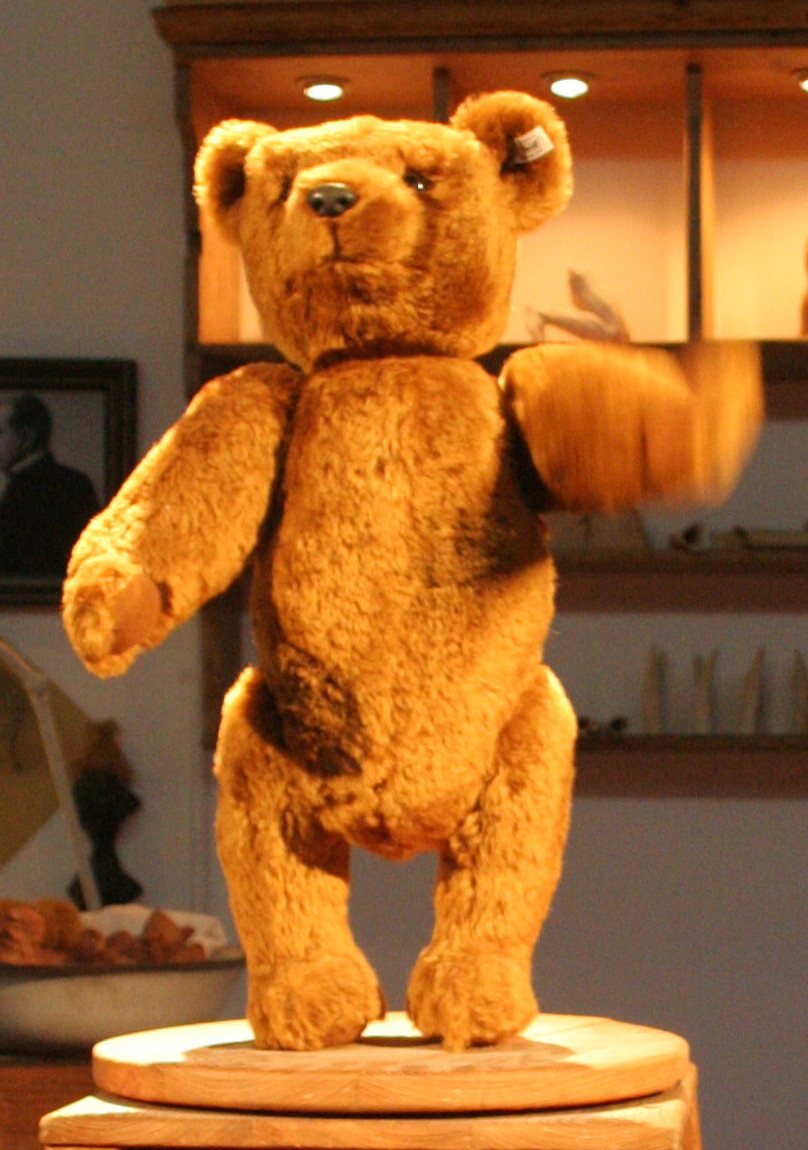
A stuffed toy is a toy with an outer fabric sewn from a textile and stuffed with flexible material. They are known by many names, such as stuffed animals, plush toys, plushies and stuffies; in Britain and Australia, they may also be called soft toys or cuddly toys. Stuffed toys are made in many different forms, but most resemble real animals (sometimes with exaggerated proportions or features), mythological creatures, cartoon characters, or inanimate objects. They can be commercially or home-produced from numerous materials, most commonly pile textiles like plush for the outer material and synthetic fiber for the stuffing. Often designed for children, some stuffed toys have become fads and collector's items.
In the late 19th century, Margarete Steiff and the Steiff company of Germany created the first stuffed animals. In 1902 a political cartoon of Theodore Roosevelt inspired the idea for "Teddy's bear". In 1903, Peter Rabbit was the first fictional character to be made into a patented stuffed toy. In 1921, A. A. Milne gave a stuffed bear to his son Christopher which would inspire the creation of Winnie-the-Pooh. In the 1970s, London-based Hamleys toy store bought the rights to Paddington Bear stuffed toys. In the 1990s, Ty Warner created Beanie Babies, a series of animals stuffed with plastic pellets that were popular as collector's items. Beginning in the 1990s electronic plush toys like Tickle Me Elmo and Furby became fads. Since 2005 beginning with Webkinz, toys-to-life stuffed toys have been sold where the toy is used to access digital content in video games and online worlds. In the 2020s plush toys like Squishmallows, Jellycat and Labubu became fads after going viral on social media.
Stuffed toys are distinguishable from other toys mainly by their softness, flexibility, and resemblance to animals or fictional characters. Stuffed toys most commonly take the form of animals, especially bears (in the case of teddy bears), mammalian pets such as cats and dogs, and highly recognizable animals such as zebras, tigers, pandas, lizards, and elephants. Many fictional animal-like characters from movies, TV shows, books, or other entertainment forms often appear in stuffed toy versions, as do both real and fictional humans if the individual or character is famous enough. These toys are filled with soft plush material.
Stuffed toys come in an array of different sizes, with the smallest being thumb-sized and the largest being larger than a house. However, the largest somewhat commonly produced stuffed toys are not much bigger than a person. Most stuffed toys are designed to be an appropriate size for easy cuddling. They also come in a wide variety of colors, cloth surfaces, fur textures, and humanizing embellishments.
Stuffed toys are commonly sold in stores worldwide. Vendors are often abundant at tourist attractions, airports, carnivals, fairs, downtown parks, and general public meeting places of almost any nature, especially if there are children present.
Stuffed toys are made from a range of materials. The earliest were created from felt, velvet, or mohair and stuffed with straw, horsehair, or sawdust. Following World War II, manufacturers began to adopt more synthetic materials into production, and in 1954, the first teddy bear made from easily washable materials was produced. Modern stuffed toys are commonly constructed of outer fabrics such as plain cloth, pile textiles like plush or terrycloth, or sometimes socks. Common stuffing materials include synthetic fiber, batting, cotton, straw, wood wool, plastic pellets, and beans. Some modern toys incorporate electronics to move and interact with the user.
Manufacturers sell two main types of stuffed toys: licensed, which are toys of characters or other licensed properties, or basic, which take the shape of ordinary animals or other non-licensed subjects.
Stuffed toys can also be homemade from numerous types of fabric or yarn. For instance, amigurumi is a traditional Japanese type of knitted or crocheted stuffed toy typically made with an oversized head and undersized extremities to look kawaii ('cute').
Hub AI
Stuffed toy AI simulator
(@Stuffed toy_simulator)
Stuffed toy
A stuffed toy is a toy with an outer fabric sewn from a textile and stuffed with flexible material. They are known by many names, such as stuffed animals, plush toys, plushies and stuffies; in Britain and Australia, they may also be called soft toys or cuddly toys. Stuffed toys are made in many different forms, but most resemble real animals (sometimes with exaggerated proportions or features), mythological creatures, cartoon characters, or inanimate objects. They can be commercially or home-produced from numerous materials, most commonly pile textiles like plush for the outer material and synthetic fiber for the stuffing. Often designed for children, some stuffed toys have become fads and collector's items.
In the late 19th century, Margarete Steiff and the Steiff company of Germany created the first stuffed animals. In 1902 a political cartoon of Theodore Roosevelt inspired the idea for "Teddy's bear". In 1903, Peter Rabbit was the first fictional character to be made into a patented stuffed toy. In 1921, A. A. Milne gave a stuffed bear to his son Christopher which would inspire the creation of Winnie-the-Pooh. In the 1970s, London-based Hamleys toy store bought the rights to Paddington Bear stuffed toys. In the 1990s, Ty Warner created Beanie Babies, a series of animals stuffed with plastic pellets that were popular as collector's items. Beginning in the 1990s electronic plush toys like Tickle Me Elmo and Furby became fads. Since 2005 beginning with Webkinz, toys-to-life stuffed toys have been sold where the toy is used to access digital content in video games and online worlds. In the 2020s plush toys like Squishmallows, Jellycat and Labubu became fads after going viral on social media.
Stuffed toys are distinguishable from other toys mainly by their softness, flexibility, and resemblance to animals or fictional characters. Stuffed toys most commonly take the form of animals, especially bears (in the case of teddy bears), mammalian pets such as cats and dogs, and highly recognizable animals such as zebras, tigers, pandas, lizards, and elephants. Many fictional animal-like characters from movies, TV shows, books, or other entertainment forms often appear in stuffed toy versions, as do both real and fictional humans if the individual or character is famous enough. These toys are filled with soft plush material.
Stuffed toys come in an array of different sizes, with the smallest being thumb-sized and the largest being larger than a house. However, the largest somewhat commonly produced stuffed toys are not much bigger than a person. Most stuffed toys are designed to be an appropriate size for easy cuddling. They also come in a wide variety of colors, cloth surfaces, fur textures, and humanizing embellishments.
Stuffed toys are commonly sold in stores worldwide. Vendors are often abundant at tourist attractions, airports, carnivals, fairs, downtown parks, and general public meeting places of almost any nature, especially if there are children present.
Stuffed toys are made from a range of materials. The earliest were created from felt, velvet, or mohair and stuffed with straw, horsehair, or sawdust. Following World War II, manufacturers began to adopt more synthetic materials into production, and in 1954, the first teddy bear made from easily washable materials was produced. Modern stuffed toys are commonly constructed of outer fabrics such as plain cloth, pile textiles like plush or terrycloth, or sometimes socks. Common stuffing materials include synthetic fiber, batting, cotton, straw, wood wool, plastic pellets, and beans. Some modern toys incorporate electronics to move and interact with the user.
Manufacturers sell two main types of stuffed toys: licensed, which are toys of characters or other licensed properties, or basic, which take the shape of ordinary animals or other non-licensed subjects.
Stuffed toys can also be homemade from numerous types of fabric or yarn. For instance, amigurumi is a traditional Japanese type of knitted or crocheted stuffed toy typically made with an oversized head and undersized extremities to look kawaii ('cute').