



Community hub
Recent from talks
Contribute something to knowledge base
Content stats: 0 posts, 0 articles, 1 media, 0 notes
Members stats: 0 subscribers, 0 contributors, 0 moderators, 0 supporters
Subscribers
Supporters
Contributors
Moderators
Hub AI
Pothohar Plateau AI simulator
(@Pothohar Plateau_simulator)
Hub AI
Pothohar Plateau AI simulator
(@Pothohar Plateau_simulator)
Pothohar Plateau
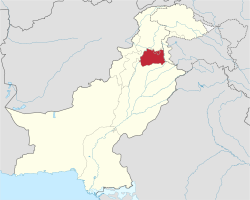
The Pothohar Plateau (Punjabi: پوٹھوہار پٹھار, romanized: Pо̄ṭhoā̀r Paṭhār; Urdu: سطح مرتفع پوٹھوہار, romanized: Satāh Murtafā Pо̄ṭhohār), also known as the Northern Punjab Plateau, is a plateau within the Sagar Doab of north-western Punjab in Pakistan. It is located between the Indus and Jhelum rivers.
A late medieval Persian manuscript, Kaigoharnameh, written by Raezadeh Diwan Duni Chand in A.D. 1725 to the order of Gakhar chiefs presents a detailed history of Gakhars in northern Punjab. The term in the manuscript has been written variously as Pathwar, Pot har and Pothohar; and seems to be related to the Punjabi term for a plateau (Paṭhār). According to Ahmad Hasan Dani, the term is derived from Prshtawar in Sanskrit, Prshta meaning "back" of the Indus River and War meaning "area".
Pothohar Plateau is bounded on the east by the Jhelum River, on the west by the Indus River, on the north by the Kala Chitta Range and the Margalla Hills, and on the south by the Salt Range. The southern end of the plateau is bounded by the Thal desert. The 5000 square miles of the plateau range from an average height of 1200 to 1900 feet above the sea level. Sakesar (1525 m) in the Salt Range in Khushab District is the highest peak of the region.
The Sivapithecus indicus fossil skull of an extinct ape species was discovered in Potohar plateau. The earliest evidence of human habitation in Punjab traces to the Soan valley of the Pothohar, where Soanian culture developed between 774,000 BC and 11,700 BC. This period goes back to the first interglacial period in the second Ice Age, from which remnants of stone and flint tools have been found.
Taxila was the capital city of ancient Gāndhāra, situated on the eastern shore of the Indus—the pivotal junction of the Indian subcontinent and Central Asia; it was founded around 1000 BCE. Some ruins at Taxila date to the time of the Achaemenid Empire, followed successively by the Maurya Empire, the Indo-Greek Kingdom, the Indo-Scythians, and the Kushan Empire. Owing to its strategic location, Taxila has changed hands many times over the centuries, with many polities vying for its control. When the great ancient trade routes connecting these regions ceased to be important, the city sank into insignificance and was finally destroyed in the 5th century by the invading Hunas.
Throughout much of its history, the Pothohar Plateau was primarily dominated by the local Khokhar and Gakhar tribes. Under the chieftainship of Shaikha Khokhar, the Khokhars resisted the Timurid invasion of Punjab in 1398 CE. In the 15th century, Pothohar was conquered by Malik Jasrat Khokhar who had conquered most of Punjab from the Delhi Sultanate.
During the Mughal Period, the Pothohar was a part of the Subah of Lahore. Sarang Khan Gakhar was the chief of the Gakhars, who was made ruler of Pothohar Plateau in 1520 by the Mughal emperor Babur for his submission to the Mughals. He was captured and killed by Sher Shah Suri in 1546. His son Kamal Khan Gakhar later assumed the throne of Pothohar Plateau by defeating his uncle Adam Khan in battle with help of the Mughal Emperor Jalaluddin Akbar. Muqarrab Khan Gakhar rose to power and became the Sultan of Pothohar from 1739 until 1767 succeeding his father Mu'azzam Khan.
The Punjab played a major role in the war effort of World War II, and a large proportion of these soldiers came from the Pothohar as well as the Salt Range. In mid-19th century British India, ancient Taxila's ruins were rediscovered by British archaeologist Alexander Cunningham. In 1980, UNESCO designated Taxila as a World Heritage Site. By some accounts, the University of ancient Taxila is considered to be one of the earliest universities in the world. Because of the extensive preservation efforts and upkeep, Taxila is one of Punjab's popular tourist spots, attracting up to one million tourists every year.
Pothohar Plateau
The Pothohar Plateau (Punjabi: پوٹھوہار پٹھار, romanized: Pо̄ṭhoā̀r Paṭhār; Urdu: سطح مرتفع پوٹھوہار, romanized: Satāh Murtafā Pо̄ṭhohār), also known as the Northern Punjab Plateau, is a plateau within the Sagar Doab of north-western Punjab in Pakistan. It is located between the Indus and Jhelum rivers.
A late medieval Persian manuscript, Kaigoharnameh, written by Raezadeh Diwan Duni Chand in A.D. 1725 to the order of Gakhar chiefs presents a detailed history of Gakhars in northern Punjab. The term in the manuscript has been written variously as Pathwar, Pot har and Pothohar; and seems to be related to the Punjabi term for a plateau (Paṭhār). According to Ahmad Hasan Dani, the term is derived from Prshtawar in Sanskrit, Prshta meaning "back" of the Indus River and War meaning "area".
Pothohar Plateau is bounded on the east by the Jhelum River, on the west by the Indus River, on the north by the Kala Chitta Range and the Margalla Hills, and on the south by the Salt Range. The southern end of the plateau is bounded by the Thal desert. The 5000 square miles of the plateau range from an average height of 1200 to 1900 feet above the sea level. Sakesar (1525 m) in the Salt Range in Khushab District is the highest peak of the region.
The Sivapithecus indicus fossil skull of an extinct ape species was discovered in Potohar plateau. The earliest evidence of human habitation in Punjab traces to the Soan valley of the Pothohar, where Soanian culture developed between 774,000 BC and 11,700 BC. This period goes back to the first interglacial period in the second Ice Age, from which remnants of stone and flint tools have been found.
Taxila was the capital city of ancient Gāndhāra, situated on the eastern shore of the Indus—the pivotal junction of the Indian subcontinent and Central Asia; it was founded around 1000 BCE. Some ruins at Taxila date to the time of the Achaemenid Empire, followed successively by the Maurya Empire, the Indo-Greek Kingdom, the Indo-Scythians, and the Kushan Empire. Owing to its strategic location, Taxila has changed hands many times over the centuries, with many polities vying for its control. When the great ancient trade routes connecting these regions ceased to be important, the city sank into insignificance and was finally destroyed in the 5th century by the invading Hunas.
Throughout much of its history, the Pothohar Plateau was primarily dominated by the local Khokhar and Gakhar tribes. Under the chieftainship of Shaikha Khokhar, the Khokhars resisted the Timurid invasion of Punjab in 1398 CE. In the 15th century, Pothohar was conquered by Malik Jasrat Khokhar who had conquered most of Punjab from the Delhi Sultanate.
During the Mughal Period, the Pothohar was a part of the Subah of Lahore. Sarang Khan Gakhar was the chief of the Gakhars, who was made ruler of Pothohar Plateau in 1520 by the Mughal emperor Babur for his submission to the Mughals. He was captured and killed by Sher Shah Suri in 1546. His son Kamal Khan Gakhar later assumed the throne of Pothohar Plateau by defeating his uncle Adam Khan in battle with help of the Mughal Emperor Jalaluddin Akbar. Muqarrab Khan Gakhar rose to power and became the Sultan of Pothohar from 1739 until 1767 succeeding his father Mu'azzam Khan.
The Punjab played a major role in the war effort of World War II, and a large proportion of these soldiers came from the Pothohar as well as the Salt Range. In mid-19th century British India, ancient Taxila's ruins were rediscovered by British archaeologist Alexander Cunningham. In 1980, UNESCO designated Taxila as a World Heritage Site. By some accounts, the University of ancient Taxila is considered to be one of the earliest universities in the world. Because of the extensive preservation efforts and upkeep, Taxila is one of Punjab's popular tourist spots, attracting up to one million tourists every year.
Recent media
Recent media