Hubbry Logo
MotorboatMotorboatMain
Open search
Motorboat
Community hub
Motorboat
logo
8 pages, 0 posts
0 subscribers
Be the first to start a discussion here.
Motorboat
Motorboat
from Wikipedia
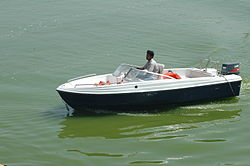
A motorboat with an outboard motor

A motorboat, powerboat, or speedboat is a boat that is exclusively powered by an engine; faster examples may be called "speedboats".

Some motorboats are fitted with inboard engines, others have an outboard motor installed on the rear, containing the internal combustion engine, the gearbox and the propeller in one portable unit. An inboard-outboard contains a hybrid of an inboard and an outboard, where the internal combustion engine is installed inside the boat, and the gearbox and propeller are outside.

There are two configurations of an inboard, V-drive and direct drive. A direct drive has the powerplant mounted near the middle of the boat with the propeller shaft straight out the back, where a V-drive has the powerplant mounted in the back of the boat facing backwards having the shaft go towards the front of the boat then making a V towards the rear.

Lazzara 80 Sky Lounge enclosed bridge

Overview

[edit]

A motorboat is a small craft with one or more engines for propulsion. Motorboats are commonly used for work, recreation, sport, or racing.

Boat engines vary in shape, size, and type. These include inboard, outboard (integrating, the engine, gearbox, and propeller in one portable unit mounted in the rear), and inboard-outboard (or “sterndrive”, which mounts the engine inboard and the rest outboard).

Fuel types include gasoline, diesel, gas turbine, rotary combustion or steam.

High performance speedboats can reach speeds of over 50 knots.[1] Their high speed and performance can be attributed to their hull technology and engine. With a more powerful and heavier engine, an appropriate hull shape is needed.[2] High performance boats include yachts, HSIC (high speed interceptor craft) and racing powerboats.

A V-type hull helps a boat cut through the water. A deep V-hull helps keep the boat's bow down at low speeds, improving visibility. V-hulls also improve a boat's speed and maneuvering capabilities. They stabilize a boat in rough conditions.

History

[edit]

Invention

[edit]
Model of the first motor boat constructed by Gottlieb Daimler and Wilhelm Maybach in 1886
A motorboat on patrol in Southwick, West Sussex during World War I

Although the screw propeller had been added to an engine (steam engine) as early as the 18th century in Birmingham, England, by James Watt, boats powered by a petrol engine only came about in the later part of the 19th century with the invention of the internal combustion engine.

The earliest boat to be powered by a petrol engine was tested on the Neckar River by Gottlieb Daimler and Wilhelm Maybach in 1886, when they tested their new "longcase clock" engine. It had been constructed in the former greenhouse (converted into a workshop) in Daimler's back yard.[3][4] The first public display took place on the Waldsee in Cannstatt, today a suburb of Stuttgart, at the end of that year.[5] The engine of this boat had a single cylinder of 1 horse power. Daimler's second launch in 1887 had a second cylinder positioned at an angle of 15 degrees to the first one, and was known as the "V-type".

The first successful motor boat was designed by the Priestman Brothers in Hull, England, under the direction of William Dent Priestman. The company began trials of their first motorboat in 1888.[6] The engine was powered with kerosene and used an innovative high-tension (high voltage) ignition system. The company was the first to begin large scale production of the motor boat, and by 1890, Priestman's boats were successfully being used for towing goods along canals.[7]

Another early pioneer was Mr. J. D. Roots, who in 1891 fitted a launch with an internal combustion engine and operated a ferry service between Richmond and Wandsworth along the River Thames during the seasons of 1891 and 1892. [8]

The eminent inventor Frederick William Lanchester recognized the potential of the motorboat and over the following 15 years, in collaboration with his brother George, perfected the modern motorboat, or powerboat. Working in the garden of their home in Olton, Warwickshire, they designed and built a river flat-bottomed launch with an advanced high-revving engine that drove via a stern paddle wheel in 1893. In 1897, he produced a second engine similar in design to his previous one but running on benzene at 800 r.p.m. The engine drove a reversible propeller. An important part of his new engine was the revolutionary carburettor, for mixing the fuel and air correctly. His invention was known as a "wick carburetor", because fuel was drawn into a series of wicks, from where it was vaporized. He patented this invention in 1905.[8]

The Daimler Company began production of motor boats in 1897 from its manufacturing base in Coventry. The engines had two cylinders and the explosive charge of petroleum and air was ignited by compression into a heated platinum tube. The engine gave about six horse-power. The petrol was fed by air pressure to a large surface carburettor and also an auxiliary tank which supplied the burners for heating the ignition tubes. Reversal of the propeller was effected by means of two bevel friction wheels which engaged with two larger bevel friction wheels, the intermediate shaft being temporarily disconnected for this purpose. It was not until 1901 that a safer apparatus for igniting the fuel with an electric spark was used in motor boats.[8]

Expansion

[edit]
Dorothy Levitt won the first Harmsworth Cup, driving the Napier motor yacht in 1903.

Interest in fast motorboats grew rapidly in the early years of the 20th century. The Marine Motor Association was formed in 1903 as an offshoot of the Royal Automobile Club. Motor Boat & Yachting was the first magazine to address technical developments in the field and was brought out by Temple Press, London from 1904. Large manufacturing companies, including Napier & Son and Thornycroft began producing motorboats.[7]

Early racing

[edit]

The first motorboating competition was established by Alfred Charles William Harmsworth in 1903. The Harmsworth Cup was envisioned as a contest between nations, rather than between boats or individuals. The boats were originally to be designed and built entirely by residents of the country represented, using materials and units built wholly within that country.[9]

The first competition, held in July 1903, at Cork Harbour in Ireland, and officiated by the Automobile Club of Great Britain and Ireland and the Royal Victoria Yacht Club, was a very primitive affair, with many boats failing even to start.[9] The competition was won by Dorothy Levitt in a Napier launch designed to the specifications of Selwyn Edge. This motorboat was the first proper motorboat designed for high speed.[6] She set the world's first water speed record when she achieved 19.3 mph (31.1 km/h) in a 40-foot (12 m) steel-hulled, 75-horsepower Napier speedboat fitted with a three-blade propeller. As both the owner and entrant of the boat, "S. F. Edge" was engraved on the trophy as the winner.[10]

John Hacker's 1911 Kitty Hawk was the fastest boat in the world between 1911 and 1915.

An article in the Cork Constitution on 13 July reported "A large number of spectators viewed the first mile from the promenade of the Yacht Club, and at Cork several thousand people collected at both sides of the river to see the finishes."[11][12][13] Levitt was then commanded to the Royal yacht of King Edward VII where he congratulated her on her pluck and skill, and they discussed the performance of the motorboat and its potential for British government despatch work.[14][15]

France won the race in 1904, and the boat Napier II set a new world water speed record for a mile at almost 30 knots (56 km/h), winning the race in 1905.

The acknowledged genius of motor boat design in America was the naval architect John L. Hacker. His pioneering work, including the invention of the V-hull and the use of dedicated petrol engines revolutionized boat design from as early as 1908, when he founded the Hacker Boat Co. In 1911, Hacker designed the Kitty Hawk, the first successful step hydroplane which exceeded the then-unthinkable speed of 50 mph (80 km/h) and was at that time the fastest boat in the world. The Harmsworth Cup was first won by Americans in 1907.[9] The US and England traded it back and forth until 1920. From 1920 to 1933, Americans had an unbroken winning streak. Gar Wood won this race eight times as a driver and nine times as an owner between 1920 and 1933.

Hull type

[edit]

From a design point of view, a boat’s hull type reflects its use and the waters it will be used it. These include displacement hulls, vee-bottom hulls, modified vee-bottom hulls, deep-vee hulls and trim tabs for vee-bottom hulls. The three main hull materials are wood, reinforced fiberglass and metal. Wood hulls may be made of planks or plywood. Fiberglass hulls are reinforced with balsa wood. Metal hulls are either aluminum or steel.[16] Some gross configurations of motorboats include skiff, day cruiser, bow rider, pilothouse and cabin cruiser. These vary by such considerations as size, whether they have a deck, cabin, head, is sail, helm position, and additional seating.[17]

[edit]

See also

[edit]

References

[edit]
Revisions and contributorsEdit on WikipediaRead on Wikipedia
from Grokipedia
A motorboat, also known as a powerboat, is a vessel propelled by machinery, such as an internal combustion engine, electric motor, or other mechanical means, distinguishing it from sailboats or human-powered craft. These boats vary widely in size, from small personal watercraft under 10 feet to large yachts exceeding 100 feet, and are constructed from materials like fiberglass, aluminum, or wood. Motorboats serve diverse purposes, including recreational cruising, fishing, watersports like skiing and wakeboarding, commercial transport, and competitive racing. The origins of the motorboat trace back to the late 19th century, with the first practical example developed in 1886 by German engineer Gottlieb Daimler, who fitted a gasoline-powered internal combustion engine into a small boat called the "Neckar" for testing on the Neckar River near Cannstatt, Germany. This innovation built on earlier steam-powered vessels but marked the shift to more efficient, compact propulsion systems that enabled faster and more accessible boating. By 1888, the Priestman brothers in England had built one of the first commercially successful motorboats using a similar oil engine design, further advancing the technology for practical use. The early 20th century saw rapid evolution, with American designer John Hacker founding Hacker-Craft in 1908 and popularizing sleek wooden runabouts among affluent leisure seekers on inland waters. Common types of motorboats include bowriders for family outings, center consoles for offshore fishing, cabin cruisers for overnight trips, and high-performance speedboats for racing, each optimized for specific hull designs like planing or displacement to suit speed, stability, and load capacity. Propulsion systems typically feature outboard motors for smaller vessels, inboard engines for larger ones, or pod drives for enhanced maneuverability, with modern advancements incorporating hybrid or fully electric options to reduce emissions and noise. Today, motorboating remains a global pastime, governed by safety regulations from bodies like the U.S. Coast Guard, emphasizing life jackets, navigation rules, and environmental stewardship to mitigate impacts such as fuel pollution and wildlife disturbance.

Introduction

Definition and Characteristics

A motorboat is a watercraft designed for propulsion primarily by mechanical power from an engine, distinguishing it from vessels reliant on wind, human effort, or other non-engine sources. This includes boats equipped with internal combustion, electric, or other machinery-driven systems. These boats typically range from small recreational craft under 5 meters (16 feet) to larger powerboats exceeding 20 meters (65 feet), suitable for various water environments such as inland lakes, rivers, coastal waters, and open oceans. Key characteristics of motorboats encompass their structural and performance attributes, including hull configurations that influence stability and speed. Displacement hulls, which push through the water at lower speeds for efficient fuel use and load-carrying capacity, contrast with planing hulls that lift onto the surface at higher velocities to reduce drag and enable faster travel. Typical sizes vary widely: small dinghies and runabouts measure under 5 meters (16 feet) in length, while luxury yachts and cruisers can exceed 20 meters (65 feet), classified by regulatory standards into categories like Class A (less than 5 meters), Class 1 (5-8 meters), Class 2 (8-12 meters), and Class 3 (12-20 meters). Essential components integrate the hull for buoyancy and hydrodynamic efficiency, the deck for passenger space and safety, and the propulsion system seamlessly connected to the engine for power delivery. In operation, a motorboat's engine generates rotational power that drives a propeller or water jet to produce thrust, overcoming hydrodynamic resistance from the water to propel the vessel forward. This mechanized propulsion allows independent control of speed and direction, without dependence on external forces like wind for sailboats or manual paddling for rowboats. Propellers create forward momentum by accelerating water rearward, while jet systems draw and expel water for thrust in shallow or agile applications.

Modern Uses and Significance

Motorboats serve a prominent role in recreational activities, enabling leisure pursuits such as fishing, waterskiing, and scenic touring along coastlines and inland waterways. In the United States, fishing stands out as the leading activity for recreational boaters, with waterskiing and cruising also drawing significant participation among the approximately 11.8 million registered recreational vessels in 2024. These vessels facilitate tourism by allowing visitors to explore remote islands and coastal areas, contributing to the growing appeal of marine tourism experiences. Personal ownership remains high, reflecting motorboats' integration into everyday leisure, with over 47 million Americans engaging in motorized boating in 2021. Increasingly, electric and hybrid motorboats are gaining popularity for their lower emissions and quieter operation, with the global electric boat market valued at USD 6.78 billion in 2024 and projected to reach USD 14.09 billion by 2030. In commercial contexts, motorboats support essential operations including logistics transport, coast guard patrols, and offshore industry assistance. Smaller motorboats and support vessels transport cargo, fuel, and personnel to oil rigs and production platforms, ensuring efficient supply chains in remote maritime environments. Coast guard forces rely on high-speed motor patrol boats for maritime security, interdiction, and rapid response to emergencies along coastlines and harbors. These applications underscore motorboats' versatility in professional maritime logistics, where they handle diverse tasks from personnel transfers to equipment delivery in challenging offshore conditions. The cultural and economic significance of motorboats extends to shaping lifestyles and driving industry growth worldwide. They embody freedom and relaxation, fostering social bonds through family outings and adventure sports like waterskiing, which enhance community and wellness in boating culture. Economically, the global recreational boating market, dominated by motorboats, reached $37.7 billion in 2024, supporting extensive manufacturing, marina operations, and related services. In the U.S. alone, the sector generates $230 billion in annual economic impact and sustains 812,000 jobs across boating businesses. Motorboats influence adventure sports and leisure trends, promoting an active, water-oriented lifestyle that blends recreation with economic vitality. Motorboat prevalence varies globally, with North America and Europe holding the largest shares due to extensive waterway networks and established boating traditions. In North America, robust infrastructure and high disposable incomes drive adoption, while Europe benefits from coastal access and tourism. The Asia-Pacific region is experiencing rapid growth, fueled by urbanization, rising incomes, and expanding marinas in countries like China and Australia, broadening motorboat access in emerging markets.

History

Early Invention and Development

The development of the motorboat began in the late 19th century with pioneering experiments in electric and steam propulsion, laying the groundwork for mechanically powered watercraft. French electrical engineer Gustave Trouvé conducted the world's first successful test of a rechargeable battery-powered electric outboard motorboat in May 1881 on the River Seine in Paris, where the 5-meter craft achieved speeds of up to 9 km/h downstream using a small electric motor and lead-acid batteries. This demonstration highlighted the potential for compact, emission-free propulsion but was limited by battery capacity and power output for practical use. Concurrently, British naval architect John Isaac Thornycroft advanced steam technology; in 1877, his company completed HMS Lightning, the Royal Navy's first torpedo boat, a steam-powered launch capable of 17.5 knots, which demonstrated reliable high-speed operation through lightweight boilers and surface condensers. The pivotal shift toward internal combustion engines occurred in 1886 when German engineer Gottlieb Daimler integrated his newly developed high-speed petrol engine into a boat for testing. Commissioned from shipbuilder Friedrich Lürssen, the 5-meter open boat Rems—powered by a single-cylinder 1.5 hp engine—became the world's first motorboat, achieving about 6 knots on the Neckar River near Cannstatt and proving the viability of gasoline propulsion for marine applications. This innovation addressed key limitations of steam systems, such as lengthy startup times and heavy boilers requiring constant water and fuel management, while internal combustion offered quicker response, lighter weight, and simpler operation, though early engines suffered from vibration, unreliable ignition, and fuel volatility. By 1888, Daimler had established a dedicated shipyard in Bad Cannstatt for motorboat production, with the elegantly appointed 10-meter launch Marie—built for German Reich Chancellor Otto von Bismarck and named after his daughter—serving as one of the earliest production models equipped with a 1.5 hp four-stroke petrol engine capable of about 6 knots. These prototypes spurred further adoption of gasoline engines over steam, as the former enabled greater efficiency and speeds; underscoring the rapid progress in hull-engine integration. Key milestones included the 1893 World's Columbian Exposition in Chicago, where electric launches were introduced to U.S. audiences on the fairgrounds' lagoons, marking early adoption of powered boating and prompting local experimentation with imported Daimler engines. This event, combined with patents like Daimler's 1886 marine engine design (DRP 39,367), catalyzed a timeline of innovations that transitioned motorboats from experimental curiosities to feasible vessels by the early 1900s.

Commercial Expansion and Popularization

The commercial expansion of motorboats in the early 20th century was driven by innovations in affordable propulsion systems, notably Henry Ford's adaptation of the Model T engine for marine applications, which made reliable power accessible to a broader market beyond elite users. Ford's mass-production techniques, honed in the automotive industry, extended to marine engines in the 1910s, reducing costs and enabling widespread adoption in small craft for both recreational and utility purposes. Concurrently, the rise of outboard motors revolutionized accessibility; Ole Evinrude patented the first practical outboard in 1907, with production scaling in the 1910s, while the Johnson brothers introduced lightweight, detachable models in the early 1920s, shifting from bulky inboard setups to portable designs that fit small boats. These advancements by Evinrude and Johnson facilitated easier transport and maintenance, spurring market growth as outboards became standard for everyday boating. In the United States, companies like Chris-Craft capitalized on this momentum, expanding production of wooden powerboats in the 1920s to meet rising demand for leisure vessels, establishing themselves as a leading manufacturer with global exports that introduced American-style runabouts to international waters. The Roaring Twenties amplified popularization through economic prosperity, positioning motorboating as a symbol of affluence and weekend escape, with affluent urbanites flocking to lakes and rivers for social outings in stylish mahogany craft. This era's cultural embrace of leisure boating, fueled by post-World War I optimism, saw initial clusters of ownership emerge among the middle class, laying groundwork for broader societal integration. World War II marked a pivotal acceleration, as surplus military engines—particularly outboards and small marine units repurposed from patrol and rescue boats—flooded civilian markets post-1945, drastically lowering entry barriers for hobbyists and fishermen. The introduction of fiberglass hulls in the late 1940s enabled mass production, with manufacturers like Chris-Craft transitioning to this durable, low-maintenance material by 1955, which resisted rot and allowed for quicker assembly lines compared to wood. Ownership surged accordingly; U.S. registered motorboats numbered around 100,000 in the early 1920s but reached approximately 450,000 by 1950, reflecting a boom from wartime technology transfer and pent-up consumer demand. Regionally, Europe advanced luxury yacht segments in the mid-20th century, with builders like those in the Netherlands and Italy incorporating diesel engines and steel hulls for opulent superyachts catering to aristocracy and emerging industrialists during the interwar and post-war periods. In Asia, adoption gained traction in the late 20th century, particularly in Japan where economic recovery post-1960s fostered an emerging recreational market, with motorboating shifting from utilitarian fishing to leisure pursuits amid rising disposable incomes.

Evolution of Racing and Sport

The sport of motorboat racing emerged in the early 20th century with informal competitions that quickly evolved into structured international events. The Harmsworth Trophy, established in 1903 by British newspaper magnate Alfred Harmsworth, marked the first major international motorboat race, contested on the River Thames in England. Won by S.F. Edge aboard the displacement-hull boat Napier I at an average speed of 19.53 miles per hour, the event pitted British and American entrants against each other, setting a precedent for transatlantic rivalry in aquatic speed contests. Early races like this were often endurance-oriented, covering long distances on open water to test both vessel reliability and pilot stamina, reflecting the nascent technology's limitations in propulsion and hull stability. By the 1920s, racing gained momentum through pioneering speed records that pushed the boundaries of marine engineering. American racer Garfield "Gar" Wood dominated this era, setting his first world speed record in 1920 on the Detroit River with Miss America at 74.87 miles per hour, surpassing previous marks and capturing the Harmsworth Trophy that year at 61.51 miles per hour. Wood's relentless innovations culminated in breaking the 100-mile-per-hour barrier in 1930 aboard Miss America X, powered by three Liberty aircraft engines, which averaged 101.14 miles per hour over measured miles—a feat that solidified his legacy as the era's preeminent speedboat pioneer. These achievements not only elevated racing's profile but also shifted focus from mere endurance to outright velocity, inspiring global competitors to refine boat designs for higher velocities. Organizational efforts formalized the sport's growth, culminating in the establishment of governing bodies that standardized competitions. In 1922, the Union Internationale Motonautique (UIM) was founded in Brussels by enthusiasts including Dr. Morton Smart and John Ward, becoming the international authority for powerboating and promoting uniform rules across nations. The UIM introduced class divisions based on engine displacement to ensure fair competition, such as limits around 10 liters for unlimited classes in the 1920s, allowing racers to compete within comparable power categories while fostering technological advancement. This structure transformed ad hoc events into regulated series, with races evolving from multi-hour endurance trials—common in pre-1910 Harmsworth contests—to shorter, high-speed sprints on closed courses by the 1930s, emphasizing precision handling and rapid acceleration. Technological strides further propelled racing's evolution, particularly through engine enhancements and hull innovations up to the mid-20th century. The adoption of supercharged engines in the 1930s, exemplified by Harry Miller's twin V-16 marine powerplants delivering up to 1,800 horsepower each for Wood's Miss America VIII in 1931, enabled sustained speeds exceeding 120 miles per hour and redefined performance thresholds. Post-World War II, the surplus of surplus aircraft engines like the Allison V-1710 spurred hydroplane designs, with builders such as Dan Arena creating the first dedicated Allison-powered unlimited racer, Miss Golden Gate III, in 1946; these three-point hydroplanes lifted nearly entirely out of the water at speed, prioritizing planing efficiency over displacement stability. Key figures like Wood and Edge exemplified this progression, transitioning the sport from exploratory long-haul challenges to adrenaline-fueled spectacles that captivated audiences and drove engineering innovation.

Design and Construction

Hull Types and Configurations

Motorboat hulls are primarily categorized into three types based on their interaction with water: displacement, planing, and semi-displacement hulls, each optimized for specific speed ranges and operational conditions. Displacement hulls feature rounded or V-shaped bottoms that push through the water, relying on buoyancy from the Archimedean principle where the hull displaces a volume of water equal to the boat's weight. This design minimizes drag at low speeds by maintaining a consistent wetted surface area but limits top speeds to around 10-15 knots due to increased wave-making resistance beyond the hull speed, calculated as approximately 1.34 times the square root of the waterline length in feet. They offer excellent stability and load-carrying capacity, making them suitable for heavy, slow-moving motorboats like trawlers in calm inland or coastal waters. Planing hulls, in contrast, are designed to lift partially out of the water at higher speeds, typically above 15-20 knots, using hydrodynamic lift generated by the hull's flat or angled surfaces to reduce the wetted area and thus frictional drag. This allows motorboats to achieve speeds exceeding 30 knots efficiently, as the planing action converts dynamic pressure into vertical lift, similar to an airfoil. Common in recreational speedboats, these hulls provide responsive handling but can be less stable in rough seas due to reduced buoyancy at rest. Semi-displacement hulls serve as hybrids, incorporating rounded forward sections for efficient displacement at low speeds and flatter aft sections to enable partial planing at moderate speeds of 15-25 knots. This configuration balances buoyancy and lift, reducing overall drag compared to full displacement hulls while requiring less power than pure planing designs; the transitional shape allows partial lift at cruising speeds. They are favored in cruising motor yachts for their versatility in varied conditions, offering better fuel efficiency over long distances. Hull configurations further refine these types, with monohull designs dominating due to their simplicity, though multi-hull options like catamarans and trimarans provide trade-offs in performance. V-hulls, often used in planing motorboats, feature a deep, angled keel (typically 20-24 degrees deadrise) that slices through waves, enhancing stability and reducing pounding in choppy offshore conditions by deflecting water outward and minimizing vertical acceleration. In contrast, flat-bottom configurations (deadrise under 10 degrees) maximize planing surface for quick acceleration and stability in calm inland waters but increase drag and discomfort in waves due to larger impact forces. Catamaran configurations, employing two parallel slender hulls connected by a bridging structure, reduce hydrodynamic drag compared to equivalent monohulls through decreased wetted surface area and wave interference, while the wide beam enhances transverse stability and buoyancy distribution for smoother rides in moderate seas. Trimarans, with three hulls, offer even greater stability and space for certain applications. Monohulls offer better maneuverability and lower construction costs but sacrifice some stability and interior space relative to multi-hulls, which excel in reduced rolling at the expense of higher turning radii. Adaptations often vary by size and intended use; larger offshore motorboats (over 30 feet) typically employ deep-V hulls (deadrise 20-25 degrees) for superior wave-piercing and stability in rough conditions, whereas smaller inland vessels under 20 feet favor shallower, flatter designs to optimize shallow-draft access and calm-water efficiency. These choices directly influence overall hydrodynamic performance, with planing V-hulls reducing drag by lifting the bow at speed to maintain visibility and control.

Materials and Building Techniques

Traditional motorboat construction relied heavily on wood, with species like mahogany favored for its durability, rot resistance, and aesthetic appeal in planking and framing. Mahogany planking was often applied over a framework of oak or other hardwoods, secured with copper rivets or screws to withstand marine environments. Lamination techniques, such as cold-molding, involved layering thin strips of wood—typically cedar or mahogany—diagonally over a mold and bonding them with epoxy or resin to create a strong, lightweight hull without the need for extensive steaming or bending. Early adoption of metals in motorboats included aluminum, introduced in the late 19th century with the first examples in 1891, though improved alloys and widespread use came in the early 20th century for its lightweight properties and corrosion resistance in saltwater. Riveting was the primary joining method for aluminum sheets in pre-World War II and postwar designs, allowing for rapid assembly of flat-panel hulls in small utility and racing boats, though it required careful sealing to prevent leaks. Since the 1940s, fiberglass reinforced plastics (GRP) have become a cornerstone of motorboat construction, with the first viable polyester-resin fiberglass boat built in 1942 by Ray Greene, marking the shift to mass-producible, low-maintenance hulls. GRP combines glass fibers with resin for a composite that is strong, impact-resistant, and impermeable to water. In high-performance applications, such as racing motorboats, carbon fiber composites are employed for their exceptional strength-to-weight ratio, enabling hulls that are up to 40% lighter than equivalent fiberglass structures while resisting fatigue under high speeds. Other advanced composites, like those incorporating Kevlar or hybrid fibers, further optimize weight reduction for speed and fuel efficiency in specialized vessels. Building techniques vary by material but prioritize precision for hydrodynamic performance. For GRP, hand-layup or spray-up molding deposits layers of fiberglass mat or cloth into a female mold, saturated with polyester or epoxy resin, which cures to form a seamless, one-piece hull; vacuum infusion methods enhance resin distribution for thicker laminates in larger boats. Aluminum construction employs MIG or TIG welding to fuse pre-cut plates along seams, often using jigs for alignment to minimize distortion and ensure structural integrity, particularly in planing hulls compatible with V-bottom configurations. Modular assembly, common in modern shipyards, involves fabricating hull sections, decks, and superstructures separately before joining them via adhesives, welds, or mechanical fasteners, streamlining production for custom or series-built motorboats. Composites like GRP provide key advantages in corrosion resistance, as they do not rot, delaminate from moisture, or require frequent painting, unlike wood which demands regular varnishing and inspection to prevent decay. However, wood offers superior repairability, with damaged planks easily replaced using traditional carpentry tools, whereas fiberglass repairs often necessitate grinding and resin work by skilled technicians. Cost trade-offs favor fiberglass, which has dominated the recreational motorboat market at approximately 64% share as of 2025 due to its scalability and lower lifecycle expenses compared to labor-intensive wood or premium carbon fiber builds.

Propulsion and Power Systems

Engine Types and Technologies

Inboard engines are mounted entirely within the hull of a motorboat, typically amidships or toward the stern, and transmit power to the propeller through a drive shaft that extends through the hull. This configuration provides a low center of gravity for improved stability and allows for higher torque output suitable for larger vessels, though it requires more maintenance access compared to external units. Inboard engines operate on either two-stroke or four-stroke cycles; two-stroke engines complete a power cycle in one crankshaft revolution for simpler design and quicker acceleration, but four-stroke engines, which require two revolutions for intake, compression, power, and exhaust phases, offer superior fuel efficiency and reduced emissions due to more complete combustion. Outboard engines, in contrast, are self-contained, detachable units mounted externally on the transom, integrating the engine, gearbox, and propeller into a single assembly that pivots for steering. Early models in the early 20th century produced around 2 horsepower, but advancements in materials and design have evolved them into high-performance variants exceeding 300 horsepower, including turbocharged options for enhanced power density and speed. These engines also utilize two-stroke or four-stroke cycles, with modern four-stroke outboards dominating due to their quieter operation and better fuel economy, making them ideal for recreational and fishing applications. Sterndrive, or inboard/outboard, systems combine an inboard engine with an external drive unit that protrudes through the transom, similar to an outboard, enabling direct control of propulsion direction for superior maneuverability in tight spaces. This hybrid design delivers the torque of inboards while allowing tilt and trim adjustments for varied water conditions, commonly used in pleasure craft for watersports and cruising. Jet drives, another variant, employ an inboard or outboard engine to power an impeller that draws and expels water through a nozzle for thrust, eliminating exposed propellers and excelling in shallow waters where traditional props risk damage. Pod drive systems, such as Volvo Penta's IPS, pair an inboard engine with steerable underwater pods containing counter-rotating propellers, offering improved fuel efficiency, reduced noise, and joystick control for precise maneuvering in larger motorboats. Key technologies enhancing motorboat engine performance include fuel injection systems, which precisely meter fuel delivery for optimal combustion and efficiency, first introduced in recreational outboards by Mercury in 1987. Supercharging, prevalent in racing applications, uses a belt-driven compressor to force additional air into the engine, boosting horsepower—such as in Mercury Racing's 500-horsepower V8 outboards—without relying on exhaust gases, providing immediate throttle response for high-speed competition. Electronic control units (ECUs), emerging in the 1980s, integrate sensors to manage ignition timing, fuel injection, and throttle response in real-time, improving overall reliability and performance across engine types.

Fuel Systems and Alternatives

Motorboat fuel systems primarily rely on gasoline or diesel for internal combustion engines, with delivery mechanisms designed to ensure safe, efficient supply while managing contaminants and emissions. Gasoline systems typically feature a fuel tank, often constructed from aluminum or polyethylene to resist corrosion, connected via flexible hoses to a primer bulb, fuel filter, and either a carburetor for older models or electronic fuel injectors for modern setups that provide precise metering. Diesel systems, in contrast, emphasize robust filtration due to the fuel's sensitivity to water and particulates; they include a primary filter-water separator between the tank and low-pressure pump to remove moisture and debris, followed by a secondary fine filter before the high-pressure injection pump. Tankage in both systems incorporates vent lines to equalize pressure and prevent overfilling, with integrated flame arrestors to mitigate explosion risks. Vapor control is critical in gasoline systems to handle volatile fumes, which are heavier than air and prone to accumulation in bilges. Contemporary designs employ carbon canisters to adsorb hydrocarbons from vented vapors, self-sealing rollover valves that close during tilts or capsizes, and fill-limit vents that trigger automatic pump shutoff at 90-95% capacity to avoid spills. Diesel systems require less vapor management but include coalescing filters that drain accumulated water periodically, often via petcocks, to maintain fuel purity. These components integrate with engine types such as outboards or inboards, ensuring seamless delivery without delving into combustion specifics. Fuel efficiency in motorboats is quantified by specific fuel consumption (SFC), measuring fuel use per unit of power output. For diesel engines, SFC typically ranges from 0.4 to 0.45 pounds per horsepower-hour (lbs/hp-hr) at optimal loads, reflecting their higher thermal efficiency compared to gasoline counterparts, which average 0.50 to 0.55 lbs/hp-hr. These rates establish baseline performance; for instance, a 300-horsepower diesel might consume around 17 gallons per hour at full throttle, underscoring the importance of load management for range. Emerging alternatives aim to reduce reliance on fossil fuels, with electric propulsion using lithium-ion batteries—often lithium iron phosphate (LiFePO4) variants for safety and longevity—powering direct-drive motors for silent, emission-free operation. Systems like those from ePropulsion feature modular packs with capacities from 3 to 8 kilowatt-hours (kWh), enabling 1-2 hours of cruising at 5-10 knots for small vessels, though limited energy density restricts range to tens of miles without recharging. Hybrid setups combine these batteries with internal combustion engines, allowing electric mode for low-speed maneuvering and diesel or gasoline for high-power needs; examples include Yanmar's YF12e system, which uses a 12-kilowatt electric motor alongside a conventional engine for seamless transitions and regenerative charging from propulsion. Biofuels, such as ethanol blends (e.g., E10 with 10% ethanol), offer a drop-in option for gasoline engines but face challenges including water absorption leading to phase separation—where ethanol and water settle separately, starving the engine—and corrosion of non-compatible seals and tanks. Higher blends like E15 exacerbate these issues, potentially causing injector fouling and power loss in older or non-approved systems. Hydrogen propulsion remains experimental, with projects like the Energy Observer catamaran employing fuel cells to generate electricity from stored hydrogen for electric motors, achieving zero-emission voyages but grappling with low storage density that limits onboard capacity to hours of operation without refueling infrastructure. Storage challenges, including high-pressure tanks and cryogenic options for liquid hydrogen, hinder widespread adoption despite successful trials by Yanmar and Toyota.

Classifications and Types

Recreational Motorboats

Recreational motorboats encompass a diverse array of vessels designed primarily for leisure activities such as day trips, family outings, and watersports, prioritizing comfort and enjoyment over commercial utility. These boats typically feature open or semi-enclosed layouts that facilitate social interaction and relaxation on the water. Common subtypes include runabouts, which are versatile small powerboats suited for day cruising and short excursions, often measuring 14 to 24 feet in length and powered by outboard motors for easy maneuverability. Cabin cruisers, on the other hand, provide enclosed accommodations for overnight stays, including sleeping berths, a galley, and bathroom facilities, with sizes generally ranging from 25 to 45 feet to accommodate up to 10 passengers. Speedboats, frequently configured as bowriders or sport boats, are optimized for high-speed activities like waterskiing and wakeboarding, emphasizing agile handling and towing capabilities. Key features of recreational motorboats enhance user comfort and functionality, such as plush seating arrangements for 5 to 8 people, integrated stereos for entertainment, and bimini tops that offer adjustable sun protection without obstructing views. Size variations cater to different needs; for instance, bowriders commonly span 4 to 10 meters, balancing portability with ample deck space for lounging or fishing. Bass boats, a specialized subtype for recreational fishing, incorporate livewells, rod holders, and low-freeboard designs for easy casting, often in lengths of 17 to 22 feet to support family outings or solo angling trips. Prominent brands dominate the recreational motorboat market, with Bayliner offering affordable, entry-level models like bowriders and deck boats that appeal to first-time buyers for casual family use. Sea Ray, positioned as a premium option, produces upscale cabin cruisers and sport boats with refined finishes and advanced amenities, such as the Sundancer series for extended leisure cruising. These brands exemplify the segment's focus on reliable, user-friendly designs that support activities from leisurely picnics to recreational fishing. Market trends in recreational motorboats reflect increasing consumer demand for personalization, with manufacturers providing extensive customization options like upholstery choices, electronics packages, and performance upgrades to tailor vessels to individual preferences. The sector is experiencing robust growth, projected to expand from USD 18.9 billion in 2023 to USD 25.9 billion by 2028 at a compound annual growth rate of 6.5%, driven by rising interest in outdoor recreation. Additionally, there is growing integration of personal watercraft elements, such as towable platforms and hybrid designs that accommodate jet skis for multifaceted leisure experiences, aligning with the broader surge in the personal watercraft market valued at USD 1.25 billion in 2025.

Commercial and Specialized Vessels

Commercial motorboats encompass a range of vessels designed for industrial and transport purposes, including workboats for towing, ferries for passenger transport, and fishing trawlers equipped for commercial catch preservation. These vessels prioritize durability, efficiency, and payload capacity over leisure features, often featuring reinforced hulls to handle heavy loads and integrated navigation systems such as radar for safe operations in demanding environments. Tugboats, a primary type of workboat, are specialized motorboats used for towing and maneuvering larger ships in harbors and open waters, typically ranging from 20 to 32 meters in length with propulsion power between 2,000 and 4,000 kW to achieve bollard pulls sufficient for heavy-duty tasks. Their designs include robust steel or aluminum hulls reinforced for towing stresses, twin-screw propulsion for precise control, and fendering systems to protect both the tug and the assisted vessel during operations. For example, harbor tugs in this size class are engineered for high maneuverability, often incorporating azimuth thrusters for 360-degree rotation capabilities. Passenger ferries represent another key commercial category, built as high-speed motorboats to transport people across inland waters or short sea routes, with lengths varying from 16 to 130 meters and capacities for hundreds of passengers depending on configuration. These vessels feature stable catamaran or monohull designs with efficient diesel propulsion systems, enabling speeds up to 40 knots while maintaining stability for safe boarding and disembarkation. Adaptations include wide decks for vehicle or pedestrian access and advanced radar integration for collision avoidance in busy channels. Fishing trawlers, essential for commercial seafood harvesting, are motorboats equipped with nets, winches, and onboard processing facilities, often featuring live wells or refrigerated holds to preserve catches during extended voyages. Common types include stern trawlers for deep-sea operations and beam trawlers for targeted bottom fishing, with hulls reinforced to support heavy gear and variable loads from 20 to over 50 meters in length. These vessels integrate radar and sonar for locating fish schools, ensuring operational efficiency in diverse marine conditions. Specialized motorboats extend to rescue operations, where self-righting hulls are a critical adaptation allowing vessels to automatically recover from capsizing in rough seas, enhancing crew safety during high-risk missions. For instance, rigid inflatable boats (RIBs) like the Interceptor 38 incorporate deep-V hulls with buoyant superstructures and twin inboard engines for speeds up to 29 knots, enabling rapid deployment for search and rescue. These designs often include reinforced frames to withstand impacts and integrated radar for navigation in low-visibility scenarios. Military patrol craft are agile motorboats optimized for coastal surveillance and interdiction, featuring high-speed propulsion systems capable of over 45 knots and armored hulls for protection in hostile environments. Adaptations such as modular weapon mounts, reinforced structures for heavy equipment, and advanced radar integration allow these vessels to monitor exclusive economic zones and respond to threats swiftly. Examples include aluminum-hulled craft from 10 to 80 meters, designed for multipurpose roles including boarding operations. Research vessels among specialized motorboats are equipped with sensor mounts for scientific data collection, such as pole-deployed multibeam echo sounders and side-scan sonar for underwater mapping. These boats, often 15 to 30 meters long, feature stable platforms with reinforced decks to support winches and A-frames for deploying equipment, alongside diesel-electric propulsion for quiet operations during acoustic surveys. Dive support boats, a related niche, adapt similar reinforced hulls and navigation aids for offshore operations, providing platforms for underwater inspections with cranes and saturation diving systems.

Operation and Safety

Handling and Navigation Basics

Steering a motorboat involves mechanisms tailored to the vessel's size and type. Small motorboats, typically under 20 feet with outboard engines, often use a tiller for direct control, where the operator manually adjusts the engine's direction via a handle connected to the outboard's tiller arm. Larger motorboats employ steering wheels connected to hydraulic or cable systems, providing smoother and more precise control for higher speeds and heavier loads; hydraulic steering uses fluid pressure to transmit force from the wheel to the rudder or outboard, reducing effort compared to mechanical cable systems. Trim tabs, adjustable plates mounted on the transom, play a key role in maintaining balance by counteracting uneven weight distribution or waves, lifting the bow or stern as needed to optimize planing and stability. Maneuvering a motorboat relies on throttle control to manage acceleration and speed, with gradual increases preventing loss of steering effectiveness at low speeds. Reverse thrust, achieved by shifting the engine into reverse gear, is essential for slowing or stopping during docking, creating prop wash over the rudder for tighter turns. Wind and current significantly influence handling; wind exerts force on the hull and superstructure, often pushing the bow downwind, while current can accelerate or oppose the boat's path, requiring operators to approach into the prevailing force for better control and to observe drift for 1-2 minutes before maneuvers. Navigation tools form the foundation for safe motorboat operation. GPS provides real-time positioning and route plotting, often integrated with electronic chartplotters for visual overlays, while traditional nautical charts detail depths, hazards, and aids to navigation, and a magnetic compass offers reliable direction independent of electronics. Basic right-of-way rules, governed by the International Regulations for Preventing Collisions at Sea (COLREGS), require vessels in narrow channels to stay to the starboard side and yield to oncoming traffic by altering course; in meeting situations, both boats turn to starboard to pass port-to-port. Handling varies by water conditions to ensure control and safety. In rough seas, operators maintain moderate hull speed, quartering waves at a 45-degree angle to avoid broaching, and trim the boat to keep the bow from plunging into waves, leveraging hull stability for reduced pounding. In confined marinas, precise low-speed techniques prevail, using short bursts of forward or reverse throttle to pivot, aligning the boat parallel to the dock while compensating for crosswinds or currents with rudder adjustments.

Safety Equipment and Regulations

Safety equipment for motorboats encompasses both mandatory and recommended items designed to prevent and respond to emergencies. Essential personal flotation devices (PFDs), commonly known as life jackets, must be provided in sufficient numbers for all passengers and crew, approved by authorities such as the U.S. Coast Guard (USCG) for recreational vessels. Fire extinguishers, rated for marine use (e.g., 5-B:C or 20-B:C types, updated from former B-I and B-II classifications since 2022 for boats model year 2018 and later), are required based on vessel size and fuel type, with at least one on boats less than 26 feet and additional units for larger ones to combat engine compartment fires. Bilge pumps, either manual or powered, serve as dewatering devices to remove water accumulation, commonly installed on recreational motorboats under 39 feet to prevent flooding. For offshore operations, Emergency Position Indicating Radio Beacons (EPIRBs) are strongly recommended, though not federally required for most U.S. recreational vessels; these 406 MHz devices transmit distress signals to satellites for rapid rescue coordination. Regulations governing motorboat safety are enforced at national levels, often aligned with international guidelines from the International Maritime Organization (IMO). In the United States, the USCG mandates visual distress signals (VDS) such as flares or flags for boats over 16 feet operating on coastal waters, ensuring visibility during nighttime or low-visibility conditions. Sound-producing devices like whistles or horns are required on all motorboats to signal intentions and comply with collision avoidance rules under the IMO's International Regulations for Preventing Collisions at Sea (COLREGs). Internationally, IMO conventions such as the Safety of Life at Sea (SOLAS) influence standards for larger pleasure craft carrying over 12 passengers, emphasizing life-saving appliances and fire safety, though smaller motorboats fall under national jurisdictions. Risk mitigation measures focus on operational limits and operator responsibilities to avert accidents. Overloading is prohibited, with USCG regulations requiring boats under 20 feet to display a capacity plate specifying maximum persons, maximum weight (persons + gear + motor), and maximum horsepower; motor weight is addressed separately in the total capacity weight, not the horsepower limit, and exceeding these compromises stability and is subject to penalties. Alcohol prohibitions are strict, with federal law banning operation under the influence at a blood alcohol concentration (BAC) of 0.08% or higher, as it impairs judgment and reaction times critical for navigation. Regular maintenance checks for engines, hull integrity, and safety gear are mandated to ensure seaworthiness, with voluntary USCG vessel safety examinations verifying compliance and promoting proactive upkeep. Incident statistics underscore the importance of these measures, with drowning accounting for approximately 75% of boating fatalities as of 2023 USCG data, and about 87% of those victims not wearing PFDs; as of 2024 data (released 2025), fatalities reached the lowest in over 50 years at 556. Capsizing remains a significant accident type for small motorboats, often linked to operator inattention or excessive speed in rough conditions, contributing to approximately 6% of reported incidents as of 2023 USCG data.

Racing and Competition

Development of Motorboat Racing

The development of motorboat racing in the late 20th century onward has been marked by the establishment of robust international and national governing structures to ensure standardized competition and safety. The Union Internationale Motonautique (UIM), founded in 1922 and headquartered in Monaco, serves as the global authority for powerboating, recognized by the International Olympic Committee, and plays a pivotal role in defining and standardizing racing classes such as Formula 1, Formula 2, and unlimited hydroplanes to promote fair and consistent international events. In the United States, the American Power Boat Association (APBA), authorized by the UIM, acts as the national sanctioning body, overseeing domestic races and aligning U.S. classes with global standards to facilitate cross-border participation. Rule frameworks have evolved to balance excitement with risk management, distinguishing between circuit racing—where boats navigate closed oval or multi-turn courses emphasizing agility and sustained speed—and straight-line formats like drag racing, which focus on acceleration over short distances for head-to-head sprints. Safety protocols have become integral, with mandatory engine cut-off switches (often tethered lanyards connected to the driver) required in professional racing to instantly halt propulsion if the operator is ejected, a standard reinforced by federal regulations for vessels under 26 feet since 2021 and widely adopted in high-speed competitions to mitigate collision risks. Technological advancements since the 1990s have dramatically enhanced performance and safety, with carbon fiber hulls replacing traditional materials like fiberglass for their superior strength-to-weight ratio, allowing boats to withstand extreme stresses while reducing overall mass. Digital telemetry systems, integrating GPS tracking and real-time data logging for engine metrics, hull dynamics, and driver inputs, have become standard, enabling teams to optimize strategies mid-race and analyze performance post-event via onboard loggers and wireless transmission. In the unlimited class, these innovations have pushed top speeds beyond 200 mph, as seen in hydroplanes powered by turbine engines capable of nearly 3,000 horsepower, representing the pinnacle of speedboat engineering. Professionalization has grown through structured sponsorship models and driver development programs, transforming racing into a viable career path. Sponsorships often follow tiered structures, including title partnerships for series visibility and custom activations like branded liveries or event integrations, providing teams with funding in exchange for marketing exposure to global audiences. Driver training has formalized via programs like the APBA Driving School, which offers hands-on instruction in hydroplane handling, safety gear usage, and race tactics using provided equipment, alongside specialized courses from organizations such as US Powerboating for advanced powerboat operation.

Major Events and Classes

The Formula 1 H2O World Championship stands as the premier international series for single-seater inshore circuit powerboat racing, sanctioned by the Union Internationale Motonautique (UIM) and organized by H2O Racing Promotions since 1981. Featuring lightweight 5.10-meter carbon fiber catamarans powered by twin Mercury V6 engines producing 400 horsepower, these boats achieve top speeds of up to 220 km/h on 2 km circuits marked by tight turns in sheltered coastal bays, lakes, or rivers. Post-2000, the championship has expanded globally with annual Grand Prix events in venues such as Dubai, Sharjah, Shanghai, and Jeddah, culminating in high-stakes finales that have produced multiple champions, including Italy's Alex Carella with back-to-back titles in 2011 and 2012. The Dubai Grand Prix, a fixture since the early 2000s, exemplifies the series' Middle Eastern prominence, drawing crowds to the city's waters for sprint races and pole position battles. The Harmsworth Trophy, one of the oldest international motorboat racing awards established in 1903, saw revivals in the offshore category post-2000 under UIM oversight, emphasizing endurance and Anglo-European match races. Notable post-2000 editions include the 2002 win by Italy's Super Classic 40 team of Tommaso de Simone and Roberto Buonomo on the Solent course, marking the first Italian victory in the trophy's history, followed by successes in 2003 by Wettpunkt.com and 2004 by Grand Argentina Sony. The event concluded its traditional runs in 2011 with a British Offshore Racing Club-organized race, after which the trophy transitioned toward electric boat competitions in 2025 under the Royal Motor Yacht Club, with the inaugural electric race held that year marking a shift toward sustainable powerboating. These revivals highlighted the trophy's role in testing machinery against challenging coastal conditions, with races spanning up to 200 miles. The Offshore World Cup, formally the UIM Class 1 World Powerboat Championship, represents the pinnacle of ocean-going endurance racing, featuring high-powered catamarans and V-hulls in point-to-point or circuit formats across global venues. Organized annually by the UIM since the 1970s, post-2000 events have included high-profile rounds like the Key West World Championships under Race World Offshore, where over 40 teams compete in divisions such as Super Cat and Bracket 200-700, racing against time on courses up to 100 miles. Recent editions, such as the 2025 Key West event, saw Qatar's Spirit of Qatar 96 claim victory in the Super Cat class, piloted by Sheikh Hassan bin Jabor Al-Thani and Steve Curtis, underscoring the series' focus on 3,000-horsepower vessels enduring rough seas. Inshore classes like Formula 2 (F2) provide an accessible entry point for competitive racing, utilizing 4.8-meter minimum length catamaran hulls weighing at least 550 kg, powered by outboard engines producing up to 250 horsepower for balanced performance on shorter circuits. These boats, similar in design to F1 but with reduced power, emphasize pilot skill in 20-30 km heats, with UIM rule updates for 2026 including safety and fairness enhancements. In contrast, offshore classes prioritize endurance, as seen in the Cowes-Torquay-Cowes race, a 210-mile U.K.-based event held annually over the August Bank Holiday since 1961, divided into categories like Class 80 (high-speed catamarans), Class 75, Class 65, and 55-MPH brackets based on vessel length and power. The 2025 edition, sponsored by GoGPS, featured international entries navigating the English Channel's variable conditions, with Good Boy Vodka securing the overall victory. Notable records in unlimited hydroplane racing, governed by H1 Unlimited, include qualifying lap speeds exceeding 164 mph on 2.5-mile ovals, with the current course record of 164.759 mph set by Dave Villwock in 2011 on Mission Bay. These 3,000-horsepower turbine-powered boats routinely hit straight-line speeds over 200 mph during events like the APBA Gold Cup, though the outright water speed record stands at 317.59 mph achieved by Ken Warby in 1978 aboard Spirit of Australia. Post-2000 histories reflect technological advances, such as the 2023 Guntersville Grand Prix where J Michael Echols posted the fifth-fastest qualifying run in class history at over 160 mph. Motorboat racing teams typically operate as professional outfits with structured hierarchies, including an owner or sponsor (often government-backed), lead driver, co-driver or mechanic, engineers for hull and engine tuning, and support crew for logistics. The Dubai-based Victory Team exemplifies this model in F1H2O, comprising owner Sheikh Khalid Al Maktoum, primary driver Shaun Torrente (three-time champion), Emirati talent Ahmad Al-Fahim, and Swedish racer Erik Stark, backed by a technical team handling carbon fiber chassis maintenance and Mercury engine setups for global campaigns. Such teams field two boats per event, rotating drivers to maximize points while adhering to UIM safety protocols like enclosed cockpits and airbags.

Environmental and Regulatory Aspects

Ecological Impacts

Motorboat operations contribute to various forms of pollution, primarily through exhaust emissions and fuel leaks. Two-stroke outboard engines, commonly used in smaller recreational motorboats, release significant amounts of nitrogen oxides (NOx), carbon dioxide (CO2), and unburned hydrocarbons directly into the water and air, with 10-25% of the fuel often discharged unburned as a toxic mixture. These emissions exacerbate water quality degradation, as the partially combusted fuel introduces polycyclic aromatic hydrocarbons (PAHs) and other contaminants that persist in aquatic environments. Additionally, oil and fuel leaks from engine maintenance or hull damage represent a chronic pollution source, releasing hydrocarbons that coat water surfaces and harm plankton and fish larvae upon contact. Habitat disruption from motorboats occurs through physical and acoustic mechanisms. Propellers and hulls in shallow waters erode seabeds and seagrass meadows, creating long scars that fragment habitats essential for fish nurseries and invertebrate communities; for instance, each new propeller scar averages 78.5 meters in length, leading to cumulative habitat loss over time. Noise pollution from motorboat engines propagates underwater, disturbing marine mammals such as whales, which exhibit behavioral avoidance and increased stress responses to vessel sounds exceeding 120-150 dB re 1 μPa, potentially altering migration patterns and foraging efficiency. Globally, recreational motorboats consume substantial fuel volumes, estimated at around 1.5 billion gallons annually in the United States alone, generating approximately 13.6 million metric tons of CO2 emissions that contribute less than 1% to total transportation sector outputs but accumulate in localized waterway systems. In high-traffic lakes, intensified motorboat activity correlates with biodiversity loss, as wave action and propeller damage reduce aquatic vegetation cover by up to 50% in affected areas, diminishing habitat availability for juvenile fish and increasing vulnerability to invasive species. A notable case study is the Everglades National Park in Florida, where motorboat propeller scarring has damaged over 30,000 acres of seagrass in Florida Bay, fragmenting ecosystems that support manatees, sea turtles, and fish populations; scarring density increases with visitor boating intensity, exacerbating erosion and reducing primary productivity in these shallow, sensitive wetlands.

Sustainability and Regulations

Efforts to enhance the sustainability of motorboat operations have led to the development of innovative technologies aimed at minimizing emissions and fuel consumption. Electric propulsion systems, such as those offered by Torqeedo, enable the conversion of traditional motorboats to emission-free drives, significantly reducing the carbon footprint compared to combustion engines when powered by renewable energy sources. These systems, including outboard and inboard models up to 100 kW, produce no exhaust fumes or noise pollution during operation, promoting cleaner waterways. Additionally, low-emission marine engines compliant with the U.S. Environmental Protection Agency's (EPA) Tier 3 standards have been mandated for new diesel engines, achieving substantial reductions in nitrogen oxides (NOx) emissions—ranging from 3.4 to 1.96 g/kWh depending on engine speed—and particulate matter, thereby curbing air pollution from recreational and commercial vessels. Regulatory frameworks play a crucial role in enforcing environmental protections for motorboat use. In California, bans on carbureted two-stroke engines have been implemented in sensitive areas like Lake Tahoe since 1999, prohibiting their operation to prevent the discharge of unburned fuel and oil that contributes to water contamination. The International Convention for the Prevention of Pollution from Ships (MARPOL), administered by the International Maritime Organization, regulates waste discharge from vessels, including motorboats, by generally prohibiting the release of garbage and sewage into the sea except under strict conditions, such as comminuted and disinfected sewage beyond 3 nautical miles from land. In 2025, the U.S. Clean Boating Act (CBA) requires measures to mitigate recreational vessel discharges, regulating sewage, graywater, and bilge water from motorboats in all U.S. waters and the 12-mile territorial zone to protect aquatic environments. Operators can adopt best practices to further mitigate environmental impacts. No-wake zones, established in shallow lakes and near shorelines, limit boat speeds to idle levels, reducing sediment resuspension and propeller damage to aquatic vegetation while improving water clarity. Eco-certification programs for marinas, such as the Clean Marina Program in Florida and the international Blue Flag award, encourage facilities to implement voluntary best management practices like proper waste handling and spill prevention, with certified sites meeting at least 60% of environmental benchmarks. In Europe, biofuel mandates under the Renewable Energy Directive (RED II) promote the integration of sustainable fuels in maritime applications, including motorboats, by setting targets for greenhouse gas reductions and allowing blends up to 10% bioethanol in conventional fuels to support decarbonization efforts. Looking ahead, emerging trends point toward even greater sustainability in motorboating. Hydrogen fuel cell prototypes, such as the FCV high-performance speedboat and various hydrogen-powered yachts, demonstrate zero-emission potential with quiet operation and rapid refueling, positioning as a viable alternative for future recreational vessels. Carbon offset programs for boating allow participants to calculate and neutralize their vessels' emissions through investments in verified projects, fostering a collective approach to neutrality.

References

Add your contribution
Related Hubs
User Avatar
No comments yet.