
Recent from talks
Primer (firearms)
Knowledge base stats:
Talk channels stats:
Members stats:
Primer (firearms)
In firearms and artillery, the primer (/ˈpraɪmər/) is the chemical and/or device responsible for initiating the propellant combustion that will propel the projectiles out of the gun barrel.
In early black powder guns such as muzzleloaders, the primer was essentially the same chemical as the main propellant (albeit usually in a finer-powdered form), but poured into an external flash pan, where it could be ignited by an ignition source such as a slow match or a flintlock, though some muzzleloaders have primers like cap gun caps. This external powder was connected through a small opening at the rear of the gun barrel that led to the main charge within the barrel. As gunpowder will not burn when wet, this made it difficult (or even impossible) to fire these types of weapons in rainy or humid conditions.
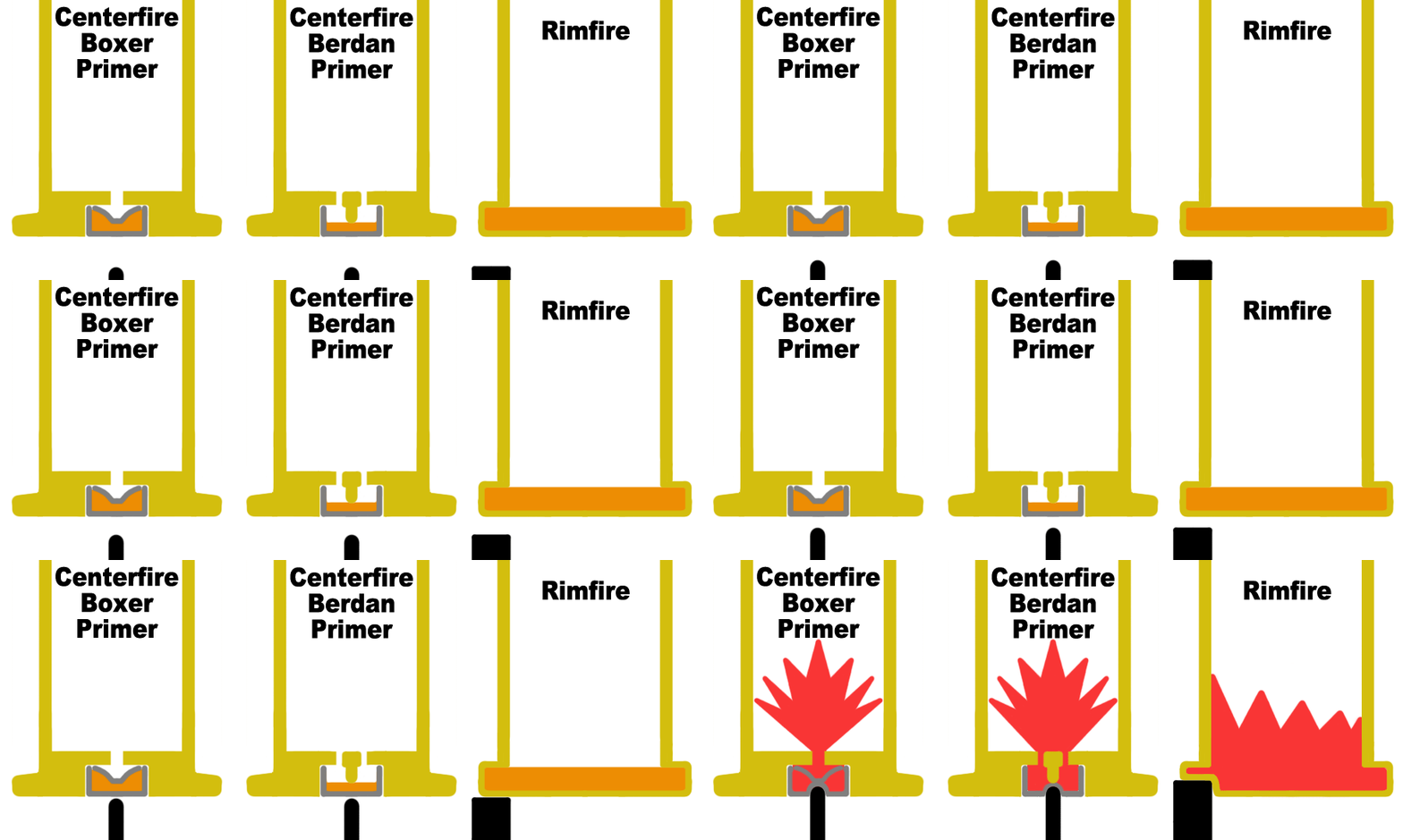
Modern primers, by contrast, are more specialized and distinct from the main propellant they are designed to ignite. They are of two types, those using shock-sensitive chemicals, and those reliant on chemicals ignited by an electric impulse. In smaller weapons the primer is usually of the first type and integrated into the base of a cartridge. Examples include handgun cartridges, rifle cartridges, and shotgun shells. Larger artillery pieces in contrast typically use electric priming. In artillery the primers are frequently a separate component, placed inside the barrel to the rear of the main propellant charge—but there are other examples of guns, including for example some automatic weapons, designed to shoot cartridges with integral electric primers.
Upon being struck with sufficient force generated by the firing pin, or electrically ignited, primers react chemically to produce heat, which gets transferred to the main propellant charge and ignites it, and this, in turn, propels the projectile. Due to their small size, these primers themselves lack the power to shoot the projectile, but still have enough energy to drive a bullet partway into the barrel — a dangerous condition called a squib load.
The first step to firing a firearm of any sort is igniting the propellant. The earliest firearms were hand cannons, which were simple closed tubes. There was a small aperture, the "touchhole", drilled in the closed end of the tube, leading to the main powder charge. This hole was filled with finely ground powder, which was then ignited with a hot ember or torch. With the advent of hand-held firearms, this became an undesirable way of firing a gun. Holding a burning stick while trying to pour a charge of black powder carefully down a barrel is dangerous, and trying to hold the gun with one hand while simultaneously aiming at the target and looking for the touchhole makes it very difficult to fire accurately.[citation needed]
The first attempt to make the process of firing a small arm easier was the "matchlock". The matchlock incorporated a "lock" (so-called because of its resemblance to door locks of the day) that was actuated by a trigger, originally called a "tricker." The lock was a simple lever which pivoted when pulled and lowered the match down to the touchhole. The match was a slow-burning fuse made of plant fibers that were soaked in a solution of nitrates, charcoal, and sulfur, and dried. This "slow-match" was ignited before the gun was needed, and it would slowly burn, keeping a hot ember at the burning end. After the gun was loaded and the touchhole primed with powder, the burning tip of the match was positioned so that the lock would bring it into contact with the touchhole. To fire the gun, it was aimed and the trigger pulled. This brought the match down to the touchhole, igniting the powder. With careful attention, the slow-burning match could be kept burning for long periods of time, and the use of the lock mechanism made fairly accurate fire possible.
The next revolution in ignition technology was the "wheel-lock". It used a spring-loaded, serrated steel wheel which rubbed against a piece of iron pyrite, similar to a modern lighter. A key was used to wind the wheel and put the spring under tension. Once tensioned, the wheel was held in place by a trigger. When the trigger was pulled, the serrated edge of the steel rubbed against the pyrite, generating sparks. These sparks were directed into a pan, called the "flash pan", filled with loose powder which led into the touchhole. The flashpan usually was protected by a spring-loaded cover that would slide out of the way when the trigger was pulled, exposing the powder to the sparks. The wheel-lock was a major innovation — since it did not rely on burning material as a source of heat, it could be kept ready for extended periods of time. The covered flashpan also provided some ability to withstand bad weather. Wind, rain, and wet weather would render a matchlock useless, but a wheel-lock that was loaded and waterproofed with a bit of grease around the flashpan could be fired under most conditions.
The wheel-lock enjoyed only a brief period of popularity before being superseded by a simpler, more robust design. The "flintlock", like the wheel-lock, used a flashpan and a spark to ignite the powder. As the name implies, the flintlock used flint rather than iron pyrite. The flint was held in a spring-loaded arm, called the "cock" from the resemblance of its motion to a pecking chicken. The cock rotated through approximately a 90-degree arc and was held in the tensioned, or "cocked" position by a trigger. Usually, flintlocks could lock the cock in two positions. The "half-cock" position held the cock halfway back, and used a deep notch so that pulling the trigger would not release the cock. Half-cock was a safety position, used when loading, storing or carrying a loaded flintlock. The "full-cock" position held the cock all the way back and was the position from which the gun was fired. The L-shaped "frizzen" was the other half of the flintlock's ignition system. It served as both a flashpan cover and a steel striking surface for the flint. The frizzen was hinged and spring-loaded so that it would lock in the open or closed position. When closed, the striking surface was positioned so that the flint would strike at the proper angle to generate a spark. The striking flint would also open the frizzen, exposing the flashpan to the spark. The flintlock mechanism was simpler and stronger than the wheel-lock, and the flint and steel provided a good, reliable source of ignition. The flintlock remained in military service for over 200 years, and flintlocks are still made today for historical re-enactments and muzzle-loading target competition, and for hunters who enjoy the additional challenge that the flintlock provides.
Hub AI
Primer (firearms) AI simulator
(@Primer (firearms)_simulator)
Primer (firearms)
In firearms and artillery, the primer (/ˈpraɪmər/) is the chemical and/or device responsible for initiating the propellant combustion that will propel the projectiles out of the gun barrel.
In early black powder guns such as muzzleloaders, the primer was essentially the same chemical as the main propellant (albeit usually in a finer-powdered form), but poured into an external flash pan, where it could be ignited by an ignition source such as a slow match or a flintlock, though some muzzleloaders have primers like cap gun caps. This external powder was connected through a small opening at the rear of the gun barrel that led to the main charge within the barrel. As gunpowder will not burn when wet, this made it difficult (or even impossible) to fire these types of weapons in rainy or humid conditions.
Modern primers, by contrast, are more specialized and distinct from the main propellant they are designed to ignite. They are of two types, those using shock-sensitive chemicals, and those reliant on chemicals ignited by an electric impulse. In smaller weapons the primer is usually of the first type and integrated into the base of a cartridge. Examples include handgun cartridges, rifle cartridges, and shotgun shells. Larger artillery pieces in contrast typically use electric priming. In artillery the primers are frequently a separate component, placed inside the barrel to the rear of the main propellant charge—but there are other examples of guns, including for example some automatic weapons, designed to shoot cartridges with integral electric primers.
Upon being struck with sufficient force generated by the firing pin, or electrically ignited, primers react chemically to produce heat, which gets transferred to the main propellant charge and ignites it, and this, in turn, propels the projectile. Due to their small size, these primers themselves lack the power to shoot the projectile, but still have enough energy to drive a bullet partway into the barrel — a dangerous condition called a squib load.
The first step to firing a firearm of any sort is igniting the propellant. The earliest firearms were hand cannons, which were simple closed tubes. There was a small aperture, the "touchhole", drilled in the closed end of the tube, leading to the main powder charge. This hole was filled with finely ground powder, which was then ignited with a hot ember or torch. With the advent of hand-held firearms, this became an undesirable way of firing a gun. Holding a burning stick while trying to pour a charge of black powder carefully down a barrel is dangerous, and trying to hold the gun with one hand while simultaneously aiming at the target and looking for the touchhole makes it very difficult to fire accurately.[citation needed]
The first attempt to make the process of firing a small arm easier was the "matchlock". The matchlock incorporated a "lock" (so-called because of its resemblance to door locks of the day) that was actuated by a trigger, originally called a "tricker." The lock was a simple lever which pivoted when pulled and lowered the match down to the touchhole. The match was a slow-burning fuse made of plant fibers that were soaked in a solution of nitrates, charcoal, and sulfur, and dried. This "slow-match" was ignited before the gun was needed, and it would slowly burn, keeping a hot ember at the burning end. After the gun was loaded and the touchhole primed with powder, the burning tip of the match was positioned so that the lock would bring it into contact with the touchhole. To fire the gun, it was aimed and the trigger pulled. This brought the match down to the touchhole, igniting the powder. With careful attention, the slow-burning match could be kept burning for long periods of time, and the use of the lock mechanism made fairly accurate fire possible.
The next revolution in ignition technology was the "wheel-lock". It used a spring-loaded, serrated steel wheel which rubbed against a piece of iron pyrite, similar to a modern lighter. A key was used to wind the wheel and put the spring under tension. Once tensioned, the wheel was held in place by a trigger. When the trigger was pulled, the serrated edge of the steel rubbed against the pyrite, generating sparks. These sparks were directed into a pan, called the "flash pan", filled with loose powder which led into the touchhole. The flashpan usually was protected by a spring-loaded cover that would slide out of the way when the trigger was pulled, exposing the powder to the sparks. The wheel-lock was a major innovation — since it did not rely on burning material as a source of heat, it could be kept ready for extended periods of time. The covered flashpan also provided some ability to withstand bad weather. Wind, rain, and wet weather would render a matchlock useless, but a wheel-lock that was loaded and waterproofed with a bit of grease around the flashpan could be fired under most conditions.
The wheel-lock enjoyed only a brief period of popularity before being superseded by a simpler, more robust design. The "flintlock", like the wheel-lock, used a flashpan and a spark to ignite the powder. As the name implies, the flintlock used flint rather than iron pyrite. The flint was held in a spring-loaded arm, called the "cock" from the resemblance of its motion to a pecking chicken. The cock rotated through approximately a 90-degree arc and was held in the tensioned, or "cocked" position by a trigger. Usually, flintlocks could lock the cock in two positions. The "half-cock" position held the cock halfway back, and used a deep notch so that pulling the trigger would not release the cock. Half-cock was a safety position, used when loading, storing or carrying a loaded flintlock. The "full-cock" position held the cock all the way back and was the position from which the gun was fired. The L-shaped "frizzen" was the other half of the flintlock's ignition system. It served as both a flashpan cover and a steel striking surface for the flint. The frizzen was hinged and spring-loaded so that it would lock in the open or closed position. When closed, the striking surface was positioned so that the flint would strike at the proper angle to generate a spark. The striking flint would also open the frizzen, exposing the flashpan to the spark. The flintlock mechanism was simpler and stronger than the wheel-lock, and the flint and steel provided a good, reliable source of ignition. The flintlock remained in military service for over 200 years, and flintlocks are still made today for historical re-enactments and muzzle-loading target competition, and for hunters who enjoy the additional challenge that the flintlock provides.
Recent media