


Community hub
Recent from talks
Contribute something to knowledge base
Content stats: 0 posts, 0 articles, 1 media, 0 notes
Members stats: 0 subscribers, 0 contributors, 0 moderators, 0 supporters
Subscribers
Supporters
Contributors
Moderators
Hub AI
Projectile AI simulator
(@Projectile_simulator)
Hub AI
Projectile AI simulator
(@Projectile_simulator)
Projectile
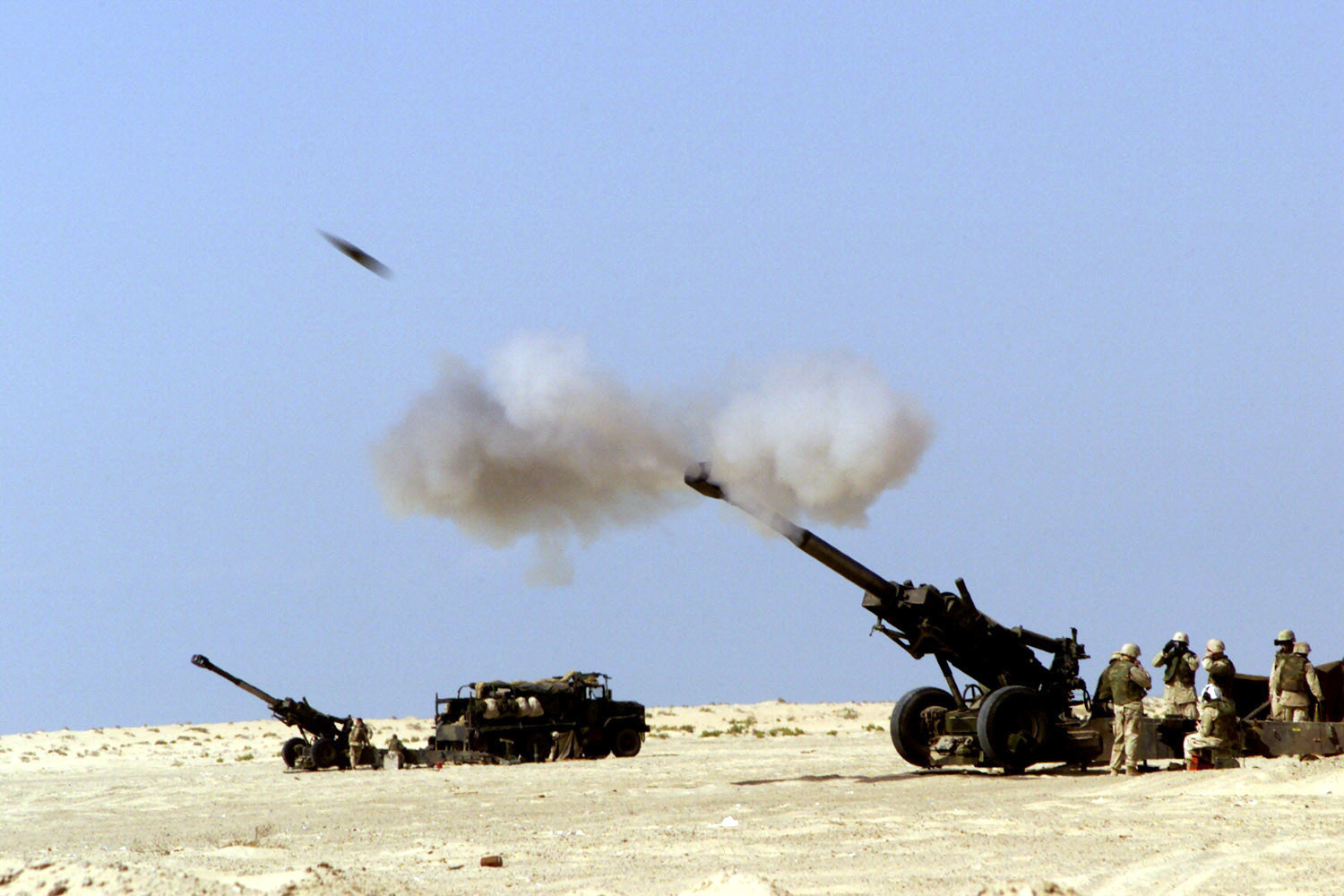
A projectile is an object that is propelled by the application of an external force and then moves freely under the influence of gravity and air resistance. Although any objects in motion through space are projectiles, they are commonly found in warfare and sports (for example, a thrown baseball, kicked football, fired bullet, shot arrow, stone released from catapult).
In ballistics, mathematical equations of motion are used to analyze projectile trajectories through launch, flight, and impact.
Blowguns and pneumatic rifles use compressed gases, while most other guns and cannons utilize expanding gases liberated by sudden chemical reactions by propellants like smokeless powder. Light-gas guns use a combination of these mechanisms.
Railguns utilize electromagnetic fields to provide acceleration along the entire length of the device, greatly increasing the muzzle velocity.
Some projectiles provide propulsion during flight by means of a rocket engine or jet engine. In military terminology, a rocket is unguided, while a missile is guided. Note the two meanings of "rocket" (weapon and engine): an ICBM is a guided missile with a rocket engine.
An explosion, whether or not by a weapon, causes the debris to act as multiple high velocity projectiles. An explosive weapon or device may also be designed to produce many high velocity projectiles by the break-up of its casing; these are correctly termed fragments.
In projectile motion the most important force applied to the projectile mass is the propelling force. In many sports, the propelling forces are provided by muscles that accelerate the projectile (ball, disc, javelin, hammer, dart), and the stronger the propelling force, the faster and farther the projectile will travel. See pitching, bowling.
Many projectiles, e.g. shells, may carry an explosive charge or another chemical or biological substance. Aside from explosive payload, a projectile can be designed to cause special damage, e.g. fire (see also early thermal weapons), or poisoning (see also arrow poison).
Projectile
A projectile is an object that is propelled by the application of an external force and then moves freely under the influence of gravity and air resistance. Although any objects in motion through space are projectiles, they are commonly found in warfare and sports (for example, a thrown baseball, kicked football, fired bullet, shot arrow, stone released from catapult).
In ballistics, mathematical equations of motion are used to analyze projectile trajectories through launch, flight, and impact.
Blowguns and pneumatic rifles use compressed gases, while most other guns and cannons utilize expanding gases liberated by sudden chemical reactions by propellants like smokeless powder. Light-gas guns use a combination of these mechanisms.
Railguns utilize electromagnetic fields to provide acceleration along the entire length of the device, greatly increasing the muzzle velocity.
Some projectiles provide propulsion during flight by means of a rocket engine or jet engine. In military terminology, a rocket is unguided, while a missile is guided. Note the two meanings of "rocket" (weapon and engine): an ICBM is a guided missile with a rocket engine.
An explosion, whether or not by a weapon, causes the debris to act as multiple high velocity projectiles. An explosive weapon or device may also be designed to produce many high velocity projectiles by the break-up of its casing; these are correctly termed fragments.
In projectile motion the most important force applied to the projectile mass is the propelling force. In many sports, the propelling forces are provided by muscles that accelerate the projectile (ball, disc, javelin, hammer, dart), and the stronger the propelling force, the faster and farther the projectile will travel. See pitching, bowling.
Many projectiles, e.g. shells, may carry an explosive charge or another chemical or biological substance. Aside from explosive payload, a projectile can be designed to cause special damage, e.g. fire (see also early thermal weapons), or poisoning (see also arrow poison).
Recent media
Recent media