Hubbry Logo
search
logo
2078066

Principal boy

logo
Community Hub0 Subscribers
Read side by side
from Wikipedia

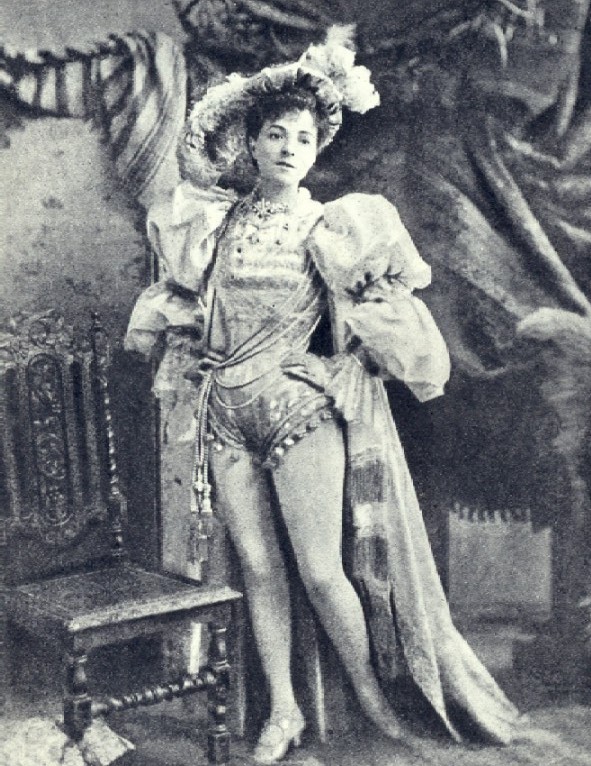
Vesta Tilley as a principal boy
Actress Nan Hearne as Jack in the pantomime The House That Jack Built

In pantomime, a principal boy role is the young male protagonist of the play, traditionally played by a young actress in boy's clothes.

The earliest example is Miss Ellington who in 1852 appeared in The Good Woman in the Wood by James Planché to the consternation of a reviewer.[1] She was followed by other music hall and burlesque entertainers, such as Harriet Vernon[2] described as "a magnificent creature, who was willing to show her ample figure as generously as the conventional tights and trunks of the day allowed" and thus setting the standard of good legs on display and nominally male costume which emphasized her figure.[1]

The tradition grew out of laws restricting the use of child actors in London theatre, and the responsibility carried by such lead roles. A Breeches role was also a rare opportunity for an early 20th-century actress to wear a costume revealing the legs covered only in tights, potentially increasing the size of the audience.[3] The practice of having a female play the principal boy has become less common: it's 'been put down to political correctness, as well as greater knowledge among children about homosexual relationships'.[4]

Although not written as a pantomime, Peter Pan, or The Boy Who Wouldn't Grow Up is often produced as one with the tradition of a female principal boy continuing.

List of notable principal boys

[edit]

See also

[edit]

References

[edit]
Revisions and contributorsEdit on WikipediaRead on Wikipedia
from Grokipedia
The principal boy is the young male protagonist and romantic hero in British pantomime, a theatrical tradition conventionally played by a female actress in male costume, often featuring form-fitting tights to highlight her legs in an era when women's attire concealed them.[1][2] This role reversal, paired with the pantomime dame (a comic female character portrayed by a man), forms a core element of pantomime's gender-bending conventions, originating from the 19th century when female performers on stage adopted the part to appeal to audiences through visual allure and physical display.[3][4] The first documented principal boy was Eliza Povey as Jack in Jack and the Beanstalk at Drury Lane in 1819, though the practice solidified as a standard in the 1880s with performers like Vesta Tilley, who popularized the role through her androgynous style and music hall influences.[5][6] Common examples include Dick Whittington, Aladdin, or Prince Charming in Cinderella, where the character drives the plot's adventure and romance, engaging audiences with direct address and physical comedy.[7] In contemporary productions, while the tradition persists in many regional theaters, casting has evolved to occasionally feature male actors, reflecting shifts in theatrical norms but preserving the role's emphasis on youthful heroism and spectacle.[8][9]

Definition and Context in Pantomime

Core Role and Traditional Casting

![Nan C. Hearne as principal boy in music hall][float-right] The principal boy serves as the central heroic male protagonist in British pantomime productions, embodying the romantic lead who typically courts the principal girl, confronts the villain, and resolves the narrative's central conflict through bravery and wit.[10][11] This role, often depicted as a prince, adventurer, or local hero, drives the plot forward in fairy tale adaptations like Cinderella or Aladdin, where the character pursues true love and triumphs over obstacles.[12][2] Traditional casting assigns the principal boy to a female actress, a convention established in the early 19th century following the lifting of restrictions on women performing on stage.[1] This practice evolved from the "travesti" or breeches role tradition in European theatre, where women portrayed youthful male characters in fitted male costumes to highlight physical appeal, particularly the legs in tights or breeches.[13][4] By the Victorian era, as exemplified by actress Lucy Eliza Vestris in J.R. Planché's 1837 production of Puss in Boots, the female principal boy became a staple, allowing for exaggerated masculine posturing juxtaposed with feminine allure to engage audiences.[1][2] This cross-gender casting persisted as a deliberate theatrical device, distinguishing pantomime from straight plays and enhancing its comedic and spectacular elements, though occasional male performers, such as Norman Wisdom in a 1956 Aladdin production, briefly challenged the norm without supplanting it.[14][8] The tradition underscores pantomime's roots in gender-bending performance, prioritizing visual and performative contrast over literal representation.[15]

Distinction from Other Pantomime Characters

The principal boy role in British pantomime is primarily distinguished from the pantomime dame by the direction of cross-gender casting and the character's narrative function: whereas the principal boy features a female actress portraying a young male hero, the dame involves a male actor in an exaggerated female role, typically as a comic maternal figure such as a mother or housekeeper.[2][16] This reversal serves different purposes; the principal boy's attire—often tight breeches or stockings to accentuate the actress's legs—emphasizes physical appeal and romantic heroism, while the dame's costume employs padding, heavy makeup, and outlandish dresses for broad, slapstick humor.[17][18] In contrast to the principal girl, who is the female romantic lead played by an actress in her own gender's attire, the principal boy embodies the male protagonist—such as a prince or local youth—driving the plot's heroic arc and often pairing romantically with the principal girl.[19][20] Unlike comic supporting roles like Buttons (a cheeky servant or apprentice, usually played by a male for direct audience interaction) or the villain (a scheming antagonist regardless of casting gender), the principal boy avoids overt comedy or antagonism, focusing instead on straightforward valor and narrative resolution.[21][4] These distinctions underscore pantomime's tradition of gender-bending for spectacle rather than realism, with the principal boy's convention emerging to showcase female performers' agility in male garb, separate from the dame's drag-derived farce rooted in earlier harlequinade influences.[1][22] While modern productions occasionally cast males in principal boy roles for practical reasons, the female-led tradition persists to maintain visual and performative contrast with other characters.[8]

Historical Development

Origins in Early 19th-Century Theatre

The principal boy role, depicting the youthful male protagonist in British pantomime and traditionally enacted by a female performer, emerged in 1819 with Eliza Povey's portrayal of Jack in Jack and the Beanstalk at Drury Lane Theatre.[5][23] This debut aligned with pantomime's transition from 18th-century harlequinade spectacles toward structured fairy-tale narratives, where the heroic lead demanded physical vigor and vocal projection often challenging for juvenile male actors under contemporary theatre licensing constraints.[23] Building on established breeches roles from opera—such as Cherubino in Mozart's The Marriage of Figaro—early 19th-century pantomime leveraged female casting to exploit visual allure, with tights and short tunics revealing leg contours prohibited in everyday female attire by Regency modesty norms.[5] Performers like Povey capitalized on this to enhance audience engagement, as the risqué display drew crowds to patent theatres amid competition from unlicensed venues.[5] A pivotal advancement occurred in 1837 when actress-manager Lucia Elizabeth Vestris assumed the breeches part of Ralph in James Robinson Planché's Puss in Boots at the Olympic Theatre, refining the principal boy's energetic, heroic archetype through her prior travesti expertise.[1] Vestris's interpretation emphasized graceful athleticism and charm, solidifying the role's appeal in pantomime's burgeoning format and foreshadowing its Victorian standardization, though the practice remained sporadic until mid-century music hall influences amplified it.[1]

Establishment in the Victorian Era

The principal boy role, initially appearing in the early 19th century, solidified as a core convention of British pantomime during the Victorian period (1837–1901), coinciding with the genre's expansion into family-oriented fairy-tale spectacles at major London theatres like Drury Lane and Covent Garden. Although the first documented performance was Eliza Povey's portrayal of Jack in 1819 at Drury Lane, the practice gained widespread acceptance and standardization from the mid-19th century onward, as pantomime producers increasingly cast young actresses to embody heroic male protagonists such as princes or adventurers in productions inspired by nursery rhymes and European folktales.[2][4] By the late Victorian era, the female principal boy had become an entrenched tradition, enabling actresses to perform athletic feats and engage directly with audiences in a manner that blurred gender lines while adhering to theatre's licensed transgressions. This casting choice was partly driven by practical and commercial factors: women's stage presence in fitted breeches or tights offered a visually striking contrast to the era's corseted, ankle-length female attire, attracting diverse crowds including male patrons appreciative of the displayed physique.[1][6][4] Performers like Vesta Tilley exemplified this establishment, debuting in principal boy roles as a child in the 1870s and achieving stardom through characterizations that combined boyish vigor with feminine allure, as seen in her appearances in pantomimes at venues such as the Gaiety Theatre. Pantomime's popularity surged, with annual Christmas productions drawing tens of thousands; for instance, Drury Lane's 1880s spectacles featured elaborate sets and casts where the principal boy's sword-wielding heroics anchored the narrative's romantic and adventurous arcs.[24][25]

Evolution Through the 20th Century

The tradition of casting women as principal boys persisted robustly into the early 20th century, with performers donning form-fitting tunics, tights, and boots to highlight physical agility and appeal in roles like Dick Whittington or Prince Charming.[1] This convention, rooted in Victorian precedents, aligned with pantomime's emphasis on spectacle and family-oriented entertainment, as evidenced by costumes such as the 1918 aristocratic principal boy attire worn by Bay Harrington, featuring knee-breeches and silk stockings designed for stage movement.[26] Pantomime productions during the interwar years maintained this female-led format, serving as a staple of holiday theatre amid economic and social upheavals, with the role's breeches costume retaining its allure despite evolving fashions.[27] World War II disruptions temporarily curtailed elaborate stagings, yet post-war recovery saw pantomime resurgence, with female principal boys continuing to dominate until the mid-century shift toward celebrity-driven casting.[23] In 1953, comedian Norman Wisdom's portrayal of Aladdin at the London Palladium marked a pivotal departure, as male stars from film and variety circuits began supplanting actresses, a trend that endured for roughly 15 years and reflected producers' strategies to leverage television fame for box-office draw.[14] This change coincided with pantomime's commercialization, where the principal boy role increasingly prioritized star power over traditional gender inversion, leading to a decline in female casting by the 1960s.[23] By the late 20th century, the female principal boy had waned significantly, with male performers—often drawn from pop music or soap operas—filling the role in major tours, as seen in productions favoring audience-recognizable names over historical conventions.[8] Economic pressures and shifting gender norms further eroded the practice, though vestiges remained in select regional or boutique pantomimes, underscoring pantomime's adaptation from artisanal theatre to a multimillion-pound industry responsive to market demands rather than rigid tradition.[8] This evolution paralleled broader theatrical trends, where the principal boy's once-central cross-dressing lost novelty amid relaxed societal views on gender presentation.[28]

Performance Characteristics

Costume and Physical Presentation

The traditional costume for the principal boy in British pantomime features a short tunic or breeches designed to accentuate the actress's legs, often paired with shiny tights, high boots reaching the thighs, and elaborate detailing such as feathers or embroidery to evoke a heroic, fantastical male protagonist while highlighting feminine attributes.[2][10] This attire, popularized in the Victorian era, allowed for displays of the female form, including glimpses of stockinged legs during movement, which served as a key visual appeal in family-oriented theatre.[29] Physical presentation emphasizes the actress's femininity through retained natural features like styled hair and makeup, contrasting with adopted masculine postures such as wide-legged stances, hands on hips, and thigh-slapping gestures to signal action or bravado.[5] These elements create a deliberate juxtaposition, where the performer's gender is not concealed but celebrated, avoiding full male impersonation in favor of a stylized, appealing hybrid that engages audiences through gender play without disguise.[30] Over time, costumes evolved from exaggerated hour-glass silhouettes with padded thighs in the late 19th and early 20th centuries to simpler, more tailored fits by the interwar period, reflecting changing theatrical norms while preserving the leg-focused design.[26][31] In contemporary productions, though the role is sometimes cast with male actors, traditional female portrayals maintain these core visual and postural conventions when employed.[29]

Acting Style and Audience Engagement

The acting style of the principal boy emphasizes a blend of heroic bravado and retained femininity, with performers avoiding strict male impersonation in favor of energetic, physical portrayals suited to the romantic protagonist. Actresses execute slapstick comedy routines alongside the dame, incorporating clowning, dance, and occasional sword-fighting to advance the plot and generate laughs. A robust singing voice is requisite for belting out popular songs integrated into the production, while costumes—typically short tunics over tights—highlight the performer's legs, a convention accentuated by thigh-slapping gestures upon stage entrance to captivate viewers.[5][9] Audience engagement relies on breaking the fourth wall, with the principal boy soliciting cheers as the hero and prompting warnings like "He's behind you!" during villainous pursuits, thereby enlisting spectators as narrative allies. This call-and-response fosters immediate interactivity, amplifying communal excitement and drawing families into the action, as audiences boo antagonists and affirm the protagonist's triumphs. Such techniques, persisting from Victorian precedents, underscore pantomime's participatory ethos, where the principal boy's appeals directly heighten involvement without scripted detachment.[32][5]

Notable Performers and Productions

Pioneering Figures (19th Century)

The earliest documented instance of a principal boy in British pantomime occurred in 1819, when actress Eliza Povey portrayed Jack in Jack and the Beanstalk at Drury Lane Theatre, marking an initial experimentation with female performers in male juvenile leads.[5][6] This casting choice preceded the widespread adoption of the convention, which did not fully establish itself until the 1880s, amid evolving theatrical norms that favored women in such roles to highlight physical appeal and evade restrictions on child actors.[5] Lucy Elizabeth Vestris emerged as a pivotal figure in the early development of the principal boy tradition during the 1830s. As an actor-manager at the Olympic Theatre, she popularized breeches roles, notably playing the male protagonist Ralph in Puss in Boots in 1837, where her performances emphasized shapely legs in fitted trousers, blending femininity with heroic masculinity to captivate audiences.[1][33] Vestris's approach influenced subsequent pantomime staging, transitioning from harlequinade elements to more narrative-driven spectacles with gender-reversed leads.[1] By the mid-to-late 19th century, performers like Vesta Tilley advanced the role's visibility in both music hall and pantomime contexts. Debuting professionally at age six in 1870, Tilley specialized in male impersonation, taking on principal boy parts such as Dick Whittington in the 1880s and 1890s, where her polished characterizations and elaborate costumes helped normalize the female-led hero as a staple of Victorian family entertainment.[5] Her success underscored the commercial viability of the convention, drawing crowds through a mix of athleticism, charm, and subtle eroticism inherent in the trouser-clad portrayal.[6]

Iconic 20th-Century Examples

Dorothy Ward, often dubbed the "Queen of Pantomime," epitomized the principal boy tradition through her extensive career spanning over five decades, performing in more than 40 pantomimes from 1905 to 1957.[34] She frequently portrayed heroic roles such as Dick Whittington, notably in a 1932 production at the Garrick Theatre in London, partnering with her husband Shaun Glenville, who played the dame.[35] Ward's athletic physicality and commanding stage presence, accentuated by tight-fitting costumes that highlighted her figure, drew large audiences and sustained the convention's popularity into the interwar period.[5] Pat Kirkwood maintained the role's allure in the mid-20th century with vivacious performances that blended musical talent and charisma. In December 1944, she played Robin Goodfellow, the principal boy, in Goody Two Shoes at a London venue, showcasing the character's adventurous spirit amid wartime entertainment.[36] Kirkwood reprised such roles throughout her career, culminating in her final principal boy appearance as Aladdin in 1973 at the Theatre Royal, Newcastle upon Tyne, at age 52, demonstrating the tradition's endurance despite growing male casting trends.[37] Noele Gordon exemplified the principal boy's appeal in post-war productions, taking on Captain Florizel in Humpty Dumpty at the London Palladium in 1951, opposite Norman Evans as dame and Terry-Thomas as king.[38] Her energetic portrayal, supported by the era's star-studded casts, highlighted the role's centrality to family-oriented spectacle, even as the convention faced challenges from shifting gender norms and male actors like Norman Wisdom assuming heroic parts in the 1950s and 1960s.[6] These examples underscore how female principal boys like Ward, Kirkwood, and Gordon preserved the pantomime's cross-dressing heritage, leveraging physical dynamism and audience rapport to affirm the character's narrative and visual distinctiveness.[5]

Contemporary Practitioners (Post-2000)

In the early 21st century, the convention of casting female actresses as principal boys has persisted in select British pantomime productions, particularly in regional and traditional venues, though large-scale commercial tours have trended toward male performers for these roles to align with audience expectations and casting economics. An analysis of Qdos Entertainment's pantomimes from 2000 to 2006, the UK's largest producer at the time, revealed that male actors filled the majority of principal boy positions across titles like Aladdin, Dick Whittington, and Jack and the Beanstalk, with females largely confined to Peter Pan.[39] This shift reflects practical market dynamics rather than a deliberate rejection of tradition, as female principal boys continue to draw acclaim for their physicality and audience engagement in venues prioritizing historical fidelity.[8] Bonnie Langford stands out as a prominent contemporary practitioner, celebrated for her athleticism and charisma in the role. In the 1999–2000 season's Peter Pan at Birmingham Hippodrome, Langford's portrayal of the titular boy was lauded for revitalizing the character's swashbuckling appeal, demonstrating why she is regarded as one of the finest modern interpreters despite the encroaching male casting trend.[40] Her performances emphasized the traditional elements of high-kicking choreography and direct audience interaction, sustaining the role's appeal in family-oriented settings. Su Pollard has also upheld the practice into the 2000s and beyond, drawing on her extensive panto experience to embody principal boys in productions such as Jack and the Beanstalk and Babes in the Wood. Pollard's tenure in the role spanned over 25 years, including post-2000 engagements where her comedic timing and vocal prowess adapted the character's heroic archetype for contemporary audiences.[41][42] Similarly, Rula Lenska took on the principal boy as Aladdin at Richmond Theatre, showcasing the role's enduring viability for established actresses in mid-sized houses.[43] These examples illustrate a niche continuation amid broader evolution, with female principal boys often selected for their star power and ability to evoke the tradition's origins in Victorian breeches roles, even as male casting dominates major tours. The Pantomime Awards' Barbara Windsor category for Best Principal Boy, named after the iconic 20th-century performer who influenced later practitioners, underscores ongoing recognition, though winners increasingly include males.[44]

Cultural Impact and Debates

Role in British Family Entertainment

The principal boy serves as the heroic male protagonist in British pantomime, a form of theatrical entertainment centered on fairy-tale narratives, slapstick comedy, musical numbers, and direct audience participation, traditionally staged during the Christmas season to engage families across generations. Productions emphasize moral simplicity, with the principal boy embodying bravery, romance, and triumph over adversity—qualities portrayed through energetic performances that include sword fights, chases, and romantic duets, making the character an aspirational figure for young audiences. This role, played by a female actress in fitted breeches or tights, adds visual spectacle and glamour without overt sexualization, aligning with panto's wholesome, festive ethos that prioritizes communal laughter and escapism over adult-oriented themes.[7][12] The tradition enhances panto's family appeal by facilitating gender reversal humor, paired with the male-played pantomime dame, which introduces light absurdity and role subversion suitable for mixed-age crowds; children delight in the hero's exploits, while adults appreciate the performer's vocal and athletic prowess. Emerging in the early 19th century— with the first recorded instance in 1819 when Eliza Povey portrayed Jack at Drury Lane—this casting convention addressed practical constraints like child labor restrictions on evening performances, enabling reliable, skilled actresses to sustain the demanding lead amid late-night family outings. By the Victorian era, it had solidified as a panto hallmark, contributing to the genre's endurance as a secular holiday ritual that fosters intergenerational bonding through call-and-response chants like "He's behind you!" and collective cheers for the principal boy's victories.[2][5][4] In contemporary family entertainment, the principal boy upholds panto's commercial viability, with UK theatres hosting over 200 professional productions annually that attract millions of attendees, often featuring television personalities to draw parents and ensure broad accessibility. The role's emphasis on physicality—showcasing toned legs via shiny tights—provides a subtle, era-appropriate allure that underscores heroism rather than sensuality, reinforcing panto's reputation as inclusive, non-explicit fun amid modern media alternatives. This convention persists in regional and touring shows, where it balances tradition with adaptability, such as casting athletic women to model resilience and wit for family viewers.[12][7]

Gender Dynamics: Tradition vs. Modern Interpretations

In traditional British pantomime, the principal boy role—a heroic young male protagonist such as Jack or Dick Whittington—has been conventionally performed by a female actress since the late 19th century, allowing for the display of feminine legs in fitted breeches or tunics, which provided visual appeal in an era when such exposure was novel for women on stage.[10] This practice originated in the 18th century but gained prominence during the Victorian period, popularized by performers like Vesta Tilley in the 1880s, who retained feminine mannerisms while embodying male heroism.[23] The convention complemented the pantomime dame (a male actor in a female role), creating a deliberate gender inversion that heightened comedic and romantic tension without challenging underlying heterosexual audience expectations.[1] By the mid-20th century, particularly from the 1950s onward, the female principal boy began to decline as male performers from music halls and television, such as Tommy Steele in the 1957 production of Cinderella, assumed the role, reflecting shifts in star-driven casting and reduced novelty of female leg display amid evolving social norms.[23] In contemporary productions post-2000, many opt for male actors in the principal boy role, prioritizing vocal range for musical numbers and direct heroic physicality over traditional cross-dressing, though some regional and amateur shows retain female performers to honor historical aesthetics.[2] This evolution underscores a move toward gender-congruent casting in professional settings, influenced by economic factors like employing established male celebrities, rather than ideological reinterpretations.[39] Critics of the traditional format argue it objectified female performers through emphasis on physical allure, yet historical evidence indicates the role empowered actresses like Tilley to headline and amass wealth in a male-dominated industry.[5] Modern interpretations occasionally explore gender fluidity, but such instances remain marginal, with most debates centering on practicality over performative identity, as the core appeal lies in narrative familiarity rather than subversion of biological sex roles.[45] The persistence of the dame tradition juxtaposed against the principal boy's shift highlights pantomime's adaptive balance between convention and audience preference for exaggerated, non-literal gender play.[8]

Criticisms and Challenges to the Convention

The convention of casting women as principal boys in British pantomime has encountered substantial practical challenges, manifesting in a sharp decline in its adherence since the mid-20th century. Commercial productions, such as those by Qdos Entertainment—the largest pantomime producer—saw female principal boys constitute 33% of casts in 1995 but 0% by 2002, reflecting a strategic pivot toward male performers to enhance marketability and align with corporate branding priorities.[8] A 2013 analysis of 251 pantomimes across the UK revealed that only 10% employed women in the role, underscoring the tradition's marginalization in professional settings.[46] Producers attribute this shift primarily to audience reception issues, particularly confusion among young viewers regarding romantic dynamics between the principal boy and principal girl—both female. Producer Duggie Chapman noted that children become "puzzled by two girls singing together, one of them acting like a boy," arguing that casting a male principal boy alongside a female counterpart simplifies comprehension and fosters clearer engagement.[47] This trend accelerated from the 1950s onward, with male celebrities like Norman Wisdom assuming roles such as Aladdin at the London Palladium in 1957, prioritizing star appeal and perceived authenticity over historical cross-dressing norms.[48] The decline has drawn criticism for curtailing opportunities for female performers in heroic leads, inverting the convention's original function of elevating women to central, empowered positions amid limited stage roles for them historically.[8] While some regional or repertory theaters, like Nottingham Playhouse and York Theatre Royal, preserve female principal boys to retain subversive gender elements, broader commercial pressures favor male casting, potentially eroding pantomime's capacity for playful norm disruption without evidence of ideological mandates like political correctness driving the change.[8][46]

References

User Avatar
No comments yet.