Hubbry Logo
Puff BarPuff BarMain
Open search
Puff Bar
Community hub
Puff Bar
logo
8 pages, 0 posts
0 subscribers
Be the first to start a discussion here.
Puff Bar
Puff Bar
from Wikipedia

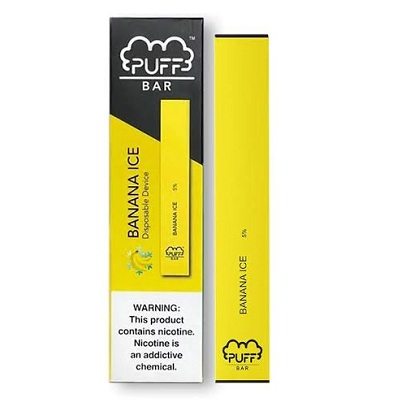
Puff Bar is a brand of disposable electronic cigarette.[1] As of 2021, Puff Bar was the second most popular e-cigarette brand after Juul in the United States.[2]

[edit]

In response to a request from the United States House of Representatives,[3] the US Food and Drug Administration (FDA) Center for Tobacco Products effectively banned sales of Puff Bar e-cigarettes in July 2020.[4] Puff Bar returned to the market in February 2021 by claiming to switch to synthetic nicotine, which was not regulated by FDA Center for Tobacco Products at the time.[5] As part of the Consolidated Appropriations Act, 2022, FDA was given authority over synthetic nicotine and required companies to submit their products for review within 30 days.[6]

A 2022 national survey in the found that Puff Bar was the most popular brand of e-cigarette among youth.[7] In October 2022, the FDA issued a warning letter to the makers of Puff Bar (EVO Brands LLC and PVG2, LLC) for receiving and delivering e-cigarettes in the US without an FDA marketing authorization order.[7] FDA requested a response within 15 working days detailing how the companies intend to address the government's concerns.[8]

See also

[edit]

References

[edit]
[edit]
Revisions and contributorsEdit on WikipediaRead on Wikipedia
from Grokipedia
Puff Bar is a brand of disposable electronic cigarettes consisting of compact, pre-filled, non-rechargeable devices that heat nicotine salt e-liquid to produce vapor, typically delivering around 300 puffs per unit with 5% nicotine concentration by volume. Introduced to the U.S. market in 2019 by Cool Clouds Distribution Inc., the product line features a variety of fruit, candy, and menthol flavors that contributed to its swift rise in popularity, particularly as a flavored alternative following FDA restrictions on pod-based systems like Juul. By 2020, Puff Bar had become one of the most used disposable e-cigarette brands among youth, prompting the FDA to issue warning letters and import alerts against the company for marketing unauthorized new tobacco products without premarket authorization. In response to regulatory scrutiny, the brand adapted by reformulating products with synthetic nicotine—initially exempt from certain tobacco regulations—and later offering zero-nicotine variants to sustain sales while navigating enforcement actions.

History

Founding and Launch

Puff Bar, a disposable brand, was launched in the United States in 2019 by Cool Clouds Distribution Inc., an Irvine, California-based company operating out of an unmarked facility. The product consisted of compact, pre-filled devices delivering approximately 300 puffs of e-liquid in various flavors, marketed as a convenient alternative to reusable vaping systems. Development involved collaboration with a Chinese manufacturer for assembly, though details on Cool Clouds' initial partners remain limited and have been characterized as shadowy by observers. The brand's entry capitalized on a regulatory environment where disposable e-cigarettes faced fewer immediate restrictions than cartridge-based competitors, enabling rapid without premarket authorization required for products introduced after August 2016. Early sales were modest but surged in early following FDA enforcement against flavored pods from brands like , with weekly revenue escalating from $14,000 to $3 million as consumers shifted to disposables. Amid scrutiny over youth appeal and unauthorized , Cool Clouds halted U.S. distribution in February 2020 and sold the brand to its Chinese manufacturer, DS Licensing LLC, to mitigate liability. Later that year, childhood friends Nick Minas and Patrick Beltran acquired the , website, and trademarks, assuming roles as co-CEOs and restructuring operations.

Market Expansion and Popularity

Puff Bar entered the U.S. e-cigarette market in early as a disposable device offering salts in various flavors, quickly differentiating itself through its compact design and lack of need for recharging or refilling. Its market expansion accelerated in late and early 2020, driven by increased online visibility and engagement, with and mentions rising sharply during this period. By February 2020, Puff Bar's online search popularity had surpassed that of , signaling a broader shift toward disposable products amid regulatory scrutiny on pod-based systems. The product's popularity surged following the FDA's September 2019 enforcement guidance prioritizing flavored cartridge e-cigarettes, which restricted competitors like while initially sparing disposables; this policy vacuum enabled Puff Bar's sales to climb from negligible levels to category dominance in under six months. Overall disposable e-cigarette unit sales grew amid this environment, with their rising from 18.8% in early to 32.1% by October , as consumers sought accessible flavored alternatives. Puff Bar benefited from its fruit and candy-like flavors, such as and , which appealed particularly to younger users experimenting with vaping. Peak popularity occurred in mid-2020, when Puff Bar emerged as the leading brand among youth vapers, with 26.1% of U.S. high school students reporting current use according to the National Youth Tobacco Survey. It commanded 51.3% of the disposable segment's market share by April 2021, underscoring its role in driving overall e-cigarette unit sales increases of 46.6% from January 2020 to December 2022. Factors including low price points—often under $10 per device—and high delivery via salts contributed to its viral spread on platforms like and , though this growth later prompted intensified regulatory responses.

Adaptation to Regulatory Pressures

In July 2020, the U.S. (FDA) issued marketing denial orders to Cool Clouds Distribution, Inc., operating as Puff Bar, requiring the removal of its unauthorized flavored disposable e-cigarette products from the U.S. market due to insufficient evidence of benefits and concerns over youth appeal. Puff Bar complied by temporarily suspending online sales in the United States, though products remained available through unauthorized channels and international sourcing. By February 2021, Puff Bar resumed U.S. distribution by reformulating its products to use synthetic derived from non-tobacco sources, exploiting a regulatory gap since the FDA's premarket authorization requirements under the Family Smoking Prevention and Act applied only to tobacco-derived at the time. This shift enabled the company to continue offering flavored variants, such as fruit and dessert profiles, which had driven its prior market dominance among youth vapers, without immediate FDA oversight. Sales data indicated a resurgence, with Puff Bar products ranking among the top disposable e-cigarettes by unit volume shortly after relaunch. The adaptation drew criticism from advocates for circumventing restrictions intended to curb youth initiation, as synthetic nicotine products retained high strengths (typically 5%) and appealing flavors banned for cartridge-based devices. In response to such loopholes, amended the Tobacco Control Act in April 2022 via the Consolidated Appropriations Act to extend FDA authority to synthetic , prompting further enforcement actions including import alerts and warning letters against non-compliant distributors. Puff Bar's strategy highlighted ongoing challenges in regulating disposable formats, which proliferated as alternatives to restricted pod systems.

Product Characteristics

Design and Functionality

The Puff Bar is a compact, disposable device designed for single-use convenience, featuring a slim, pen-shaped body typically measuring around 9 cm in length and constructed from lightweight single-use plastics. It incorporates a pre-filled pod with approximately 1.3 mL of e-liquid containing salts, usually at concentrations of 2% or 5% by weight, and is powered by a non-rechargeable internal of 280 mAh capacity. The device lacks external buttons, charging ports, or refill mechanisms, emphasizing simplicity and portability akin to a . Functionality relies on a draw-activated mechanism, where through the mouthpiece triggers a that activates the battery to heat a built-in coil and cotton wick soaked in the e-liquid, vaporizing it into an inhalable without user adjustments. This process delivers roughly 200 to 300 puffs per device, depending on usage patterns such as puff duration and frequency, after which the battery depletes or e-liquid is exhausted, rendering the unit non-functional and intended for disposal. No maintenance or technical modifications are required, as the sealed design prevents tampering or reuse, aligning with its role as a closed-system, one-time vaping option.

Nicotine Delivery and Flavors

Puff Bar disposable e-cigarettes deliver via aerosolized e-liquid heated by a built-in coil, with users inhaling vapor through a mouthpiece. The e-liquid typically contains in salt form, which enables higher concentrations—averaging 44.8 mg/mL across analyzed devices—while providing smoother throat sensation and faster absorption compared to freebase at equivalent levels. This formulation, common in disposables, mimics cigarette-like uptake more efficiently than earlier e-cigarette liquids, though plasma peaks remain lower than combustible . The composition, often paired with (PG) and vegetable glycerin (VG) as base carriers, facilitates rapid bloodstream delivery upon puffing, with studies showing salts yield up to three times higher maximum plasma concentrations than freebase under similar puff profiles. Puff Bars' pre-filled pods, designed for approximately 200-300 puffs per device, maintain consistent delivery until depletion, without user-adjustable settings. Puff Bar e-liquids feature a wide array of flavors, categorized primarily as fruity, /mint, , and others, which contribute synthetic cooling agents and aroma compounds beyond basic and solvents. Analyzed flavors include Banana Ice, Peach Ice, Tangerine Ice, Sour Apple, , Grape, , , Café Latte, and , with fruity variants dominating sales appeal. These flavors incorporate esters and aldehydes for taste profiles, such as those evoking tropical fruits or icy , though concentrations vary and some include synthetic coolants like WS-23 for enhanced sensation. Unflavored options exist but represent a minority, as flavor diversity drove initial market penetration.

Regulatory Developments

FDA Enforcement Actions

On July 20, 2020, the U.S. (FDA) issued a warning letter to Cool Clouds Distribution, Inc., doing business as Puff Bar, for marketing flavored disposable e-cigarettes without required premarket authorization under the Family Smoking Prevention and Control Act. The agency determined the products were adulterated under section 902(6)(A) and misbranded under section 903(a)(6) of the Federal Food, Drug, and Cosmetic Act, as they lacked evidence of safety and were not grandfathered under the 2016 cutoff for deemed products. The letter demanded immediate cessation of sales and distribution, with failure to comply risking further enforcement such as product seizures or injunctions. Following the warning, Puff Bar announced it would halt U.S. sales and shipments, citing the FDA action, though reports indicated ongoing availability through unauthorized channels. In response to attempts to reformulate with synthetic to bypass product regulations, the FDA issued additional scrutiny, including a March 2021 letter rejecting such circumvention and affirming over Puff Bar products. Subsequent enforcement targeted successors and importers. On October 6, 2022, the FDA sent a warning letter to EVO Brands, LLC and PVG2, LLC (doing business as ) for continued of unauthorized products, emphasizing non-compliance with premarket product application requirements. The agency placed unauthorized e-cigarettes, including Puff Bar variants, under Import Alert 98-06, authorizing detention without of imports lacking marketing authorization. In 2023 and 2024, the FDA escalated actions against distributors and retailers. On May 31, 2023, warning letters were issued to entities selling Puff Bar disposables like and flavors, as part of a retailer blitz. July 2023 notices targeted distributors of Puff Max products for illegal youth-appealing e-cigarettes. On April 30, 2024, the FDA and Department of Justice seized over $700,000 worth of unauthorized flavored disposables, including Puff Bar/Puff brands, from a distributor. These measures reflect the FDA's prioritization of unauthorized flavored products amid youth usage concerns, with over 700 warning letters issued broadly for similar violations by October 2025.

State-Level and International Responses

In the United States, state-level responses to Puff Bar and similar disposable flavored e-cigarettes intensified after federal actions, focusing on flavor restrictions to curb youth access. Massachusetts implemented the nation's first comprehensive statewide ban on flavored tobacco products, including e-cigarettes, effective December 31, 2019, following an emergency order in September 2019 that explicitly captured disposable vapes amid a national lung injury outbreak linked to vaping. By 2025, over a dozen states had enacted similar prohibitions on flavored disposables or non-tobacco/menthol e-cigarette flavors, such as California's in-store sales ban starting December 2022 (extended to online sales January 1, 2025) and Colorado's effective January 1, 2024. Florida's June 2025 law specifically targeted flavored disposables, mandating removal of products like Puff Bar from shelves. New York and New Jersey maintained ongoing bans on flavored vapes, limiting sales to tobacco flavors only. Internationally, jurisdictions adopted outright prohibitions on disposables like Puff Bar, driven by parallel concerns over addiction and environmental waste from single-use devices. banned imports of all disposable vapes—-containing or not—effective January 1, 2024, followed by flavor limits to mint, , and starting July 1, 2024, with sales restricted to pharmacies via prescription. In , a July 1, 2024, law prohibited puff bars with sweet flavors or exceeding 20 mg/ml, with further enforcement against imports and possession announced in October 2024. Within the , enacted the first national ban on disposable e-cigarette sales in March 2024, permitting only refillable or pre-filled pod systems; followed with a disposable vape prohibition effective February 26, 2025, after approval. These policies, often justified by data on rising adolescent use, have reduced Puff Bar's market penetration but prompted shifts to unregulated or black-market alternatives in affected regions.

Controversies and Public Debates

Youth Access and Usage Patterns

In the period following intensified regulatory scrutiny of reusable pod-based e-cigarettes like in 2019–2020, disposable e-cigarettes such as Puff Bar experienced a surge in popularity among U.S. youth, becoming the most commonly reported brand among current e-cigarette users in the 2021 National Youth Tobacco Survey (NYTS). Among middle and high students who used e-cigarettes in the past 30 days, 29.7% identified Puff Bar as their most frequently used brand, surpassing other disposables and pods. This shift reflected broader patterns where disposable devices filled a market gap, with youth e-cigarette use remaining elevated at 19.6% for high school students and 4.7% for middle students in 2020 NYTS data. By 2022, Puff Bar's share as the "usual" brand among current youth users had declined to 14.5%, coinciding with FDA enforcement actions against unauthorized flavored disposables. Usage patterns among favored disposables for their simplicity and concealability, with Puff Bar users often reporting higher persistence in vaping compared to those using nondisposable devices. Prospective studies indicate that with disposables like Puff Bar correlates with increased odds of continued e-cigarette use over time, potentially due to the device's single-use design encouraging experimentation without long-term commitment. In 2020–2021 NYTS responses, frequently cited flavored varieties—such as those mimicking or —as a primary draw, with 82.9% of current e-cigarette users overall reporting flavored product use, though specific Puff Bar flavor data highlighted preference for sweet profiles over . Frequency data from the same surveys showed that while most vaped on fewer than 20 days per month, a subset—particularly high school students—engaged in daily or near-daily use, with disposables facilitating discreet, on-the-go consumption in social settings like schools. Youth access to Puff Bar primarily occurred through social networks rather than direct retail purchases, evading age-verification requirements under . NYTS and related studies report that over 70% of underage e-cigarette users obtain products from friends, family, or peers, with disposables like Puff Bar easily shared due to their compact, odor-minimizing form factor. Online sales channels, including websites with inadequate age gating, further enabled access prior to 2020 FDA import alerts and warnings against Puff Bar for illegal marketing and shipments. Convenience stores and delivery apps occasionally served as secondary sources, though enforcement gaps allowed minors to exploit lax ID checks or proxies; for instance, pre-ban Puff Bar promotions on amplified visibility and peer-driven acquisition. These patterns underscore how —portable, flavored, and inexpensive—lowered , contributing to Puff Bar's role in sustaining vaping amid broader efforts.

Health Risks Versus Harm Reduction Claims

Puff Bar devices deliver nicotine at concentrations of 5% by weight, equivalent to approximately 50 mg/mL, which promotes rapid addiction through efficient absorption via nicotine salts, particularly posing risks to adolescent brain development by altering neural pathways involved in attention, learning, and impulse control. Aerosol from these disposables contains elevated levels of toxic metals such as lead, antimony, and nickel, exceeding noncancer and cancer risk thresholds established by the U.S. Environmental Protection Agency, with emissions leaching from device components during use. These metals, alongside cytotoxic chemicals like formaldehyde and acrolein, contribute to respiratory irritation, inflammation, and potential for e-cigarette or vaping product use-associated lung injury (EVALI). Proponents of argue that products like Puff Bar offer a less harmful alternative to combustible cigarettes for adult smokers seeking to quit, citing randomized controlled trials indicating higher cessation rates with e-cigarettes compared to traditional replacement therapies, attributed to the absence of and its associated and . Systematic reviews support this for complete substitution among smokers, noting reduced exposure to certain carcinogens, though long-term cardiovascular and pulmonary outcomes remain uncertain due to limited longitudinal data. However, from population-based studies shows that exclusive e-cigarette use elevates odds for conditions like and relative to non-use, with dual use (e-cigarettes plus cigarettes) conferring risks comparable to smoking alone. For non-smokers, particularly —who comprise a significant portion of Puff Bar users due to appealing flavors—harm reduction claims lack empirical support, as initiation introduces without offsetting benefits, increasing susceptibility to future cigarette smoking by up to threefold per meta-analyses. Disposable formats exacerbate risks through inconsistent delivery and higher toxin yields than some reusable e-cigarettes, undermining assertions of overall safety even in comparative terms. Peer-reviewed assessments emphasize that while e-cigarettes may mitigate harms for entrenched smokers, their promotion via disposable, flavored products like Puff Bar primarily drives novel rather than reduction.

Market Impact and Legacy

Commercial Success and Sales Data

Puff Bar, launched in mid-2019, achieved rapid commercial ascent in the U.S. e-cigarette market, particularly amid the January 2020 FDA enforcement prioritizing flavored cartridge-based products, which created an opportunity for flavored disposables. In the four weeks ending , 2020, nationwide sales surged to $3.3 million, compared to $14,000 in prior months, reflecting explosive demand driven by fruit and candy flavors unavailable in restricted competitors like . Convenience store scanner data from April to June indicate Puff Bar generated over $3 million in during this period, with weekly unit volumes exceeding 300,000 disposable devices, underscoring its dominance in retail channels. Quarterly analyses from show Puff Bar's revenue ranging from $4.66 million to $30.59 million per period, with a of $15.69 million by the third quarter, as it capitalized on synthetic formulations to evade initial regulatory scrutiny. By April 2021, Puff Bar commanded 51.3% of the U.S. disposable e-cigarette segment, outpacing rivals and contributing to the broader shift where disposables rose from 24.7% of total e-cigarette unit sales in to over 50% by . This market share reflected not only volume growth but also pricing strategies, with average unit prices remaining competitive amid high-nicotine offerings that appealed to transitioning smokers and younger users. Overall e-cigarette sales, buoyed by disposables like Puff Bar, totaled $2.224 billion in despite pandemic disruptions, with flavored variants driving the category's resilience.

Influence on Vaping Industry and Competitors

Puff Bar's emergence in as an affordable, flavored disposable e-cigarette disrupted the vaping market previously dominated by reusable pod systems like , capturing significant market share through its convenience and appeal to price-sensitive consumers. By mid-2020, Puff Bar had become one of the most searched and used disposable brands, prompting users to shift from cartridge-based devices to single-use alternatives amid regulatory pressures on pod systems. This transition accelerated the industry's pivot toward disposables, with U.S. disposable e-cigarette sales surging as pod system sales, including Juul's, stagnated or declined. The product's —compact, pre-filled, and requiring no —spurred competitors to innovate in the disposable segment, leading to broader availability of stronger, larger-capacity devices. From January 2017 to September , disposable e-cigarettes tripled in nicotine strength, quintupled in puff capacity, and decreased in price by nearly 70%, trends directly tied to the disposable boom initiated by Puff Bar. Brands like , Elf Bar, and Hyde gained traction post-2020, with disposables generating $2.74 billion in U.S. sales by 2023, eroding shares of established players such as (27.9% market share) and . Puff Bar's 26.8% usage rate among disposable users in surveys underscored its role in normalizing disposables, which by represented a plurality of e-cigarette types alongside rising non-disposable vaping among young adults. Regulatory actions against Puff Bar in , including FDA import alerts and marketing denial orders, failed to halt the disposable trend, instead fostering a proliferation of copycat products and unauthorized imports that sustained market growth. This enforcement whack-a-mole dynamic compelled competitors to adapt by emphasizing synthetic loopholes (closed by in 2022) and flavored variants, contributing to the disposable segment's projected expansion from $6.9 billion globally in 2023 to $14.9 billion by 2031 at a 10.37% CAGR. Overall, Puff Bar's brief dominance exemplified how in disposables could reshape competitive landscapes, prioritizing short-term accessibility over long-term reusability despite heightened scrutiny on youth uptake.

Current Status and Future Outlook

As of October 2025, Puff Bar disposable vaping devices continue to be marketed and sold , primarily through online channels and select authorized retailers, with the company emphasizing zero-nicotine variants to navigate regulatory constraints. Nicotine-containing products from the brand lack FDA premarket product (PMTA), rendering them unauthorized for interstate sale under , yet they persist in gray-market distribution amid inconsistent enforcement. The FDA's most recent warning letter to Puff Bar affiliates, issued on October 6, 2022, targeted entities like EVO Brands and PVG2 for introducing new unauthorized products without required filings, part of broader agency actions against flavored disposables popular with . Federal has intensified in 2024–2025, with warning letters to retailers of unauthorized e-cigarettes, though Puff Bar-specific actions have not escalated to import alerts or seizures on the scale seen for competitors like Elf Bar. State-level measures further complicate availability; for instance, Florida's June 2025 law bans flavored disposable vapes, effectively restricting brands like Puff Bar in that market. Ongoing litigation, including New York v. Puff Bar (filed February 2025 in the Southern District of New York), alleges violations of laws over youth-targeted marketing and unauthorized sales, with the case remaining open. Looking ahead, Puff Bar's viability hinges on adapting to escalating regulatory pressures, including potential FDA import bans on unauthorized disposables and expanding state flavor prohibitions, which could erode domestic market share. The brand's pivot to zero- options positions it for compliance in nicotine-restricted environments, but without PMTA approval for tobacco-flavored products—a rare achievement for disposables—flavored variants face sustained legal risks and disruptions. International expansion or innovation in non-tobacco alternatives may offer growth pathways, as evidenced by persistent popularity in disposable segments despite bans, though youth appeal continues to invite scrutiny from advocates.

References

Add your contribution
Related Hubs
User Avatar
No comments yet.