


Community hub
Recent from talks
Contribute something
Nothing was collected or created yet.
Sensor
View on Wikipedia
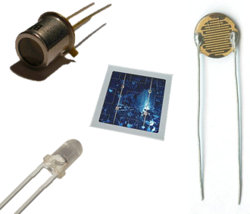
A sensor is often defined as a device that receives and responds to a signal or stimulus. The stimulus is the quantity, property, or condition that is sensed and converted into electrical signal.[1]
In the broadest definition, a sensor is a device, module, machine, or subsystem that detects events or changes in its environment and sends the information to other electronics, frequently a computer processor.
Sensors are used in everyday objects such as touch-sensitive elevator buttons (tactile sensor) and lamps which dim or brighten by touching the base, and in innumerable applications of which most people are never aware. With advances in micromachinery and easy-to-use microcontroller platforms, the uses of sensors have expanded beyond the traditional fields of temperature, pressure and flow measurement,[2] for example into MARG sensors.
Analog sensors such as potentiometers and force-sensing resistors are still widely used. Their applications include manufacturing and machinery, airplanes and aerospace, cars, medicine, robotics and many other aspects of our day-to-day life. There is a wide range of other sensors that measure chemical and physical properties of materials, including optical sensors for refractive index measurement, vibrational sensors for fluid viscosity measurement, and electro-chemical sensors for monitoring pH of fluids.
A sensor's sensitivity indicates how much its output changes when the input quantity it measures changes. For instance, if the mercury in a thermometer moves 1 cm when the temperature changes by 1 °C, its sensitivity is 1 cm/°C (it is basically the slope dy/dx assuming a linear characteristic). Some sensors can also affect what they measure; for instance, a room temperature thermometer inserted into a hot cup of liquid cools the liquid while the liquid heats the thermometer. Sensors are usually designed to have a small effect on what is measured; making the sensor smaller often improves this and may introduce other advantages.[3]
Technological progress allows more and more sensors to be manufactured on a microscopic scale as microsensors using MEMS technology. In most cases, a microsensor reaches a significantly faster measurement time and higher sensitivity compared with macroscopic approaches.[3][4] Due to the increasing demand for rapid, affordable and reliable information in today's world, disposable sensors—low-cost and easy‐to‐use devices for short‐term monitoring or single‐shot measurements—have recently gained growing importance. Using this class of sensors, critical analytical information can be obtained by anyone, anywhere and at any time, without the need for recalibration and worrying about contamination.[5]
Classification of measurement errors
[edit]
A good sensor obeys the following rules:[5]
- it is sensitive to the measured property
- it is insensitive to any other property likely to be encountered in its application, and
- it does not influence the measured property.
Most sensors have a linear transfer function. The sensitivity is then defined as the ratio between the output signal and measured property. For example, if a sensor measures temperature and has a voltage output, the sensitivity is constant with the units [V/K]. The sensitivity is the slope of the transfer function. Converting the sensor's electrical output (for example V) to the measured units (for example K) requires dividing the electrical output by the slope (or multiplying by its reciprocal). In addition, an offset is frequently added or subtracted. For example, −40 must be added to the output if 0 V output corresponds to −40 C input.
For an analog sensor signal to be processed or used in digital equipment, it needs to be converted to a digital signal, using an analog-to-digital converter.
Sensor deviations
[edit]Since sensors cannot replicate an ideal transfer function, several types of deviations can occur which limit sensor accuracy:
- Since the range of the output signal is always limited, the output signal will eventually reach a minimum or maximum when the measured property exceeds the limits. The full scale range defines the maximum and minimum values of the measured property. [citation needed]
- The sensitivity may in practice differ from the value specified. This is called a sensitivity error. This is an error in the slope of a linear transfer function.
- If the output signal differs from the correct value by a constant, the sensor has an offset error or bias. This is an error in the y-intercept of a linear transfer function.
- Nonlinearity is deviation of a sensor's transfer function from a straight line transfer function. Usually, this is defined by the amount the output differs from ideal behavior over the full range of the sensor, often noted as a percentage of the full range.
- Deviation caused by rapid changes of the measured property over time is a dynamic error. Often, this behavior is described with a bode plot showing sensitivity error and phase shift as a function of the frequency of a periodic input signal.
- If the output signal slowly changes independent of the measured property, this is defined as drift. Long term drift over months or years is caused by physical changes in the sensor.
- Noise is a random deviation of the signal that varies in time.
- A hysteresis error causes the output value to vary depending on the previous input values. If a sensor's output is different depending on whether a specific input value was reached by increasing vs. decreasing the input, then the sensor has a hysteresis error.
- If the sensor has a digital output, the output is essentially an approximation of the measured property. This error is also called quantization error.
- If the signal is monitored digitally, the sampling frequency can cause a dynamic error, or if the input variable or added noise changes periodically at a frequency near a multiple of the sampling rate, aliasing errors may occur.
- The sensor may to some extent be sensitive to properties other than the property being measured. For example, most sensors are influenced by the temperature of their environment.
All these deviations can be classified as systematic errors or random errors. Systematic errors can sometimes be compensated for by means of some kind of calibration strategy. Noise is a random error that can be reduced by signal processing, such as filtering, usually at the expense of the dynamic behavior of the sensor.
Resolution
[edit]The sensor resolution or measurement resolution is the smallest change that can be detected in the quantity that is being measured. The resolution of a sensor with a digital output is usually the numerical resolution of the digital output. The resolution is related to the precision with which the measurement is made, but they are not the same thing. A sensor's accuracy may be considerably worse than its resolution.
- For example, the distance resolution is the minimum distance that can be accurately measured by any distance-measuring devices. In a time-of-flight camera, the distance resolution is usually equal to the standard deviation (total noise) of the signal expressed in unit of length.
- The sensor may to some extent be sensitive to properties other than the property being measured. For example, most sensors are influenced by the temperature of their environment.
Chemical sensor
[edit]A chemical sensor is a self-contained analytical device that can provide information about the chemical composition of its environment, that is, a liquid or a gas phase.[6][7] The information is provided in the form of a measurable physical signal that is correlated with the concentration of a certain chemical species (termed as analyte). Two main steps are involved in the functioning of a chemical sensor, namely, recognition and transduction. In the recognition step, analyte molecules interact selectively with receptor molecules or sites included in the structure of the recognition element of the sensor. Consequently, a characteristic physical parameter varies and this variation is reported by means of an integrated transducer that generates the output signal. A chemical sensor based on recognition material of biological nature is a biosensor. However, as synthetic biomimetic materials are going to substitute to some extent recognition biomaterials, a sharp distinction between a biosensor and a standard chemical sensor is superfluous. Typical biomimetic materials used in sensor development are molecularly imprinted polymers and aptamers.[8]
Chemical sensor array
[edit]Biosensor
[edit]In biomedicine and biotechnology, sensors which detect analytes thanks to a biological component, such as cells, protein, nucleic acid or biomimetic polymers, are called biosensors. Whereas a non-biological sensor, even organic (carbon chemistry), for biological analytes is referred to as sensor or nanosensor. This terminology applies for both in-vitro and in vivo applications. The encapsulation of the biological component in biosensors, presents a slightly different problem that ordinary sensors; this can either be done by means of a semipermeable barrier, such as a dialysis membrane or a hydrogel, or a 3D polymer matrix, which either physically constrains the sensing macromolecule or chemically constrains the macromolecule by bounding it to the scaffold.
Neuromorphic sensors
[edit]Neuromorphic sensors are sensors that physically mimic structures and functions of biological neural entities.[13] One example of this is the event camera.
MOS sensors
[edit]The MOSFET invented at Bell Labs between 1955 and 1960,[14][15][16][17][18][19] MOSFET sensors (MOS sensors) were later developed, and they have since been widely used to measure physical, chemical, biological and environmental parameters.[20]
Biochemical sensors
[edit]A number of MOSFET sensors have been developed, for measuring physical, chemical, biological, and environmental parameters.[20] The earliest MOSFET sensors include the open-gate field-effect transistor (OGFET) introduced by Johannessen in 1970,[20] the ion-sensitive field-effect transistor (ISFET) invented by Piet Bergveld in 1970,[21] the adsorption FET (ADFET) patented by P.F. Cox in 1974, and a hydrogen-sensitive MOSFET demonstrated by I. Lundstrom, M.S. Shivaraman, C.S. Svenson and L. Lundkvist in 1975.[20] The ISFET is a special type of MOSFET with a gate at a certain distance,[20] and where the metal gate is replaced by an ion-sensitive membrane, electrolyte solution and reference electrode.[22] The ISFET is widely used in biomedical applications, such as the detection of DNA hybridization, biomarker detection from blood, antibody detection, glucose measurement, pH sensing, and genetic technology.[22]
By the mid-1980s, numerous other MOSFET sensors had been developed, including the gas sensor FET (GASFET), surface accessible FET (SAFET), charge flow transistor (CFT), pressure sensor FET (PRESSFET), chemical field-effect transistor (ChemFET), reference ISFET (REFET), biosensor FET (BioFET), enzyme-modified FET (ENFET) and immunologically modified FET (IMFET).[20] By the early 2000s, BioFET types such as the DNA field-effect transistor (DNAFET), gene-modified FET (GenFET) and cell-potential BioFET (CPFET) had been developed.[22]
Image sensors
[edit]MOS technology is the basis for modern image sensors, including the charge-coupled device (CCD) and the CMOS active-pixel sensor (CMOS sensor), used in digital imaging and digital cameras.[23] Willard Boyle and George E. Smith developed the CCD in 1969. While researching the MOS process, they realized that an electric charge was the analogy of the magnetic bubble and that it could be stored on a tiny MOS capacitor. As it was fairly straightforward to fabricate a series of MOS capacitors in a row, they connected a suitable voltage to them so that the charge could be stepped along from one to the next.[23] The CCD is a semiconductor circuit that was later used in the first digital video cameras for television broadcasting.[24]
The MOS active-pixel sensor (APS) was developed by Tsutomu Nakamura at Olympus in 1985.[25] The CMOS active-pixel sensor was later developed by Eric Fossum and his team in the early 1990s.[26]
MOS image sensors are widely used in optical mouse technology. The first optical mouse, invented by Richard F. Lyon at Xerox in 1980, used a 5 μm NMOS sensor chip.[27][28] Since the first commercial optical mouse, the IntelliMouse introduced in 1999, most optical mouse devices use CMOS sensors.[29]
Monitoring sensors
[edit]
MOS monitoring sensors are used for house monitoring, office and agriculture monitoring, traffic monitoring (including car speed, traffic jams, and traffic accidents), weather monitoring (such as for rain, wind, lightning and storms), defense monitoring, and monitoring temperature, humidity, air pollution, fire, health, security and lighting.[31] MOS gas detector sensors are used to detect carbon monoxide, sulfur dioxide, hydrogen sulfide, ammonia, and other gas substances.[32] Other MOS sensors include intelligent sensors[33] and wireless sensor network (WSN) technology.[34]
Electronics sensors
[edit]The typical modern CPUs, GPUs and SoCs are usually integrated electric sensors to detect chip temperatures, voltages and powers.[35]
See also
[edit]References
[edit]- ^ FRADEN, JACOB (2004). HANDBOOK OF MODERN SENSORS (3rd ed.). New York: Springer. p. 1. ISBN 0-387-00750-4.
- ^ Bennett, S. (1993). A History of Control Engineering 1930–1955. London: Peter Peregrinus Ltd. on behalf of the Institution of Electrical Engineers. ISBN 978-0-86341-280-6The source states "controls" rather than "sensors", so its applicability is assumed. Many units are derived from the basic measurements to which it refers, such as a liquid's level measured by a differential pressure sensor.
{{cite book}}: CS1 maint: postscript (link) - ^ a b Jihong Yan (2015). Machinery Prognostics and Prognosis Oriented Maintenance Management. Wiley & Sons Singapore Pte. Ltd. p. 107. ISBN 978-1-118-63872-9.
- ^ Ganesh Kumar (September 2010). Modern General Knowledge. Upkar Prakashan. p. 194. ISBN 978-81-7482-180-5.
- ^ a b Dincer, Can; Bruch, Richard; Costa-Rama, Estefanía; Fernández-Abedul, Maria Teresa; Merkoçi, Arben; Manz, Andreas; Urban, Gerald Anton; Güder, Firat (2019-05-15). "Disposable Sensors in Diagnostics, Food, and Environmental Monitoring". Advanced Materials. 31 (30) 1806739. Bibcode:2019AdM....3106739D. doi:10.1002/adma.201806739. hdl:10044/1/69878. ISSN 0935-9648. PMID 31094032.
- ^ Toniolo, Rosanna; Dossi, Nicolò; Giannilivigni, Emanuele; Fattori, Andrea; Svigelj, Rossella; Bontempelli, Gino; Giacomino, Agnese; Daniele, Salvatore (3 March 2020). "Modified Screen Printed Electrode Suitable for Electrochemical Measurements in Gas Phase". Analytical Chemistry. 92 (5): 3689–3696. doi:10.1021/acs.analchem.9b04818. ISSN 0003-2700. PMID 32008321. S2CID 211012680.
- ^ Bǎnicǎ, Florinel-Gabriel (2012). Chemical Sensors and Biosensors:Fundamentals and Applications. Chichester, UK: John Wiley & Sons. p. 576. ISBN 978-1-118-35423-0.
- ^ Svigelj, Rossella; Dossi, Nicolo; Pizzolato, Stefania; Toniolo, Rosanna; Miranda-Castro, Rebeca; de-los-Santos-Álvarez, Noemí; Lobo-Castañón, María Jesús (1 October 2020). "Truncated aptamers as selective receptors in a gluten sensor supporting direct measurement in a deep eutectic solvent". Biosensors and Bioelectronics. 165 112339. doi:10.1016/j.bios.2020.112339. hdl:10651/57640. PMID 32729482. S2CID 219902328.
- ^ Albert, Keith J.; Lewis, Nathan S.; Schauer, Caroline L.; Sotzing, Gregory A.; Stitzel, Shannon E.; Vaid, Thomas P.; Walt, David R. (2000-07-01). "Cross-Reactive Chemical Sensor Arrays". Chemical Reviews. 100 (7): 2595–2626. doi:10.1021/cr980102w. ISSN 0009-2665. PMID 11749297.
- ^ Johnson, Kevin J.; Rose-Pehrsson, Susan L. (2015-07-10). "Sensor Array Design for Complex Sensing Tasks". Annual Review of Analytical Chemistry. 8 (1): 287–310. Bibcode:2015ARAC....8..287J. doi:10.1146/annurev-anchem-062011-143205. ISSN 1936-1327. PMID 26132346.
- ^ Li, Zheng; Askim, Jon R.; Suslick, Kenneth S. (2019-01-09). "The Optoelectronic Nose: Colorimetric and Fluorometric Sensor Arrays". Chemical Reviews. 119 (1): 231–292. doi:10.1021/acs.chemrev.8b00226. ISSN 0009-2665. PMID 30207700. S2CID 206542436.
- ^ Askim, Jon R.; Mahmoudi, Morteza; Suslick, Kenneth S. (2013-10-21). "Optical sensor arrays for chemical sensing: the optoelectronic nose". Chemical Society Reviews. 42 (22): 8649–8682. doi:10.1039/C3CS60179J. ISSN 1460-4744. PMID 24091381.
- ^ Vanarse, Anup; Osseiran, Adam; Rassau, Alexander (2016). "A Review of Current Neuromorphic Approaches for Vision, Auditory, and Olfactory Sensors". Frontiers in Neuroscience. 10: 115. doi:10.3389/fnins.2016.00115. PMC 4809886. PMID 27065784.
- ^ Huff, Howard; Riordan, Michael (2007-09-01). "Frosch and Derick: Fifty Years Later (Foreword)". The Electrochemical Society Interface. 16 (3): 29. doi:10.1149/2.F02073IF. ISSN 1064-8208.
- ^ Frosch, C. J.; Derick, L (1957). "Surface Protection and Selective Masking during Diffusion in Silicon". Journal of the Electrochemical Society. 104 (9): 547. doi:10.1149/1.2428650.
- ^ KAHNG, D. (1961). "Silicon-Silicon Dioxide Surface Device". Technical Memorandum of Bell Laboratories: 583–596. doi:10.1142/9789814503464_0076. ISBN 978-981-02-0209-5.
{{cite journal}}: ISBN / Date incompatibility (help) - ^ Lojek, Bo (2007). History of Semiconductor Engineering. Berlin, Heidelberg: Springer-Verlag Berlin Heidelberg. p. 321. ISBN 978-3-540-34258-8.
- ^ Ligenza, J.R.; Spitzer, W.G. (1960). "The mechanisms for silicon oxidation in steam and oxygen". Journal of Physics and Chemistry of Solids. 14: 131–136. Bibcode:1960JPCS...14..131L. doi:10.1016/0022-3697(60)90219-5.
- ^ Lojek, Bo (2007). History of Semiconductor Engineering. Springer Science & Business Media. p. 120. ISBN 978-3-540-34258-8.
- ^ a b c d e f Bergveld, Piet (October 1985). "The impact of MOSFET-based sensors" (PDF). Sensors and Actuators. 8 (2): 109–127. Bibcode:1985SeAc....8..109B. doi:10.1016/0250-6874(85)87009-8. ISSN 0250-6874.
- ^ Chris Toumazou; Pantelis Georgiou (December 2011). "40 years of ISFET technology: From neuronal sensing to DNA sequencing". Electronics Letters. Retrieved 13 May 2016.
- ^ a b c Schöning, Michael J.; Poghossian, Arshak (10 September 2002). "Recent advances in biologically sensitive field-effect transistors (BioFETs)" (PDF). Analyst. 127 (9): 1137–1151. Bibcode:2002Ana...127.1137S. doi:10.1039/B204444G. ISSN 1364-5528. PMID 12375833.
- ^ a b Williams, J. B. (2017). The Electronics Revolution: Inventing the Future. Springer. pp. 245 & 249. ISBN 978-3-319-49088-5.
- ^ Boyle, William S; Smith, George E. (1970). "Charge Coupled Semiconductor Devices". Bell Syst. Tech. J. 49 (4): 587–593. Bibcode:1970BSTJ...49..587B. doi:10.1002/j.1538-7305.1970.tb01790.x.
- ^ Matsumoto, Kazuya; et al. (1985). "A new MOS phototransistor operating in a non-destructive readout mode". Japanese Journal of Applied Physics. 24 (5A): L323. Bibcode:1985JaJAP..24L.323M. doi:10.1143/JJAP.24.L323. S2CID 108450116.
- ^ Eric R. Fossum (1993), "Active Pixel Sensors: Are CCD's Dinosaurs?" Proc. SPIE Vol. 1900, p. 2–14, Charge-Coupled Devices and Solid State Optical Sensors III, Morley M. Blouke; Ed.
- ^ Lyon, Richard F. (2014). "The Optical Mouse: Early Biomimetic Embedded Vision". Advances in Embedded Computer Vision. Springer. pp. 3–22 (3). ISBN 978-3-319-09387-1.
- ^ Lyon, Richard F. (August 1981). "The Optical Mouse, and an Architectural Methodology for Smart Digital Sensors" (PDF). In H. T. Kung; Robert F. Sproull; Guy L. Steele (eds.). VLSI Systems and Computations. Computer Science Press. pp. 1–19. doi:10.1007/978-3-642-68402-9_1. ISBN 978-3-642-68404-3.
- ^ Brain, Marshall; Carmack, Carmen (24 April 2000). "How Computer Mice Work". HowStuffWorks. Retrieved 9 October 2019.
- ^ "LiDAR vs. 3D ToF Sensors — How Apple Is Making AR Better for Smartphones". 31 March 2020. Retrieved 2020-04-03.
- ^ Omura, Yasuhisa; Mallik, Abhijit; Matsuo, Naoto (2017). MOS Devices for Low-Voltage and Low-Energy Applications. John Wiley & Sons. pp. 3–4. ISBN 978-1-119-10735-4.
- ^ Sun, Jianhai; Geng, Zhaoxin; Xue, Ning; Liu, Chunxiu; Ma, Tianjun (17 August 2018). "A Mini-System Integrated with Metal-Oxide-Semiconductor Sensor and Micro-Packed Gas Chromatographic Column". Micromachines. 9 (8): 408. doi:10.3390/mi9080408. ISSN 2072-666X. PMC 6187308. PMID 30424341.
- ^ Mead, Carver A.; Ismail, Mohammed, eds. (May 8, 1989). Analog VLSI Implementation of Neural Systems (PDF). The Kluwer International Series in Engineering and Computer Science. Vol. 80. Norwell, MA: Kluwer Academic Publishers. doi:10.1007/978-1-4613-1639-8. ISBN 978-1-4613-1639-8.
- ^ Oliveira, Joao; Goes, João (2012). Parametric Analog Signal Amplification Applied to Nanoscale CMOS Technologies. Springer Science & Business Media. p. 7. ISBN 978-1-4614-1670-8.
- ^ "Page 486". xem.github.io. Retrieved 2025-01-23.
Further reading
[edit]- M. Kretschmar and S. Welsby (2005), Capacitive and Inductive Displacement Sensors, in Sensor Technology Handbook, J. Wilson editor, Newnes: Burlington, MA.
- C. A. Grimes, E. C. Dickey, and M. V. Pishko (2006), Encyclopedia of Sensors (10-Volume Set), American Scientific Publishers. ISBN 1-58883-056-X
- Blaauw, F.J., Schenk, H.M., Jeronimus, B.F., van der Krieke, L., de Jonge, P., Aiello, M., Emerencia, A.C. (2016). Let's get Physiqual – An intuitive and generic method to combine sensor technology with ecological momentary assessments. Journal of Biomedical Informatics, vol. 63, page 141–149.


- http://www.cbm-sweden.se/images/Seminarie/Class_Descriptions_IDA_MEMS.pdf (see https://web.archive.org/web/20160304105724/http://www.cbm-sweden.se/images/Seminarie/Class_Descriptions_IDA_MEMS.pdf)
| International | |
|---|---|
| National | |
| Other | |

| System |
|  | ||||||||||||||||||
|---|---|---|---|---|---|---|---|---|---|---|---|---|---|---|---|---|---|---|---|---|
| Tasks | ||||||||||||||||||||
| Other | ||||||||||||||||||||
Sensor
View on GrokipediaOverview
Definition and Role
A sensor is a device that detects and responds to physical inputs from the environment, such as changes in temperature, pressure, or light, by converting them into measurable signals that can be processed or recorded.[15] This conversion typically involves transforming a physical phenomenon into an electrical or digital output, enabling quantitative analysis of environmental conditions.[15] Sensors play a fundamental role in data acquisition for automation systems, where they capture real-time information to inform decision-making and optimize processes.[16] They are essential for monitoring environmental changes, such as variations in humidity or motion, allowing systems to detect anomalies and maintain operational efficiency.[17] Additionally, sensors serve as the critical interface between the physical world and digital systems, bridging analog inputs to computational platforms in applications like the Internet of Things (IoT).[18] Basic sensor functions include detecting light intensity for illumination control, measuring temperature fluctuations for climate regulation, and sensing motion for security alerts, without delving into specialized mechanisms.[15] These capabilities underscore sensors' versatility in everyday and industrial contexts. Early precursors to modern sensors, such as the thermoscopes developed in the late 16th century by Galileo Galilei, demonstrated rudimentary detection of thermal changes, laying the groundwork for precise measurement technologies.[19]Historical Evolution
The development of sensors traces back to ancient civilizations, where rudimentary devices were created to detect and respond to environmental stimuli. Among the earliest examples is the sundial, in use as far back as 1500 BC in ancient Egypt and Babylon, which functioned as a primitive light sensor by projecting the sun's shadow onto a marked surface to indicate time.[20] Other simple mechanical instruments, such as the clepsydra (water clock) from around 1400 BC in Egypt, served as flow sensors by measuring water levels to track time intervals.[21] A key advancement came in 1800 with Alessandro Volta's invention of the electric battery, providing a stable power source essential for early electrical sensors.[5] The 19th century marked a pivotal era of breakthroughs in electrical sensing principles. In 1821, Thomas Johann Seebeck discovered the thermoelectric effect, leading to the invention of the thermocouple, a device that generates a voltage proportional to temperature differences between two junctions of dissimilar metals.[22] This innovation enabled reliable temperature measurement in industrial applications. In 1856, Lord Kelvin (William Thomson) observed that mechanical strain alters the electrical resistance of conductors, establishing the foundational principle for strain gauges.[22] Thomas Edison's phonograph, patented in 1877, incorporated early acoustic sensor elements—a vibrating diaphragm and stylus—that converted sound waves into mechanical motion for recording and playback.[23] In 1880, Pierre and Jacques Curie discovered the piezoelectric effect in certain crystals, where applied mechanical stress produces an electric charge, paving the way for sensors detecting pressure, acceleration, and vibration.[24] The 20th century ushered in mass production and technological refinement, particularly following World War II. The 1938 independent invention of the bonded wire strain gauge by Edward E. Simmons and Arthur C. Ruge allowed precise measurement of structural deformations in engineering and aerospace.[22] The emergence of semiconductor sensors accelerated post-1947 with the transistor's invention at Bell Labs, enabling compact, solid-state devices that replaced bulky vacuum tubes.[25] In the 1950s, the first practical phototransistor, developed by John N. Shive at Bell Labs and announced in 1950, provided efficient light-to-electrical signal conversion for applications in communications and imaging.[26] By the 1970s, advancements in microelectronics facilitated the transition from analog to digital sensors, integrating analog-to-digital converters and microprocessors for enhanced accuracy, noise reduction, and data processing in systems like automotive controls and consumer electronics.[27]Operating Principles
Transduction Processes
Transduction processes in sensors involve the conversion of physical, chemical, or biological stimuli into measurable electrical or optical signals through fundamental physical and chemical mechanisms. These processes enable sensors to detect changes in environmental parameters by exploiting material properties that respond to inputs like force, temperature, or light, producing an output proportional to the stimulus intensity. The efficiency of transduction depends on the underlying energy conversion principles, where input energy forms—such as mechanical, thermal, or electromagnetic—are transformed into electrical charge, voltage, or current, often following linear or nonlinear relationships governed by material characteristics.[28] Resistive transduction occurs when an input stimulus alters the electrical resistance of a sensing material, typically through changes in geometry or conductivity. For instance, in strain sensors, mechanical deformation stretches or compresses a conductive element, increasing its length or decreasing its cross-sectional area, which raises resistance according to the relation , where is resistivity, is length, and is cross-sectional area. This mechanism is widely used in piezoresistive sensors, where semiconductor materials like silicon exhibit high gauge factors (up to 100 or more) due to the piezoresistive effect, amplifying resistance changes under stress.[29][30] Capacitive transduction relies on variations in capacitance caused by changes in the dielectric properties or geometry of a capacitor structure. Pressure or displacement moves a diaphragm or electrode, altering the gap distance between plates, thereby changing capacitance as , where is the permittivity of free space, is the relative permittivity, and is the plate area. This results in a measurable voltage shift when integrated with readout circuits, offering high sensitivity in applications like pressure or touch sensors, with capacitance changes typically ranging from 1–10% for touch and up to 50–100% for certain pressure sensors over the dynamic range.[31] Materials with high , such as silicon or polymers, enhance sensitivity by increasing the electric field strength.[32][28] Inductive transduction detects changes in magnetic fields or coil inductance induced by metallic targets or motion, based on Faraday's law of electromagnetic induction. An alternating current in a coil generates a magnetic field, and proximity to a conductive object induces eddy currents that oppose the field, reducing effective inductance and altering the coil's impedance. This mechanism converts mechanical position into an electrical signal via changes in mutual or self-inductance, with sensitivity influenced by coil geometry and core materials like ferrite, which concentrate magnetic flux.[28][33] Piezoelectric transduction generates an electric charge or voltage directly from mechanical stress applied to certain crystalline materials, such as quartz or lead zirconate titanate (PZT), due to the displacement of internal dipoles. The direct piezoelectric effect produces a voltage , where is the piezoelectric voltage constant (typically 10–30 × 10^{-3} Vm/N for PZT), is the material thickness, and is the applied stress. This linear relationship allows rapid response times (on the order of microseconds), making it suitable for dynamic force sensing, though output diminishes under sustained load due to charge leakage.[34][35] Optical transduction modulates light properties—such as intensity, wavelength, or phase—in response to stimuli, often using waveguides or interferometers. Analyte binding or environmental changes alter the refractive index or absorption in an optical medium, shifting transmitted light characteristics detectable by photodetectors; for example, evanescent wave sensors exploit surface plasmon resonance for refractive index variations as small as 10^{-6}. This mechanism enables remote sensing without electrical contacts, with efficiency tied to optical material transparency and coupling losses.[36] Broader energy conversion principles underpin these mechanisms, including the photovoltaic effect, where incident photons in semiconductors like silicon generate electron-hole pairs, producing a photocurrent proportional to light intensity via the relation , with as electron charge, as area, as reflectivity, as quantum efficiency, and as photon flux. Similarly, the thermoelectric effect, based on the Seebeck coefficient, converts thermal gradients into voltage through charge carrier diffusion in materials like bismuth telluride, yielding , where is the Seebeck coefficient (up to 200 μV/K) and is the temperature difference. These principles facilitate self-powered sensors by harvesting ambient energy.[37] Factors influencing transduction efficiency primarily include material properties such as sensitivity (e.g., gauge factor for resistive or piezoelectric constants) and response time, determined by charge mobility and dielectric relaxation. High-sensitivity materials like doped silicon improve signal-to-noise ratios but may introduce nonlinearity, while low-response-time materials (e.g., with high thermal conductivity) minimize lag in dynamic environments. Advances in nanomaterials, such as graphene for resistive sensors, enhance these properties by increasing surface area and conductivity, though trade-offs in stability must be managed. Ongoing materials research enables tailored transduction for specific inputs, optimizing conversion yields up to 90% in advanced designs.[7][30]Signal Conversion and Amplification
Signal conditioning is essential for transforming raw sensor outputs into reliable, usable signals for downstream processing. This involves several key steps, including noise filtering to remove unwanted interference such as electromagnetic noise or thermal fluctuations that can degrade signal integrity. Techniques like low-pass, high-pass, or band-pass filters are employed to isolate the desired frequency components while attenuating extraneous noise, ensuring the signal-to-noise ratio is optimized for accurate measurement.[38] Linearization addresses the nonlinear responses inherent in many sensors, where the output does not vary proportionally with the input; methods such as piecewise linear approximation or polynomial corrections are applied to produce a more linear relationship, enhancing measurement precision across the sensor's operating range. Finally, analog-to-digital conversion (ADC) quantizes the conditioned analog signal into discrete digital values, enabling compatibility with digital systems; common ADC types include successive approximation and sigma-delta converters, which provide resolutions from 8 to 24 bits depending on the application requirements. Amplification boosts the weak sensor signals to levels suitable for transmission or further processing, often using operational amplifiers (op-amps) configured in non-inverting mode to preserve signal polarity. In this setup, the input signal is applied to the non-inverting terminal, with feedback provided through resistors to the inverting terminal, yielding a voltage gain that amplifies the differential input while maintaining high input impedance. The gain for a non-inverting amplifier is given by where is the feedback resistor and is the input resistor connected to ground. This configuration is widely used in sensor interfaces due to its simplicity and ability to achieve gains from unity to hundreds, depending on the resistor ratio.[39] Sensor outputs can be formatted as analog or digital signals to suit different system architectures. Analog formats include voltage outputs (e.g., 0-5 V proportional to the measurand) and current outputs (e.g., 4-20 mA loops for long-distance transmission with low susceptibility to noise), providing continuous representation of the sensed parameter. Digital formats, in contrast, offer discrete representations such as pulse-width modulation (PWM), where the duty cycle encodes the signal amplitude at a fixed frequency, or serial data protocols like I²C or SPI, which transmit multi-bit digital words for high-resolution information transfer. These digital outputs reduce susceptibility to noise and enable direct interfacing with processors.[40] In Internet of Things (IoT) applications, sensors are often integrated with microcontrollers to produce direct digital outputs, streamlining data handling in resource-constrained environments. The microcontroller's built-in ADC converts the conditioned analog signal from the sensor into digital form, followed by calibration and basic processing (e.g., averaging to further reduce noise) before transmission via wireless modules. For instance, platforms like Arduino Uno interface multiple sensors—such as gas and temperature detectors—through analog pins, converting signals to digital values with 10-bit resolution and uploading them to cloud services for real-time analysis, thereby enabling efficient IoT ecosystems with low power consumption.[41]Classification
By Physical Phenomenon
Sensors are classified according to the physical phenomenon or input stimulus they detect, which determines the type of environmental property transduced into a measurable output. This taxonomy emphasizes the core measurand, such as mechanical deformation, thermal energy, electromagnetic fields, optical radiation, or acoustic pressure, enabling targeted selection for specific applications. Unlike classifications based on output signals, this approach prioritizes the underlying physical interaction between the sensor and its surroundings.[2][42] Mechanical phenomena involve sensors that respond to forces, pressures, displacements, or accelerations by exploiting principles like elasticity, inertia, or strain. These sensors detect changes in position, velocity, or stress, often through mechanical deformation that alters electrical properties such as capacitance or resistance. For example, accelerometers commonly employ a mass-spring system, where external acceleration displaces a suspended mass against spring restoring forces, producing a proportional signal for motion detection. This category is essential for vibration monitoring, structural health assessment, and inertial navigation systems.[43][44][45] Thermal phenomena encompass sensors that measure temperature or heat flux by sensing variations in material properties caused by heat transfer. Key principles include thermal expansion, where materials dilate differently under heat, or changes in electrical conductivity with temperature. Bimetallic strips illustrate this, consisting of two metals with distinct expansion coefficients bonded together; heating causes differential expansion, resulting in bending that can actuate a switch or indicate temperature. Such sensors are widely used in thermostats, fire alarms, and industrial process control due to their simplicity and reliability over moderate temperature ranges.[46][47] Electromagnetic phenomena cover sensors sensitive to electric fields, magnetic fields, or related interactions, converting field variations into electrical outputs via effects like induction or charge separation. These sensors detect proximity, current flow, or magnetic flux density in non-contact scenarios. Hall effect sensors, for instance, utilize the Hall effect—where a magnetic field perpendicular to a current-carrying conductor generates a transverse voltage—to measure magnetic strength, enabling applications in motor control, position sensing, and current measurement. This classification supports advancements in electromagnetics-based diagnostics and automation.[48][49][50] Optical phenomena include sensors that detect electromagnetic radiation, particularly in the visible, infrared, or ultraviolet ranges, by interacting with photons to produce charge carriers or voltage changes. Principles such as absorption, reflection, or refraction govern their operation, allowing measurement of light intensity, color, or wavelength. Photodiodes exemplify this, operating on the photoelectric effect where incident photons excite electrons across a semiconductor p-n junction, generating a photocurrent proportional to light intensity. Optical sensors find critical use in imaging, spectroscopy, and environmental monitoring, offering high sensitivity and non-invasive detection.[51][52][53] Acoustic phenomena pertain to sensors that capture pressure waves or vibrations in gases, liquids, or solids, converting mechanical oscillations into electrical signals through dynamic or static transduction. These sensors typically rely on a flexible diaphragm that deforms under sound pressure, modulating an electrical parameter like capacitance. Microphones represent a core example, with the diaphragm's vibration altering the spacing in a capacitor or inducing motion in a coil within a magnetic field to produce an audio signal. Acoustic sensors are indispensable for audio recording, noise analysis, and ultrasonic ranging, providing insights into wave propagation and intensity.[2][54][55] This input-based classification criteria—focusing on stimuli like motion, radiation, or energy flux—facilitates interdisciplinary integration in systems design, ensuring sensors match the dominant physical property in their operational context.[42][43]By Output Signal Type
Sensors are classified by output signal type primarily into analog and digital categories, with further distinctions based on whether they are passive or active devices. Analog output sensors produce a continuous electrical signal, typically voltage, current, or resistance, that varies proportionally with the measured physical quantity. For instance, a thermocouple generates a voltage output directly proportional to temperature differences via the Seebeck effect.[56] These sensors are valued for their simplicity and direct representation of input variations, making them suitable for applications requiring high-resolution continuous monitoring.[57] Passive sensors, a subset often featuring analog outputs, do not require external excitation power and self-generate their signal from the input energy. Examples include thermocouples, which produce millivolt-level voltages without additional power, and piezoelectric sensors that output charge or voltage in response to mechanical stress.[56] In contrast, active sensors need external power for excitation to produce an analog output, such as linear variable differential transformers (LVDTs) that use AC excitation to yield a voltage proportional to displacement.[58] Analog outputs excel in low-cost, straightforward applications where minimal processing is needed, though they are susceptible to noise over long distances.[59] Digital output sensors deliver discrete signals, such as binary codes, pulse-width modulation (PWM), or serial data streams (e.g., I²C, SPI), representing quantized values of the input. Proximity sensors, for example, often use PWM or serial digital outputs to indicate object detection thresholds.[60] These sensors typically incorporate internal analog-to-digital conversion (ADC), enabling direct interfacing with microcontrollers and reducing external circuitry. Digital outputs provide superior noise immunity, especially in electrically noisy environments or over extended cabling, as the signal can include error-checking protocols like CRC.[61] They also facilitate easier integration in smart systems, supporting features like self-calibration and multi-sensor networking.[62] Hybrid sensors combine analog and digital outputs for enhanced versatility, allowing users to select the interface based on system requirements. For example, certain integrated temperature sensors offer both linear analog voltage outputs and digital serial interfaces, enabling compatibility with legacy analog systems or modern digital processors without additional converters.[63] This dual-mode design balances the precision of analog signals with the robustness of digital transmission, optimizing for applications like industrial automation where mixed-signal environments are common. Overall, digital and hybrid types offer advantages in reliability and scalability for complex systems, while analog remains preferred for cost-sensitive, high-fidelity scenarios.[64]Physical Sensors
Mechanical Sensors
Mechanical sensors detect physical quantities such as force, pressure, displacement, and vibration by converting mechanical deformations into measurable electrical signals, often through elastic elements that respond to applied stress. These sensors are fundamental in applications requiring precise monitoring of mechanical phenomena, utilizing materials and structures designed for robustness under varying loads.[65] Pressure sensors, a key category of mechanical sensors, commonly employ diaphragm or bellows configurations to sense applied pressure. In diaphragm-type sensors, a flexible thin membrane deflects under pressure, with the deformation transduced into an electrical output; bellows types use an expandable metallic capsule that elongates or contracts similarly, providing isolation from the surrounding environment. Piezoresistive variants integrate strain gauges directly onto the diaphragm or bellows, where resistance changes due to mechanical strain enable sensitive pressure detection, often achieving resolutions suitable for industrial monitoring.[66][65][67] Accelerometers, widely used for measuring acceleration and vibration, frequently adopt MEMS-based capacitive detection principles. In these devices, a proof mass suspended by springs moves relative to fixed electrodes under acceleration, altering the capacitance between plates as the gap distance changes. The acceleration can be derived from the relative capacitance change via the relation where is the capacitance change, is the nominal capacitance, and is a calibration factor incorporating spring stiffness and geometry. This configuration allows for compact, low-power operation with high sensitivity to dynamic motions.[68][69][70] For strain and displacement measurement, linear variable differential transformers (LVDTs) operate on inductive principles, consisting of a primary coil excited by AC voltage and two secondary coils whose differential output varies linearly with the position of a ferromagnetic core attached to the moving object. As the core displaces within the transformer coil assembly, it modulates the magnetic coupling between primary and secondary windings, producing an output voltage proportional to linear displacement over a range of several inches with sub-micron resolution and minimal hysteresis. This frictionless design ensures reliability in harsh environments.[71][72][73] These mechanical sensors find critical applications in automotive and aerospace sectors for vibration monitoring, where accelerometers and LVDTs detect imbalances or structural stresses in engines, landing gear, and airframes to prevent failures and enable predictive maintenance. In automotive contexts, they monitor tire pressure and suspension dynamics, while in aerospace, they ensure compliance with vibration limits during flight operations.[74][75][76] Construction of mechanical sensors prioritizes durable materials like silicon for MEMS components, offering excellent mechanical properties and compatibility with microfabrication, and metals such as stainless steel for diaphragms and strain gauges to withstand high stresses and fatigue. Silicon provides high gauge factors for piezoresistive elements, while metals ensure thermal stability and longevity in load-bearing structures.[77][78][79]Thermal Sensors
Thermal sensors measure temperature or heat flux by detecting changes in physical properties induced by thermal energy, essential for applications in manufacturing, aerospace, and biomedical fields. These devices convert thermal variations into electrical signals, enabling precise monitoring and control. While temperature sensors directly quantify heat levels, heat flux sensors assess energy transfer rates, often using differential temperature measurements across a medium. Thermocouples function on the Seebeck effect, generating an electromotive force (emf) from the temperature difference at the junction of two dissimilar conductive materials.[80] This thermoelectric phenomenon produces a voltage proportional to the temperature gradient, making thermocouples robust for harsh environments up to 1800°C. Common variants include Type J, composed of iron and constantan for ranges up to 760°C, and Type K, using chromel and alumel for broader utility from -200°C to 1350°C, valued for their stability and cost-effectiveness in industrial settings.[81] The emf is approximated by the equationwhere is the Seebeck coefficient specific to the material pair, typically ranging from 10 to 70 μV/°C.[81] Resistance temperature detectors (RTDs) employ the principle that electrical resistance in pure metals increases predictably with temperature, offering high accuracy for laboratory and precision industrial use. Platinum is the preferred material due to its chemical inertness, wide operating range (-200°C to 850°C), and minimal hysteresis.[82] These sensors provide a linear response modeled by
where is the base resistance (often 100 Ω at 0°C), is the temperature coefficient (approximately 0.00385 Ω/Ω/°C for platinum), and is the temperature change.[82] RTDs excel in stability, with uncertainties below 0.01°C when calibrated properly, though they require careful lead wire compensation to avoid self-heating errors. Thermistors, semiconductor-based resistors, exhibit large resistance changes with temperature, providing superior sensitivity compared to metallic sensors. Negative temperature coefficient (NTC) thermistors decrease resistance as temperature rises, ideal for precise detection in compact devices, while positive temperature coefficient (PTC) types increase resistance for self-regulating applications like circuit protection.[83] NTC variants, often made from oxides like manganese or nickel, achieve sensitivities up to 5% per °C, making them prevalent in consumer electronics for tasks such as smartphone battery thermal management and HVAC controls.[84] PTC thermistors, typically barium titanate-based, serve in overcurrent limiting, enhancing safety in appliances without additional circuitry. Infrared sensors facilitate non-contact temperature assessment by capturing emitted thermal radiation, suitable for moving or inaccessible surfaces. These devices detect infrared wavelengths (typically 8–14 μm) corresponding to blackbody emission from objects above 0 K, following Planck's law where radiance peaks with temperature.[85] Pyrometers or thermopiles convert this radiation into electrical signals, enabling measurements from -50°C to over 3000°C with response times under 100 ms, though emissivity corrections are necessary for non-ideal surfaces.[85] For heat flux measurement, thermal sensors like thin-film thermopiles quantify energy flow by sensing temperature differentials across a thin insulating layer, critical for aerodynamics and material testing where direct contact is impractical.[86] Calibration of thermal sensors adheres to the International Temperature Scale of 1990 (ITS-90), which establishes 17 fixed points from the triple point of hydrogen (-259.34°C) to silver's freezing point (961.78°C) for thermodynamic consistency.[87] This scale ensures traceability, with platinum resistance thermometers serving as interpolating instruments between fixed points, achieving accuracies to 0.001°C in standard realizations.[87]
Chemical and Biological Sensors
Chemical Detection Sensors
Chemical detection sensors are devices designed to identify and quantify chemical substances, such as gases and ions in liquids, by converting chemical interactions into measurable signals. These sensors operate through abiotic mechanisms, including electrochemical reactions, resistance changes, and optical perturbations, enabling applications in environmental monitoring, industrial safety, and water quality assessment. Unlike biosensors, which incorporate biological elements for recognition, chemical detection sensors rely on physical or chemical properties of materials to achieve specificity.[88] Gas sensors represent a major category within chemical detection, with electrochemical cells commonly used for detecting toxic gases like carbon monoxide (CO). In these sensors, CO is oxidized at a working electrode in an electrolyte, typically sulfuric acid or a solid polymer like Nafion, generating a current proportional to the gas concentration; for instance, a sensor using a superconductive C-loaded CuO-CeO₂ nanocomposite achieves a sensitivity of 192 mV/ppm and a response time of 9 seconds for CO levels from 0.1 to 1000 ppm.[89] Metal-oxide semiconductor (MOS) sensors, such as those based on tin dioxide (SnO₂), detect volatile organic compounds (VOCs) through changes in electrical resistance; exposure to reducing gases like ethanol or formaldehyde causes electrons to transfer from the gas to the oxide surface, decreasing resistance in n-type SnO₂, with response times often under 10 seconds and sensitivities enhanced by nanostructuring.[90] These MOS sensors are widely adopted for their low cost and portability in air quality monitoring.[91] pH sensors and ion-selective electrodes (ISEs) measure ionic concentrations in aqueous solutions using potentiometric principles. The classic pH glass electrode features a thin glass membrane that selectively permits H⁺ ions, establishing a potential difference across the membrane according to the Nernst equation: where is the measured potential, is the standard potential, is the gas constant, is temperature, is the number of electrons (1 for H⁺), and is Faraday's constant; this yields a theoretical sensitivity of 59 mV per pH unit at 25°C.[92] ISEs extend this to other ions, such as Na⁺ or K⁺, via ionophore-doped membranes that facilitate selective ion exchange and transport, creating a potential responsive to the analyte's activity while minimizing interference from other species.[88] These electrodes are essential for precise measurements in clinical and environmental analyses. Optical chemical sensors exploit light-matter interactions for detection, with fluorescence quenching being a prominent method where analyte binding reduces the emission intensity of a fluorophore. The Stern-Volmer equation describes this process: where and are the fluorescence intensities without and with quencher (analyte) concentration , and is the quenching constant; this enables quantification of oxygen or metal ions in solutions.[93] Such sensors offer advantages in remote sensing and miniaturization, as seen in fiber-optic probes for pollutant detection.[94] A key challenge in chemical detection sensors is selectivity, where cross-sensitivity to interferents like humidity or co-existing gases can lead to false positives; for example, MOS sensors often respond to multiple VOCs indiscriminately, reducing accuracy in complex mixtures.[95] Strategies to mitigate this include material doping and temperature modulation, but environmental factors remain a persistent issue.[96] To address multi-analyte environments, sensor arrays—known as electronic noses—combine diverse sensing elements, such as electrochemical and MOS types, with pattern recognition algorithms to discriminate between analytes; these systems achieve high-dimensional data analysis for identifying gas mixtures in food quality or breath diagnostics.[97]Biosensors
Biosensors are analytical devices that integrate biological recognition elements with physicochemical transducers to detect specific biomolecules, pathogens, or biological processes, producing a measurable signal proportional to the analyte concentration.[98] These sensors leverage the high specificity of biological components to achieve selective detection in complex matrices, such as physiological fluids, distinguishing them from purely chemical sensors by their reliance on biorecognition mechanisms.[99] The core components of a biosensor include a bioreceptor, which is the biological recognition element responsible for selectively binding the target analyte; a transducer, which converts the biorecognition event into a quantifiable physical or chemical signal; and a signal processor, which amplifies, processes, and displays the output for interpretation.[99] Common bioreceptors encompass enzymes like glucose oxidase, antibodies for antigen detection, nucleic acids for DNA hybridization, and aptamers or whole cells for broader specificity.[100] The transducer interfaces with the bioreceptor to detect changes such as electron transfer, mass variation, or optical shifts, while the signal processor ensures the output is reliable and user-interpretable, often incorporating electronics for real-time data handling.[101] Among the various types, amperometric biosensors are widely used, operating by measuring the electric current generated from redox reactions involving the analyte and bioreceptor.[102] In these devices, the bioreceptor catalyzes the oxidation or reduction of the target, producing electrons that diffuse to an electrode, where the resulting current is proportional to the analyte concentration under applied potential.[103] A seminal example is the glucose biosensor employing glucose oxidase, which oxidizes glucose to gluconolactone and hydrogen peroxide; the peroxide's subsequent electrochemical oxidation generates a measurable current, enabling continuous monitoring for diabetes management.[104] This configuration has been foundational since the 1960s, with commercial implementations achieving detection limits as low as 0.1 mM glucose in blood.[102] Optical biosensors, particularly those based on surface plasmon resonance (SPR), provide label-free detection of biomolecular interactions by monitoring changes in the refractive index near a metal surface.[105] In SPR systems, light excites surface plasmons on a thin gold film, and analyte binding to the immobilized bioreceptor alters the resonance angle, allowing real-time assessment of binding affinity through association and dissociation kinetics.[106] This technique excels in quantifying equilibrium dissociation constants () for antibody-antigen pairs, with sensitivities reaching refractive index units, facilitating applications in drug discovery and diagnostics.[106] Implantable biosensors extend biosensor capabilities for in vivo monitoring, with neural probes representing a key example for recording brain activity.[107] These devices typically feature microelectrode arrays coated with bioreceptors such as enzymes or neurotransmitters-specific aptamers, integrated with flexible substrates to minimize tissue damage during chronic implantation.[108] For instance, neural probes can detect dopamine release or local field potentials in the cortex, providing high-resolution signals (up to 1-10 kHz sampling) to support brain-machine interfaces for paralysis treatment or epilepsy monitoring.[109] Advances in materials like carbon nanotubes or polymers have improved biocompatibility, enabling recordings over months with signal-to-noise ratios exceeding 10:1.[107] Recent developments as of 2025 include wearable electrochemical biosensors using nanomaterials for non-invasive, real-time detection of stress biomarkers and phytohormones in agriculture and health monitoring.[110] Regulatory oversight for medical biosensors in the United States began with the Medical Device Amendments of 1976, which empowered the Food and Drug Administration (FDA) to classify and premarket review devices based on risk, marking the start of formal approvals for biosensor technologies.[111] Since then, the FDA has approved numerous biosensors under pathways like 510(k) clearance for moderate-risk devices and Premarket Approval (PMA) for high-risk implants, with early examples including electrochemical glucose monitors in the 1980s and continuous systems by the 1990s.[112] This framework ensures safety and efficacy, requiring clinical data on biocompatibility, accuracy (e.g., ±15% for glucose readings), and long-term stability for implantable variants.[113]Semiconductor-Based Sensors
MOS Sensors
Metal-oxide-semiconductor (MOS) sensors represent a key subset of semiconductor-based sensors, leveraging the electrical properties of metal oxide materials to detect chemical species, particularly gases and ions, through changes in conductivity or potential. These sensors operate on the principle of surface interactions where target analytes modulate charge carrier concentration at the oxide-semiconductor interface, enabling applications in environmental monitoring, air quality assessment, and industrial safety.[114] Their appeal stems from inherent advantages such as miniaturization potential, room-temperature operation in advanced designs, and compatibility with large-scale integration.[115] The core structure of MOS sensors derives from metal-oxide-semiconductor field-effect transistor (MOSFET) architectures, adapted for sensitivity to specific stimuli via specialized oxide layers. In these variants, the gate region is engineered to interact with the environment; for instance, the ion-sensitive field-effect transistor (ISFET), a widely adopted MOSFET derivative for pH detection, replaces the traditional metal gate with an ion-selective membrane exposed to an electrolyte solution, while retaining the underlying gate oxide (typically SiO₂ or Al₂O₃) that responds to ion binding through shifts in surface potential and threshold voltage.[116] This oxide layer facilitates sensitivity by enabling electrostatic gating effects, where pH-induced protonation or deprotonation alters the electric field across the dielectric, yielding near-Nernstian responses of approximately 59 mV/pH at 25°C in optimized devices.[117] Such configurations extend to gas-sensing applications, where polycrystalline metal oxides like ZnO or TiO₂ form the active layer, with oxygen vacancies—intrinsic defects in the lattice—serving as electron trap sites that influence baseline conductivity. Gas detection in MOS sensors primarily relies on redox reactions at the surface of n-type metal oxides, such as ZnO and TiO₂, where adsorbed oxygen species create a depletion layer that reduces free electron density. In ambient air, O₂ molecules adsorb and ionize by extracting electrons from the conduction band, forming species like O₂⁻ or O⁻ and generating oxygen vacancies that deplete carriers; exposure to reducing gases (e.g., CO or H₂) then reacts with these adsorbed oxygen ions, releasing electrons back to the material and increasing conductivity.[114] This modulation is quantitatively described by the conductivity equation , where denotes electrical conductivity, is the variable electron concentration influenced by gas interactions, is the elementary charge, and is electron mobility—typically, can increase by orders of magnitude upon gas exposure, yielding response times under 10 seconds for concentrations in the ppm range.[115] Common variants include chemiresistors, which employ a simple two-electrode setup to measure resistance changes across the oxide film (e.g., SnO₂-based devices showing 10-100 fold resistance drops to target gases), and field-effect transistors (FETs), which incorporate a gated three-terminal structure for signal amplification and improved selectivity through voltage biasing of the channel.[118] Fabrication of MOS sensors benefits from CMOS-compatible processes, facilitating seamless integration with silicon microelectronics for compact, array-based systems suitable for portable environmental monitors. These methods involve standard photolithography, thin-film deposition (e.g., sputtering or sol-gel for oxide layers), and etching on silicon substrates, often culminating in plasma-enhanced chemical vapor deposition (PECVD) for passivation layers that withstand operating temperatures up to 450°C without degradation.[119] This compatibility enables miniaturization to micrometer scales, reducing power consumption to microwatts and supporting on-chip signal processing for real-time gas analysis.[120] However, practical deployment is challenged by limitations including baseline drift—signal shifts up to 50% over months due to material sintering, humidity ingress, or thermal cycling—and poisoning effects, where exposure to inhibitors like silicone vapors or sulfur compounds irreversibly blocks active sites, diminishing sensitivity by 20-80% and necessitating frequent recalibration or replacement.[121] Mitigation strategies, such as noble metal doping or heterostructure designs, have been explored to enhance long-term stability in environmental monitoring contexts.[122]Image Sensors
Image sensors are semiconductor-based devices designed to capture visual information by converting incident light into electrical signals, forming the core of digital imaging systems. These sensors operate primarily through the photoelectric effect, where photons absorbed in the semiconductor material generate electron-hole pairs, producing a measurable charge proportional to the light intensity. This technology enables high-resolution image capture in various formats, from consumer photography to scientific applications, and has evolved significantly since the late 20th century.[123] Two primary architectures dominate image sensors: charge-coupled devices (CCDs) and complementary metal-oxide-semiconductor (CMOS) sensors. CCDs, invented in 1969 by Willard Boyle and George E. Smith at Bell Laboratories, function by transferring accumulated charge across pixels in a serial manner, offering superior charge transfer efficiency and low noise for high-quality imaging.[124] In contrast, CMOS image sensors employ active pixel sensors (APS), pioneered by Eric Fossum in the early 1990s at NASA's Jet Propulsion Laboratory, where each pixel includes an amplifier to read out signals in parallel, resulting in lower power consumption, reduced manufacturing costs, and integrated functionality compared to CCDs.[125] While CCDs excel in applications requiring maximal uniformity and sensitivity, such as astronomy, CMOS sensors have largely supplanted them in consumer and mobile devices due to their efficiency and scalability.[123] A key performance metric for image sensors is quantum efficiency (QE), which quantifies the conversion of photons to electrons via the photoelectric effect. Internal quantum efficiency (IQE) is defined as: This ratio, often exceeding 80% in modern silicon-based sensors for visible wavelengths, determines the sensor's ability to utilize incoming light effectively, directly impacting signal-to-noise ratio and low-light performance.[126] Higher IQE minimizes photon loss, enhancing overall image fidelity in diverse lighting conditions. For color imaging, most sensors incorporate a Bayer filter array, a mosaic of red, green, and blue filters developed by Bryce Bayer at Eastman Kodak in 1976, which assigns color sensitivity to individual pixels in a repeating RGGB pattern to approximate full-color reproduction through interpolation.[127] This design, now ubiquitous in digital cameras, balances spatial resolution with color accuracy, though it introduces minor artifacts addressed by demosaicing algorithms. Image sensors find widespread applications in consumer cameras for photography and videography, medical endoscopy for internal visualization during procedures, and autonomous vehicles for real-time environmental perception and obstacle detection.[128][129] Advancements in the 2000s, particularly back-illuminated (BSI) sensors commercialized by Sony in 2009, reposition the wiring layer behind the photodiode to improve light capture, achieving up to twice the sensitivity of front-illuminated designs by increasing the fill factor and reducing shadowing effects.[130] This innovation has been pivotal in enabling compact, high-performance imaging in smartphones and advanced computational photography systems.Performance Metrics
Error Classification
Errors in sensor measurements are broadly classified into systematic and random categories, with systematic errors causing consistent biases in output that can be predicted and corrected, while random errors introduce unpredictable variability around the true value.[131] Systematic errors arise from imperfections in the sensor design, manufacturing, or environmental interactions, leading to deviations that affect all measurements in a repeatable manner. Random errors, conversely, stem from inherent stochastic processes and are characterized by their statistical distribution, often quantified using metrics like standard deviation.[132] Systematic errors include offset, where the sensor produces a non-zero output in the absence of input, representing a fixed bias in the baseline reading. Scale factor errors occur when the sensor's sensitivity deviates from the ideal ratio of output change to input change, altering the gain across the measurement range. Nonlinearity manifests as a variation in the scale factor with input magnitude, causing the response curve to depart from ideal linearity, such as in inertial sensors where output scales unevenly with acceleration. A common example is zero drift over temperature, where thermal expansion or material properties shift the offset, with the drift coefficient defined as the change in offset per unit temperature variation.[133][133][133][134] Random errors primarily originate from noise sources, including thermal noise, also known as Johnson-Nyquist noise, which arises from the random thermal motion of charge carriers in resistive components. The root-mean-square voltage of thermal noise is given bywhere is Boltzmann's constant, is temperature, is resistance, and is bandwidth; this noise is fundamental and temperature-dependent, limiting precision in low-signal applications like amplifiers in sensors. Shot noise, another key random error, results from the discrete nature of charge carriers or photons, following a Poisson distribution with variance equal to the mean count, prominent in photodetectors where it scales with signal intensity.[135][135][136] Environmental influences contribute to both systematic and random errors, with hysteresis causing output discrepancies depending on the direction of input change due to mechanical friction, magnetic remanence, or material memory effects, often exacerbated by humidity or temperature cycles. Aging effects lead to gradual degradation over time, such as shifts in sensitivity from material fatigue or diffusion processes, resulting in long-term drift that compromises reliability in deployed systems.[137][138] Classification frameworks for sensor errors, including budgeting for combined uncertainties, are standardized by IEEE guidelines, such as IEEE Std 2700, which defines performance parameters like bias, scale factor, and noise for consistent specification across sensor types.[139] Mitigation strategies for these errors involve calibration curves, which map actual sensor output against known inputs to derive correction polynomials for systematic biases like offset and nonlinearity, ensuring traceability to reference standards. Feedback loops, implemented via closed-loop control systems, dynamically adjust sensor outputs by comparing measurements to references, reducing both systematic drifts and random noise through real-time compensation, as seen in observer-based fault-tolerant designs.[132][140]