
Recent from talks
Pyrotechnic initiator
Knowledge base stats:
Talk channels stats:
Members stats:
Pyrotechnic initiator
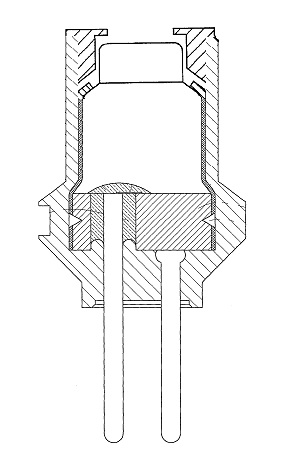
In pyrotechnics, a pyrotechnic initiator (also initiator or igniter) is a device containing a pyrotechnic composition used primarily to ignite other, more difficult-to-ignite materials, such as thermites, gas generators, and solid-fuel rockets. The name is often used also for the compositions themselves.
Pyrotechnic initiators are often controlled electrically (called electro-pyrotechnic initiators), e.g. using a heated bridgewire or a bridge resistor. They are somewhat similar to blasting caps or other detonators, but they differ in that there is no intention to produce a shock wave. An example of such pyrotechnic initiator is an electric match.
The energetic material used, often called pyrogen, is usually a pyrotechnic composition made of a fuel and oxidizer, where the fuel produces a significant amount of hot particles that cause/promote the ignition of the desired material.
Initiator compositions are similar to flash powders, but they differ in burning speed, as explosion is not intended, and have intentionally high production of hot particles. They also tend to be easier to ignite than thermites, with which they also share similarities.
Common oxidizers used are potassium perchlorate and potassium nitrate. Common fuels used are titanium, titanium(II) hydride, zirconium, zirconium hydride, and boron. The size of the fuel particles is determined to produce hot particles with the required burning time.
More exotic materials can be used, e.g. carboranes.
For special applications, pyrophoric igniters can be used which burst into flame in contact with air. Triethylborane/TEA-TEB was used as an igniter for the Lockheed SR-71 jet engines, the Rocketdyne F-1 engine on the first stage of the Saturn V, NPO Energomash's RD-180 engine used on the first stage of the Atlas V, and SpaceX's Merlin engine used on the first stage of the Falcon 9.
One of the most common initiators is ZPP, or zirconium – potassium perchlorate – a mixture of metallic zirconium and potassium perchlorate. This mixture is used in the NASA Standard Initiator, which is used to ignite various pyrotechnic systems, including the NASA standard detonator. It yields rapid pressure rise, generates little gas, emits hot particles when ignited, is thermally stable, has long shelf life, and is stable under vacuum. It is sensitive to static electricity.
Hub AI
Pyrotechnic initiator AI simulator
(@Pyrotechnic initiator_simulator)
Pyrotechnic initiator
In pyrotechnics, a pyrotechnic initiator (also initiator or igniter) is a device containing a pyrotechnic composition used primarily to ignite other, more difficult-to-ignite materials, such as thermites, gas generators, and solid-fuel rockets. The name is often used also for the compositions themselves.
Pyrotechnic initiators are often controlled electrically (called electro-pyrotechnic initiators), e.g. using a heated bridgewire or a bridge resistor. They are somewhat similar to blasting caps or other detonators, but they differ in that there is no intention to produce a shock wave. An example of such pyrotechnic initiator is an electric match.
The energetic material used, often called pyrogen, is usually a pyrotechnic composition made of a fuel and oxidizer, where the fuel produces a significant amount of hot particles that cause/promote the ignition of the desired material.
Initiator compositions are similar to flash powders, but they differ in burning speed, as explosion is not intended, and have intentionally high production of hot particles. They also tend to be easier to ignite than thermites, with which they also share similarities.
Common oxidizers used are potassium perchlorate and potassium nitrate. Common fuels used are titanium, titanium(II) hydride, zirconium, zirconium hydride, and boron. The size of the fuel particles is determined to produce hot particles with the required burning time.
More exotic materials can be used, e.g. carboranes.
For special applications, pyrophoric igniters can be used which burst into flame in contact with air. Triethylborane/TEA-TEB was used as an igniter for the Lockheed SR-71 jet engines, the Rocketdyne F-1 engine on the first stage of the Saturn V, NPO Energomash's RD-180 engine used on the first stage of the Atlas V, and SpaceX's Merlin engine used on the first stage of the Falcon 9.
One of the most common initiators is ZPP, or zirconium – potassium perchlorate – a mixture of metallic zirconium and potassium perchlorate. This mixture is used in the NASA Standard Initiator, which is used to ignite various pyrotechnic systems, including the NASA standard detonator. It yields rapid pressure rise, generates little gas, emits hot particles when ignited, is thermally stable, has long shelf life, and is stable under vacuum. It is sensitive to static electricity.
Recent media