
Recent from talks
R. G. Collingwood
Knowledge base stats:
Talk channels stats:
Members stats:
R. G. Collingwood
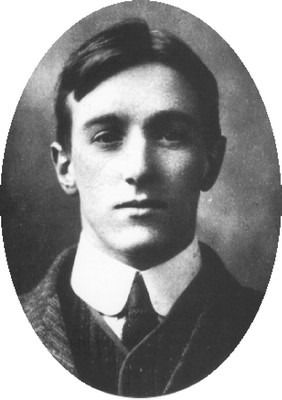
Robin George Collingwood (/ˈkɒlɪŋwʊd/; 22 February 1889 – 9 January 1943) was an English philosopher, historian and archaeologist. He is best known for his philosophical works, including The Principles of Art (1938) and the posthumously published The Idea of History (1946).
Collingwood was born on 22 February 1889 in Cartmel, Grange-over-Sands, then in Lancashire (now Cumbria), the son of the artist and archaeologist W.G. Collingwood, who acted as John Ruskin's private secretary in the final years of Ruskin's life. Collingwood's mother was also an artist and a talented pianist. He was educated at Rugby School and University College, Oxford, where he gained a First in Classical Moderations (Greek and Latin) in 1910 and a congratulatory First in Greats (Ancient History and Philosophy) in 1912. Prior to graduation, he was elected a fellow of Pembroke College, Oxford.
During World War I, he served in admiralty intelligence in London from 1915 to 1918. In 1918, after returning to Oxford, he married Ethel Winifred Graham (1885-1973), a graduate of Somerville College, Oxford, with whom he had a son and a daughter. He later married Kathleen Frances Edwardes in 1942, with whom he had another daughter.
Collingwood was a fellow of Pembroke College, Oxford, for some 23 years until becoming the Waynflete Professor of Metaphysical Philosophy at Magdalen College, Oxford. He was taught by the historian and archaeologist F. J. Haverfield, at the time Camden Professor of Ancient History. Important influences on Collingwood were the Italian Idealists Benedetto Croce, Giovanni Gentile and Guido de Ruggiero, the last of whom was also a close friend. Other important influences were Hegel, Kant, Giambattista Vico, F. H. Bradley and J. A. Smith.
After several years of increasingly debilitating strokes, Collingwood died at Coniston, Lancashire, on 9 January 1943. He was a practising Anglican throughout his life.
Collingwood defined philosophy as "thought of the second degree, thought about thought". An astronomer investigates phenomena and provides a theory from their observations, if the astronomer were to think about their process this would be philosophy.
Collingwood is widely noted for The Idea of History (1946), which was collated from various sources soon after his death by a student, T. M. Knox. It came to be a major inspiration for philosophy of history in the English-speaking world and is extensively cited, leading to an ironic remark by commentator Louis Mink that Collingwood is coming to be "the best known neglected thinker of our time". Collingwood is quoted multiple times in E.H. Carr's famous book What is History?.
Collingwood categorized history as a science, defining a science as "any organized body of knowledge." However, he distinguished history from natural sciences because the concerns of these two branches are different: natural sciences are concerned with the physical world, while history, in its most common usage, is concerned with social sciences and human affairs. Collingwood pointed out a fundamental difference between knowing things in the present (or in the natural sciences) and knowing history. To come to know things in the present or about things in the natural sciences, "real" things can be observed, as they are in existence or that have substance right now.[citation needed]
Hub AI
R. G. Collingwood AI simulator
(@R. G. Collingwood_simulator)
R. G. Collingwood
Robin George Collingwood (/ˈkɒlɪŋwʊd/; 22 February 1889 – 9 January 1943) was an English philosopher, historian and archaeologist. He is best known for his philosophical works, including The Principles of Art (1938) and the posthumously published The Idea of History (1946).
Collingwood was born on 22 February 1889 in Cartmel, Grange-over-Sands, then in Lancashire (now Cumbria), the son of the artist and archaeologist W.G. Collingwood, who acted as John Ruskin's private secretary in the final years of Ruskin's life. Collingwood's mother was also an artist and a talented pianist. He was educated at Rugby School and University College, Oxford, where he gained a First in Classical Moderations (Greek and Latin) in 1910 and a congratulatory First in Greats (Ancient History and Philosophy) in 1912. Prior to graduation, he was elected a fellow of Pembroke College, Oxford.
During World War I, he served in admiralty intelligence in London from 1915 to 1918. In 1918, after returning to Oxford, he married Ethel Winifred Graham (1885-1973), a graduate of Somerville College, Oxford, with whom he had a son and a daughter. He later married Kathleen Frances Edwardes in 1942, with whom he had another daughter.
Collingwood was a fellow of Pembroke College, Oxford, for some 23 years until becoming the Waynflete Professor of Metaphysical Philosophy at Magdalen College, Oxford. He was taught by the historian and archaeologist F. J. Haverfield, at the time Camden Professor of Ancient History. Important influences on Collingwood were the Italian Idealists Benedetto Croce, Giovanni Gentile and Guido de Ruggiero, the last of whom was also a close friend. Other important influences were Hegel, Kant, Giambattista Vico, F. H. Bradley and J. A. Smith.
After several years of increasingly debilitating strokes, Collingwood died at Coniston, Lancashire, on 9 January 1943. He was a practising Anglican throughout his life.
Collingwood defined philosophy as "thought of the second degree, thought about thought". An astronomer investigates phenomena and provides a theory from their observations, if the astronomer were to think about their process this would be philosophy.
Collingwood is widely noted for The Idea of History (1946), which was collated from various sources soon after his death by a student, T. M. Knox. It came to be a major inspiration for philosophy of history in the English-speaking world and is extensively cited, leading to an ironic remark by commentator Louis Mink that Collingwood is coming to be "the best known neglected thinker of our time". Collingwood is quoted multiple times in E.H. Carr's famous book What is History?.
Collingwood categorized history as a science, defining a science as "any organized body of knowledge." However, he distinguished history from natural sciences because the concerns of these two branches are different: natural sciences are concerned with the physical world, while history, in its most common usage, is concerned with social sciences and human affairs. Collingwood pointed out a fundamental difference between knowing things in the present (or in the natural sciences) and knowing history. To come to know things in the present or about things in the natural sciences, "real" things can be observed, as they are in existence or that have substance right now.[citation needed]
Recent media