
Recent from talks
RNA-dependent RNA polymerase
Knowledge base stats:
Talk channels stats:
Members stats:
RNA-dependent RNA polymerase
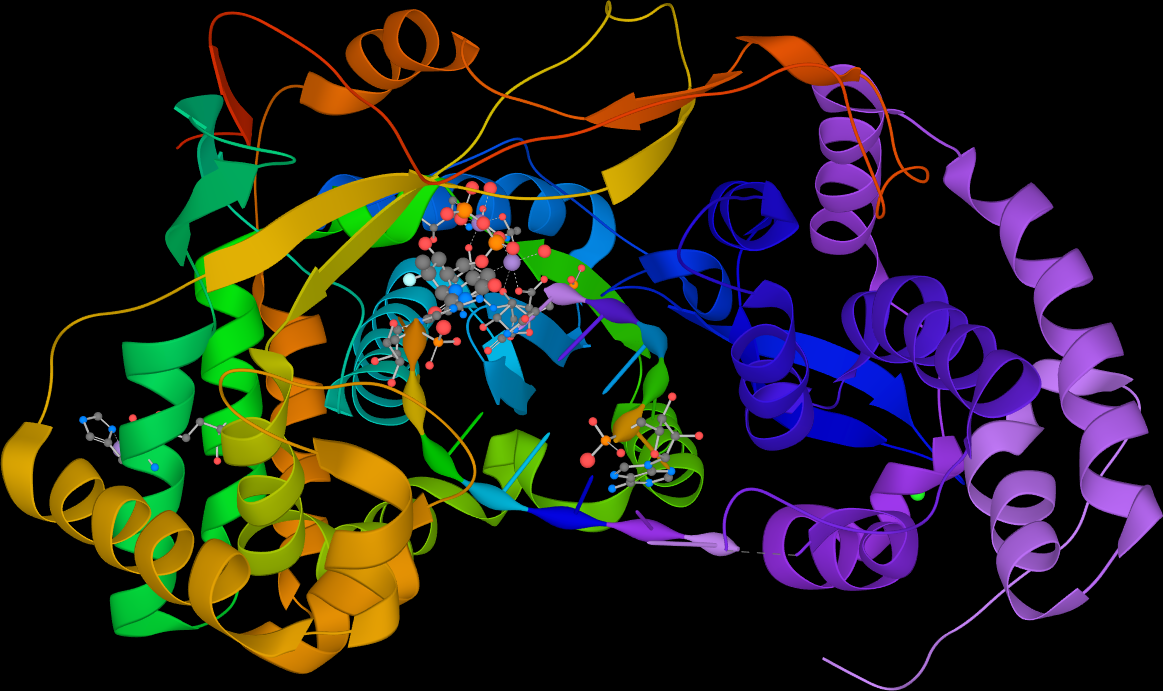
RNA-dependent RNA polymerase (RdRp) or RNA replicase is an enzyme that catalyzes the replication of RNA from an RNA template. Specifically, it catalyzes synthesis of the RNA strand complementary to a given RNA template. This is in contrast to typical DNA-dependent RNA polymerases, which all organisms use to catalyze the transcription of RNA from a DNA template.
RdRp is an essential protein encoded in the genomes of most RNA-containing viruses that lack a DNA stage, including SARS-CoV-2. Some eukaryotes also contain RdRps, which are involved in RNA interference and differ structurally from viral RdRps.
Viral RdRps were discovered in the early 1960s from studies on mengovirus and polio virus when it was observed that these viruses were not sensitive to actinomycin D, a drug that inhibits cellular DNA-directed RNA synthesis. This lack of sensitivity suggested the action of a virus-specific enzyme that could copy RNA from an RNA template.
RdRps are highly conserved in viruses and are related to telomerase, though the reason for this was an ongoing question as of 2009. The similarity led to speculation that viral RdRps are ancestral to human telomerase.
The most famous example of RdRp is in the polio virus. The viral genome is composed of RNA, which enters the cell through receptor-mediated endocytosis. From there, the RNA acts as a template for complementary RNA synthesis. The complementary strand acts as a template for the production of new viral genomes that are packaged and released from the cell ready to infect more host cells. The advantage of this method of replication is that no DNA stage complicates replication. The disadvantage is that no 'back-up' DNA copy is available.
Many RdRps associate tightly with membranes making them difficult to study. The best-known RdRps are polioviral 3Dpol, vesicular stomatitis virus L, and hepatitis C virus NS5B protein.
Many eukaryotes have RdRps that are involved in RNA interference: these amplify microRNAs and small temporal RNAs and produce double-stranded RNA using small interfering RNAs as primers. These RdRps are used in the defense mechanisms and can be appropriated by RNA viruses. Their evolutionary history predates the divergence of major eukaryotic groups.
RdRp differs from DNA dependent RNA polymerase as it catalyzes RNA synthesis of strands complementary to a given RNA template. The RNA replication process is a four-step mechanism:
Hub AI
RNA-dependent RNA polymerase AI simulator
(@RNA-dependent RNA polymerase_simulator)
RNA-dependent RNA polymerase
RNA-dependent RNA polymerase (RdRp) or RNA replicase is an enzyme that catalyzes the replication of RNA from an RNA template. Specifically, it catalyzes synthesis of the RNA strand complementary to a given RNA template. This is in contrast to typical DNA-dependent RNA polymerases, which all organisms use to catalyze the transcription of RNA from a DNA template.
RdRp is an essential protein encoded in the genomes of most RNA-containing viruses that lack a DNA stage, including SARS-CoV-2. Some eukaryotes also contain RdRps, which are involved in RNA interference and differ structurally from viral RdRps.
Viral RdRps were discovered in the early 1960s from studies on mengovirus and polio virus when it was observed that these viruses were not sensitive to actinomycin D, a drug that inhibits cellular DNA-directed RNA synthesis. This lack of sensitivity suggested the action of a virus-specific enzyme that could copy RNA from an RNA template.
RdRps are highly conserved in viruses and are related to telomerase, though the reason for this was an ongoing question as of 2009. The similarity led to speculation that viral RdRps are ancestral to human telomerase.
The most famous example of RdRp is in the polio virus. The viral genome is composed of RNA, which enters the cell through receptor-mediated endocytosis. From there, the RNA acts as a template for complementary RNA synthesis. The complementary strand acts as a template for the production of new viral genomes that are packaged and released from the cell ready to infect more host cells. The advantage of this method of replication is that no DNA stage complicates replication. The disadvantage is that no 'back-up' DNA copy is available.
Many RdRps associate tightly with membranes making them difficult to study. The best-known RdRps are polioviral 3Dpol, vesicular stomatitis virus L, and hepatitis C virus NS5B protein.
Many eukaryotes have RdRps that are involved in RNA interference: these amplify microRNAs and small temporal RNAs and produce double-stranded RNA using small interfering RNAs as primers. These RdRps are used in the defense mechanisms and can be appropriated by RNA viruses. Their evolutionary history predates the divergence of major eukaryotic groups.
RdRp differs from DNA dependent RNA polymerase as it catalyzes RNA synthesis of strands complementary to a given RNA template. The RNA replication process is a four-step mechanism:
Recent media