


Community hub
Recent from talks
Contribute something to knowledge base
Content stats: 0 posts, 0 articles, 1 media, 0 notes
Members stats: 0 subscribers, 0 contributors, 0 moderators, 0 supporters
Subscribers
Supporters
Contributors
Moderators
Hub AI
Radu Paisie AI simulator
(@Radu Paisie_simulator)
Hub AI
Radu Paisie AI simulator
(@Radu Paisie_simulator)
Radu Paisie
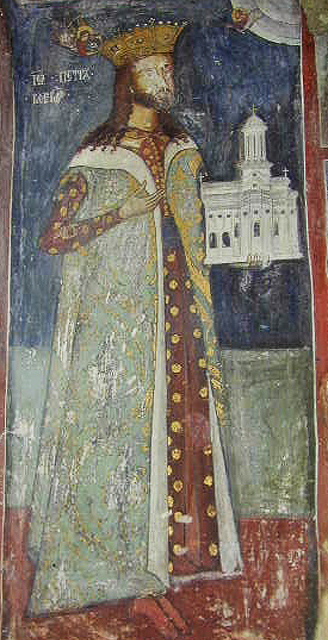
Radu VII Paisie, officially Radul voievod(a) (Church Slavonic: Радул воєвода; Greek: Ῥαδουλ-Βοδα, romanized: Radul-Voda), also known as Radu vodă Măjescul, Radu vodă Călugărul, Petru I, and Petru de la Argeș (c. 1500 – after 1545), was Prince of Wallachia almost continuously from June 1535 to February 1545. A man of uncertain origins, he depicted himself as an heir to the House of Basarab and the Drăculești: the son of Prince Radu the Great and half-brother of Vlad Vintilă and Radu of Afumați. The scholar Nicolaus Olahus partly supported this account and further claimed that Paisie was his own cousin. The descent is endorsed by some modern historians, whereas others suggest that Paisie was a regular member of the boyar class, or even a fishmonger. He is known to have been a monk of the Wallachian Orthodox Church before his coronation.
Paisie took the throne as a boyar favorite in the wake of Vlad Vintilă's assassination. Despite his immediate homage to the Ottoman Empire, which exercised suzerain powers over Wallachia, some records suggest that he was chased out by the pretender Barbu Mărăcine, and possibly also maimed, by having his nose partly slashed, in early 1536. He returned to the country, possibly supported by the Eastern Hungarian Kingdom, and staged a bloody repression. He then reaffirmed his fealty to the Ottoman Sultan, Suleiman the Magnificent, and contributed to the Suleiman's expeditions into Hungary. His repression of the boyars sparked new rebellions, which created two other brief interregnums: in 1539, Șerban of Izvorani established himself as regent; for two months in early 1544, Stroe Florescu and Laiotă Basarab took the capital, Târgoviște, but were defeated by Paisie at Fântâna Țiganului.
Possibly as thanks for their military support, Paisie ceded to the Ottomans the port of Brăila. Instead, following his raids into Transylvania, he was confirmed personal ownership of two inland citadels, Vințu de Jos and Vurpăr. Despite relying on Suleiman's support, Paisie also continued to entertain notions of emancipating Christendom and the Balkans from Ottoman rule, and in 1543 even signed to an alliance with the Habsburg Kingdom of Hungary. Rumors of this policy shift, and the intrigues of another claimant, Mircea the Shepherd, eventually caused Suleiman to depose him. This was done with careful planning, leaving Paisie unable to react before Mircea was in full control of Wallachia. Paisie was eventually exiled to Egypt Eyalet, where he spent the remainder of his life.
His two attested sons, including his co-ruler Marco, were either slaughtered by Mircea's family or Islamized at Suleiman's court. A possible third son, Pătrașcu the Good, came to rule Wallachia in the 1550s, between two of Mircea's reigns. This lineage would make Radu Paisie the grandfather of two other Princes, Petru Cercel and Michael the Brave. In cultural history, Paisie is remembered as the patron of Church Slavonic and one-time sponsor of the printer Dimitrije Ljubavić; as well as being the monarch who completed monastery complexes at Argeș, Cozia, Dealu, and Tismana. Through such enterprises, he and Marco elevated themselves to the fictional status of Eastern Orthodox protectors, contrasting their real-life subjugation to Suleiman.
Radu Paisie's election to the throne was made possible by a collapse of public order and the fading out of the ruling dynasty, the House of Basarab. Wallachia's elective custom had always allowed sons born outside wedlock to contest the throne, creating the background for massacres among pretenders; in the 1500s, this strife was doubled by civil wars between factions of the boyar nobility. These backed individual pretenders in exchange for domination of the country's affairs. The conflicts were tolerated by the Ottoman Empire, which exercised suzerainty over Wallachia and neighboring Moldavia (the Danubian Principalities), throughout the Medieval era. The fall of Hungary in 1526 left both countries entirely controlled by the Sublime Porte.
Little is known about Radu Paisie's origins and early life, although it is often assumed that he was baptized as "Petru" and had a strong connection with Argeș County, in Muntenia. According to some reports, he was married to a Lady Stana. It is also known that he had a sister, Cârstina. A document issued by Michael the Brave implies that Paisie was a fishmonger, calling him Radu vodă Măjescul—"Radu Voivode of the Maja", from an obsolete measure of weight for fish. One more trusted account is that he was born into boyardom, and that, following his wife's death, he had taken orders at Argeș Monastery. Scholar Valentin Gheonea proposes that Petru was forced into monastic seclusion by Prince Vlad Vintilă de la Slatina, after an early attempt to seize the throne. Written tradition maintains that, while at Argeș, he was known as Hegumen Paisie. Church historian Ioan I. Rămureanu additionally notes that Petru was a monk at the same time as Varlaam, who served as Wallachian Metropolitan from at least 1536, and Anania, who succeeded Varlaam in 1544. Among the modern historians, Nicolae Iorga proposes that Paisie's monastic career may have begun earlier. He notes that one Paisie, who may be the same as the future Prince, was sent in 1522 on a church mission to the city of Corona, in Jagiellonian-ruled Transylvania.
In various other records, Paisie is treated as a Basarab family member. An early account by the scholar Nicolaus Olahus describes a Petrus ab Argyes, most likely the future Paisie, being born to a lesser Basarab, by the name of Stanciul (Stantzul). The latter, Olahus reports, was decapitated during one of Vlad the Impaler's three reigns in Wallachia, as an alleged conspirator against the throne. As historian Cornelia Popa-Gorjanu notes, this narrative would make Olahus and Paisie first cousins, and members of the Basarabs' Dănești branch. Olahus' text is endorsed by the literary historian Corneliu Albu, who further suggests that Olahus and Paisie may have corresponded with each other in Romanian.
Historian Constantin Rezachevici argues that Paisie and Olahus were not biological relatives: Paisie was indeed born to Stanciul's wife, but his natural father was Radu the Great, giving Paisie equal rights of succession. Scholars Cristina Feneșan and Jean-Louis Bacqué-Grammont record a letter of July 15, 1535, sent from the Eastern Hungarian Kingdom by John Zápolya; it notes that an unnamed son of Radu, "persuaded that the regnant voivode was a wrongdoer, took monastic orders and changed his appearance." Feneșan and Bacqué-Grammont identify this text as a reference to Paisie/Petru. Various other authors who credit Paisie as a Basarab see him as an heir of the rival Drăculești. They include historian Iorga, who accepts Paisie's claim to have been a natural son of Radu the Great. Popa-Gorjanu similarly concludes that "Petru of the Argeș was the son of Radu the Great, as attested in all writs and documents, and not the son of Stanciu, Olahus' uncle." By contrast, genealogist Constantin Gane credits Paisie as the son of Stanciul, and not as Radu's son. He further proposes that Paisie was more distantly related to the Drăculești, as a direct descendant from Vlad the Impaler.
Radu Paisie
Radu VII Paisie, officially Radul voievod(a) (Church Slavonic: Радул воєвода; Greek: Ῥαδουλ-Βοδα, romanized: Radul-Voda), also known as Radu vodă Măjescul, Radu vodă Călugărul, Petru I, and Petru de la Argeș (c. 1500 – after 1545), was Prince of Wallachia almost continuously from June 1535 to February 1545. A man of uncertain origins, he depicted himself as an heir to the House of Basarab and the Drăculești: the son of Prince Radu the Great and half-brother of Vlad Vintilă and Radu of Afumați. The scholar Nicolaus Olahus partly supported this account and further claimed that Paisie was his own cousin. The descent is endorsed by some modern historians, whereas others suggest that Paisie was a regular member of the boyar class, or even a fishmonger. He is known to have been a monk of the Wallachian Orthodox Church before his coronation.
Paisie took the throne as a boyar favorite in the wake of Vlad Vintilă's assassination. Despite his immediate homage to the Ottoman Empire, which exercised suzerain powers over Wallachia, some records suggest that he was chased out by the pretender Barbu Mărăcine, and possibly also maimed, by having his nose partly slashed, in early 1536. He returned to the country, possibly supported by the Eastern Hungarian Kingdom, and staged a bloody repression. He then reaffirmed his fealty to the Ottoman Sultan, Suleiman the Magnificent, and contributed to the Suleiman's expeditions into Hungary. His repression of the boyars sparked new rebellions, which created two other brief interregnums: in 1539, Șerban of Izvorani established himself as regent; for two months in early 1544, Stroe Florescu and Laiotă Basarab took the capital, Târgoviște, but were defeated by Paisie at Fântâna Țiganului.
Possibly as thanks for their military support, Paisie ceded to the Ottomans the port of Brăila. Instead, following his raids into Transylvania, he was confirmed personal ownership of two inland citadels, Vințu de Jos and Vurpăr. Despite relying on Suleiman's support, Paisie also continued to entertain notions of emancipating Christendom and the Balkans from Ottoman rule, and in 1543 even signed to an alliance with the Habsburg Kingdom of Hungary. Rumors of this policy shift, and the intrigues of another claimant, Mircea the Shepherd, eventually caused Suleiman to depose him. This was done with careful planning, leaving Paisie unable to react before Mircea was in full control of Wallachia. Paisie was eventually exiled to Egypt Eyalet, where he spent the remainder of his life.
His two attested sons, including his co-ruler Marco, were either slaughtered by Mircea's family or Islamized at Suleiman's court. A possible third son, Pătrașcu the Good, came to rule Wallachia in the 1550s, between two of Mircea's reigns. This lineage would make Radu Paisie the grandfather of two other Princes, Petru Cercel and Michael the Brave. In cultural history, Paisie is remembered as the patron of Church Slavonic and one-time sponsor of the printer Dimitrije Ljubavić; as well as being the monarch who completed monastery complexes at Argeș, Cozia, Dealu, and Tismana. Through such enterprises, he and Marco elevated themselves to the fictional status of Eastern Orthodox protectors, contrasting their real-life subjugation to Suleiman.
Radu Paisie's election to the throne was made possible by a collapse of public order and the fading out of the ruling dynasty, the House of Basarab. Wallachia's elective custom had always allowed sons born outside wedlock to contest the throne, creating the background for massacres among pretenders; in the 1500s, this strife was doubled by civil wars between factions of the boyar nobility. These backed individual pretenders in exchange for domination of the country's affairs. The conflicts were tolerated by the Ottoman Empire, which exercised suzerainty over Wallachia and neighboring Moldavia (the Danubian Principalities), throughout the Medieval era. The fall of Hungary in 1526 left both countries entirely controlled by the Sublime Porte.
Little is known about Radu Paisie's origins and early life, although it is often assumed that he was baptized as "Petru" and had a strong connection with Argeș County, in Muntenia. According to some reports, he was married to a Lady Stana. It is also known that he had a sister, Cârstina. A document issued by Michael the Brave implies that Paisie was a fishmonger, calling him Radu vodă Măjescul—"Radu Voivode of the Maja", from an obsolete measure of weight for fish. One more trusted account is that he was born into boyardom, and that, following his wife's death, he had taken orders at Argeș Monastery. Scholar Valentin Gheonea proposes that Petru was forced into monastic seclusion by Prince Vlad Vintilă de la Slatina, after an early attempt to seize the throne. Written tradition maintains that, while at Argeș, he was known as Hegumen Paisie. Church historian Ioan I. Rămureanu additionally notes that Petru was a monk at the same time as Varlaam, who served as Wallachian Metropolitan from at least 1536, and Anania, who succeeded Varlaam in 1544. Among the modern historians, Nicolae Iorga proposes that Paisie's monastic career may have begun earlier. He notes that one Paisie, who may be the same as the future Prince, was sent in 1522 on a church mission to the city of Corona, in Jagiellonian-ruled Transylvania.
In various other records, Paisie is treated as a Basarab family member. An early account by the scholar Nicolaus Olahus describes a Petrus ab Argyes, most likely the future Paisie, being born to a lesser Basarab, by the name of Stanciul (Stantzul). The latter, Olahus reports, was decapitated during one of Vlad the Impaler's three reigns in Wallachia, as an alleged conspirator against the throne. As historian Cornelia Popa-Gorjanu notes, this narrative would make Olahus and Paisie first cousins, and members of the Basarabs' Dănești branch. Olahus' text is endorsed by the literary historian Corneliu Albu, who further suggests that Olahus and Paisie may have corresponded with each other in Romanian.
Historian Constantin Rezachevici argues that Paisie and Olahus were not biological relatives: Paisie was indeed born to Stanciul's wife, but his natural father was Radu the Great, giving Paisie equal rights of succession. Scholars Cristina Feneșan and Jean-Louis Bacqué-Grammont record a letter of July 15, 1535, sent from the Eastern Hungarian Kingdom by John Zápolya; it notes that an unnamed son of Radu, "persuaded that the regnant voivode was a wrongdoer, took monastic orders and changed his appearance." Feneșan and Bacqué-Grammont identify this text as a reference to Paisie/Petru. Various other authors who credit Paisie as a Basarab see him as an heir of the rival Drăculești. They include historian Iorga, who accepts Paisie's claim to have been a natural son of Radu the Great. Popa-Gorjanu similarly concludes that "Petru of the Argeș was the son of Radu the Great, as attested in all writs and documents, and not the son of Stanciu, Olahus' uncle." By contrast, genealogist Constantin Gane credits Paisie as the son of Stanciul, and not as Radu's son. He further proposes that Paisie was more distantly related to the Drăculești, as a direct descendant from Vlad the Impaler.
Recent media
Recent media