Hubbry Logo
Rally JapanRally JapanMain
Open search
Rally Japan
Community hub
Rally Japan
logo
8 pages, 0 posts
0 subscribers
Be the first to start a discussion here.
Rally Japan
Rally Japan
from Wikipedia

Rally Japan
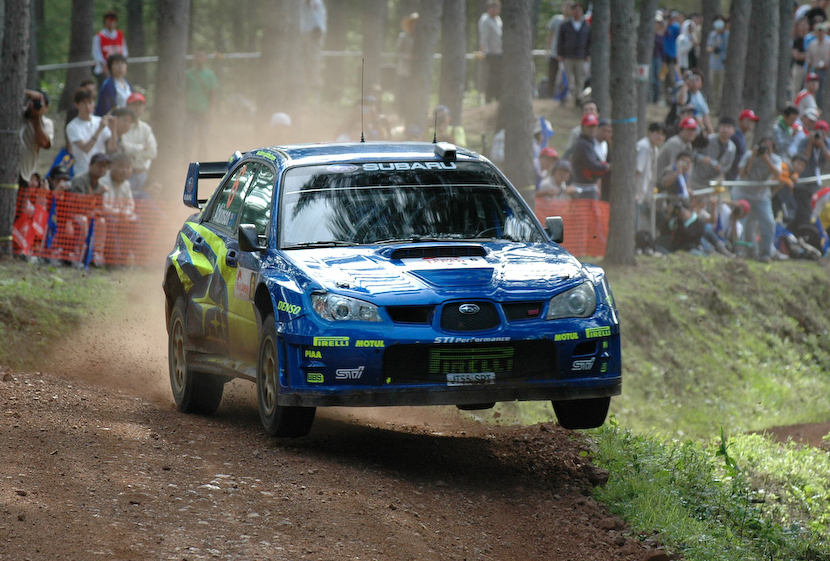
Chris Atkinson driving his Subaru Impreza WRC in 2006 Rally Japan.
GenreRallying
FrequencyAnnual
LocationChūbu region
CountryJapan
Inaugurated2004
Websitewww.rally-japan.jp

Rally Japan (ラリージャパン) is a rally competition held in Hokkaidō, Japan. The event made its debut in the FIA World Rally Championship during the 2004 season. From 2004 to 2007, the event was held on the twisty and narrow gravel roads of the Tokachi region near Obihiro. For the 2008 season, the event was moved to the region close to Sapporo, Hokkaidō's main city. Rally Japan was not held in 2009, but returned in 2010 for one year. Rally Japan was planned to return in 2020 to the new location of Nagoya, but was cancelled on August 19 due to COVID-19 pandemic in Japan. It was cancelled again in 2021, and returned as the last rally of the season in 2022.[1]

History

[edit]
A Daihatsu competitor during a stage in Rikubetsu in 2006.

Rally Hokkaido was first organised as part of the 2002 Asia-Pacific Rally Championship on the northern island of Hokkaidō. After two successful rallies the event was renamed Rally Japan and promoted to the 2004 World Rally Championship schedule. The rally was won by the 2003 world champion Petter Solberg of the Subaru World Rally Team. For 2005 the World and Asia-Pacific Rally events were split into two separate event with the APRC round returning to the Rally Hokkaido name.

The 2005 Rally Japan was held on September 30 through October 2. Headquarters and the service park were located in and near Obihiro, Hokkaidō. The rally was won by Marcus Grönholm in a Peugeot 307 WRC 1:22.1 ahead of Sébastien Loeb in a Citroën Xsara WRC. This was the last of the three world rally wins for the 307 WRC, and also the last win for the Peugeot factory team. The 2006 event was won by Loeb 5.6 seconds ahead of Grönholm.

Sébastien Loeb at the Sapporo Dome during the 2008 event.

Rally Japan was the fourteenth rally on the World Rally Championship schedule for the 2007 season. It featured 27 special stages, and was won by Mikko Hirvonen of BP Ford World Rally Team. This win was third in Hirvonen's career as a top level rally driver. The 2007 edition of the event was also remarkable for the retirements of both 2007 title contenders on the same rally; Marcus Grönholm retired on the first day of the rally after heavily damaging the roll cage of his Ford Focus RS WRC 07 on stage four. Sébastien Loeb retired on the next leg of the rally after his co-driver Daniel Elena called out the wrong pace note instruction for the first time in ten years.

In December 2007, Rally Japan organisers announced that for the 2008 WRC season the event will move from Obihiro to Sapporo, the biggest city in Hokkaidō. The 2008 Rally Japan featured 29 stages, including five super specials at the Sapporo Dome. The event saw Hirvonen take his second win in Japan in a row, ahead of his teammate Jari-Matti Latvala and Citroën Total's Sébastien Loeb, who secured a record fifth title with his third-place finish. The rally also featured a bad crash by François Duval, which injured his co-driver Patrick Pivato.[2]

The 2022 Rally Japan saw the event returns to the calendar for the first time since 2010. The rally moved its headquarters from Hokkaidō to a new base in Nagoya and is run on tarmac rather than gravel.[3] In October 2024, it was announced that the organizers signed a five-year extension with WRC Promoter GmbH, meaning the rally would stay on the World Rally Championship calendar until 2028.[4]

Past winners

[edit]

References

[edit]
[edit]
Revisions and contributorsEdit on WikipediaRead on Wikipedia
from Grokipedia
Rally Japan is an annual motor rally event forming a round of the FIA (WRC), contested on challenging asphalt roads through the mountainous terrain of Aichi and prefectures in central . Known for its narrow, twisty stages demanding precise driving amid barriers, drop-offs, and variable weather, the event typically features around 20 special stages covering more than 300 kilometers, including urban super special stages and a high-speed power stage. It serves as a late-season test of endurance and adaptability, often playing a pivotal role in deciding WRC titles due to its position near the calendar's end. The rally debuted in the WRC in as part of the championship's expansion to 16 rounds and greater global reach, initially held on roads in in northern with service in . won the inaugural event for Subaru, setting a precedent for intense competition among Japanese manufacturers like , Subaru, and , which have historically dominated the WRC. Rally Japan was held from to 2008 and in 2010 as a rally, after which it was removed from the calendar amid WRC restructuring, but returned in 2022 reimagined as a pure asphalt challenge in central with service in to highlight Japan's tarmac expertise and attract massive local fan support, with stages frequently selling out. In its modern asphalt format, Rally Japan has quickly established itself as one of the WRC's most spectator-friendly and technically demanding events, drawing international fields of up to 44 crews from 17 nations and emphasizing the championship's Asian presence. The 2024 edition marked a dramatic season finale where secured his first drivers' title for Hyundai, while narrowly clinched the manufacturers' crown. The 2025 rally, held from 6 to 9 November, saw 's triumph by 11.6 seconds over teammate in rain-affected conditions, earning Ogier 10 stage wins and positioning him just three points behind Evans in the drivers' standings ahead of the final round.

Event Overview

Format and Regulations

Rally Japan is integrated into the FIA (WRC) as a full-points scoring round, adhering to the annual WRC calendar and contributing to the drivers', co-drivers', and manufacturers' championships. The event typically spans four days of competition, from Thursday to Sunday, with a total competitive distance of approximately 300 kilometers across 20 special stages, primarily on tarmac surfaces. For the 2025 edition, the rally ran from November 6 to 9, covering 305.34 km over 20 stages. Regulations follow the FIA WRC Sporting Regulations, featuring Rally1 cars in the RC1 class without hybrid systems starting in 2025, alongside Rally2 and Rally3 vehicles in lower categories. Super special stages are included in urban settings, such as Kuragaike Park in Toyota City. Safety protocols are strictly enforced, including mandatory FIA-approved fuel, tracking devices, and medical support tailored to Japan's dense forested environments and variable weather conditions, with emergency services coordinated via local hospitals. The power stage, designated as the final special stage—such as the Wolf Power Stage at Lake Mikawako in —awards bonus points to the top five finishers ( points), influencing strategies amid Japan's unpredictable asphalt conditions where precision is critical to avoid barriers and drop-offs. For 2025, an additional points system allocates points to the top five crews on Sundays, complementing the power stage to reward consistent performance. Support categories run concurrently, including WRC2 (using Rally2 cars in ), WRC3 (Rally3 cars in RC3), and Junior WRC, all following the same stage formats as the top category but with class-specific classifications and entry limits up to 60 competitors overall.

Location and Itinerary

Rally Japan has undergone significant changes in its geographic focus and route design across its editions. The inaugural events from 2004 to 2007 were centered in the Tokachi region near in eastern , utilizing narrow roads through dense forests and rural landscapes. In 2008, the rally shifted westward within to a base in , incorporating stages around the for super specials while maintaining the emphasis on forested paths. The 2010 edition continued this Sapporo-based format, drawing on 's expansive, twisty rural roads to create a challenging itinerary. Following a long hiatus, the revived Rally Japan from 2022 onward relocated to central Japan's , with Toyota City serving as the primary hub and providing urban elements. This shift marked a transition to tarmac surfaces, leveraging the region's mountainous terrain and paved forest roads for a more technical asphalt challenge. The 2025 event was primarily based in , encompassing areas around Toyota City and extending to nearby districts like Ena in and Obara. The itinerary has evolved notably in structure and scale. Early Hokkaido-based events featured over 20 stages, such as the 22 specials in totaling 359.46 km of competitive distance, primarily looping through rural forests and foothills without significant urban components. By contrast, the modern tarmac format includes 17 to 20 stages, with the 2025 edition comprising 20 specials covering 305.34 km, starting with a short urban super special at Kuragaike Park and incorporating repeated forest loops in areas like Mount Kasagiyama. These contemporary routes blend high-speed tarmac sections with tighter, barrier-lined paths, often featuring short spectator-friendly stages near urban centers. Logistically, the event has adapted to Japan's island geography, which complicates team travel and equipment transport, particularly for international crews relying on ferries or flights to reach Hokkaido's remote setting in earlier years or the mainland's denser infrastructure today. Since 2022, the central service park has been established at in Toyota City, providing a consolidated area for repairs, operations, and fan access with dedicated zones for viewing at work. Spectator areas are strategically placed at key stages and the service park, enhancing accessibility while managing crowds in a known for efficient networks. Environmental considerations play a key role in route planning, with organizers conducting regular surveys to avoid negative impacts on forested areas and national parks, such as those near Hokkaido's Tokachi plains or Aichi's mountainous zones. Routes are designed to minimize ecological disruption, incorporating clean energy for event operations and eco-friendly materials, while integrating with local by highlighting scenic rural and urban landmarks to promote sustainable visitation.

History

Inception and Early Editions (2004–2010)

Rally Japan made its debut in the FIA in 2004 as the eleventh round of the season, organized by the Japan Automobile Federation (JAF) to expand rallying's presence in and showcase Japan's motorsport capabilities. Held from September 3 to 5 in Obihiro, , the inaugural event featured 23 special stages totaling 387.5 km of competitive gravel roads through forested and rural terrain, drawing international teams despite the logistical hurdles of transporting vehicles to the remote northern island. The rally's inclusion marked a significant step in the WRC's global outreach, with 89 entries competing under dry conditions that favored precise driving on narrow, twisty paths. Petter Solberg secured victory for the , finishing 1 minute 13.3 seconds ahead of in a , delivering Subaru's first and only home WRC win and electrifying local fans with a display of the Impreza WRC's prowess on native gravel. This success amplified Subaru's brand loyalty in Japan, where the manufacturer originated, and highlighted intense manufacturer rivalries among Subaru, , and Ford amid challenging conditions like rutted surfaces and rock hazards. Local driver Toshi Arai, competing in the (PWRC) category with his newly formed Subaru Team Arai, finished fourth in class, symbolizing the integration of Japanese talent into the global event and inspiring domestic participation. The edition's triumph boosted national enthusiasm for , fostering greater public engagement with the sport through media coverage and fan zones. From 2005 to 2008, Rally Japan remained a gravel fixture in , with the headquarters in until 2007 before shifting to in 2008 to leverage urban facilities like the for service parks and spectator access. Variable weather, including rain, fog, and occasional early snow in the region's unpredictable climate, often altered stage conditions, leading to slippery surfaces and strategic tire choices that influenced outcomes—such as Marcus Grönholm's 2005 win for amid damp gravel, Loeb's record-breaking 2006 victory for , Mikko Hirvonen's 2007 triumph for Ford, and Loeb's repeat in 2008. These editions faced substantial organizational challenges, including high costs for infrastructure in remote areas, complex logistics for international freight across the , and efforts to balance global competition with local involvement, exemplified by Arai's PWRC successes in 2005 and 2007. The events cultivated a vibrant rivalry dynamic on gravel, enhancing Japanese motorsport culture by drawing larger crowds and promoting Subaru, , and Ford as icons of endurance in adverse northern environments. The 2009 edition was cancelled amid the global , which strained sponsorships and increased operational expenses for the high-cost event in an isolated location. Rally Japan returned in , still based in on gravel, where claimed victory for Ford, concluding the early gravel era with continued emphasis on weather variability and logistical demands. Over these years, winners included Solberg (2004), Grönholm (2005), Loeb (2006 and 2008), Hirvonen (2007), and Latvala (). The period's editions significantly elevated rallying's profile in , sparking widespread enthusiasm and solidifying manufacturer legacies through home-soil battles.

Hiatus Period (2011–2021)

The hiatus of Rally Japan from the FIA World Rally Championship (WRC) began after the 2010 edition, when the event was dropped from the 2011 calendar due to decisions by the series promoter, North One Sport, amid sponsorship shortages and escalating organizational costs. Although a 2011 edition had been under consideration in , it was ultimately canceled following the devastating Tōhoku earthquake and tsunami on March 11, 2011, which caused widespread destruction and shifted national priorities toward recovery efforts. Ongoing challenges prolonged the absence, including persistent high costs for staging an international event in Japan, limited sponsorship support exacerbated by the global financial crisis's lingering effects on the automotive sector, and opposition from environmental groups concerned about the rally's impact on local forests and wildlife. WRC calendar constraints further hindered revival, as the series prioritized a balanced global rotation with only 12-14 rounds annually, favoring established European and emerging African events over Asia during this period. In response, Japanese rallying shifted focus to the Asia-Pacific Rally Championship (APRC), where Rally Japan served as a key round from 2011 onward, providing a regional platform for local competitors without the financial burden of WRC standards. Despite the WRC absence, domestic interest persisted through the All Japan Rally Championship (AJRC), which continued annually and helped nurture talent, including future WRC driver , who secured multiple AJRC titles between 2014 and 2017 while occasionally attracting informal participation from international drivers seeking preparation for Asian conditions. Revival efforts intensified from 2018, driven by the FIA's strategy to expand the WRC's footprint in and bolster participation from non-European manufacturers, with —returning to the WRC as a factory team in 2017—playing a pivotal role in lobbying and securing local government support in . These discussions culminated in a successful bid announced in September 2019 for a 2020 return as an asphalt event near , though the forced cancellations in 2020 and 2021, delaying the comeback until 2022.

Revival and Modern Era (2022–Present)

In September 2021, the FIA World Rally Championship announced the revival of Rally Japan for the 2022 season, following the event's cancellation in 2021 due to COVID-19 restrictions that had already delayed its planned return after an 11-year hiatus. The decision to base the event in Toyota City, near Nagoya, was driven by a strategic partnership with Toyota, which helped reduce organizational costs through access to existing urban infrastructure and local support, while shifting the focus entirely to tarmac stages in the surrounding mountainous areas. The 2022 edition marked a successful debut on asphalt, with securing victory for in a season finale that highlighted the event's challenging late-autumn conditions. Toyota's home advantage became evident in subsequent years, as claimed wins in both 2023 and 2024, contributing to the manufacturer's strong performance amid the introduction of Rally1 hybrid regulations that debuted across the WRC in 2022. The 2025 rally saw triumph for in heavy rain, a result that not only underscored the event's unpredictable weather but also bolstered its case for longevity on the calendar. Organizational enhancements have solidified Rally Japan's position, including deepened ties with Toyota City for logistics and promotion, the seamless integration of hybrid powertrains that aligned with global sustainability goals, and a surge in international attendance, with the event now ranking among the WRC's most viewed rounds due to its broadcast appeal and cultural draw. These changes addressed prior hiatus-era logistical hurdles, transforming the rally into a reliable late-season fixture. Looking ahead, Rally Japan has secured its place through 2028 via a multi-year agreement with WRC Promoter, ensuring continuity in Toyota City while organizers explore enhancements like potential mixed-surface elements to further diversify the challenge.

Rally Characteristics

Stages and Surfaces

Rally Japan's competitive stages during its inaugural run from 2004 to 2010 were predominantly -based, set amid the dense forests of , featuring fast and twisty routes that emphasized high-speed navigation through wooded terrain. These special stages typically included loops of 20 to 30 kilometers, with events comprising up to 27 stages totaling around 387 kilometers of competitive distance, such as in the 2004 edition. The surfaces demanded precise tire management, primarily using gravel-specific compounds to handle the loose, forest-floor conditions that could turn muddy under wet weather. The event's revival in marked a significant evolution, shifting entirely to tarmac surfaces on asphalt roads in the Aichi and prefectures. This change introduced tighter hairpins, significant elevation changes, and narrow mountain passes, with modern editions featuring 19 to 22 stages, including short urban super specials for spectator engagement and a concluding power stage offering bonus points. For instance, the rally covered 283 kilometers across 19 asphalt stages, while the 2025 event expanded to 20 stages totaling 305 kilometers. Early revival efforts incorporated no elements, maintaining a pure tarmac format to align with the region's road . Technical specifications of the tarmac stages highlight their demanding nature, with average speeds ranging from 80 to 120 kilometers per hour due to the twisty layouts and variable grip, slower than typical events but testing driver commitment on barrier-lined sections. choices are critical, favoring slick hard compounds like Pirelli's P Zero for dry conditions to maximize grip on smooth asphalt, while wet compounds become essential when renders surfaces slippery, as seen in variable weather across editions. This surface uniformity since 2022 has streamlined logistics but amplified the impact of precipitation, often leading to cautious pacing on the 13- to 30-kilometer loops.

Unique Challenges and Features

Rally Japan's environmental challenges are intensified by its autumn timing in the mountainous regions of Aichi and prefectures, where frequent rain and fog drastically reduce , often turning stages into slippery, unpredictable tests of driver caution. Persistent downpours can transform asphalt roads into rivers of standing water, while fallen leaves and damp patches add to the grip issues, demanding precise throttle control to avoid aquaplaning or off-track excursions. The event's location in an earthquake-prone area necessitates heightened safety protocols. Strategically, the rally's all-tarmac layout emphasizes exact handling on tight hairpins and narrow mountain passes, where minimal straights reward patient, rhythmical driving over aggressive speed, as barriers and drop-offs leave little room for error. European competitors often contend with significant from long-haul travel, compounded by the need for cultural adaptation, such as navigating local hospitality customs and unfamiliar road signage during non-competitive segments. Co-driver navigation plays a crucial role in these twisty, forested routes, requiring seamless to interpret pace notes accurately amid low visibility and constant direction changes. The event uniquely integrates elements of Japanese culture, offering participants and spectators experiences like visits to historic sites and traditional crafts alongside the racing, fostering a blend of and heritage that enhances its appeal. High spectator turnout, particularly in urban areas around Toyota City Stadium, creates an electric atmosphere, with over 370,000 fans lining the roads in recent editions, drawn by national pride and accessible viewing zones. Rally Japan has also served as a testing ground for advanced vehicle technologies, including hybrid systems in Rally1 cars during its early revival years, allowing manufacturers like to refine electrification in real-world conditions. Drivers frequently describe the rally's "exotic" and demanding nature, with Toyota's noting its twisty layout as "mega" in intensity, underscoring the need for clean, committed runs. Sébastien has highlighted the precision required, stating that patience often trumps outright pace on these roads, while emphasized the "lottery" element introduced by wet conditions, amplifying the reliance on co-driver trust for safe navigation.

Results and Records

Event Winners

Rally Japan has seen a diverse array of winners since its inception in 2004, with victories distributed across multiple manufacturers and drivers adapting to its demanding asphalt and former stages. The event has produced 10 editions to date, featuring standout performances from both established champions and emerging talents. Key victors include Norwegian in the inaugural running, Finnish driver Mikko Hirvonen securing back-to-back triumphs, and more recently, Welsh driver claiming consecutive wins in the modern asphalt era.
YearDriverCo-DriverCar
2004Phil Mills
2005Timo Rautiainen
2006
2007Mikko HirvonenJarmo Lehtinen
2008Mikko HirvonenJarmo Lehtinen
2010Julien Ingrassia
2022Martijn Wydaeghe
2023Scott Martin
2024Scott Martin
2025Vincent Landais
Several victories have been decided by narrow margins under challenging conditions, highlighting the rally's competitiveness. In 2004, Solberg clinched the win by 47.2 seconds over , capitalizing on home support for Subaru in the gravel-based event. The 2025 edition, affected by that tested tire choices and visibility on slick asphalt, saw Ogier edge out teammate Evans by 11.6 seconds after a tense final-day battle. Similarly, Neuville's 2022 triumph came by 1 minute 11.1 seconds over , aided by consistent pacing on the revived asphalt itinerary. Mikko Hirvonen holds the distinction of multiple wins with two consecutive victories in 2007 and 2008 aboard the , demonstrating reliability on Japan's varied terrain. matched this feat in the Rally1 era, winning in 2023 and 2024 with the , showcasing the car's adaptability to asphalt. and each secured one victory in different eras—Ogier in 2010 on and again in 2025 on asphalt—while Loeb's 2006 win marked his 27th career WRC triumph at the time. Co-drivers have played a pivotal role in these successes, providing precise navigation through Japan's intricate forest roads and tight corners, where route changes and weather can demand split-second adjustments. For instance, Phil Mills' pace notes helped Solberg navigate the unfamiliar 2004 stages effectively, while Vincent Landais' guidance was crucial for Ogier's rain-soaked 2025 push. This emphasis on co-driver expertise underscores the rally's technical demands beyond driver skill alone.

Championship Impacts and Records

Rally Japan has played a pivotal role in deciding World Rally Championship (WRC) titles, particularly in recent seasons. In 2024, Thierry Neuville secured his maiden drivers' championship with a sixth-place finish at the event, as rival Ott Tänak's crash on the final day eliminated his title hopes, while Elfyn Evans claimed victory for Toyota. The 2025 edition further intensified the drivers' battle, with Sébastien Ogier's win narrowing Evans' lead to just three points and creating a three-way contention heading into the season finale in Saudi Arabia. The event has also influenced manufacturers' championships, providing crucial points for Japanese teams. Subaru's victory in the inaugural 2004 Rally Japan, driven by , marked a strong start for the home manufacturer and contributed to their competitive standing that season, though they ultimately finished second in the constructors' title. Toyota's dominance since the 2022 revival has been instrumental in securing multiple titles, including retaining the crown after a dramatic powerstage battle with Hyundai and clinching their fifth consecutive manufacturers' championship earlier in 2025, bolstered by consistent podiums at their home event from 2023 to 2025. Several records highlight Rally Japan's competitive legacy. Mikko Hirvonen holds the joint-most wins by a driver with two victories (2007 and 2008), a mark matched by (2023 and 2024) and by (2010 and 2025). In 2006, set a then-record 27th WRC career win at the event and established benchmark stage times on gravel, including the fastest run on several forest specials that showcased his precision on the rally's mixed surfaces. Home manufacturer successes underscore national pride, with Subaru's 2004 triumph as the only pre-revival win by a Japanese team and Toyota achieving multiple victories post-2022, including 1-2-3 finishes in 2023 and 2025. Statistical trends reveal evolving patterns in Rally Japan's outcomes. Early editions saw Finnish drivers dominate with three wins out of the first five events, reflecting their gravel expertise on Hokkaido's stages. Post-revival, wins have shifted toward Japanese manufacturers, with claiming three of the four events since 2022, signaling a resurgence of home teams in the WRC's round.

References

Add your contribution
Related Hubs
User Avatar
No comments yet.